News
(Advertisement)


NEAR Protocol Is Preparing For Quantum Attacks - Here Is What It Is Doing

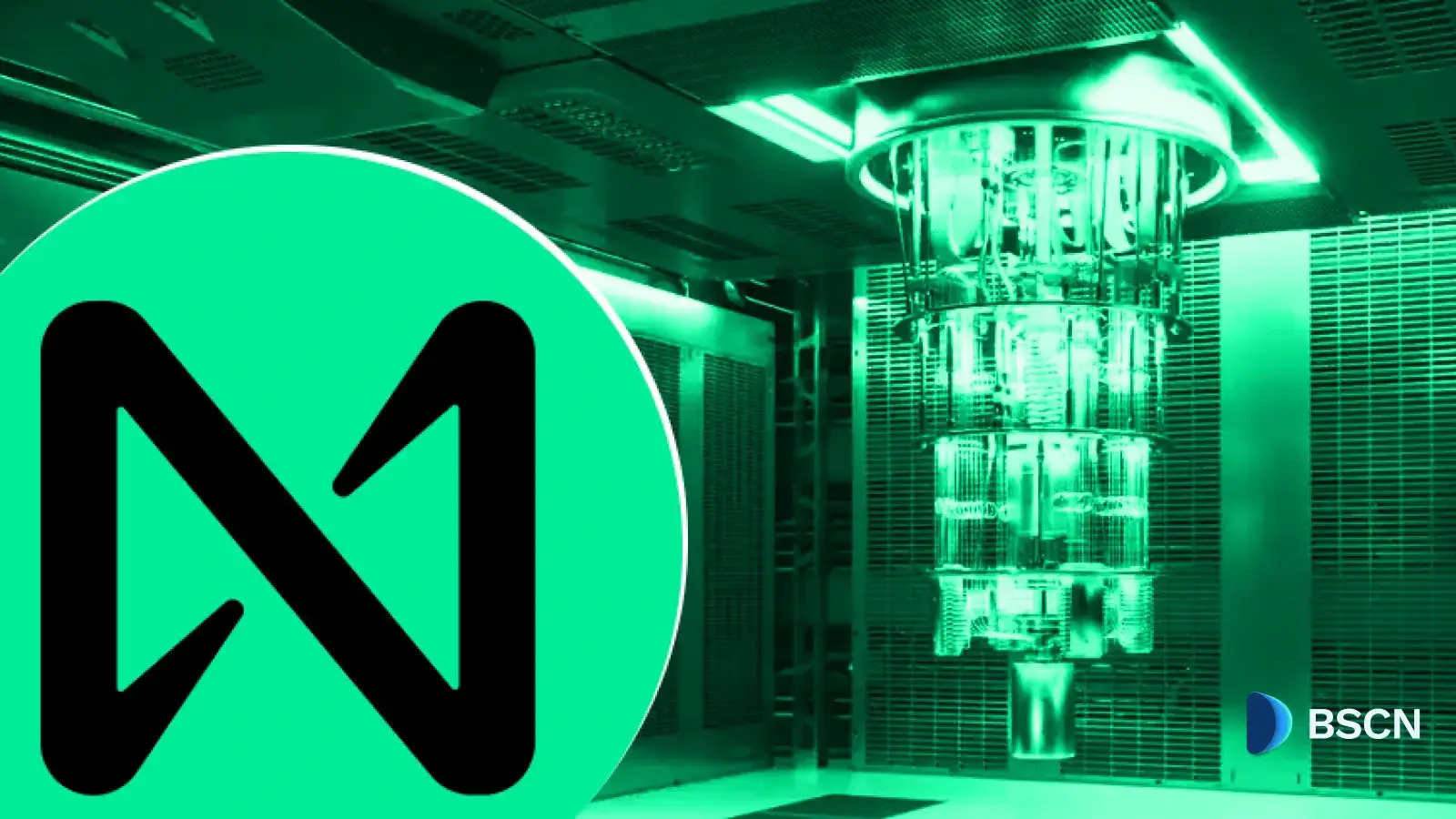
NEAR Protocol is adding FIPS-204 post-quantum cryptography, letting users rotate keys in one transaction. Here's what it means and how it works.

Soumen Datta
May 7, 2026
(Advertisement)
Table of Contents
NEAR Protocol is adding its first post-quantum signature scheme, FIPS-204, to the network, allowing account holders to rotate their cryptographic keys to a quantum-resistant standard through a single transaction. The testnet launch is planned for the end of Q2 2026.
Why Quantum Computing Threatens Blockchains
Quantum computers are built differently from the processors running today's systems. They can, in theory, derive private keys from public keys, which is exactly how most blockchain security works. If a quantum computer can crack that relationship, anyone could sign transactions on behalf of wallets they do not own.
Anton Astafiev, CTO at Near One, said:
"Things that seemed years away have been achieved in months. As an industry, we can no longer assume we have time to figure things out."
That urgency has a concrete reference point. In March 2026, researchers at Google and the California Institute of Technology said functional quantum computers could arrive sooner than previously estimated and would need far less computing power to break cryptography than thought. Google's assessment was that quantum machines could potentially break Bitcoin's elliptic curve cryptography in as little as 10 minutes.
Today's blockchains, including Bitcoin and Ethereum, use signature schemes such as ECDSA and EdDSA. Neither is quantum-safe. Post-quantum cryptography exists, but current production networks are not yet using it.
How Is NEAR Protocol Approaching Post-Quantum Security?
NEAR is starting with a specific technical change: adding FIPS-204, also known as ML-DSA (previously called Dilithium), as a third signing scheme on the network. This is a lattice-based signature algorithm approved by the US National Institute of Standards and Technology (NIST) for post-quantum use.
NEAR currently supports:
- EdDSA (Ed25519) as the default signing scheme
- ECDSA (secp256k1) as an alternative, used in Ethereum-compatible contexts
- FIPS-204 (ML-DSA) coming to testnet by end of Q2 2026
Unlike Bitcoin or Ethereum, where wallet addresses are mathematically tied to the underlying keypair, NEAR accounts are decoupled from cryptography. Each account uses rotatable "access keys" rather than a fixed keypair. This design was intentional from the start, with future quantum safety in mind. Rotating to a new quantum-safe key requires just one transaction.
NEAR currently secures more than $137 million in user funds.
What Else Needs To Change Beyond The Signing Scheme?
Adding a new signature scheme is the first step, but it creates a chain of required updates across the ecosystem.
Wallets
Software and hardware wallets need to support new key types before users can actually use them. Near One is already working with wallet providers, including Ledger, to align on post-quantum plans. Today's hardware wallets do not support quantum-safe signing, and some may not be able to without significant hardware changes.
Cross-Chain Signatures
NEAR supports threshold signatures across 35+ blockchains via its Chain Signatures MPC (Multi-Party Computation) network. The Defuse team, which manages NEAR Intents, is working on quantum-safe cross-chain signing. The goal is to offer a quantum-secure option for users from other ecosystems, particularly if those ecosystems lag behind on post-quantum adoption.
Protocol-Level Research
Longer-term, Near One is researching how consensus, validator signing, epoch synchronization, and transaction broadcasting all need to change. Every blockchain will need to address these layers eventually. NEAR's plan is to complete this migration once, building something designed to last for decades.
The Ownership Problem Quantum Computing Creates
One underexplored issue is what happens after a quantum computer becomes operational. If private keys can be cracked, protocols will not be able to confirm that the person signing a transaction is the legitimate account owner. Anton Astafiev described two bad outcomes: freezing all assets or allowing a free-for-all.
Near One is researching a third option using zero-knowledge proofs (ZKPs). A ZKP allows a user to prove they know the original seed phrase that generated a private key, without revealing the seed itself. Because quantum computers do not break the hashing step between a seed phrase and a private key, this approach could preserve ownership verification even after classical cryptography is compromised.
How Does NEAR Compare To Other Blockchains On Quantum Readiness?
The broader industry is moving, but timelines vary:
- The Ethereum Foundation has created a dedicated Post-Quantum Ethereum team, targeting protocol-level quantum solutions by 2029.
- Solana's validator clients Anza and Firedancer have implemented a test version of Falcon, a different post-quantum signature scheme, for network preparation.
- NEAR is targeting a testnet implementation of FIPS-204 by end of Q2 2026, with hardware wallet collaboration already underway.
Conclusion
NEAR Protocol is moving on quantum security through a combination of near-term key rotation, protocol-level research, wallet coordination, and cross-chain signature work. The first tangible output is FIPS-204 support on testnet, expected by end of Q2 2026.
The longer work involves securing consensus, validators, and transaction infrastructure, alongside solving the ownership verification problem that quantum computing introduces. NEAR's rotatable account model and its existing multi-signature infrastructure give it a structural head start, but as Near One's CTO noted, no blockchain can treat this as a problem for the future anymore.
Resources
Blog article by Anton Astafiev: Preparing NEAR for the Quantum Computing Era
Google Research: Safeguarding cryptocurrency by disclosing quantum vulnerabilities responsibly
News from Solana Developers: Solana’s Quantum Readiness
Ethereum Quantum Roadmap: Post-quantum cryptography on Ethereum
Read Next...



Frequently Asked Questions
What is FIPS-204 and why is NEAR using it?
FIPS-204, also called ML-DSA or Dilithium, is a lattice-based digital signature algorithm approved by NIST for post-quantum cryptography. NEAR chose it as its first quantum-safe signing scheme because it is standardized, well-researched, and compatible with NEAR's flexible account model. It is scheduled to launch on testnet by end of Q2 2026.
Can NEAR users protect their accounts from quantum attacks today?
Not yet, but the tools are coming. Once FIPS-204 launches on testnet and eventually mainnet, any NEAR account holder will be able to run a single transaction to rotate their keys to the quantum-safe standard. NEAR's account model, which uses rotatable access keys, makes this possible without creating a new address.
What happens to wallets and hardware devices when quantum-safe signatures go live?
Wallets need to support the new signing schemes before users can interact with them. Near One is working with software and hardware wallet providers, including Ledger, to prepare for these changes. Some older hardware wallets may require significant updates or replacements.
Disclaimer
Disclaimer: The views expressed in this article do not necessarily represent the views of BSCN. The information provided in this article is for educational and entertainment purposes only and should not be construed as investment advice, or advice of any kind. BSCN assumes no responsibility for any investment decisions made based on the information provided in this article. If you believe that the article should be amended, please reach out to the BSCN team by emailing [email protected].
Author
 Soumen Datta
Soumen has been a crypto researcher since 2020 and holds a master’s in Physics. His writing and research has been published by publications such as CryptoSlate and DailyCoin, as well as BSCN. His areas of focus include Bitcoin, DeFi, and high-potential altcoins like Ethereum, Solana, XRP, and Chainlink. He combines analytical depth with journalistic clarity to deliver insights for both newcomers and seasoned crypto readers.
(Advertisement)
Latest News
0h : 28m ago
What Is the Ondo Network?
5h : 43m ago

What is a World Liberty Financial Super Node, and How Much Does it Cost?
July 27, 2026

How Does a Spot Crypto ETF Actually Work?
July 27, 2026
Two Major Crypto Exchanges to Shut Down: What's Behind It?
July 27, 2026

How Does Hedera's Council Model Differ From One Coin One Vote Blockchains?
July 27, 2026
How Does Chainlink Plan to Become the "Operating System" for Tokenized Finance?
July 24, 2026
Analysis: Ondo Finance's 2026 In Numbers
July 24, 2026

Is Circle Planning to Launch a Korean Won Stablecoin?
(Advertisement)

Crypto Project & Token Reviews
Project & Token Reviews
Comprehensive reviews of crypto's most interesting projects and assets
Learn about the hottest projects & tokens

Latest Crypto Articles
Get up to date with the latest crypto news stories and events