Deepdive
(Advertisement)


How Aster's Buyback-and-Burn Program Works & What It Means for ASTER Supply?

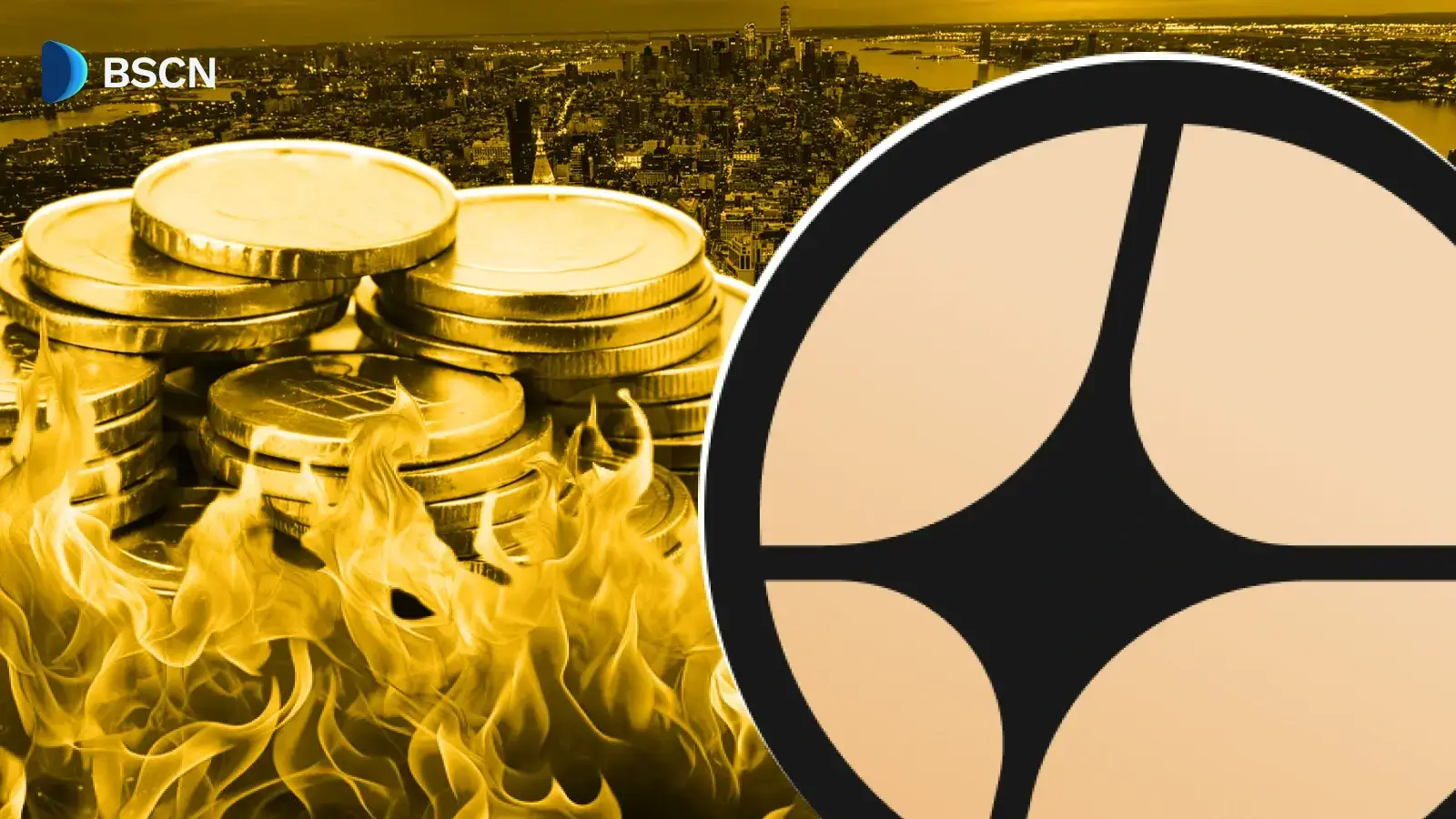
Aster's buyback-and-burn program uses daily trading fees to buy and permanently destroy ASTER tokens. Here's how each stage works and what it means for supply.

Soumen Datta
May 27, 2026

(Advertisement)
Table of Contents
Aster's buyback-and-burn program works by taking a portion of daily trading fees and using them to purchase ASTER from the open market, then permanently destroying those tokens. As of March 9, 2026, Aster had bought back a total of 266.3 million tokens worth $187 million, with over 176 million permanently burned across six stages.
That figure has continued growing since, as Stage 6 runs automatic daily burns tied directly to platform revenue. The program is the primary mechanism shaping ASTER's circulating supply and sits at the center of the project's tokenomics.
What Is a Buyback-and-Burn, and Why Does It Matter?
A buyback-and-burn is a two-step supply reduction mechanism. A protocol uses its own revenue to purchase its native token from the open market. Those purchased tokens are then sent to a burn address, a wallet with no private key from which tokens can never be retrieved or moved. The result is a permanently smaller circulating supply.
The structure mirrors share buybacks in traditional finance, where companies repurchase stock to return value to shareholders. In crypto, the mechanics are similar but everything executes on-chain and is publicly verifiable in real time.
In 2024, total token buybacks across the crypto market reached roughly $3.3 billion. By 2025, that figure had climbed to $8.1 billion, a 145% year-over-year increase, reflecting a broader shift in how projects manage capital and reward long-term holders.
Aster is a decentralized perpetual futures exchange operating across BNB Chain, Ethereum, Solana, and Arbitrum. It launched its Token Generation Event (TGE) on September 17, 2025, and is backed by YZi Labs, the investment arm of Binance founder Changpeng Zhao. ASTER functions as the platform's utility and governance token, used for trading fee discounts, staking, and protocol governance decisions.
How Did Each Buyback Stage Work?
Shortly after its September 2025 token launch, Aster introduced a multi-stage buyback plan designed to scale alongside the platform's trading volumes. Each stage accumulates tokens from the open market over a set period, then triggers a defined burn or allocation event at the end.
Here is how each completed stage broke down:
- Stage 3 (S3): The S3 buyback program repurchased a total of 155,720,656 ASTER tokens. The burn was executed on December 5, 2025, at 00:00 UTC, with 77,860,328 ASTER permanently sent to the canonical burn address at 0x0000…0000dEaD, and the remaining 77,860,328 transferred to a locked airdrop wallet to support future user rewards, ecosystem grants, and community events. S3 alone removed 3.3% of circulating supply, a strong deflation signal for a newly launched token.
- Stages 4 and 5 (S4+S5): On February 5, 2026, at 13:00 UTC, a total of 98,400,345.46 ASTER tokens were permanently burned in a 100% burn of all tokens repurchased during both stages. The breakdown was 53,920,060.26 ASTER from S4 and 44,480,285.20 ASTER from S5. All transactions are verifiable on BscScan. Unlike S3, where 50% was locked for airdrops, S4 and S5 saw every repurchased token destroyed outright.
- Stage 6 (S6): Launched on February 4, 2026, Stage 6 introduced a two-tier structure. The first component allocates 40% of daily platform fees to automatic daily buybacks, providing continuous on-chain buying activity without manual intervention. The second component reserves an additional 20% to 40% of fees for a strategic buyback reserve, used for discretionary purchases during periods of heightened market volatility. Together, these two components direct up to 80% of daily platform fees toward ASTER repurchases.
How Are Tokens Actually Destroyed?
Burns are executed on BNB Chain and sent to the canonical burn address 0x000000000000000000000000000000000000dEaD, with every transaction publicly verifiable on BscScan. This is the industry-standard dead address.
No private key exists for this wallet, making it impossible for anyone to ever move the tokens out. Aster's CEO Leonard confirmed that once the Aster Chain mainnet launched, all buyback activities would be automatically recorded as on-chain transactions, giving token holders full visibility into each repurchase and burn execution.
What Does the Buyback Program Mean for ASTER's Circulating Supply?
The buyback-and-burn program does not operate in isolation. Two additional supply-side changes introduced in early 2026 have substantially changed how ASTER tokens enter and exit circulation.
Aster Chain, a privacy-focused Layer 1 blockchain, launched its mainnet on March 17, 2026. Built with ZK-verifiable encryption, stealth addresses, and a claimed capacity of over 100,000 transactions per second with 50-millisecond block times, the chain transitions ASTER from a pure DEX governance token into the native asset of its own Layer 1 network. New utility use cases now include gas fee payments, Layer 1 staking, protocol revenue sharing, and on-chain governance.
Then on March 30, 2026, Aster overhauled its entire emission model. The protocol replaced its monthly ecosystem unlock with a staking-only emission model, reducing the amount of ASTER entering circulation by approximately 97%.
Previously, 78.4 million ASTER, around 1% of total supply, was released each month on a linear schedule. Under the new model, ecosystem tokens only enter circulation as staking rewards, set at 450,000 ASTER per weekly epoch, equivalent to approximately 1.8 to 2.25 million tokens per month.
Insider token unlocks remain frozen until September 2026. An active buyback program allocates up to 80% of daily platform fees toward token purchases, creating a structural deflationary tilt alongside the reduced emission schedule.
Does Burning Tokens Move the Price?
Not automatically, and the data from Aster's own stages makes this clear. Despite the S3 token burn removing nearly $80 million worth of ASTER from circulation, the token slipped 2.7% in the 24 hours following the announcement. For comparison, Chainlink saw a 35% price increase following its buyback program, while Hyperliquid's $1.44 billion HYPE buyback fund demonstrated how revenue-aligned strategies can sustain long-term value. Even successful burns like BNB's quarterly burns remain vulnerable to regulatory risks and competitive pressures.
Token burning is not a complete solution on its own. For ASTER to achieve lasting price stability, deflationary mechanics need to be paired with utility-driven demand. Aster's Aster Chain mainnet launch and the staking rollout address exactly that, adding real on-chain utility to a token that previously derived value mainly from trading fee discounts and governance rights.
Where Does ASTER Stand Right Now?
As of late May 2026, ASTER reached an intraday high of $0.7092, with a 24-hour low of $0.6811. The all-time high of $2.42 was set on September 24, 2025.
Current circulating supply stands at approximately 2.6 billion ASTER, with a market cap of around $1.79 billion. ASTER's perpetuals volume has stabilized above $2 billion for several consecutive weeks, holding around $2.25 billion, with open interest between $1.8 billion and $2.1 billion. When perpetuals volume and open interest rise together, it indicates increased participation and capital inflows into the platform.
Conclusion
Aster's buyback-and-burn program is a fee-funded, multi-stage supply reduction mechanism introduced shortly after the project's September 2025 token launch.
Across six stages, the protocol had permanently removed over 176 million ASTER tokens from circulation and repurchased more than 266 million tokens worth $187 million in total as of March 9, 2026, with Stage 6's daily burns continuing to add to both figures. Stage 6 runs on a dual structure: a fixed 40% automatic daily buyback and a discretionary 20% to 40% strategic reserve, drawing from up to 80% of daily platform fees.
Paired with the March 17, 2026 Aster Chain mainnet launch and a 97% cut in monthly token emissions effective March 30, 2026, the supply mechanics around ASTER have been comprehensively restructured since launch. Structural burns reduce sell-side pressure, but sustained price performance depends equally on trading volume, platform adoption, and the ability to manage future token unlocks when insider vesting resumes in September 2026.
Resources
- The Merkle News – Aster Executes Full S4 and S5 Token Burn as Crypto Buybacks Surge Across the Market
- The Merkle News – Aster Executes Massive Buyback Burn as 2026 Roadmap Lands
- Aster on X (official) – S4+S5 100% Buyback Token Burn Execution Details
- AMBCrypto – ASTER Burns 455K Tokens: Price Holds Range as Buybacks Tighten Circulating Supply
- Cryptopolitan – Aster Buyback Wallet Burns 77.86M ASTER Worth $79.81 Million
- Crypto Briefing – Aster Cuts Token Emissions by 97% as It Shifts to Staking-Only Rewards Model
- Yahoo Finance – Aster Crypto Perps DEX Cuts Monthly Token Unlocks by 97% in Emission Overhaul
- CoinMarketCap – Aster DEX Slashes Monthly Token Unlocks by 97% With Staking Switch
- CoinMarketCap Latest Updates – Aster Chain Mainnet Launch, March 17, 2026
- Odaily – Aster CEO Leonard Explains the Buyback and Burn Mechanism in Detail
- CoinMarketCap – Aster (ASTER) Live Price and Market Data
Read Next...

Frequently Asked Questions
How does Aster's buyback-and-burn program work?
Aster directs up to 80% of its daily trading fees toward purchasing ASTER tokens from the open market. Those tokens are then permanently destroyed by sending them to an unrecoverable burn address on BNB Chain. Stage 6, which launched February 4, 2026, uses a dual structure: 40% of fees for fixed automatic daily buybacks, and an additional 20% to 40% held in a strategic reserve for discretionary purchases during volatile periods.
How many ASTER tokens have been burned so far?
As of March 9, 2026, over 176 million ASTER tokens had been permanently burned, with total buyback value reaching $187 million across all stages. Stage 6 daily burns and ongoing airdrop settlement burns have continued beyond that date, meaning both figures are higher today. All burn transactions are publicly verifiable on BscScan.
Does burning ASTER tokens increase its price?
Supply burns reduce circulating tokens, which can support price if demand holds steady or grows. However, on-chain data from Aster's own program shows that price did not immediately respond to burns. The S3 burn, which removed nearly $80 million worth of tokens, was followed by a 2.7% price decline in the 24 hours after the announcement. Burns create structural supply reduction, but price outcomes remain tied to platform volume, broader market conditions, and demand-side growth.
Disclaimer
Disclaimer: The views expressed in this article do not necessarily represent the views of BSCN. The information provided in this article is for educational and entertainment purposes only and should not be construed as investment advice, or advice of any kind. BSCN assumes no responsibility for any investment decisions made based on the information provided in this article. If you believe that the article should be amended, please reach out to the BSCN team by emailing [email protected].
Author
 Soumen Datta
Soumen has been a crypto researcher since 2020 and holds a master’s in Physics. His writing and research has been published by publications such as CryptoSlate and DailyCoin, as well as BSCN. His areas of focus include Bitcoin, DeFi, and high-potential altcoins like Ethereum, Solana, XRP, and Chainlink. He combines analytical depth with journalistic clarity to deliver insights for both newcomers and seasoned crypto readers.
(Advertisement)
Latest News
July 24, 2026
Analysis: Ondo Finance's 2026 In Numbers
July 24, 2026

Is Circle Planning to Launch a Korean Won Stablecoin?
July 24, 2026
What Is Ripple Mint?
July 23, 2026
Can Injective's New Mint Platform Bring Institutions to INJ?
July 23, 2026
What is RippleX & Why Does it Matter for XRP Ledger?
July 23, 2026
What Is Dfinity's Caffeine?
July 22, 2026
How Much Funding Has Canton Developer Digital Asset Raised?
July 22, 2026
What is Aptos' AIP-146 and Is It Good News for APT?
(Advertisement)

Crypto Project & Token Reviews
Project & Token Reviews
Comprehensive reviews of crypto's most interesting projects and assets
Learn about the hottest projects & tokens

Latest Crypto Articles
Get up to date with the latest crypto news stories and events