Deepdive
(Advertisement)


How Does Pi’s KYC Process Work and Why It Delayed Mainnet Migration

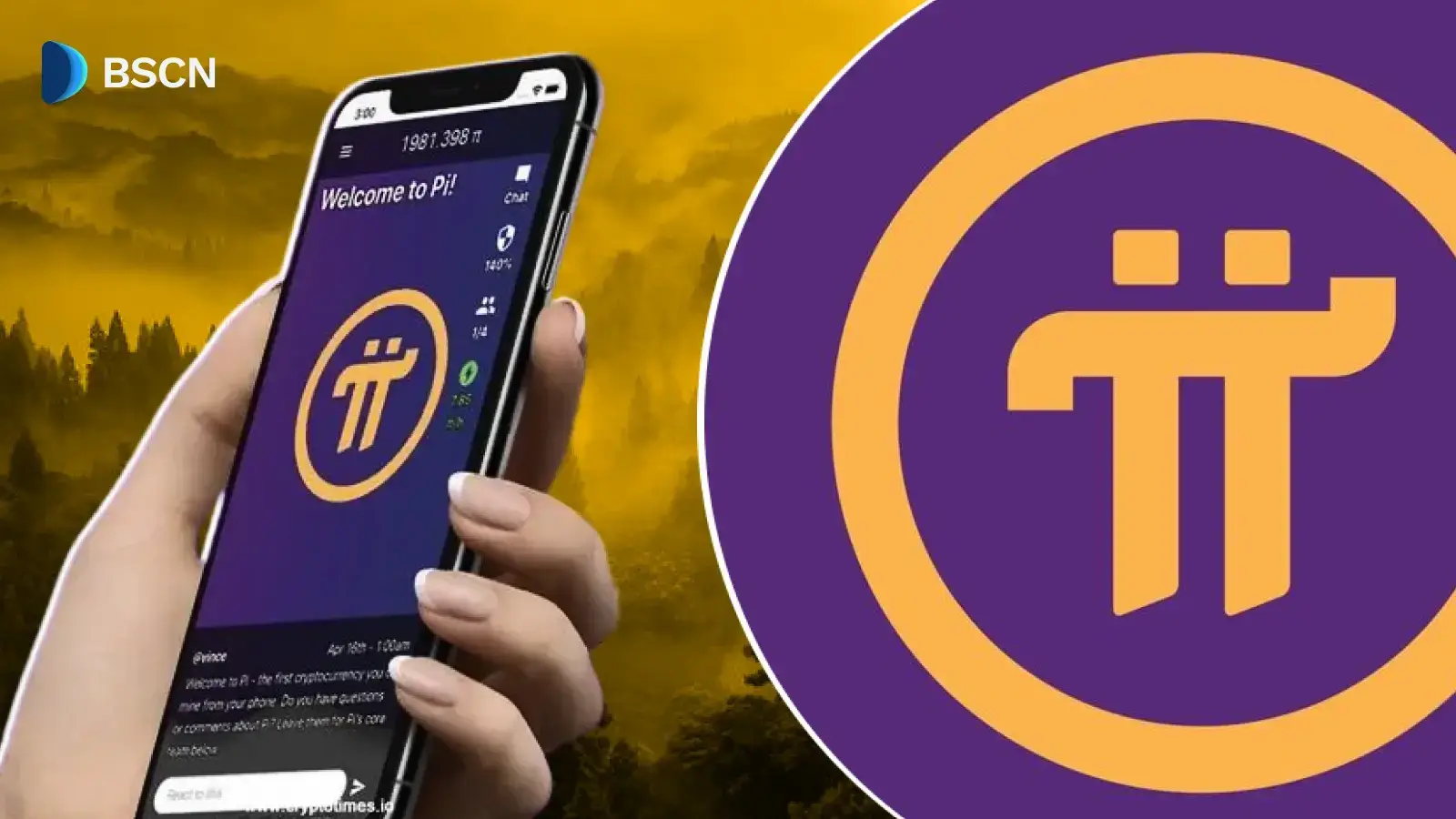
Learn how Pi Network's KYC process works, why it gated mainnet migration, and what the latest AI and palm-print verification updates mean for unverified users in 2026.

Soumen Datta
May 27, 2026

(Advertisement)
Table of Contents
Pi Network's KYC (Know Your Customer) process is a mandatory identity check that every user must complete before migrating mined Pi tokens to the mainnet. No verification, no access. That single rule became the defining bottleneck when Pi opened its Open Mainnet on February 20, 2025.
At launch, only around 14 million of the network's 60-plus million registered users had completed KYC, meaning the vast majority of the user base could not move or trade their tokens from day one.
What is Pi Network's KYC Process?
KYC is a standard identity verification practice borrowed from traditional finance, where institutions confirm who their customers are before granting access to financial services. Pi Network made it a hard prerequisite for mainnet access rather than an optional compliance step.
The process runs entirely inside the Pi mobile app and covers three stages:
- Document submission: Users upload a government-issued photo ID, such as a passport or national identity card.
- Biometric selfie: A live selfie or short video is captured and cross-referenced against the submitted document.
- Review layer: Submissions go through a combination of AI-automated screening and human validators trained within Pi's own community.
That third stage originally set Pi apart from standard third-party KYC integrations. Pi trained community members to act as validators, reviewing flagged submissions manually. However, as of late 2025, Pi integrated AI from its Fast Track KYC system into its Standard KYC process, cutting the human validator queue by roughly 50%. The shift reduced processing bottlenecks that had left millions of users stuck in what Pi calls "Tentative KYC" status, a holding state where a submission has been received but not fully approved.
Why Did Pi Use KYC to Gate the Mainnet?
Pi's decision to make mainnet migration contingent on identity verification reflects three overlapping priorities.
The first is Sybil resistance. A Sybil attack occurs when a single actor creates many fake accounts to accumulate more network rewards than they are legitimately entitled to. Pi's mobile mining model, where earning Pi required little more than a daily app tap, made the network especially exposed to this kind of abuse. KYC enforces a strict one-person-one-account rule, making it structurally harder to exploit the reward system at scale.
The second is tokenomics stability. With over 60 million registered users at the time of mainnet launch, allowing all mined balances to migrate simultaneously would have flooded circulating supply. By tying migration to verified status, Pi controlled the rate at which tokens entered the market. The result was a staggered supply release rather than a single large unlock event.
The third is regulatory positioning. Pi filed its MiCA (Markets in Crypto-Assets) whitepaper in late 2025, signalling its intent to pursue listings on regulated European exchanges. KYC compliance is a prerequisite for that kind of institutional access, and building it into the network from the start gave Pi a cleaner compliance argument than projects trying to retrofit verification after launch.
How Did KYC Shape Pi's Open Mainnet Launch?
When the Open Mainnet went live on February 20, 2025, only KYC-verified users could migrate their balances to the blockchain and trade on exchanges including OKX, Bitget, and MEXC. PI opened at approximately $1.47 on launch day, briefly peaked at $2.10, then closed around $1.01 as sell pressure from newly migrated tokens hit the market.
The Gap Between Registered Users and Migrated Users
At launch, roughly 14 million users had completed KYC out of more than 60 million registered accounts. By the end of 2025, that number had grown to approximately 19 million KYC-verified users, with around 15.7 million successfully migrated to the mainnet. That still left more than 40 million registered accounts without verified status, representing a large share of mined supply locked in Pi's enclosed network, its pre-mainnet holding system.
The staggered migration created an unusual supply dynamic. Unlike most mainnet launches where nearly all circulating tokens become available at once, Pi's verified-first model released supply gradually over many months.
What Happened to the KYC Deadline?
Pi set and extended its KYC deadline multiple times during its transition period. The final hard deadline was March 14, 2025, at 8:00 AM UTC, which Pi aligned with Pi Day and the project's sixth anniversary. The Pi Core Team confirmed at the time that no further extensions would be granted.
Users who did not submit a KYC application by that date faced a specific consequence: they forfeited their entire mobile balance except for Pi mined in the six months immediately before their first migration. That policy came directly from Pi's official Grace Period announcement. Missing the deadline did not erase a balance instantly, but it permanently removed most of the accumulated mining history from the path to mainnet migration.
Pi has since continued expanding migration access through technical updates rather than new deadline extensions, unblocking users through AI improvements and regional compliance changes rather than moving the goalposts again.
How Has Pi's KYC System Evolved in 2026?
Since the March 2025 deadline, Pi has made significant changes to its verification infrastructure. These updates directly affect how many users can still reach the mainnet.
AI Integration Cut Processing Times by Half
In late 2025, Pi integrated AI technology from its Fast Track KYC system into its Standard KYC flow. According to Pi's official blog, this reduced the queue of applications waiting for human validator review by approximately 50%.
The system pre-screens submissions automatically, routing straightforward cases to fast approval and reserving human review for complex or uncertain cases. The result was faster processing for millions of users who had been stuck in Tentative KYC status, with one update in October 2025 clearing 3.36 million previously tentative cases.
Palm-Print Authentication Is Now in Beta
In early 2026, Pi began beta testing palm-print authentication as an additional liveness check within its KYC flow. The feature is designed to confirm that a submission comes from a live person without requiring a repeated face scan.
Pi's official documentation states the palm-print method may later be used for account recovery, password resets, and two-factor authentication beyond its initial KYC role. The feature rolled out first to new users entering the KYC portal and is expected to expand to previously verified accounts in later stages.
Second Migrations Are Now Underway
Following Pi Day 2026, Pi began rolling out second migrations for eligible users. This allows verified users to migrate additional balances, including referral mining bonuses tied to KYC-verified referral team members. More than 119,000 users completed second migrations in the initial rollout phase, with the program continuing to expand gradually.
As of mid-May 2026, Pi reports 18.1 million KYC-verified users and 16.7 million successfully migrated to the mainnet, with over 526 million verification tasks completed across its validator network since 2021. At Consensus 2026 in Miami, Pi founders Nicolas Kokkalis and Chengdiao Fan described this verified user base as "human infrastructure for AI," signalling how Pi plans to position its identity layer beyond the crypto space.
Is Pi's KYC Approach Different From Other Blockchain Identity Systems?
Pi's model sits closer to centralized financial KYC than to the decentralized identity approaches that have emerged elsewhere in the crypto space. That distinction matters for understanding both its strengths and its tradeoffs.
Worldcoin, for example, takes a different route entirely. Its World ID system uses an iris-scanning device called the Orb to capture a unique identifier known as an IrisCode. That code is stored as a cryptographic hash that cannot be traced back to the original iris image, and the system uses zero-knowledge proofs to verify a user's humanity without revealing the underlying biometric data. The result is a verification system that confirms uniqueness without the user handing over a government ID document.
Pi's approach goes in the opposite direction. It collects identity documents and biometric selfies through a centralized app system, which makes its verification recognizable to regulators and financial institutions. That is useful for exchange listings and compliance filings such as MiCA, but it requires users to trust Pi's data handling practices with sensitive personal information.
Pi has not published a fully independent third-party audit of how that data is stored or protected, which remains an open question for users evaluating the tradeoffs.
Conclusion
Pi Network's KYC process is a centralized, document-based identity verification system that gates mainnet access for its entire user base. It combines document review, biometric matching, AI-automated screening, and community-assisted human validation to confirm one real person per account before allowing migration.
The system enforced a hard submission deadline of March 14, 2025, after which users who had not verified lost most of their accumulated mining balance under Pi's Grace Period policy. Since then, the KYC infrastructure has evolved considerably: AI integration has cut processing queues by half, palm-print authentication is now in beta, and second migrations are expanding access to additional balances.
As of mid-May 2026, Pi reports 18.1 million KYC-verified users and 16.7 million migrated to the mainnet, out of 60-plus million registered accounts. The model prioritizes regulatory compliance and Sybil resistance over privacy-first architecture, a deliberate tradeoff that shapes how Pi positions itself for institutional credibility in an increasingly regulated crypto market.
Resources
- Pi Network Official Blog – AI Upgrades to Pi KYC Accelerate Processing, Unblocking Mainnet Migration
- Pi Network Official Blog – Unblocking Millions for Migration: Palm Print Beta and KYC Validator Rewards Update
- Pi Network Official Blog – KYC Grace Period: Official Policy on Deadlines, Rolling Window, and Forfeited Balances
- Pi Network Official Blog – Grace Period Extension February 28: Final Policy Clarification Before March 14 Deadline
- Crypto.news – Exclusive: Pi Network Co-founders Discuss Mainnet Launch, Future, and Tokenomics
- CryptoTimes – Pi Network Explains AI-Powered KYC as Mainnet Migration Surpasses 16.7M Users (May 13, 2026)
- CoinDCX Blog – Pi Network Update 2026: Protocol v23, KYC Scaling, and Second Migrations
- Coin Bureau – Pi Network in 2026: What It Is, How Mining Works, Is It Legit?
- Ledger Academy – What Is Worldcoin? IrisCode, Cryptographic Hashing, and Proof of Personhood Explained
- Gate Learn – How Does World ID Work? Iris Verification and Proof of Personhood
Read Next...




Frequently Asked Questions
What happens if I missed Pi Network's KYC deadline?
The hard KYC submission deadline was March 14, 2025, at 8:00 AM UTC. Users who did not submit by that date forfeited their entire mobile balance except for Pi mined in the six months immediately before their first migration, under the terms of Pi's official Grace Period policy. Pi has since continued expanding verification access through AI upgrades and regional compliance changes, and some previously blocked users have been unblocked through subsequent technical releases. Users should check their current KYC status directly in the Pi app to see whether new eligibility applies to their account.
Can Pi Network's KYC be completed outside the app?
No. The entire KYC process runs through the Pi Network mobile app. Users submit their identity documents and biometric verification directly inside the app's KYC section. There is no web portal or third-party platform for completing verification, which creates a practical barrier for users without access to a supported device or a valid government-issued ID.
What is Tentative KYC status and how does it affect migration?
Tentative KYC is a holding state where a user's application has been received but flagged for additional review, often due to document inconsistencies, regional compliance requirements, or suspected duplicate accounts. Users in this state cannot migrate to the mainnet until the flag is resolved. Pi's 2025 AI integration cleared millions of tentative cases, and users currently in this status are advised to stay active in mining and complete any outstanding liveness checks to help trigger automated account reviews.
Disclaimer
Disclaimer: The views expressed in this article do not necessarily represent the views of BSCN. The information provided in this article is for educational and entertainment purposes only and should not be construed as investment advice, or advice of any kind. BSCN assumes no responsibility for any investment decisions made based on the information provided in this article. If you believe that the article should be amended, please reach out to the BSCN team by emailing [email protected].
Author
 Soumen Datta
Soumen has been a crypto researcher since 2020 and holds a master’s in Physics. His writing and research has been published by publications such as CryptoSlate and DailyCoin, as well as BSCN. His areas of focus include Bitcoin, DeFi, and high-potential altcoins like Ethereum, Solana, XRP, and Chainlink. He combines analytical depth with journalistic clarity to deliver insights for both newcomers and seasoned crypto readers.
(Advertisement)
Latest News
July 24, 2026

Analysis: Ondo Finance's 2026 In Numbers
July 24, 2026

Is Circle Planning to Launch a Korean Won Stablecoin?
July 24, 2026

What Is Ripple Mint?
July 23, 2026

Can Injective's New Mint Platform Bring Institutions to INJ?
July 23, 2026
What is RippleX & Why Does it Matter for XRP Ledger?
July 23, 2026

What Is Dfinity's Caffeine?
July 22, 2026

How Much Funding Has Canton Developer Digital Asset Raised?
July 22, 2026

What is Aptos' AIP-146 and Is It Good News for APT?
(Advertisement)

Crypto Project & Token Reviews
Project & Token Reviews
Comprehensive reviews of crypto's most interesting projects and assets
Learn about the hottest projects & tokens

Latest Crypto Articles
Get up to date with the latest crypto news stories and events