Deepdive
(Advertisement)


Optimism Deep Dive: Ethereum's L2 Infrastructure Network

Optimism powers 15% of crypto transactions through its Superchain network of 50+ blockchains, processing up to 24M daily txs at $0.001 fees and 200ms blocks.

Crypto Rich
December 8, 2025

(Advertisement)
Table of Contents
What Is Optimism and Why Does It Matter?
Every time someone trades on Coinbase's Base, swaps on Uniswap's dedicated chain, or opens a perpetual on Kraken's Ink platform, they're using Optimism's infrastructure without knowing it. The project has evolved from a single Ethereum scaling solution into the invisible backbone powering 15% of all cryptocurrency transactions.
The numbers tell the story: $17 billion in total value locked, over 50 interconnected blockchains, up to 24 million daily transactions at roughly $0.001 each, and 200ms block times with 99.99% uptime. When the largest crypto exchanges needed reliable Layer 2 infrastructure, they built on the OP Stack, Optimism's open-source framework for launching compatible chains.
This isn't just another scaling solution competing for market share. The Superchain model represents a fundamental shift in how blockchain networks can cooperate rather than compete. Instead of isolated chains fighting for liquidity, the ecosystem shares security through Ethereum while allowing specialized chains to serve different use cases. Base handles mainstream retail users, Unichain optimizes for DEX trading, Ink powers derivatives, all interconnected, all running the same underlying technology.
The $6.2 billion in stablecoins locked across the network signals real usage, not speculative positioning. Institutions and retail users alike are routing actual economic activity through this infrastructure, making Optimism one of the few crypto projects where adoption metrics match the marketing claims.
How Did Optimism Evolve From Concept to Infrastructure?
The path from whitepaper concept to infrastructure standard took five years of technical iteration, strategic pivots, and one crucial insight: building a single chain would never solve Ethereum's scaling problem.
Foundation and Early Development (2019-2021)
Ben Jones, Karl Floersch, Jinglan Wang, and Kevin Ho founded Optimism PBC in 2019 around a specific technical bet. Rather than pursuing zero-knowledge proofs, which require complex cryptography but offer immediate finality, they chose optimistic rollups. The approach assumes transactions are valid unless someone proves otherwise during a seven-day challenge window. This design prioritized something more valuable than speed: full compatibility with existing Ethereum tooling.
When mainnet launched in 2021, developers could deploy Solidity contracts without modification. The same code, same tools, same debugging workflows. DeFi protocols seeking lower gas fees arrived first, though transaction volumes remained modest. The team recognized the fundamental limitation: one chain, no matter how efficient, couldn't absorb Ethereum's overflow.
The Superchain Pivot (2022-2023)
The 2022 token airdrop marked more than a governance milestone-it funded the experiment in retroactive public goods that would define the project's identity. But the real strategic shift came in 2023 when the team open-sourced the OP Stack and invited competitors to become collaborators.
Coinbase launching Base as the first major Superchain deployment validated the bet. Instead of building proprietary infrastructure, a company with over 100 million verified users chose to adopt shared technology. The modular architecture let them customize for their needs while maintaining interoperability with the broader network. Other chains followed: Uniswap's Unichain, Kraken's Ink, and Sony's Soneium.
Acceleration Phase (2024-2025)
Governance matured into the Optimism Collective's dual-house system by 2024, with RetroPGF distributing millions to ecosystem contributors. TVL crossed $10 billion as institutional confidence grew.
The pace intensified through 2025. Flashblocks reduced preconfirmation times to 250ms in September. The Enterprise Yield Stack launched in October through partnerships with Morpho and Gauntlet, targeting institutional DeFi. Bitcoin integration arrived in December via Build on Bitcoin and LayerZero's kBTC deployment.
By December 2025, Kraken's Nado perpetuals platform hit $1 billion in trading volume within ten days of launch. Ben Jones earned a spot on the Forbes 30 Under 30 list in the Finance category for his work scaling Ethereum infrastructure. Each milestone reinforces the last - infrastructure that compounds.
What Makes Optimistic Rollups Different From Other Scaling Solutions?
The technical distinction sounds abstract-assume validity rather than prove it-but the practical implications shape everything from developer experience to withdrawal times.
The Trust Model
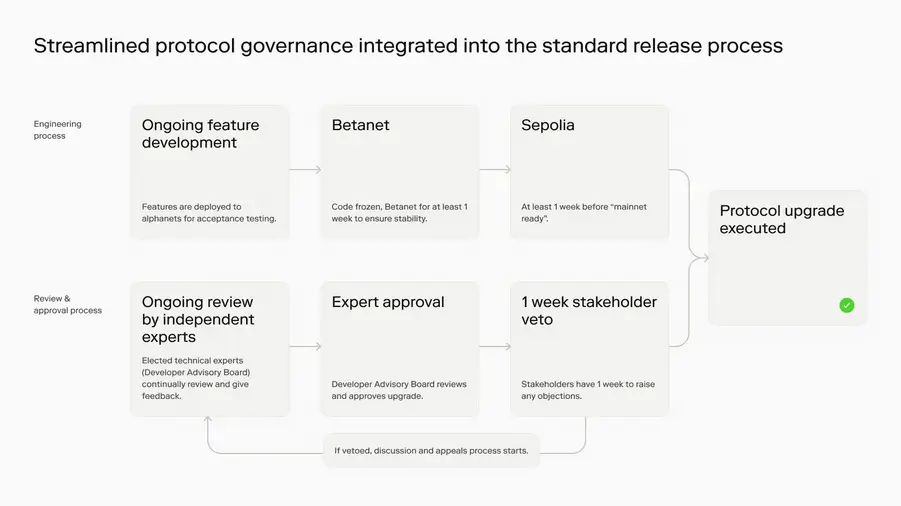
Zero-knowledge rollups generate cryptographic proofs for every transaction batch, requiring significant computational resources but enabling immediate finality once verified. Optimistic rollups flip this: transactions are valid by default, with fraud proofs only needed when someone disputes a state transition during the seven-day challenge window.
The security assumption is straightforward. As long as one honest validator monitors the chain and submits fraud proofs for invalid state changes, the system remains secure. Anyone can run a validator, and proving fraud costs less than the value of prevented theft. The math favors honesty.
Developer Experience as Competitive Advantage
Full EVM equivalence means existing Ethereum contracts deploy without modification. No new languages, no adapted tooling, no rewritten tests. Hardhat, Foundry, and Remix work identically. Debugging follows familiar patterns. Migration friction drops to nearly zero.
This compatibility proved more valuable than raw performance metrics. Developers ship faster when they don't retrain. Auditors verify code using established methodologies. The entire Ethereum tooling ecosystem transfers directly.
Cost Structure
Transaction batching spreads Layer 1 calldata costs across hundreds of transactions. The sequencer collects, orders, and posts compressed batches to Ethereum. Users pay the proportional L1 gas cost plus a small L2 execution fee-typically $0.001 for a transfer or swap. Microtransactions become economically viable where mainnet fees would exceed the transaction value itself.
The tradeoff surfaces during withdrawals. Moving assets back to Ethereum requires waiting through the full challenge period. Third-party bridges offer faster alternatives by fronting liquidity, but introduce additional trust assumptions. Users prioritizing capital efficiency over immediate access find this acceptable; frequent L1 movers often prefer zero-knowledge alternatives.
How Does the OP Stack Enable Horizontal Scaling?
Vertical scaling-making one chain faster-eventually hits physical limits. Horizontal scaling-adding more chains-distributes load without degrading existing performance. The OP Stack makes horizontal scaling practical by standardizing how new chains launch and communicate.
Modular Architecture
The stack separates blockchain functions into interchangeable layers. Data availability determines where transaction data gets stored: Ethereum, Celestia, or custom solutions. Sequencing controls block production and ordering. Execution processes transactions through the EVM or alternative virtual machines. Settlement finalizes state roots on Ethereum.
Developers modify individual layers without forking the entire codebase. A gaming chain might prioritize throughput over immediate settlement. A DeFi chain could emphasize security and fast withdrawals. Both share Ethereum's validator set for security while optimizing for their specific requirements.
Customization Without Fragmentation
Projects avoid maintaining separate security infrastructure while gaining flexibility in chain-specific optimizations. The shared security model means new chains don't need to bootstrap independent validator sets-they inherit Ethereum's battle-tested consensus.
Cross-chain coordination happens through standardized messaging protocols. Chains operate independently until interactions require coordination, at which point the Interop Layer (entering testnet early 2026) facilitates atomic transactions and message passing.
Coming Improvements
PeerDAS integration distributes data availability sampling across validator sets, allowing nodes to verify availability without downloading entire blobs. Custom gas token support lets chains denominate fees in stablecoins or native assets, removing ETH price volatility from operational planning. Plasma implementations offer higher throughput for specific data types with different security tradeoffs.
What Is the Superchain and How Does It Work?
The Superchain connects independent OP Stack blockchains into a unified network. Assets and applications move between chains with minimal friction while each chain maintains its own block production and state execution.
Network Architecture
Think hub-and-spoke: Ethereum serves as the canonical source of truth while individual chains handle specific traffic types. Security flows from Ethereum settlement and standardized fraud-proof mechanisms. High-value DeFi applications choose chains with conservative settings; consumer apps deploy where throughput matters more.
The Interop Layer, currently under development, will enable atomic transactions across multiple chains. A user could swap tokens on Base, provide liquidity on OP Mainnet, and stake rewards on Unichain in a single transaction bundle. Failed steps trigger automatic rollbacks across all involved chains.
Chain Specializations
Different chains serve different purposes:
Base (approximately $4 billion TVL): Coinbase's gateway for mainstream users. DeFi protocols, NFT marketplaces, and social applications benefit from the seamless exchange integration.
Unichain ($280M daily DEX volume): Uniswap's vertical integration play. Fast block times and low-latency execution optimize for trading performance.
Ink (880K daily transactions): Kraken's derivatives and trading ecosystem. Nado perpetuals hit $1B volume within ten days of launch.
Soneium, World Chain, Celo: Consumer applications, identity-verified transactions, and mobile-first payments, respectively, each serving communities with specific requirements.
Performance Standardization
Consistent 200ms block times across chains mean developers write applications once and deploy everywhere without adjusting for different timing assumptions. Users experience similar performance regardless of which network they're interacting with. This standardization reduces the learning curve when moving between environments, which is critical for mainstream adoption.
Who Uses Optimism and What Applications Run on the Network?
Adoption patterns reveal how different user segments choose infrastructure based on integration points, performance characteristics, and existing platform relationships.
Exchange-Backed Entry Points
Base leverages Coinbase's existing user base for mainstream onboarding. Users move between centralized and decentralized environments with minimal friction: deposit fiat on Coinbase, bridge to Base, interact with DeFi, bridge back, withdraw. The seamless loop lowers barriers that traditionally kept retail users on centralized platforms.
Ink serves Kraken's trading-focused users. Spot trading, perpetuals, and staking operations run on dedicated infrastructure optimized for exchange use cases. Gelato provides automation and gas abstraction, reducing operational complexity for both developers and users.
Protocol-Specific Infrastructure
Unichain demonstrates the value of vertical integration. Rather than depending on general-purpose chains, Uniswap controls the entire trading stack: block production, sequencing, and execution. Liquidity providers earn fees in a high-throughput environment while final settlement is still anchored to Ethereum security.
This pattern, protocols launching dedicated chains, suggests where the ecosystem is heading. Applications with sufficient volume justify the operational overhead of running specialized infrastructure.
DeFi Protocol Adoption
Major protocols span the ecosystem. Synthetix offers synthetic assets and perpetuals across multiple deployments. Aave, Compound, and lending protocols serve institutional and retail borrowers. NFT marketplaces let creators choose environments based on audience demographics and gas costs.
Recent partnerships extend beyond basic DeFi. THORSwap's November integration enabled cross-chain swaps between Superchain assets and external ecosystems like Bitcoin and Cosmos. Gauntlet deployed institutional-grade risk assessment tools in December. The infrastructure layer continues expanding without requiring core protocol changes.
How Does Governance Work in the Optimism Ecosystem?
Separating economic power from technical decision-making prevents purely financial interests from overriding long-term ecosystem health. The Optimism Collective's dual-house system attempts this balance through structural design rather than relying on good intentions.
Dual-House Structure
Token holders form one house, voting on treasury allocations, fee structures, and RetroPGF rounds. The Citizens' House, composed of individuals who've contributed meaningfully to the ecosystem, reviews protocol changes and can veto proposals that conflict with community values.
Season 8 (June 2025) expanded participation beyond token holders to include application developers, infrastructure providers, and committed users. The update added veto powers preventing purely economic voting from overriding technical or ethical concerns.
Token Mechanics
The $OP token serves governance and operational functions. Holders vote through weighted mechanisms tied to token balances and delegation patterns. The token also pays for priority sequencing on some chains and provides discounts on protocol fees. Burning mechanisms remove tokens based on network usage, creating deflationary pressure tied to actual activity.
Retroactive Public Goods Funding
RetroPGF inverts traditional grant models. Instead of funding promises, it rewards demonstrated value. Round 3 deployed in early 2025 with subsequent monthly distributions-2 million OP for general ecosystem support, 8 million specifically for developer tooling in February.
The funding target: up to $250 million monthly in cross-chain grants by the end of 2025, up from earlier $100 million goals. Fee generation from over 22 million daily transactions creates the revenue base. The Collective reviews spending effectiveness quarterly and adjusts allocation strategies based on measured impact.
Proposal Process
Submission requires minimum token holdings or Citizens' House endorsement. Voting runs for two weeks on standard proposals and four weeks on constitutional changes. Quorum scales with the proposal's impact; controversial changes require broad consensus.
What Challenges Does Optimism Face?
Technical achievements and ecosystem growth don't eliminate structural limitations or competitive pressures. Understanding the challenges clarifies what the roadmap needs to address.
The Withdrawal Problem
Seven-day withdrawal periods create genuine friction. Users experience this as locked capital that can't deploy elsewhere. Third-party bridges offer faster alternatives but introduce trust assumptions that the base protocol avoids.
Zero-knowledge competitors like zkSync and StarkNet offer sub-hour withdrawals through validity proofs. For users frequently moving between L1 and L2, this matters. Optimism's bet on EVM equivalence over immediate finality trades withdrawal speed for developer experience-a calculated choice that disadvantages certain use cases.
Competitive Dynamics
Arbitrum maintains higher TVL on its primary chain ($3B+ versus OP Mainnet's ~$565M). The Superchain's total $17B across all chains demonstrates the multi-chain strategy's effectiveness, but the comparison highlights that no single Optimism chain dominates in isolation.
Cosmos IBC pioneered interoperable sovereign chains before Ethereum L2s adopted similar models. Cosmos chains maintain independent validators and governance while using IBC for communication. The Superchain trades sovereignty for shared security and direct Ethereum liquidity access. Different tradeoffs appeal to different projects.
Centralization Concerns
The Optimism Foundation controls significant OP reserves and retains authority over certain decisions during the transition to full decentralization. Critics identify single points of failure and potential regulatory vulnerabilities. The 2025 governance overhaul addressed some concerns by expanding voting power and adding foundation oversight, but the transition remains incomplete.
Network Effects and Liquidity Fragmentation
Established chains attract liquidity and users more easily than new deployments. Base succeeded partly through Coinbase's existing user base. Smaller chains struggle to reach critical mass even with superior technology. The Interop Layer aims to address this by making liquidity accessible across chains, but until it ships, fragmentation remains a real challenge.
Application-Layer Risks
Layer 2 security doesn't eliminate smart contract vulnerabilities. The Moonwell bad debt incident (November 2025) highlighted that infrastructure reliability doesn't protect against oracle failures, economic attacks, or protocol bugs. Users need to evaluate application risk independently from underlying chain security.
What Recent Developments Are Shaping Optimism's Future?
Despite these challenges, the second half of 2025 delivered technical upgrades and strategic partnerships that expanded capabilities, incremental improvements compounding on existing infrastructure rather than discontinuous pivots.
Performance: Flashblocks
September's Flashblocks activation reduced preconfirmation times to 250ms. Applications now provide near-instant feedback before transactions finalize on Ethereum. Trading, gaming, and payment applications benefit most.
Institutional Infrastructure: Enterprise Yield Stack
The October launch with Morpho and Gauntlet targets institutional users seeking DeFi yields with professional-grade risk management. Corporations and funds deploy capital across protocols with automated monitoring and compliance tooling. Institutions gain exposure without managing technical complexity directly.
Bitcoin Integration
Build on Bitcoin enables non-custodial BTC usage within Superchain applications. LayerZero's December kBTC deployment brought tokenized Bitcoin to Ink, Unichain, and OP Mainnet. These integrations tap Bitcoin's $2 trillion market cap, attracting users who want DeFi access without selling BTC holdings.
Strategic Partnerships
THORSwap integration (November) enabled cross-chain swaps between Superchain assets and external ecosystems. Gauntlet's December deployment brings institutional-grade risk assessment to protocols. These partnerships add capabilities through integration rather than core protocol changes.
2026 Roadmap
Three priorities: interoperability, performance, and economics.
The Interop Layer entering testnet in early 2026 (with mainnet expected mid-2026) enables atomic cross-chain transactions, applications can treat the entire Superchain as a unified liquidity pool. Custom gas tokens let chains denominate fees in stablecoins. Plasma implementations offer higher throughput for specific data types. PeerDAS distributes data availability requirements across validator sets, reducing node operation costs.
Revenue growth supports expanded RetroPGF distribution. The targeted $250 million monthly goal reflects confidence in sustainable fee generation from network activity.
What Does Optimism Mean for Ethereum's Scaling Future?
The practical question isn't whether Layer 2s work, they demonstrably do… But which architectural approach best serves long-term ecosystem needs?
Optimism's 15% share of crypto transactions proves demand for affordable, fast transactions without abandoning Ethereum's security guarantees. The Superchain model offers a template: specialized chains handling specific functions while sharing security and liquidity. This architecture contrasts with monolithic chains that attempt to serve all use cases and with sharded designs that get fragmented across complex coordination boundaries.
Institutional adoption through Base, Unichain, and Ink validates technical reliability. Major financial institutions choose infrastructure based on uptime records, audit results, and operational track records-not theoretical performance claims. The 99.99% uptime and consistent block times meet professional standards.
The open-source OP Stack trades short-term competitive advantage for long-term network effects. Competitors becoming collaborators expands the total addressable market rather than fragmenting it across incompatible platforms. As more chains join, shared tooling and access to liquidity make the ecosystem more valuable for everyone participating.
Cross-chain composability through the Interop Layer will enable complex operations spanning multiple environments: collateral on Base supporting leverage on Unichain while earning yield on OP Mainnet. These workflows remain impractical on isolated chains but become standard features in an interconnected network with shared state awareness.
The bet is that horizontal scaling, through cooperating specialized chains, beats vertical scaling through ever-faster single chains. Five years of development and $17 billion in TVL suggest the bet is paying off.
For more information about Optimism and the Superchain, visit optimism.io or follow @Optimism on X to stay updated.
Sources
- Optimism Official Site - Technical specifications, TVL data, roadmap
- Optimism Blog - Flashblocks, Enterprise Yield Stack, and upgrade announcements
- L2Beat - Layer 2 TVL comparisons, security models, and risk assessments
- @Optimism on X - Real-time updates, announcements, ecosystem metrics
- Messari - Tokenomics analysis and adoption metrics
- Cointelegraph - Layer 2 market analysis and comparative data
- Forbes - Ben Jones 30 Under 30 recognition (December 2025)
- Kraken Blog - Ink chain launch and Nado platform details
- Coinbase Blog - Base infrastructure and integration documentation
Read Next...

Frequently Asked Questions
What is the difference between Optimism and Arbitrum?
Both use optimistic rollups for Ethereum scaling. Optimism focuses on the Superchain ecosystem with 50+ interconnected chains and horizontal scaling through the OP Stack. Arbitrum operates primarily as a single high-TVL chain with its own technical approach.
What is RetroPGF and how does it work?
Retroactive Public Goods Funding rewards projects after they demonstrate value, not before development begins. The Optimism Collective distributes millions monthly to infrastructure, tools, and educational resources based on actual ecosystem impact.
What is the Superchain and why does it matter?
The Superchain connects 50+ blockchains into an interoperable network sharing security and liquidity. Applications work across chains with consistent performance, currently processing over 22 million daily transactions.
Disclaimer
Disclaimer: The views expressed in this article do not necessarily represent the views of BSCN. The information provided in this article is for educational and entertainment purposes only and should not be construed as investment advice, or advice of any kind. BSCN assumes no responsibility for any investment decisions made based on the information provided in this article. If you believe that the article should be amended, please reach out to the BSCN team by emailing [email protected].
Author
 Crypto Rich
Rich has been researching cryptocurrency and blockchain technology for eight years and has served as a senior analyst at BSCN since its founding in 2020. He focuses on fundamental analysis of early-stage crypto projects and tokens and has published in-depth research reports on over 200 emerging protocols. Rich also writes about broader technology and scientific trends and maintains active involvement in the crypto community through X/Twitter Spaces, and leading industry events.
(Advertisement)
Latest News
July 17, 2026

What is the Nakamoto Coefficient & Why Does it Matter?
July 17, 2026
How to Trade on Robinhood Chain, Crypto's Busiest New Memecoin Market
July 17, 2026
Insights from CoinGecko's Q2 Crypto Report
July 17, 2026
Why Is Sui's Approach to Storing Data On Chain Different From Most Blockchains?
July 17, 2026
Why Does XRP Move Faster Than Bitcoin, And What Makes It Possible?
July 17, 2026
Top 8 Prediction Markets in Crypto Today
July 16, 2026
Grayscale Picks Its Most Promising Tokenization Blockchains
July 16, 2026

Crypto's Top Five Centralized Exchanges
(Advertisement)

Crypto Project & Token Reviews
Project & Token Reviews
Comprehensive reviews of crypto's most interesting projects and assets
Learn about the hottest projects & tokens

Latest Crypto Articles
Get up to date with the latest crypto news stories and events