News
(Advertisement)


Full Rollout of MetaMask Debit Card Arrives

MetaMask's self-custodial debit card is now live across 49 US states. Here's what the Mastercard-powered crypto card offers and how it works.

Crypto Rich
February 27, 2026

(Advertisement)
Table of Contents
MetaMask has officially launched its crypto debit card across the United States. Announced on February 26, the MetaMask Card is now available to eligible users in 49 states, including New York for the first time. Vermont remains the sole exception. The Mastercard-powered card lets users spend crypto directly from their self-custodial MetaMask wallet at over 150 million merchants worldwide.
The selling point is simple: your funds stay in your wallet until the exact moment you tap or swipe. There is no pre-loading, no custodial middleman holding your tokens. At purchase, crypto converts to fiat automatically. It works in-store, online, and through Apple Pay and Google Pay.
How Did MetaMask Get Here?
The card has been in the works for a while. MetaMask first launched a limited pilot in August 2024, rolling out a few thousand digital cards in the United Kingdom and select EU countries. Those early cards supported stablecoins like USDC, USDT, and wETH on Linea, the Ethereum Layer-2 built by Consensys.
A US pilot followed in December 2024, with refinements showcased at ETHDenver 2025. The phased approach let the team gather real user data before going nationwide. According to MetaMask Staff Product Manager Ale Machado, pilot users were already treating the card like any other card in their wallet.
"Six months from now, success looks like that behavior becoming the norm across our U.S. users," Machado said.
Who Powers the Card?
MetaMask did not build this alone. The infrastructure relies on a handful of partners:
- Mastercard provides the global payments network
- Monavate (formerly Baanx) handles regulated card issuance
- Cross River Bank, an FDIC-insured US bank, issues the card stateside
- Consensys developed the product and manages the MetaMask ecosystem
Cross River's role is worth noting. While your crypto sits in a self-custodial wallet, the actual card issuance runs through traditional banking rails. It is a hybrid approach designed to satisfy regulators while preserving user control over assets.
What Are the Card Tiers?
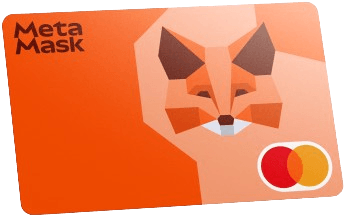
MetaMask offers two options.
Standard Card
The standard version is a virtual card with up to 1% cashback on purchases. Rewards come in mUSD, MetaMask's native stablecoin issued by Bridge, a Stripe company, and built on M0's decentralized infrastructure. It launched in September 2025 on Ethereum and Linea. No annual fee, no physical card.
Metal Card
The premium tier costs $199 per year and comes as a physical metal card. It bumps cashback to 3% on the first $10,000 spent annually and removes foreign transaction fees entirely. Users also get higher spending and ATM withdrawal limits, travel discounts through Entravel, and access to exclusive events.
For frequent spenders or travelers, the math on that $199 subscription can work out quickly. Three percent back on $10,000 is $300 in rewards before factoring in saved transaction fees abroad.
Why Does Self-Custody Matter Here?
Most crypto debit cards on the market require users to deposit funds into a custodial account before spending. That means handing tokens to a third party and trusting them to be there when needed. MetaMask's approach skips that step entirely.
"There's no handing your funds to someone else and hoping they're there when you need them," Machado said.
After the collapses of centralized platforms over the past few cycles, that distinction carries real weight. Users who got burned by custodial failures will recognize the appeal of keeping assets under their own keys right up until the point of sale.
What Do Users Need to Get Started?
Eligibility requires standard KYC verification, meaning ID checks and compliance screening. The card is available in 49 US states, with Vermont excluded due to regulatory restrictions. Users need an active MetaMask wallet and supported crypto assets on compatible networks.
The full US rollout marks the broadest deployment of a self-custodial crypto spending card to date. Beyond the US, the card is also live in the UK, the European Economic Area, Argentina, Brazil, Canada, Colombia, Mexico, and Switzerland, with more markets planned. Whether it changes everyday spending habits for crypto holders remains to be seen, but the infrastructure is now in place across multiple continents to find out.
Sources:
Read Next...



Disclaimer
Disclaimer: The views expressed in this article do not necessarily represent the views of BSCN. The information provided in this article is for educational and entertainment purposes only and should not be construed as investment advice, or advice of any kind. BSCN assumes no responsibility for any investment decisions made based on the information provided in this article. If you believe that the article should be amended, please reach out to the BSCN team by emailing [email protected].
Author
 Crypto Rich
Rich has been researching cryptocurrency and blockchain technology for eight years and has served as a senior analyst at BSCN since its founding in 2020. He focuses on fundamental analysis of early-stage crypto projects and tokens and has published in-depth research reports on over 200 emerging protocols. Rich also writes about broader technology and scientific trends and maintains active involvement in the crypto community through X/Twitter Spaces, and leading industry events.
(Advertisement)
Latest News
July 17, 2026

What is the Nakamoto Coefficient & Why Does it Matter?
July 17, 2026

How to Trade on Robinhood Chain, Crypto's Busiest New Memecoin Market
July 17, 2026

Insights from CoinGecko's Q2 Crypto Report
July 17, 2026
Why Is Sui's Approach to Storing Data On Chain Different From Most Blockchains?
July 17, 2026

Why Does XRP Move Faster Than Bitcoin, And What Makes It Possible?
July 17, 2026

Top 8 Prediction Markets in Crypto Today
July 16, 2026

Grayscale Picks Its Most Promising Tokenization Blockchains
July 16, 2026

Crypto's Top Five Centralized Exchanges
(Advertisement)

Crypto Project & Token Reviews
Project & Token Reviews
Comprehensive reviews of crypto's most interesting projects and assets
Learn about the hottest projects & tokens

Latest Crypto Articles
Get up to date with the latest crypto news stories and events