News
(Advertisement)


Mastercard Launches Global Crypto Partner Program With Ripple, Solana, Circle & More

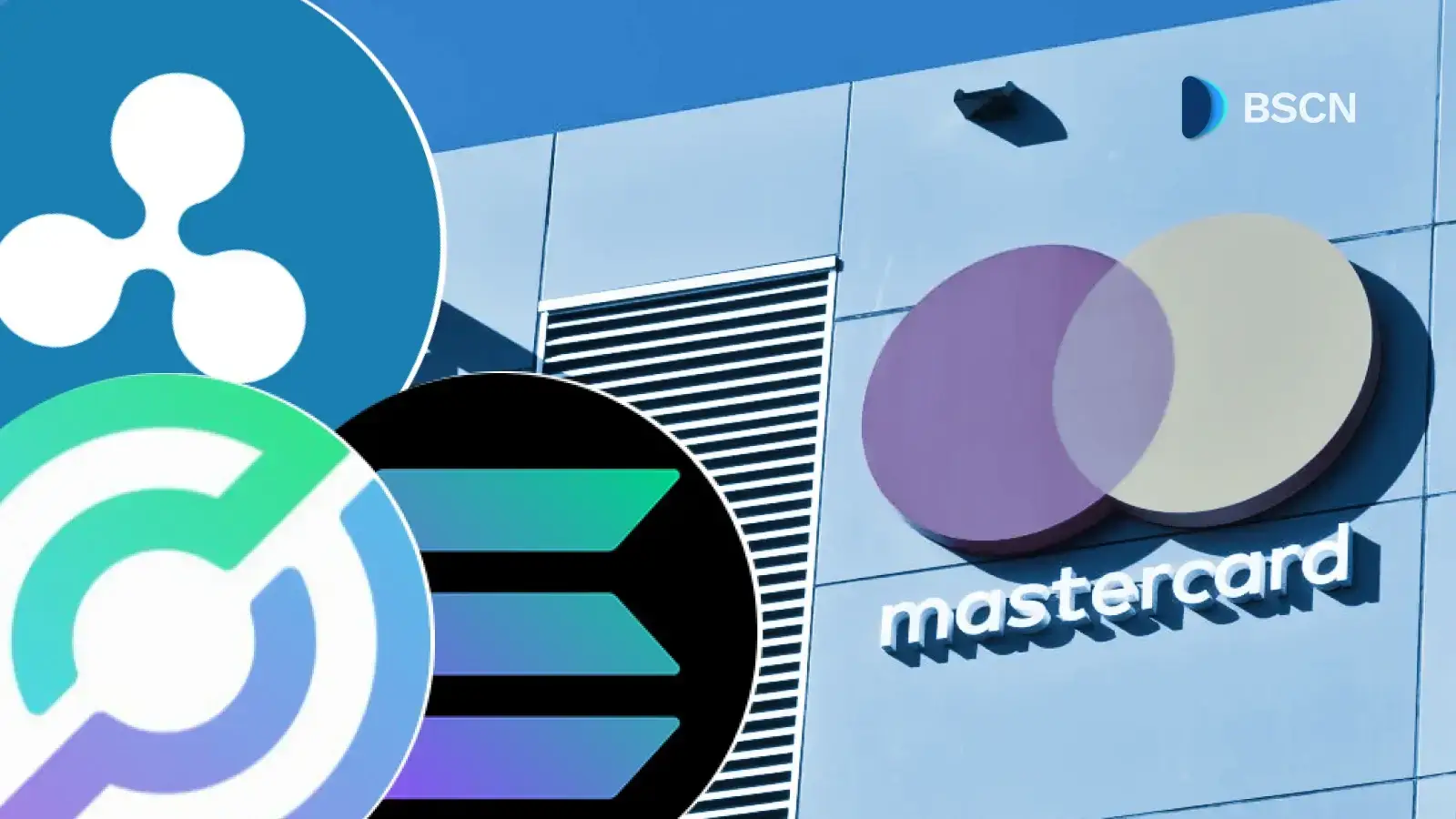
Mastercard launches a global Crypto Partner Program with 85+ firms including Ripple, Solana, Circle, Binance, and PayPal to integrate blockchain into everyday payments.

Soumen Datta
March 12, 2026

(Advertisement)
Table of Contents
What Is the Mastercard Crypto Partner Program?
Mastercard has launched a new global initiative called the Crypto Partner Program, bringing together more than 85 companies to integrate blockchain technology into mainstream payment infrastructure. The program includes major crypto names such as Binance, Circle, Ripple, Gemini, PayPal, Paxos, BitGo, Crypto.com, Solana, OKX, Polygon, and Optimism, alongside fintech firms, banks, and blockchain developers.
Digital assets are entering a new phase. What once ran in parallel to existing financial systems is increasingly being applied to solve practical, real-world needs — often behind the scenes – from cross-border remittances to B2B money transfers. This creates new opportunities to… pic.twitter.com/DZ1gjmW8og
— Mastercard (@Mastercard) March 11, 2026
The program is not a product launch. It is a structured collaboration framework designed to help partners work directly with Mastercard's product teams, share technical expertise, and align on industry standards. The stated focus is on practical use cases: cross-border transfers, business-to-business payments, corporate payouts, and settlement.
Why Is Mastercard Doing This Now?
The timing reflects where digital assets currently sit in the financial system. Raj Dhamodharan, Mastercard's executive vice president of Digital Asset and Blockchain Products and Partnerships, described the launch as a response to the evolving role of blockchain in financial markets. He noted that crypto and blockchain tools are increasingly being used to solve real problems rather than operate as separate, parallel systems.
Those problems include slow and expensive cross-border remittances, delayed settlement windows in B2B payments, and limited payment access in certain markets. Blockchain-based tools can offer instant settlement, programmable payment conditions, and around-the-clock transfers, capabilities that complement existing card rails rather than replace them.
The announcement also comes as crypto markets show renewed activity. Bitcoin traded near $69,900 to $70,200 on the day of the announcement, and Ethereum hovered around $2,030. Higher on-chain activity tends to accelerate institutional appetite for infrastructure that can support those flows.
Who Are the Partners in the Program?
The full list of partners runs to more than 85 companies across crypto exchanges, blockchain networks, fintech platforms, and traditional financial institutions. Some of the more recognizable names include:
- Crypto exchanges and platforms: Binance, Bybit, OKX, Gemini, Crypto.com, Nexo, SwissBorg, MoonPay
- Stablecoin and payments infrastructure: Circle, Paxos, PayPal, Ripple, Worldpay, Mercuryo
- Blockchain networks and layer-2s: Solana, Polygon, Optimism, Aptos, Ava Labs, Tron, Monad
- Compliance and security firms: Chainalysis, Elliptic, TRM Labs, Blockaid, Hacken, Merkle Science
- Banking and card infrastructure: Cross River, Lead Bank, CBW Bank, Marqeta, Lithic, Galileo, Thredd
Ripple acknowledged the program publicly, stating on X that cross-network cooperation is essential for real-world digital asset payments and that programs like this bring builders, networks, and institutions closer to a trusted payment infrastructure.
How Does It Build on Mastercard's Existing Crypto Work?
Mastercard is not new to digital assets. The company has already been running several related initiatives that the Crypto Partner Program builds on directly.
Its Start Path accelerator has backed blockchain startups for years, giving early-stage companies access to Mastercard's network and expertise. The Engage platform includes a dedicated Crypto Card program that lets fintech and crypto companies issue Mastercard-branded cards connected to digital asset accounts.
Mastercard has also run Crypto Credential pilots, which explore how to verify identities and transaction details on-chain in a way that meets compliance requirements.
The new program is described as the next phase of that work: a more structured channel for co-designing products that combine the speed and programmability of on-chain payments with the regulatory guardrails and global reach of Mastercard's card network. That network operates in more than 200 countries and territories.
What Does This Mean for On-Chain Payments?
Analysts note that the program could deepen interoperability between enterprise payment systems and public blockchains, but caution that regulatory clarity will determine how fast any of these projects scale. For banks and financial institutions, the appeal is to capture the speed, transparency, and programmability that on-chain systems offer without creating compliance risk.
Mastercard's role in that equation is to provide standards, trust, and global connectivity. Visa has taken a similar path, testing stablecoin-based settlements and partnering with blockchain firms on tokenized dollar payments. Banks are also experimenting with blockchain-based deposits and payment systems. Mastercard's approach, however, emphasizes working within existing infrastructure rather than building around it.
Programmable payments, for example, are a key area of interest. These are transactions that execute automatically when certain conditions are met, something a smart contract on a blockchain can do far more efficiently than a traditional payment system. Stablecoin settlement is another focus area, particularly for cross-border B2B payments where delays and currency conversion costs are significant pain points.
Conclusion
The Mastercard Crypto Partner Program consolidates more than 85 companies into a single collaboration framework built around practical on-chain payment use cases. With partners spanning crypto exchanges, stablecoin issuers, blockchain networks, compliance firms, and traditional banks, the program gives Mastercard a direct line into the infrastructure being built across the digital asset space.
The focus is on cross-border transfers, B2B payments, settlement, and global payouts, areas where blockchain tools offer measurable advantages over legacy systems. Mastercard's network, which spans over 200 countries, provides the scale and compliance infrastructure that on-chain solutions need to operate at the level everyday commerce demands.
Resources
Press release by Mastercard 1: Mastercard launches new Crypto Partner Program
Press release by Mastercard 3: Mastercard Crypto Credential goes live with first peer-to-peer pilot transactions, adds new partners to the ecosystem
Report by The Block: Mastercard launches global crypto partner program with Binance, Ripple and more
Read Next...



Frequently Asked Questions
What is the Mastercard Crypto Partner Program?
It is a global collaboration initiative launched by Mastercard that brings together more than 85 crypto, fintech, and financial companies to develop practical blockchain-based payment solutions. Partners include Binance, Circle, Ripple, Solana, PayPal, Gemini, and Paxos, among others.
What is the goal of the program?
The program focuses on integrating on-chain payment capabilities, such as instant settlement, programmable payments, and cross-border transfers, into Mastercard's existing global card infrastructure. The goal is scalable, compliant solutions that work across multiple markets.
How is this different from what Mastercard was already doing in crypto?
Mastercard already runs a Start Path blockchain accelerator, a Crypto Card program via its Engage platform, and Crypto Credential pilots. The new Crypto Partner Program creates a more formal structure for partners to co-design future products directly with Mastercard's product teams.
Disclaimer
Disclaimer: The views expressed in this article do not necessarily represent the views of BSCN. The information provided in this article is for educational and entertainment purposes only and should not be construed as investment advice, or advice of any kind. BSCN assumes no responsibility for any investment decisions made based on the information provided in this article. If you believe that the article should be amended, please reach out to the BSCN team by emailing [email protected].
Author
 Soumen Datta
Soumen has been a crypto researcher since 2020 and holds a master’s in Physics. His writing and research has been published by publications such as CryptoSlate and DailyCoin, as well as BSCN. His areas of focus include Bitcoin, DeFi, and high-potential altcoins like Ethereum, Solana, XRP, and Chainlink. He combines analytical depth with journalistic clarity to deliver insights for both newcomers and seasoned crypto readers.
(Advertisement)
Latest News
July 22, 2026
How Much Funding Has Canton Developer Digital Asset Raised?
July 22, 2026

What is Aptos' AIP-146 and Is It Good News for APT?
July 22, 2026
What Happens to Unverified Pi Balances If Users Miss the Deadline?
July 22, 2026

What Is in Trump's CLARITY Act Ethics Deal?
July 21, 2026

Pudgy Penguins to Reach Millions with Target Placement
July 21, 2026
What is the GENIUS Act and Why Does it Matter?
July 21, 2026

What Is Jimothy Memecoin?
July 21, 2026

What Is the Cardano Van Rossem Upgrade?
(Advertisement)

Crypto Project & Token Reviews
Project & Token Reviews
Comprehensive reviews of crypto's most interesting projects and assets
Learn about the hottest projects & tokens

Latest Crypto Articles
Get up to date with the latest crypto news stories and events