Deepdive
(Advertisement)


Is Ethereum Still The Dominant Smart Contract Blockchain?

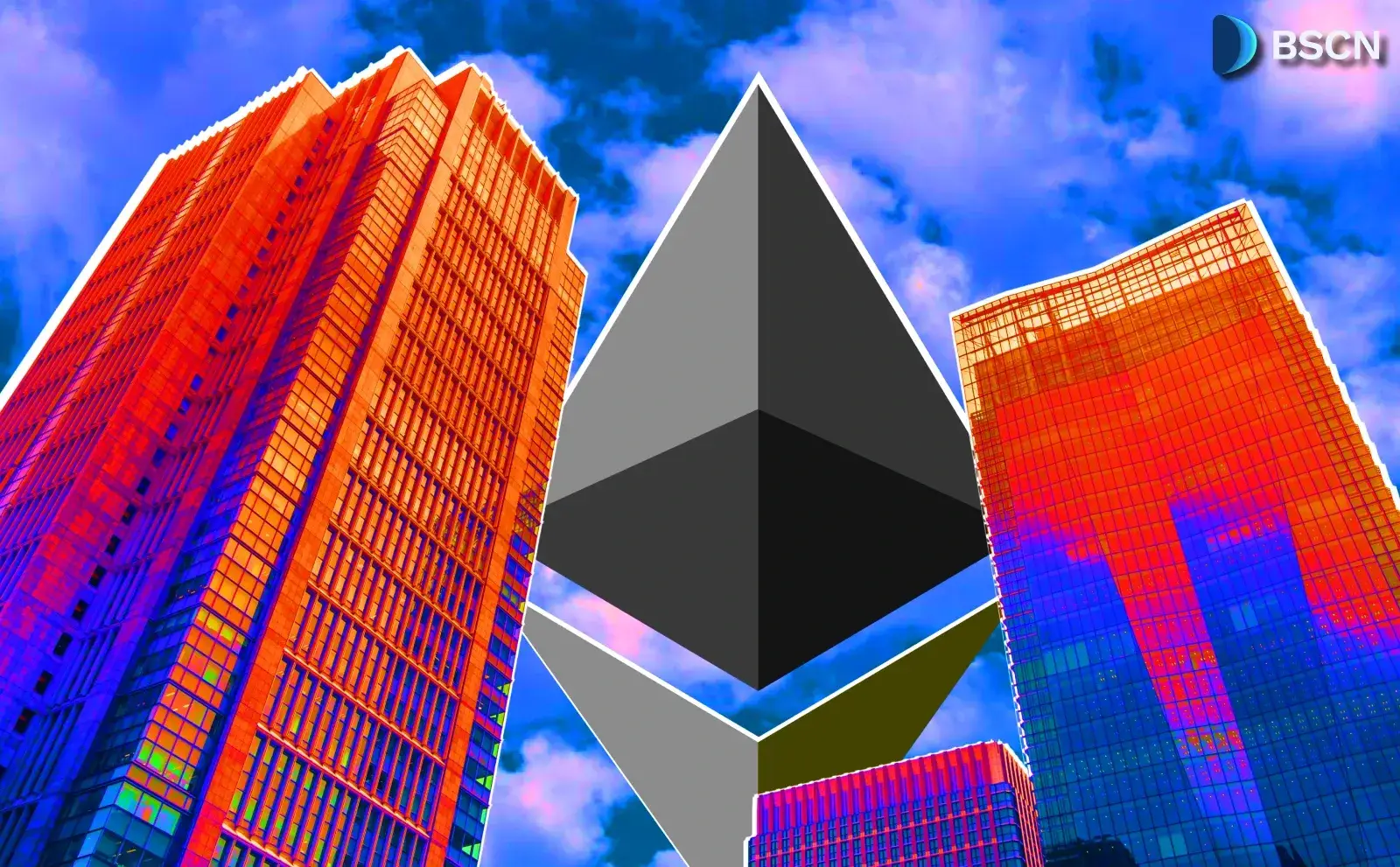
Ethereum still leads in TVL, stablecoins and RWAs, but rivals now beat it on volume and users. A look at where its dominance holds and where it slips.

Crypto Rich
June 11, 2026

(Advertisement)
Table of Contents
Yes, Ethereum (@ethereum) is still the dominant smart contract blockchain. It leads in total value locked, stablecoin supply, tokenized real-world assets and developer talent, often by multiples rather than percentage points. But the lead is shrinking, and on the metrics that measure daily activity rather than parked capital, Ethereum is no longer in first place. The honest answer depends on what you choose to measure.
Where Ethereum Still Wins
Start with the money. DefiLlama data from June 11 shows Ethereum mainnet holding $37.16 billion in DeFi TVL. The next four chains combined do not come close: BNB Chain sits at $5.21 billion, Solana at $4.59 billion, Tron at $4.39 billion and Bitcoin at $4.16 billion.
The stablecoin picture tells the same story. Ethereum hosts $157.48 billion in stablecoins, roughly half the global supply. Tron is second at $90.05 billion, built almost entirely on cheap USDT transfers. Solana holds $15.21 billion and BNB Chain holds $13.85 billion. When institutions and DeFi protocols need dollar liquidity at scale, they still go to Ethereum.
Tokenized real-world assets may be Ethereum's safest moat. Per rwa.xyz data reported in early June, Ethereum holds $16.6 billion in distributed RWA value, about 53% of the entire market. BNB Chain is a distant second at $3.6 billion, with Solana at $2.5 billion. BlackRock's BUIDL fund and most large tokenized Treasury products launched on Ethereum first. Ethereum-based tokenized RWAs grew roughly 300% in the past year.
Developer numbers round out the case. Despite an industry-wide slowdown in commits as engineering talent drifts toward AI, Ethereum and its layer 2s remain the largest concentration of full-time blockchain developers. Tooling, audits and composability compound over time, and that is hard to replicate.
Where the Erosion Shows
Now the uncomfortable part. Ethereum's share of total DeFi TVL fell from 63.5% at the start of 2025 to around 54% by early May 2026, close to a one-year low. That is nearly 10 percentage points gone in 17 months. The pie keeps growing, but Ethereum's slice grows slower than everyone else's.
The activity metrics are worse. On June 11, the Ethereum mainnet processed $904 million in 24-hour DEX volume. That put it fourth:
- Solana: $1.80 billion
- Base: $1.24 billion
- BNB Chain: $918 million
- Ethereum: $904 million
The chain holding half of DeFi's capital gets outtraded two-to-one by Solana. Users and transactions follow the same pattern. Tron and BNB Chain each see millions of daily active addresses, Solana processes tens of millions of transactions per day, and Ethereum mainnet runs far below all three.
The competition has also stopped trying to be Ethereum. Each rival has carved out a specific job. Tron handles stablecoin settlement in emerging markets. BNB Chain runs retail DEX flow through Binance's distribution. Hyperliquid dominates perpetuals. Base brings in new users via Coinbase. None of them holds more than 7% of DeFi TVL individually, but together they are pulling activity away from the center.
Stock Versus Flow
The cleanest way to read all this: Ethereum dominates stock, competitors are winning flow.
Stock means stored value. TVL, stablecoin reserves, tokenized Treasuries, institutional custody. Capital that sits, earns and settles. Ethereum's security record, regulatory familiarity and deep liquidity make it the default for anyone moving serious size.
Flow means velocity. Trades, transfers, mints, and daily users. This is where speed and sub-cent fees matter more than 10 years of uptime, and it is exactly where Solana, Tron and BNB Chain have built their leads. That matters because retail activity is where the next generation of users, builders and capital comes from.
Is the Layer 2 Story Strength or Splintering?
Much of the "lost" activity has not left the Ethereum family at all. Base alone now holds nearly $4 billion in TVL and outtrades the Ethereum mainnet in daily DEX volume. Arbitrum adds another $1.25 billion. Counted as one ecosystem, Ethereum plus its layer 2s controls a far bigger share of DeFi than the mainnet number alone.
Bulls call this the roadmap working as designed: mainnet settles, layer 2s scale, and security flows down from the base layer. Skeptics see fragmentation. Liquidity is split across a dozen rollups, bridging remains clunky and a new user on Base may never touch the Ethereum mainnet or even care that it exists.
What Happens Next
Two scenarios are worth watching through the rest of 2026.
The bull case is the tokenization supercycle. If real-world assets grow from today's tens of billions toward the trillions that asset managers keep projecting, Ethereum's institutional gravity could pull its TVL share back up regardless of where memecoins trade.
The bear case is permanent rotation. High-value capital stays on Ethereum, but attention, retail users and new developers keep choosing faster chains, and the share grind continues toward 50% and below.
Ethereum is still the dominant smart contract blockchain where it counts most: money at rest. Whether that holds depends on whether its institutional advantages compound faster than its competitors' edge in speed and cost.
Sources:
Read Next...





Disclaimer
Disclaimer: The views expressed in this article do not necessarily represent the views of BSCN. The information provided in this article is for educational and entertainment purposes only and should not be construed as investment advice, or advice of any kind. BSCN assumes no responsibility for any investment decisions made based on the information provided in this article. If you believe that the article should be amended, please reach out to the BSCN team by emailing [email protected].
Author
 Crypto Rich
Rich has been researching cryptocurrency and blockchain technology for eight years and has served as a senior analyst at BSCN since its founding in 2020. He focuses on fundamental analysis of early-stage crypto projects and tokens and has published in-depth research reports on over 200 emerging protocols. Rich also writes about broader technology and scientific trends and maintains active involvement in the crypto community through X/Twitter Spaces, and leading industry events.
(Advertisement)
Latest News
8h : 25m ago

Pudgy Penguins to Reach Millions with Target Placement
10h : 43m ago

What is the GENIUS Act and Why Does it Matter?
12h : 55m ago

What Is Jimothy Memecoin?
15h : 55m ago
What Is the Cardano Van Rossem Upgrade?
July 20, 2026

How Does Pump.Fun Make Money?
July 20, 2026

A Closer Look at Avalanche's 2026 Fundamentals
July 20, 2026

How Does Chainlink Verify That Tokenized Gold Is Backed by Real Gold?
July 17, 2026

What is the Nakamoto Coefficient & Why Does it Matter?
(Advertisement)

Crypto Project & Token Reviews
Project & Token Reviews
Comprehensive reviews of crypto's most interesting projects and assets
Learn about the hottest projects & tokens

Latest Crypto Articles
Get up to date with the latest crypto news stories and events