News
(Advertisement)


Ethereum Foundation Redefines L1 And L2 Roles In New Roadmap

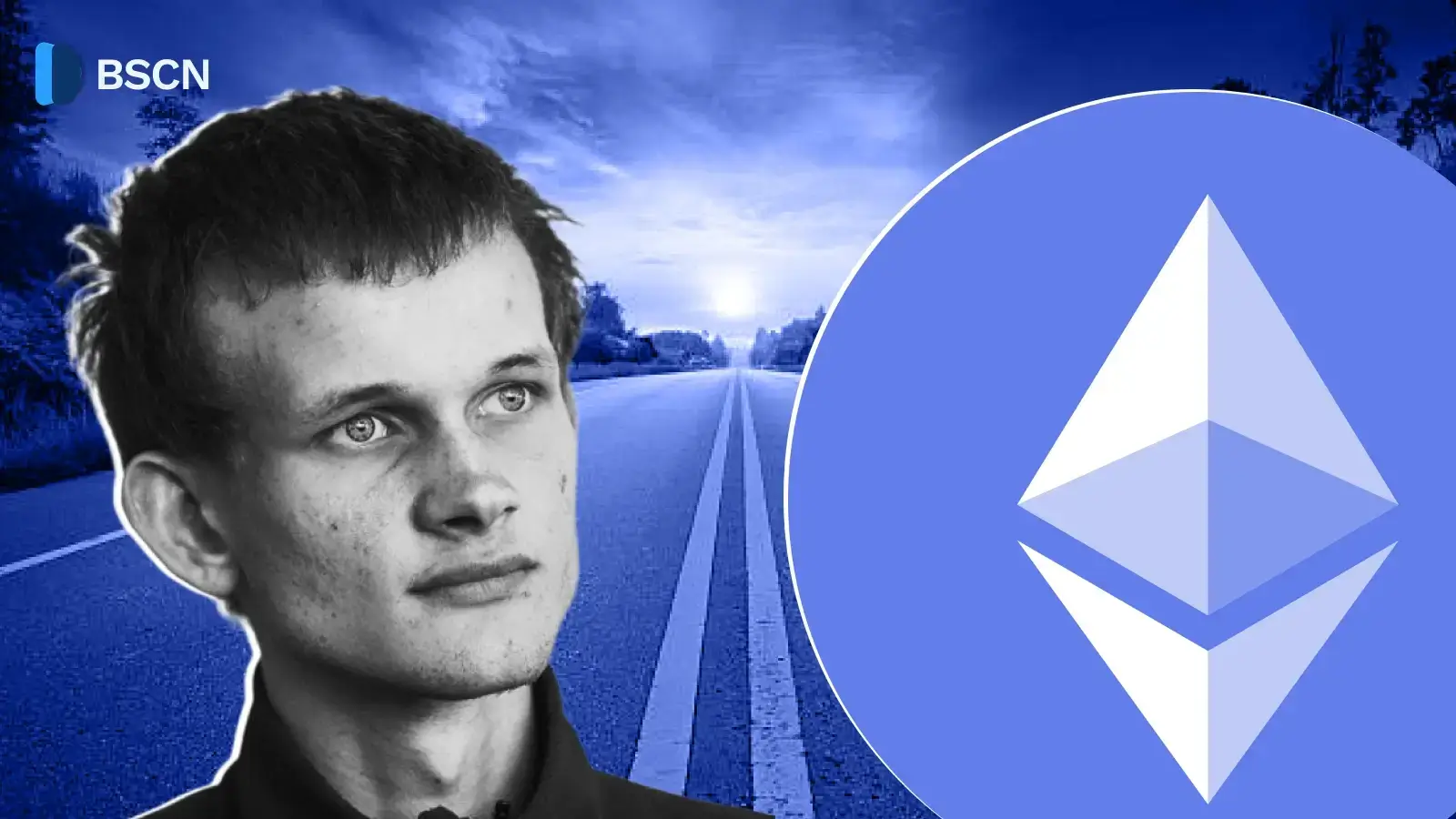
The Ethereum Foundation has published a new roadmap redefining the roles of L1 and L2, with clear guidance on scaling, security standards, and cross-chain fragmentation.

Soumen Datta
March 24, 2026

(Advertisement)
Table of Contents
The Ethereum Foundation has published a new document outlining how Ethereum's Layer 1 (L1) and Layer 2 (L2) networks should work together going forward, with L1 serving as the core settlement and DeFi hub while L2s shift focus from pure scaling to offering specialized, differentiated services.
The post marks the first major update to Ethereum's L1 and L2 strategy since the rollup-centric roadmap was introduced roughly five years ago. The Foundation acknowledged that the ecosystem has grown significantly since then and that the relationship between L1 and L2 needs a fresh model.
What Has Changed In Ethereum's L1 And L2 Strategy?
The original purpose of L2s was to scale Ethereum by handling more transactions off the main chain. That goal has shifted.
According to the Foundation, the primary objective of L2s today is to offer differentiated features, customizations, and control, while scaling is now the secondary benefit. L1, meanwhile, is defined as a permissionless and resilient global hub for settlement, shared liquidity, and DeFi (decentralized finance, meaning financial services that run on blockchain without traditional intermediaries).
The Foundation also noted that blob capacity, introduced through EIP-4844 to reduce L2 transaction costs, is currently only about 30% full. That leaves significant room to grow without any immediate pressure on the network.
What Are The New Recommendations For L2s?
The Foundation's post includes specific guidance for L2 teams. Here are the key expectations:
- L2s should reach at least Stage 1 security, meaning users can safely withdraw funds to L1 even if operators act maliciously or a security council fails. This is sometimes called passing the "walkaway" test.
- L2s aiming for tighter L1 integration should work toward Stage 2, which removes the need for a security council entirely by making the rollup fully verifiable by L1.
- L2s should pursue synchronous composability, which allows L1 and L2 to read and write to each other in real time, reducing friction for developers and users moving between layers.
- L2 teams are encouraged to explore native rollups, a design where L2 chains are fully and trustlessly verified by L1 at the protocol level.
- All L2s should maintain transparency about their security properties, supported by platforms like L2Beat, which independently monitors and rates L2 security.
Why Would A Chain Want To Build As An L2 On Ethereum?
The Foundation makes a practical case for why chains should integrate with Ethereum rather than launch independently.
Building a decentralized validator set from scratch is expensive and time-consuming. L2s sidestep that cost by inheriting Ethereum's security and paying only for the blockspace they use. They also gain access to Ethereum's developer base, existing DeFi liquidity, infrastructure like ENS (Ethereum Name Service), and the regulatory acceptance that comes with the Ethereum brand.
In return, L2s generate demand for ETH, extend Ethereum's network effects, and help distribute its core properties to more users globally.
How Does This Connect To The Lean Ethereum Vision?
This roadmap update arrives shortly after Ethereum researcher Justin Drake published the Lean Ethereum vision, and following comments from Vitalik Buterin that once Lean Ethereum is fully deployed, Ethereum will be the only major blockchain to achieve both optimal security under synchrony and strong economic finality under asynchrony simultaneously.
Lean Ethereum restructures all three sublayers of Ethereum's base protocol: Lean Consensus (faster finality, quantum-resistant signatures), Lean Data (upgraded blob model with post-quantum data availability sampling), and Lean Execution (a RISC-V-based instruction set designed for efficient ZK proof verification). Together, these upgrades give the L1 the technical foundation needed to support a growing network of L2s without sacrificing decentralization.
Conclusion
The Foundation's updated roadmap draws a line between what L1 and L2 are each responsible for. L1 holds the foundation: security, settlement, and DeFi liquidity. L2s build on top of it with specialized features, custom economies, and services the base layer cannot offer.
The immediate priorities are concrete. Blob capacity has room to expand, cross-chain fragmentation needs fixing, and L2 teams have specific security targets to hit in Stage 1 and Stage 2. The Lean Ethereum upgrades running in parallel are designed to give L1 the technical headroom to support all of it without compromising decentralization.
Five years after the rollup-centric roadmap, Ethereum is updating the playbook with a clearer split of responsibilities and a stronger push toward making its multi-chain ecosystem function as one connected system.
Resources
Blog article by Ethereum Foundation: How L1 and L2s can build the strongest possible Ethereum
Vitalik Buterin on X: Posts (March, 2026)
Ethereum blog article by Justin Drake: lean Ethereum
Read Next...


Frequently Asked Questions
What is the new role of Ethereum L2s under the updated roadmap?
The Ethereum Foundation now describes L2s primarily as platforms for differentiation and specialization, offering custom features, governance models, and services that L1 cannot provide, rather than functioning as simple scaling solutions.
What is Stage 2 for an Ethereum L2?
Stage 2 is a security classification where an L2 rollup is fully verified by Ethereum L1 without relying on a security council. It represents the highest level of trust-minimization currently defined in the rollup security framework, tracked publicly by L2Beat.
What are blobs and why does their capacity matter?
Blobs are temporary data packets introduced in the Pectra upgrade via EIP-4844, designed to reduce the cost of posting transaction data from L2s to L1. With blobs currently at only 30% capacity, the Foundation says there is room to scale L2 activity significantly before capacity becomes a constraint.
Disclaimer
Disclaimer: The views expressed in this article do not necessarily represent the views of BSCN. The information provided in this article is for educational and entertainment purposes only and should not be construed as investment advice, or advice of any kind. BSCN assumes no responsibility for any investment decisions made based on the information provided in this article. If you believe that the article should be amended, please reach out to the BSCN team by emailing [email protected].
Author
 Soumen Datta
Soumen has been a crypto researcher since 2020 and holds a master’s in Physics. His writing and research has been published by publications such as CryptoSlate and DailyCoin, as well as BSCN. His areas of focus include Bitcoin, DeFi, and high-potential altcoins like Ethereum, Solana, XRP, and Chainlink. He combines analytical depth with journalistic clarity to deliver insights for both newcomers and seasoned crypto readers.
(Advertisement)
Latest News
July 22, 2026
How Much Funding Has Canton Developer Digital Asset Raised?
July 22, 2026
What is Aptos' AIP-146 and Is It Good News for APT?
July 22, 2026
What Happens to Unverified Pi Balances If Users Miss the Deadline?
July 22, 2026

What Is in Trump's CLARITY Act Ethics Deal?
July 21, 2026

Pudgy Penguins to Reach Millions with Target Placement
July 21, 2026

What is the GENIUS Act and Why Does it Matter?
July 21, 2026

What Is Jimothy Memecoin?
July 21, 2026
What Is the Cardano Van Rossem Upgrade?
(Advertisement)

Crypto Project & Token Reviews
Project & Token Reviews
Comprehensive reviews of crypto's most interesting projects and assets
Learn about the hottest projects & tokens

Latest Crypto Articles
Get up to date with the latest crypto news stories and events