Deepdive
(Advertisement)


What Makes Coinbase Wallet Different From Coinbase's Custodial Account?

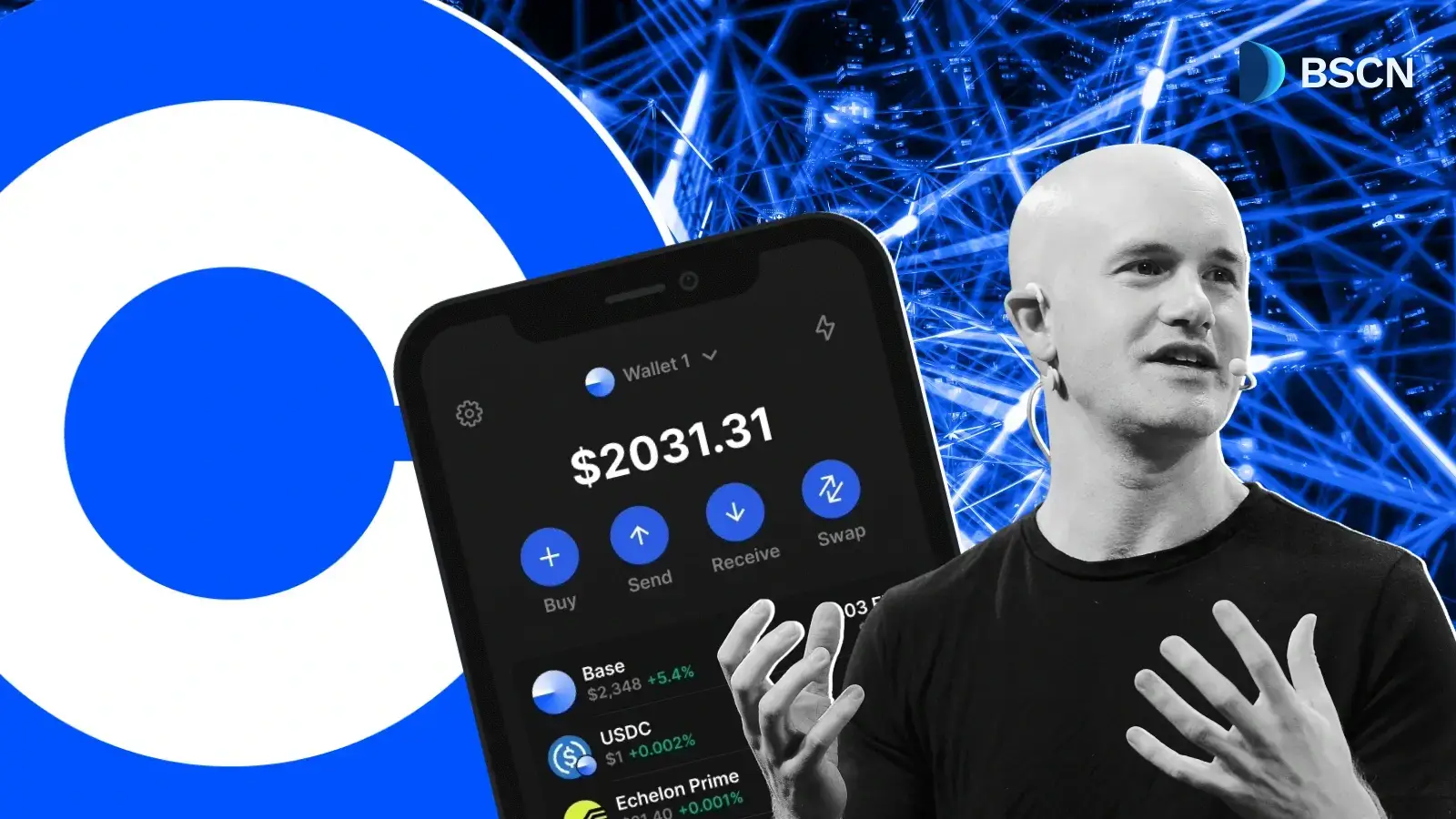
Coinbase Wallet, now Base App, and the Coinbase exchange work very differently. One holds your keys, the other doesn't. Here's what that means for your crypto.

Soumen Datta
June 3, 2026

(Advertisement)
Table of Contents
Coinbase Wallet and the Coinbase exchange are two separate products that do fundamentally different things. Coinbase Wallet is a self-custody wallet, meaning you hold your own private keys and your crypto belongs entirely to you.
The Coinbase exchange, by contrast, is custodial, meaning Coinbase holds the keys on your behalf. That one difference determines what protections you have, what you can do with your funds, and who is responsible if something goes wrong.
One important naming note before diving in: Coinbase rebranded Coinbase Wallet to Base App in July 2025. The product keeps the same self-custody model and the same wallet addresses, with new features for social, payments, and mini apps layered on. Both names appear throughout this article since many users still search for Coinbase Wallet, but Base App is the current official product.
How The Coinbase Exchange's Custodial Model Works
When you buy crypto on the Coinbase exchange, the coins are stored in a wallet managed by Coinbase. This setup means Coinbase controls the private keys, similar to how a brokerage manages your stock portfolio. You can view and manage your assets through the Coinbase app or website without needing to handle seed phrases or recovery keys.
A private key is the cryptographic proof of ownership in crypto. Whoever holds it controls the funds. On the exchange, that is Coinbase, not you. This is the definition of a custodial arrangement.
What Protections Does The Exchange Offer?
The custodial model comes with some genuine safety nets, though each has specific limits that are worth understanding precisely.
On the cash side, U.S. customer dollar funds held as cash are maintained in pooled custodial accounts at one or more FDIC-insured banks or NCUSIF-insured credit unions, with pass-through coverage available up to $250,000 per depositor. Critically, this protection covers only USD cash balances. Cryptocurrency holdings such as Bitcoin, Ether, or USDC have no government-backed insurance. If Coinbase fails, experiences a hack, or suffers a protocol error, the loss belongs to the user. The FDIC coverage is also pass-through, not direct, meaning its availability depends on Coinbase maintaining accurate records at the time of any claim.
On the crypto side, Coinbase carries crime insurance that protects a portion of digital assets held across its storage systems against losses from theft, including cybersecurity breaches. However, the policy does not cover losses resulting from unauthorized access to your personal Coinbase account due to a breach or loss of your credentials.
In plain terms, if someone phishes your login details and drains your account, the crime insurance does not apply. That distinction became especially relevant in May 2025, when cybercriminals bribed and recruited a group of rogue overseas support agents to steal Coinbase customer data and facilitate social engineering attacks against users. The incident did not involve the compromise of passwords or private keys, but it demonstrated that the social engineering threat to custodial account holders is real and active.
The trade-off with custodial storage goes beyond internal incidents. When an exchange collapses the way FTX did in 2022, the number on your screen stops mapping to anything you can recover. Users with funds on that exchange lost access overnight, while those holding crypto in self-custody wallets did not.
How Coinbase Wallet And Base App Work
Base App, formerly known as Coinbase Wallet, is a self-custody Web3 wallet that gives users direct control of private keys through a recovery phrase. Coinbase emphasizes that nobody, including Coinbase itself, can access tokens or NFTs without the recovery phrase.
The wallet is available as a mobile app and a browser extension. You do not need a Coinbase exchange account to use it. You can create a wallet instantly without identity verification. When you set it up, you receive a 12-word seed phrase. That phrase is the only backup that exists for your wallet.
Coinbase cannot recover a lost 12-word phrase, reverse an on-chain transfer, or restore funds after the wallet's real recovery method is gone. That is the non-custodial trade-off in plain English. Write the seed phrase down on paper, store it offline, and treat it with the same care you would give to the password for your bank vault.
What Coinbase Wallet Lets You Do That The Exchange Does Not
Because you control the keys directly, Base App connects you to on-chain activity that the exchange does not support. That includes:
- Connecting directly to decentralized finance (DeFi) protocols such as Uniswap or Aave for lending, borrowing, and swapping without a middleman.
- Storing, sending, and receiving NFTs peer-to-peer without routing through an exchange.
- Interacting with decentralized applications, known as dApps, across Ethereum, Base, Solana, Arbitrum, and other compatible networks.
- Making gasless transactions on Layer 2 networks and signing in using a device passkey through Face ID or Touch ID, as part of its Smart Wallet features.
The app combines social media, messaging, trading, and payments into a unified platform for engaging with the on-chain community, which is the main addition that came with the Base App rebrand beyond the original wallet functionality.
Is Coinbase Wallet Safer Than Keeping Crypto On The Exchange?
Neither option is universally safer. Each carries a different type of risk.
The main advantage of a non-custodial wallet is complete control over private keys, which reduces the risk of losing crypto to an exchange hack or collapse. The disadvantage is that your crypto is only as secure as you are. If you share your private key and your crypto is stolen, no one can help you get it back.
Custodial insurance and policies do not cover self-custody wallets. Keys are generated and stored locally, and the 12-word seed controls funds. Encrypted cloud backup is only as strong as your Apple or Google account security.
A practical approach used by many experienced holders is to keep actively traded funds on the exchange while moving longer-term holdings into Base App or a hardware wallet. Use Coinbase Wallet for active use and hardware storage for anything you cannot afford to lose.
Conclusion
Coinbase Wallet, now officially Base App, and the Coinbase exchange solve different problems. The exchange offers a regulated environment with account recovery, pass-through FDIC protection on USD cash balances up to $250,000, and crime insurance on custodied crypto, each with specific conditions attached.
Base App gives you direct control of your private keys, access to DeFi protocols, NFTs, and dApps across multiple chains, and no exposure to exchange-level counterparty risk. The security model you choose depends on what type of risk you are more equipped to manage: platform-level custodial risk on the exchange, or personal key-management responsibility with self-custody. Many experienced users run both in parallel, using each for what it does best.
Resources
- CoinTracker – Coinbase vs. Coinbase Wallet: Understanding The Key Differences
- Koinly – Coinbase vs. Coinbase Wallet: What's The Difference?
- CEX.IO University – Coinbase Wallet (Base) Review 2026: Features, Fees And Security
- CryptoSlate – Base App Review 2026: Security, Fees And Supported Chains
- CryptoAdventure – Base App (Coinbase Wallet) Review 2026: Self-Custody With A Mainstream UX
- Coin Bureau – Is Coinbase Wallet Safe In 2026? Security, Risks And Best Practices
- Coinbase Legal – How Coinbase Insurance Works: Crime Coverage And FDIC Pass-Through
- Coinbase Help – How Is Coinbase Insured? FDIC, NCUSIF And Crime Coverage Explained
- Infosecurity Magazine – TaskUs Employees Behind Coinbase Breach: What The 2025 Incident Revealed
- CoinTelegraph – Coinbase Data Breach 2025: What Was Stolen And What You Need To Know
Read Next...





Frequently Asked Questions
Do I need a Coinbase account to use Coinbase Wallet or Base App?
No. Coinbase Wallet must be set up separately, and having a Coinbase account does not automatically create one. You also do not need a Coinbase account to use it, since it can connect to other platforms and exchanges. You can fund it by receiving crypto from any external source.
What happens if I lose my Coinbase Wallet seed phrase?
Coinbase cannot recover a lost 12-word phrase. If you lose it without another backup, the funds in that wallet are permanently inaccessible. Store your seed phrase on paper in a secure, offline location away from any internet-connected device.
Can Coinbase Wallet and Base App access DeFi protocols and NFTs?
Yes. Base App supports a diverse range of cryptocurrencies and NFTs and provides direct access to the decentralized web, enabling users to engage in trading, lending, staking, and NFT marketplaces. The exchange does not offer this kind of direct dApp access.
Disclaimer
Disclaimer: The views expressed in this article do not necessarily represent the views of BSCN. The information provided in this article is for educational and entertainment purposes only and should not be construed as investment advice, or advice of any kind. BSCN assumes no responsibility for any investment decisions made based on the information provided in this article. If you believe that the article should be amended, please reach out to the BSCN team by emailing [email protected].
Author
 Soumen Datta
Soumen has been a crypto researcher since 2020 and holds a master’s in Physics. His writing and research has been published by publications such as CryptoSlate and DailyCoin, as well as BSCN. His areas of focus include Bitcoin, DeFi, and high-potential altcoins like Ethereum, Solana, XRP, and Chainlink. He combines analytical depth with journalistic clarity to deliver insights for both newcomers and seasoned crypto readers.
(Advertisement)
Latest News
0h : 44m ago

Will Robinhood Chain Push ETH's Price to All Time Highs?
2h : 26m ago

What is BlackRock's BUIDL Fund on Avalanche AVAX?
July 10, 2026

How Do PancakeSwap's CAKE Token Burns Actually Work?
July 10, 2026

Report: Ripple & The XRP Ecosystem in H1 2026
July 10, 2026

How Is Cardano Advancing Financial Inclusion in Developing Countries?
July 10, 2026

Why Was Sui Built From Scratch Instead of Forking an Existing Blockchain?
July 9, 2026

Trust Wallet Adds Native Support for Robinhood Chain, Opening Stock Tokens to 220 Million Users
July 9, 2026
Robinhood Chain Explodes Post-Mainnet Launch
(Advertisement)

Crypto Project & Token Reviews
Project & Token Reviews
Comprehensive reviews of crypto's most interesting projects and assets
Learn about the hottest projects & tokens

Latest Crypto Articles
Get up to date with the latest crypto news stories and events