Research
(Advertisement)


Will Robinhood Chain Push ETH's Price to All Time Highs?

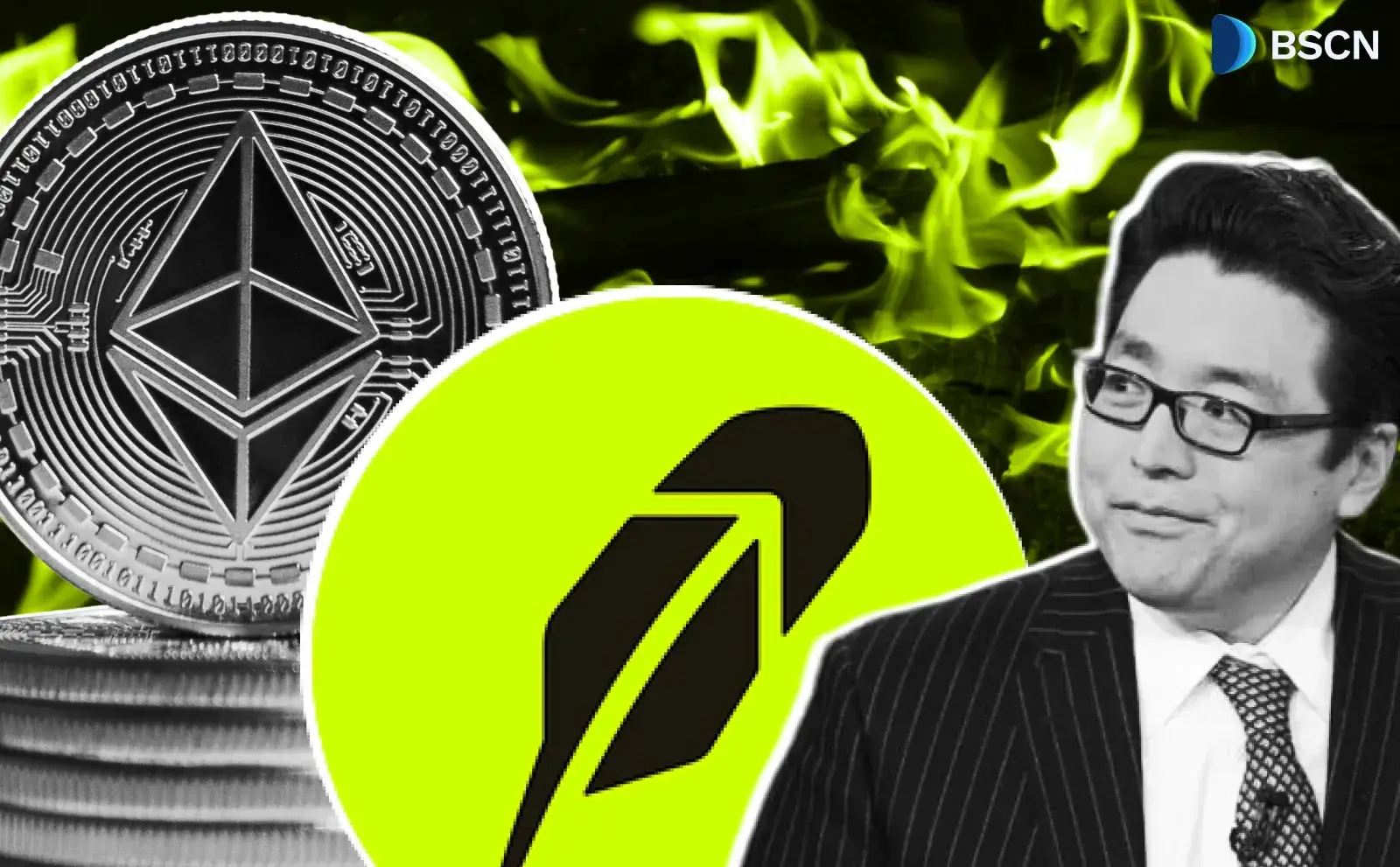
Robinhood Chain uses ETH for gas and settles to Ethereum. Here's what its fast start does, and doesn't do, for ETH's price.

Crypto Rich
July 13, 2026

(Advertisement)
Table of Contents
In its first week on mainnet, Robinhood Chain pulled more than $70 million in bridged ETH, cleared over $1 billion in trading volume, and processed 17 million transactions. Every one of those transactions was paid for in $ETH. So it is a fair question to ask what a network like this, backed by a public company with tens of millions of users, actually does for the asset underneath it.
What is Robinhood Chain?
Robinhood Chain (@RobinhoodCrypto) is a permissionless, Ethereum-compatible Layer 2 that went live on mainnet on July 1, 2026. It runs on the Arbitrum Dedicated Blockchains framework, offloads execution from Ethereum, and settles back to the base layer for security. It is built for tokenized real-world assets, mainly Stock Tokens that track equities like NVIDIA, Apple and Alphabet, alongside stablecoins, lending and 24/7 trading.
The network launched without a token of its own; instead, it uses ETH to pay for gas, the same asset you use on Ethereum mainnet. Robinhood brings tens of millions of funded accounts to that setup, which is the distribution edge no crypto-native L2 can match.
Why the design is good for ETH
Strip away the marketing and the bull case rests on a few concrete mechanics, not vibes:
- ETH is the gas token. Every trade, bridge, mint and contract call on the chain is paid for in ETH. More activity means more ETH spent and held to transact.
- Activity bridges ETH out of L1. ETH has to move from Ethereum onto the chain before it can be used, which pulls supply into active circulation on the L2.
- Settlement and data costs anchor to Ethereum. The chain posts data back to L1 and burns ETH to cover storage, tying its throughput directly to base-layer demand.
- EVM compatibility widens Ethereum's moat. A public company now runs a standard EVM network, which reinforces the tooling, standards and network effects the whole ecosystem shares.
The commentary has echoed this. Token Terminal reported that ETH bridged to the chain jumped about 70x in its first week, topping $70 million, and called it a possible "meaningful new source of demand for ETH." Uniswap founder Hayden Adams (@haydenzadams) noted most on-chain activity is ETH-denominated, describing ETH as "the base pair for trading." Fundstrat's Tom Lee (@fundstrat) leaned into the same read, stressing that fees are denominated in ETH with finality on Ethereum.
How fast did it actually grow?
The early traction is not hype, it is measurable. In its first week the network logged more than 17 million transactions, close to 350,000 addresses and over $1 billion in decentralized exchange volume. And, according to Robinhood, the total value locked reached $250 million.
Institutional money showed up too. Nearly $90 million of locked value sat in the Morpho lending protocol, with Ethena (@ethena) depositing $50 million into a single $USDG vault. Stablecoin balances climbed past $260 million. A chunk of the retail buzz came from Cash Cat $CASHCAT, a memecoin named after Robinhood's old cat mascot with no official tie to the company, which ran to roughly a $150 million market cap within a week. That the chain's first breakout hit was a joke token rather than a tokenized stock muddied Robinhood's real-world-asset pitch, and CEO Vlad Tenev (@vladtenev) went from calling memecoins a dead end on July 2 to conceding days later that the chain "works great for memes too."
So why hasn't ETH moved?
Here is where the demand story runs into trouble. The mechanics are real, but whether that demand accrues value to ETH is genuinely contested, and one of Ethereum's most prominent advocates now argues it does not. ETH traded near $1,775 in the days after launch, down roughly 64% from its August 2025 peak, even as billions of dollars in activity moved onto the chain.
David Hoffman (@TrustlessState), co-founder of Bankless and for years a loud ETH bull, sold his ETH earlier in 2026. His argument is that the network is architecturally "a giver, not a taker": activity migrates to L2s that pay almost nothing back to the base layer, so usage can boom while ETH stays weak. Robinhood Chain fits that shape almost too neatly. Enormous throughput, an ETH gas token, and a price sitting near multi-year lows at the same time.
None of this makes the chain bad for Ethereum. It plainly strengthens Ethereum's position as the settlement layer for tokenized assets. But "good for the Ethereum network" and "good for the ETH price" have quietly become two different claims, and Robinhood Chain is now one of the clearest tests of whether they reconnect.
Sources:
- Robinhood Chain Documentation — Official technical docs confirming ETH as the native gas token, full EVM compatibility, and the first-come first-served sequencing model.
- Arbitrum — Announcement that the mainnet went live on the Arbitrum Dedicated Blockchains framework while settling to Ethereum for security.
- Fortune — Cash Cat's roughly $150 million market cap and CEO Vlad Tenev's shift from dismissing memecoins to conceding the chain works for them.
- Decrypt — First-week metrics on transactions, addresses, DEX volume and TVL, plus the internal-versus-DefiLlama gap and CASHCAT context.
- Cointelegraph — Token Terminal's bridged-ETH data, Hayden Adams on ETH as the base pair, and ETH price context.
- crypto.news — Breakdown of TVL growth, Morpho lending deposits, and Ethena's $50 million USDG vault.
- Cryptotimes — Bridging surge figures and confirmation of Robinhood's 90-day gas-fee coverage on swaps, bridges and perpetuals.
- Fundstrat — Tom Lee's post framing ETH as the native gas token, with fees denominated in ETH and finality on Ethereum L1.
- BeInCrypto — David Hoffman's reasoning for selling ETH and his "giver, not a taker" critique of value accrual to the asset.
Read Next...




Disclaimer
Disclaimer: The views expressed in this article do not necessarily represent the views of BSCN. The information provided in this article is for educational and entertainment purposes only and should not be construed as investment advice, or advice of any kind. BSCN assumes no responsibility for any investment decisions made based on the information provided in this article. If you believe that the article should be amended, please reach out to the BSCN team by emailing [email protected].
Author
 Crypto Rich
Rich has been researching cryptocurrency and blockchain technology for eight years and has served as a senior analyst at BSCN since its founding in 2020. He focuses on fundamental analysis of early-stage crypto projects and tokens and has published in-depth research reports on over 200 emerging protocols. Rich also writes about broader technology and scientific trends and maintains active involvement in the crypto community through X/Twitter Spaces, and leading industry events.
(Advertisement)
Latest News
1h : 23m ago
Will Robinhood Chain Push ETH's Price to All Time Highs?
3h : 5m ago
What is BlackRock's BUIDL Fund on Avalanche AVAX?
July 10, 2026

How Do PancakeSwap's CAKE Token Burns Actually Work?
July 10, 2026

Report: Ripple & The XRP Ecosystem in H1 2026
July 10, 2026

How Is Cardano Advancing Financial Inclusion in Developing Countries?
July 10, 2026

Why Was Sui Built From Scratch Instead of Forking an Existing Blockchain?
July 9, 2026

Trust Wallet Adds Native Support for Robinhood Chain, Opening Stock Tokens to 220 Million Users
July 9, 2026
Robinhood Chain Explodes Post-Mainnet Launch
(Advertisement)

Crypto Project & Token Reviews
Project & Token Reviews
Comprehensive reviews of crypto's most interesting projects and assets
Learn about the hottest projects & tokens

Latest Crypto Articles
Get up to date with the latest crypto news stories and events