Research
(Advertisement)


Why Do Investors Choose BlackRock's Bitcoin ETF?

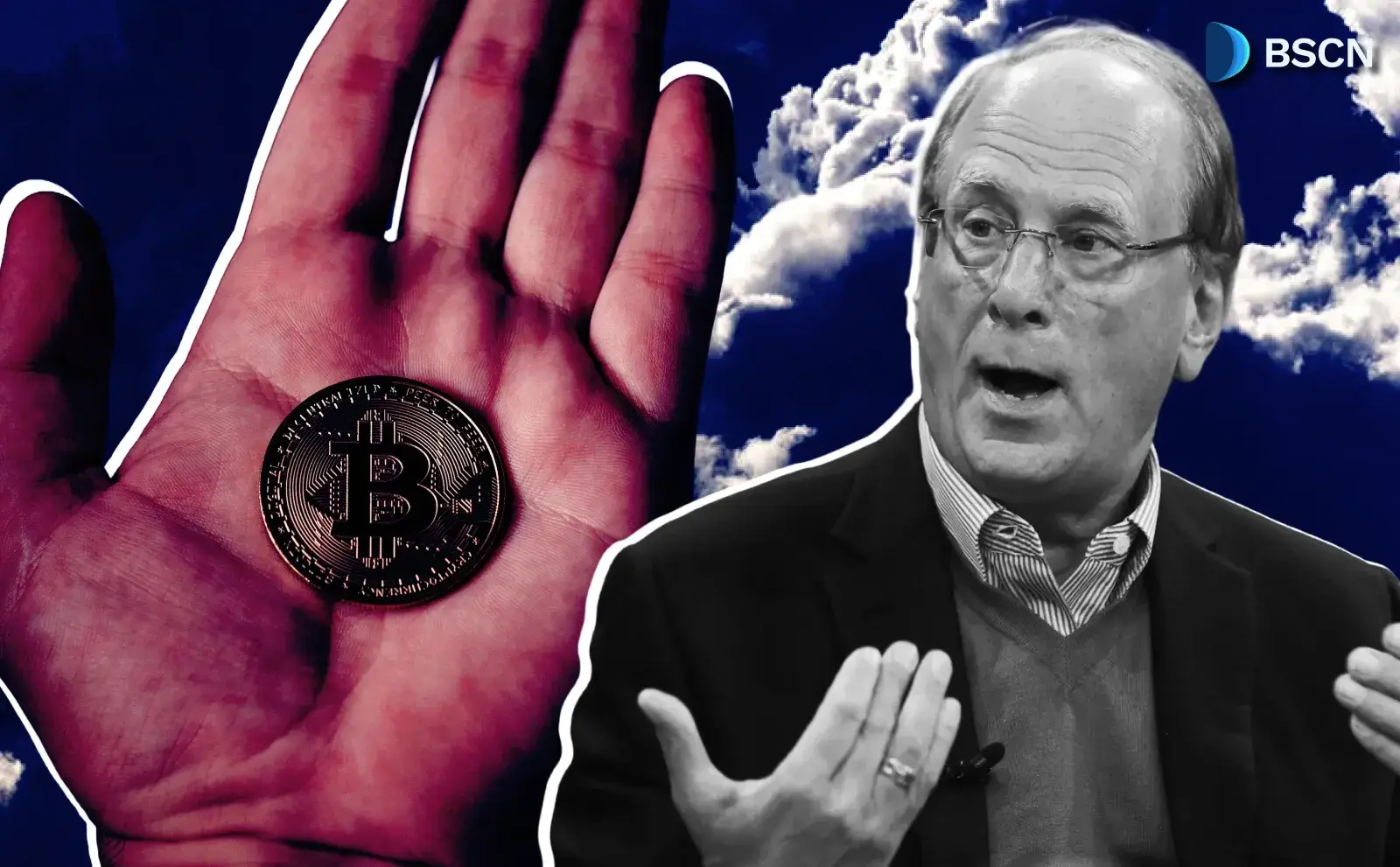
BlackRock's IBIT holds over 60% of all U.S. spot Bitcoin ETF assets. Here's why investors keep choosing it over cheaper alternatives.

Crypto Rich
March 3, 2026

(Advertisement)
Table of Contents
Short answer: because it's BlackRock. The world's largest asset manager didn't just launch a Bitcoin ETF. It launched the fastest-growing ETF in history. As of early March 2026, the iShares Bitcoin Trust ETF (IBIT) holds roughly $53 billion in assets under management, claiming about 60% of the entire U.S. spot Bitcoin ETF market. The total across all competitors sits at around $88.34 billion. Fidelity's FBTC trails at $13 billion. Grayscale's GBTC holds about $10.85 billion. The gap isn't close, and it keeps widening. So what's actually going on here? Is IBIT technically superior, or is this just a trust game?
Are There Real Differences Between Spot Bitcoin ETFs?
Honestly, not many. Most U.S. spot Bitcoin ETFs work the same way. They hold actual Bitcoin, typically custodied by firms like Coinbase, and track its spot price. No leverage, no derivatives unless a product specifically adds them. The mechanics are nearly identical across the board.
Where things diverge slightly is in fees. IBIT charges a 0.25% expense ratio. That's not the cheapest. ARK 21Shares' ARKB sits at 0.18%, and Bitwise's BITB comes in at 0.20%. On the expensive end, Grayscale's GBTC still charges 1.5%, a holdover from its pre-ETF structure.
So if cheaper options exist, why does IBIT dominate? Because cost isn't the whole story.
Why Does Brand Trust Matter So Much?
BlackRock manages trillions in traditional assets. That reputation carries enormous weight, especially for investors stepping into crypto for the first time through a regulated product. Financial advisors and institutions gravitate toward IBIT because it plugs straight into traditional brokerage platforms. No wallets, no exchanges, no seed phrases. Just a ticker symbol that behaves like any other stock.
This trust factor extends beyond retail. Institutional holders of IBIT more than doubled during Q2 2025, and invested capital from large players increased fivefold. Billionaire hedge funds and asset managers see IBIT as the path of least resistance for Bitcoin exposure without the operational headaches of direct custody.
BlackRock has leaned into this momentum too, rolling out follow-on products like the iShares Bitcoin Premium Income ETF, which layers options-based yield strategies on top of IBIT holdings. That kind of product ecosystem doesn't exist around smaller competitors.
What About Liquidity?
This is where IBIT's scale creates a real, measurable advantage. With average daily trading volume regularly exceeding 44 million shares, IBIT offers tighter bid-ask spreads than any competitor. For institutional investors moving large positions, that matters. You can get in and out without dragging the price.
Compare that to something like VanEck's HODL at $1.18 billion AUM, or Hashdex's DEFI sitting at just $9.44 million. The volume gap makes smaller ETFs impractical for high-frequency or large-scale trades. IBIT's liquidity also supports options trading, giving investors more tools for hedging or income strategies.
The ETF approached $100 billion in AUM roughly five times faster than any ETF before it. That kind of growth feeds on itself. More volume attracts more traders, which tightens spreads further, which attracts even more capital.
How Did BlackRock Build This Lead?
Smart pricing helped early on. BlackRock waived fees down to 0.12% for the first $5 billion in inflows or six months after launch. That aggressive move captured a chunk of early adopters who might have spread across competitors.
The results speak for themselves. By October 2025, IBIT was generating over $245 million in annual fees, making it BlackRock's most profitable ETF. That revenue gives BlackRock every reason to keep pushing the product hard through its global distribution network.
IBIT also tends to absorb capital when competitors bleed. There have been stretches where it captured roughly 96% of net ETF volumes, buying Bitcoin equivalents while rival funds were selling. That pattern suggests strong conviction from institutional money that views IBIT as the default allocation.
Is It Just a Network Effect at This Point?
Pretty much. The technical differences between spot Bitcoin ETFs are marginal. Custodians vary, fees differ by a few basis points, but the underlying product is the same: exposure to Bitcoin's spot price through a regulated vehicle.
What separates IBIT is the flywheel BlackRock built around it. Brand trust pulls in first-time crypto investors. Scale delivers better liquidity and tighter tracking. Distribution through every major brokerage platform makes it the easiest option to buy. And each wave of new capital reinforces all three advantages.
One thing worth noting: late entrants to IBIT haven't captured the full upside. Average dollar-weighted returns sit at an estimated 11.2% annually, compared to the fund's 46% return since inception. Timing still matters, even with the best product in the category.
For investors who want Bitcoin exposure without the complexity of self-custody, IBIT remains the default choice. Not because it's fundamentally different from the competition, but because in a market where trust and accessibility drive decisions, BlackRock simply has more of both than anyone else.
Sources:
- SoSoValue — U.S. spot Bitcoin ETF AUM data and market overview
- NerdWallet — Bitcoin ETF expense ratio comparisons
- Fortune — IBIT growth trajectory and AUM milestones
- CryptoPotato — BlackRock brand trust and ETF inflow patterns
- The Block — iShares Bitcoin Premium Income ETF details
- Morningstar — Dollar-weighted return analysis for IBIT investors
- Motley Fool — Institutional holder growth in Q2 2025
- Milk Road — BlackRock's initial fee waiver strategy
- Yahoo Finance — IBIT annual fee revenue figures
Read Next...



Disclaimer
Disclaimer: The views expressed in this article do not necessarily represent the views of BSCN. The information provided in this article is for educational and entertainment purposes only and should not be construed as investment advice, or advice of any kind. BSCN assumes no responsibility for any investment decisions made based on the information provided in this article. If you believe that the article should be amended, please reach out to the BSCN team by emailing [email protected].
Author
 Crypto Rich
Rich has been researching cryptocurrency and blockchain technology for eight years and has served as a senior analyst at BSCN since its founding in 2020. He focuses on fundamental analysis of early-stage crypto projects and tokens and has published in-depth research reports on over 200 emerging protocols. Rich also writes about broader technology and scientific trends and maintains active involvement in the crypto community through X/Twitter Spaces, and leading industry events.
(Advertisement)
Latest News
July 22, 2026
How Much Funding Has Canton Developer Digital Asset Raised?
July 22, 2026

What is Aptos' AIP-146 and Is It Good News for APT?
July 22, 2026
What Happens to Unverified Pi Balances If Users Miss the Deadline?
July 22, 2026
What Is in Trump's CLARITY Act Ethics Deal?
July 21, 2026

Pudgy Penguins to Reach Millions with Target Placement
July 21, 2026

What is the GENIUS Act and Why Does it Matter?
July 21, 2026

What Is Jimothy Memecoin?
July 21, 2026

What Is the Cardano Van Rossem Upgrade?
(Advertisement)

Crypto Project & Token Reviews
Project & Token Reviews
Comprehensive reviews of crypto's most interesting projects and assets
Learn about the hottest projects & tokens

Latest Crypto Articles
Get up to date with the latest crypto news stories and events