News
(Advertisement)


Russia Brings XRP and BNB Into Its Regulated Crypto Index Framework

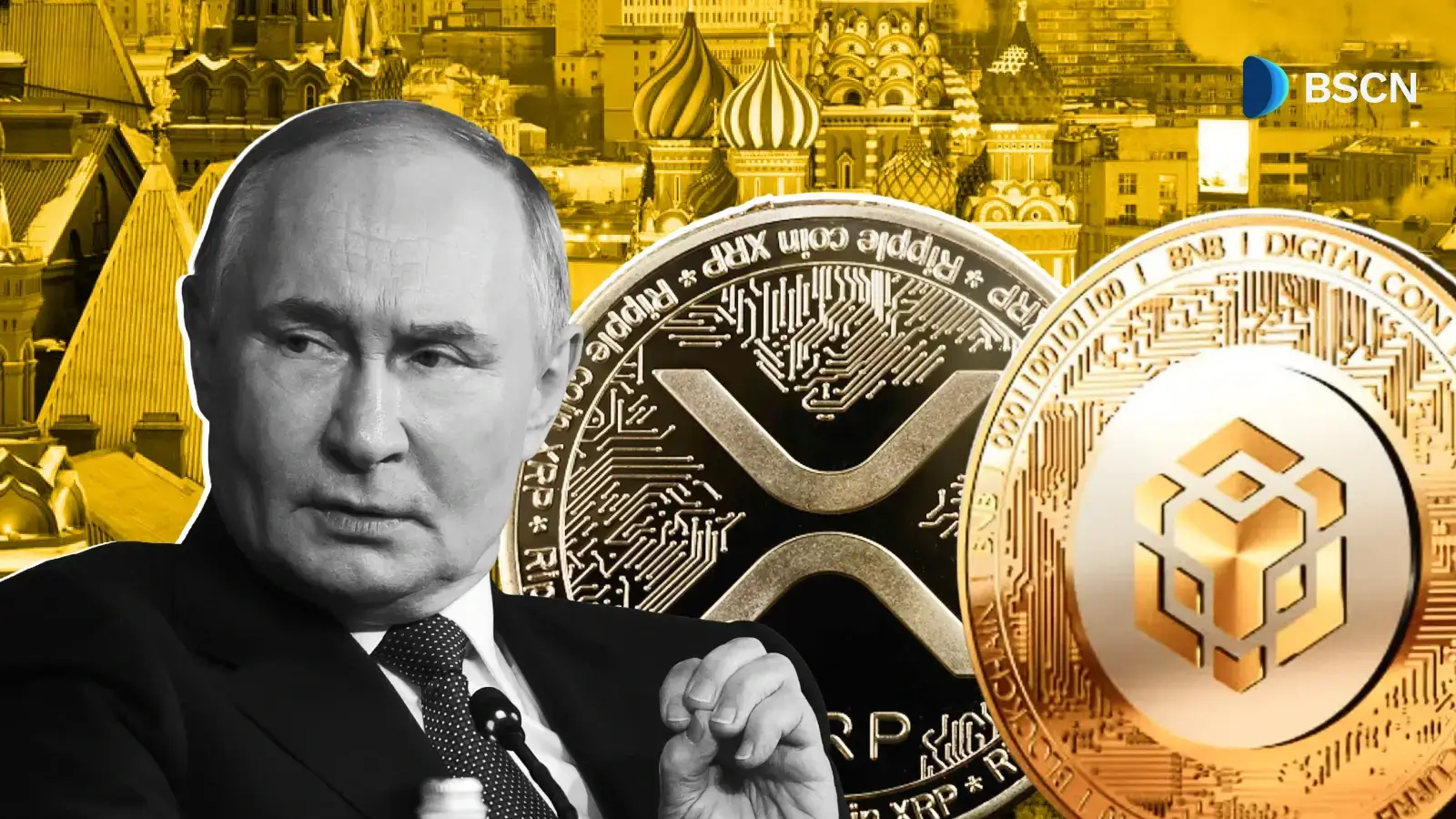
Moscow Exchange adds XRP, BNB, Solana, and Tron crypto indices from May 13, with 15-second updates and a multi-exchange pricing model across four global venues.

Soumen Datta
May 5, 2026

(Advertisement)
Table of Contents
Russia's Moscow Exchange (MOEX) will begin calculating and publishing four new cryptocurrency indices on May 13, adding Solana (MOEXSOL), XRP (MOEXXRP), Tron (MOEXTRX), and BNB (MOEXBNB) to its existing Bitcoin (MOEXBTC) and Ethereum (MOEXETH) benchmarks. The expansion brings MOEX's total crypto index count to six and forms the second phase of a longer buildout the exchange has been executing since mid-2025.
What Are the New MOEX Crypto Indices?
MOEX launched its Bitcoin index (MOEXBTC) in June 2025 and its Ether index (MOEXETH) in October 2025. The four new benchmarks follow the same architecture as those earlier products. Each index tracks price movements of its underlying asset using aggregated data pulled from multiple global crypto exchanges.
The indices will be updated every 15 seconds throughout the trading day, replacing a previous once-daily calculation schedule. MOEX will also publish data over weekends, reflecting the fact that crypto markets operate around the clock unlike traditional equity markets.
MOEX has stated it plans to grow its crypto index count to at least 10 over time. Potential additions under consideration include Dogecoin, Cardano, Hyperliquid, and Chainlink.
How Does MOEX Price Its Crypto Indices?
Rather than relying on a single exchange for price data, MOEX uses a weighted basket drawn from four global trading venues. The methodology breaks down as follows:
- Binance: 50% weighting
- Bybit: 20% weighting
- OKX: 15% weighting
- Bitget: 15% weighting
This multi-exchange approach is designed to reduce the risk of price manipulation on any single platform and to produce a benchmark that reflects broader global market conditions. It mirrors standard practice in traditional financial index construction, where data is aggregated across multiple venues to produce a more defensible benchmark. MOEX applied the same structure when building its Bitcoin and Ether indices, both of which have already served as the basis for related derivatives products.
What This Means for Russian Institutional Investors
For institutional participants, the long-term value of these indices lies in the derivatives they can support. Once a benchmark has a sufficient price history, exchange-listed futures contracts can be built on top of it. These contracts allow traders to gain regulated, leveraged exposure to price movements without directly holding or custodying any crypto assets.
Russia's Bank of Russia approved crypto-linked derivatives in May 2025 but barred the direct delivery of digital assets, which has pushed exchanges like MOEX toward cash-settled futures and other synthetic products. The new indices fit directly within that regulatory framework.
MOEX already offers derivatives linked to BlackRock's iShares Bitcoin Trust (IBIT) and iShares Ethereum Trust (ETHA), as well as its own MOEXBTC and MOEXETH indices. Maria Silkina, Chief Manager of the Derivatives Product Group at Moscow Exchange, has confirmed the exchange is also preparing to launch perpetual futures tied to Bitcoin and Ethereum.
What Is Russia's Broader Crypto Regulatory Direction?
Russia has been expanding its regulated crypto infrastructure throughout 2025 and into 2026. Western sanctions have limited Russia's access to dollar-denominated financial systems, which has given the country additional incentive to develop domestic alternatives.
Lawmakers in the State Duma are currently reviewing a draft bill called the "Digital Currency and Digital Rights" law. Key provisions include:
- Non-qualified retail investors would be capped at 300,000 rubles (roughly $4,000) per year on highly liquid tokens.
- Qualified investors would face no spending cap, but would be barred from buying privacy-focused coins.
- The bill explicitly prohibits using digital currencies for domestic payments.
- Adoption is targeted for July 1, 2026, with enforcement of provisions on illegal intermediary activity taking effect from July 1, 2027.
The legislative framework aligns with MOEX's index strategy: enable institutional exposure through regulated financial products while keeping tighter controls on retail participation and direct crypto use.
Conclusion
From May 13, Moscow Exchange will publish six cryptocurrency indices, with four new additions covering XRP, BNB, Solana, and Tron calculated every 15 seconds using weighted price data from Binance, Bybit, OKX, and Bitget.
The indices do not enable direct crypto trading but are structured to support regulated derivatives products once sufficient price history is established. With plans to expand to at least 10 indices and pending legislation set to formalize retail access rules by mid-2026, MOEX is systematically building the benchmark infrastructure needed to support a broader institutional crypto derivatives market inside Russia's regulated financial system.
Resources
Report by bitsmedia: Московская биржа начнет расчет индексов четырех криптовалют
Report by Crypto Briefing: Moscow Exchange to add XRP, BNB, Solana, TRON to its crypto index roster next week
Read Next...




Frequently Asked Questions
What crypto indices is Moscow Exchange launching on May 13?
Moscow Exchange is adding four new crypto indices on May 13: MOEXSOL (Solana), MOEXXRP (XRP), MOEXTRX (Tron), and MOEXBNB (BNB). These join the existing MOEXBTC and MOEXETH indices, bringing the total to six. The exchange has stated it intends to expand to at least 10 indices over time.
How often will MOEX update its crypto indices?
MOEX will calculate and update its crypto indices every 15 seconds during trading hours, a significant increase from the previous once-daily update schedule. The exchange will also publish data over weekends to reflect continuous crypto market activity.
Can Russian retail investors trade MOEX crypto index products?
Under current and proposed regulations, direct crypto trading on MOEX remains limited. Derivatives linked to the indices are primarily accessible to qualified or professional investors. A draft law under review in Russia's State Duma would cap non-qualified retail investors at 300,000 rubles (approximately $4,000) annually on highly liquid tokens, with a target implementation date of July 1, 2026.
Disclaimer
Disclaimer: The views expressed in this article do not necessarily represent the views of BSCN. The information provided in this article is for educational and entertainment purposes only and should not be construed as investment advice, or advice of any kind. BSCN assumes no responsibility for any investment decisions made based on the information provided in this article. If you believe that the article should be amended, please reach out to the BSCN team by emailing [email protected].
Author
 Soumen Datta
Soumen has been a crypto researcher since 2020 and holds a master’s in Physics. His writing and research has been published by publications such as CryptoSlate and DailyCoin, as well as BSCN. His areas of focus include Bitcoin, DeFi, and high-potential altcoins like Ethereum, Solana, XRP, and Chainlink. He combines analytical depth with journalistic clarity to deliver insights for both newcomers and seasoned crypto readers.
(Advertisement)
Latest News
9h : 6m ago

Analysis: Ondo Finance's 2026 In Numbers
10h : 47m ago

Is Circle Planning to Launch a Korean Won Stablecoin?
12h : 48m ago
What Is Ripple Mint?
July 23, 2026

Can Injective's New Mint Platform Bring Institutions to INJ?
July 23, 2026

What is RippleX & Why Does it Matter for XRP Ledger?
July 23, 2026

What Is Dfinity's Caffeine?
July 22, 2026
How Much Funding Has Canton Developer Digital Asset Raised?
July 22, 2026

What is Aptos' AIP-146 and Is It Good News for APT?
(Advertisement)

Crypto Project & Token Reviews
Project & Token Reviews
Comprehensive reviews of crypto's most interesting projects and assets
Learn about the hottest projects & tokens

Latest Crypto Articles
Get up to date with the latest crypto news stories and events