Research
(Advertisement)


Morgan Stanley Targets Altcoin ETFs with Record Low Fees

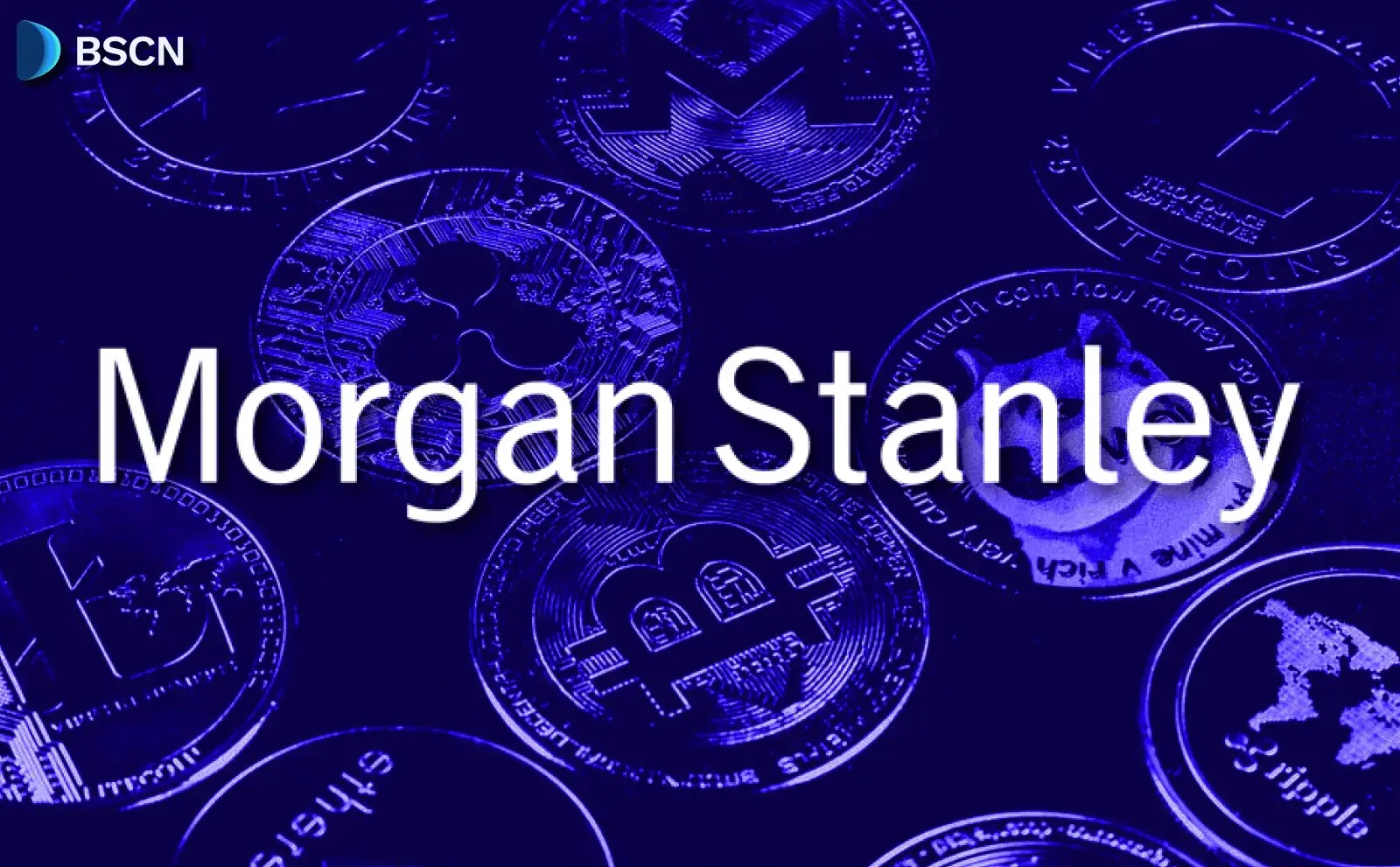
Morgan Stanley filed spot Ethereum and Solana ETFs at a record-low 0.14% fee with staking, undercutting every rival in both markets.

Crypto Rich
June 22, 2026

(Advertisement)
Table of Contents
Morgan Stanley (@MorganStanley) is pushing into altcoin ETFs with the lowest fees on the market. On June 18 the bank filed amended registration statements for spot Ethereum and Solana funds, each carrying a 0.14% sponsor fee with staking built in. Those undercut every existing rival in both categories and extend the same low-cost playbook the bank used to break into the bitcoin ETF market roughly 10 weeks earlier.
The filings show a Wall Street giant entering crypto the way it enters most things: carefully, in stages, and on its own terms.
How Morgan Stanley priced its way into Bitcoin ETFs
Morgan Stanley launched the Morgan Stanley Bitcoin Trust (MSBT), an exchange-traded product that holds physical $BTC, on April 8. It was the first spot Bitcoin ETF issued by a major US bank under its own name. The fund tracks the CoinDesk Bitcoin Benchmark 4PM New York Settlement Rate. Coinbase provides cold storage custody, and BNY Mellon handles cash custody and administration.
The headline was the price. MSBT charges 0.14% per year, making it the cheapest spot Bitcoin ETF on the market. That comes in 11 basis points below BlackRock's iShares Bitcoin Trust at 0.25% and undercuts Grayscale's Bitcoin Mini Trust at 0.15% and Bitwise at 0.20%.
Price is only part of it. Morgan Stanley runs roughly 16,000 wealth advisors overseeing about $9.3 trillion in client assets, a distribution channel no crypto-native firm can match. MSBT pulled in more than $100 million in its first week and has gathered more than $300 million in cumulative net inflows, per SoSoValue data. It avoided outflows throughout its first month, a record no other spot Bitcoin ETF achieved in the same window.
A direct trading arm on E*Trade
The ETFs are one half of a two-track strategy. In May the bank began a crypto trading pilot on E*Trade, charging 50 basis points per trade for direct ownership of Bitcoin, Ethereum, and Solana. Custody, liquidity, and settlement run through Zerohash, a Chicago infrastructure firm in which Morgan Stanley holds a stake.
At 0.5% the fee sits below Schwab at 75 basis points and Fidelity at roughly 1%, and undercuts effective costs at Coinbase and Robinhood. The pilot is now live for a small group, with access set to expand to all 8.6 million E*Trade clients later in 2026. Jed Finn, the bank's head of wealth management, framed the move as a way to keep clients inside the Morgan Stanley ecosystem rather than route them to crypto-native platforms.
What the ETH and SOL filings undercut
The June 18 filings are second amendments to applications Morgan Stanley first submitted in January. The Ethereum and Solana exchange-traded products would trade under the tickers MSSE and MSOL, respectively, on NYSE Arca.
Each proposes a 0.14% unitary sponsor fee, accrued daily on net asset value and paid monthly in cash. That figure would be the lowest in both markets:
- MSSE undercuts Grayscale's Mini Ethereum Trust, the current floor at 0.15%, by one basis point.
- MSOL undercuts Franklin Templeton's SOEZ, the cheapest $SOL fund at 0.19%, by five basis points.
The single fee absorbs ordinary operating costs, with no separate management, staking or administrative charges stacked on top.
Staking sets the altcoin funds apart
The bigger break from the Bitcoin product is staking. Both funds plan to stake a portion of their holdings and pass the rewards through to shareholders. Figment, Galaxy Blockchain Infrastructure, and Coinbase Canada are named as staking providers.
Providers and custodians take 5% of staking rewards. The remaining 95% stays in the funds and flows to shareholders. Morgan Stanley confirmed that the sponsor collects nothing from staking other than its management fee. For the Ethereum trust, filings indicate staking between 50% and 80% of its holdings.
That turns price exposure into a yield-bearing position inside a regulated brokerage wrapper, an edge over funds that hold the asset and nothing more. The filings also flag the friction. As of May 18 about 3.64 million $ETH were waiting in Ethereum's validator activation queue, which can leave newly staked ETH roughly 63 days from earning rewards. Staked assets also carry slashing risk if a validator misbehaves.
Which altcoins come next?
So far Morgan Stanley has touched only the safest corners of the market. Bitcoin, then Ethereum, then Solana is a deliberate ladder, each step a large-cap asset with deep liquidity and, for the latter two, mature staking. There is no sign the bank is eyeing memecoins, mid-cap layer 1s, or anything speculative.
That fits a firm whose business is built on risk management and client suitability. Any future filing would likely follow the same template: a large, liquid, staking-capable asset with a clear regulatory path, added only once the ground is firm.
How far down the risk curve is a bank like Morgan Stanley willing to go, and will the 0.14% floor it just set force rivals to chase it there? The Bitcoin fee war started at around 50 basis points before Morgan Stanley dragged it down to 14. The altcoin version is only getting started.
Sources:
- Morgan Stanley announced the MSBT launch, confirming the 0.14% unitary sponsor fee and the Coinbase and BNY custody split.
- Morgan Stanley Ethereum Trust S-1/A is the June 18 amended registration filed with the SEC, with the fee, staking and NYSE Arca terms for MSSE.
- Morgan Stanley Solana Trust S-1/A is the parallel SEC filing covering MSOL.
- SoSoValue tracks MSBT's cumulative net inflows and spot bitcoin ETF flow data.
- BeInCrypto reported the E*Trade crypto trading pilot and its 0.5% per-trade fee.
Read Next...



Disclaimer
Disclaimer: The views expressed in this article do not necessarily represent the views of BSCN. The information provided in this article is for educational and entertainment purposes only and should not be construed as investment advice, or advice of any kind. BSCN assumes no responsibility for any investment decisions made based on the information provided in this article. If you believe that the article should be amended, please reach out to the BSCN team by emailing [email protected].
Author
 Crypto Rich
Rich has been researching cryptocurrency and blockchain technology for eight years and has served as a senior analyst at BSCN since its founding in 2020. He focuses on fundamental analysis of early-stage crypto projects and tokens and has published in-depth research reports on over 200 emerging protocols. Rich also writes about broader technology and scientific trends and maintains active involvement in the crypto community through X/Twitter Spaces, and leading industry events.
(Advertisement)
Latest News
July 10, 2026

How Do PancakeSwap's CAKE Token Burns Actually Work?
July 10, 2026
Report: Ripple & The XRP Ecosystem in H1 2026
July 10, 2026

How Is Cardano Advancing Financial Inclusion in Developing Countries?
July 10, 2026

Why Was Sui Built From Scratch Instead of Forking an Existing Blockchain?
July 9, 2026

Trust Wallet Adds Native Support for Robinhood Chain, Opening Stock Tokens to 220 Million Users
July 9, 2026
Robinhood Chain Explodes Post-Mainnet Launch
July 9, 2026

Is Avalanche AVAX Bringing Hyundai On Chain?
July 9, 2026

Stop Tokenizing Assets You Don't Control
(Advertisement)

Crypto Project & Token Reviews
Project & Token Reviews
Comprehensive reviews of crypto's most interesting projects and assets
Learn about the hottest projects & tokens

Latest Crypto Articles
Get up to date with the latest crypto news stories and events