News
(Advertisement)


Coinbase Unlocked $100,000 in Borrowing Power for XRP, DOGE, ADA and LTC Holders

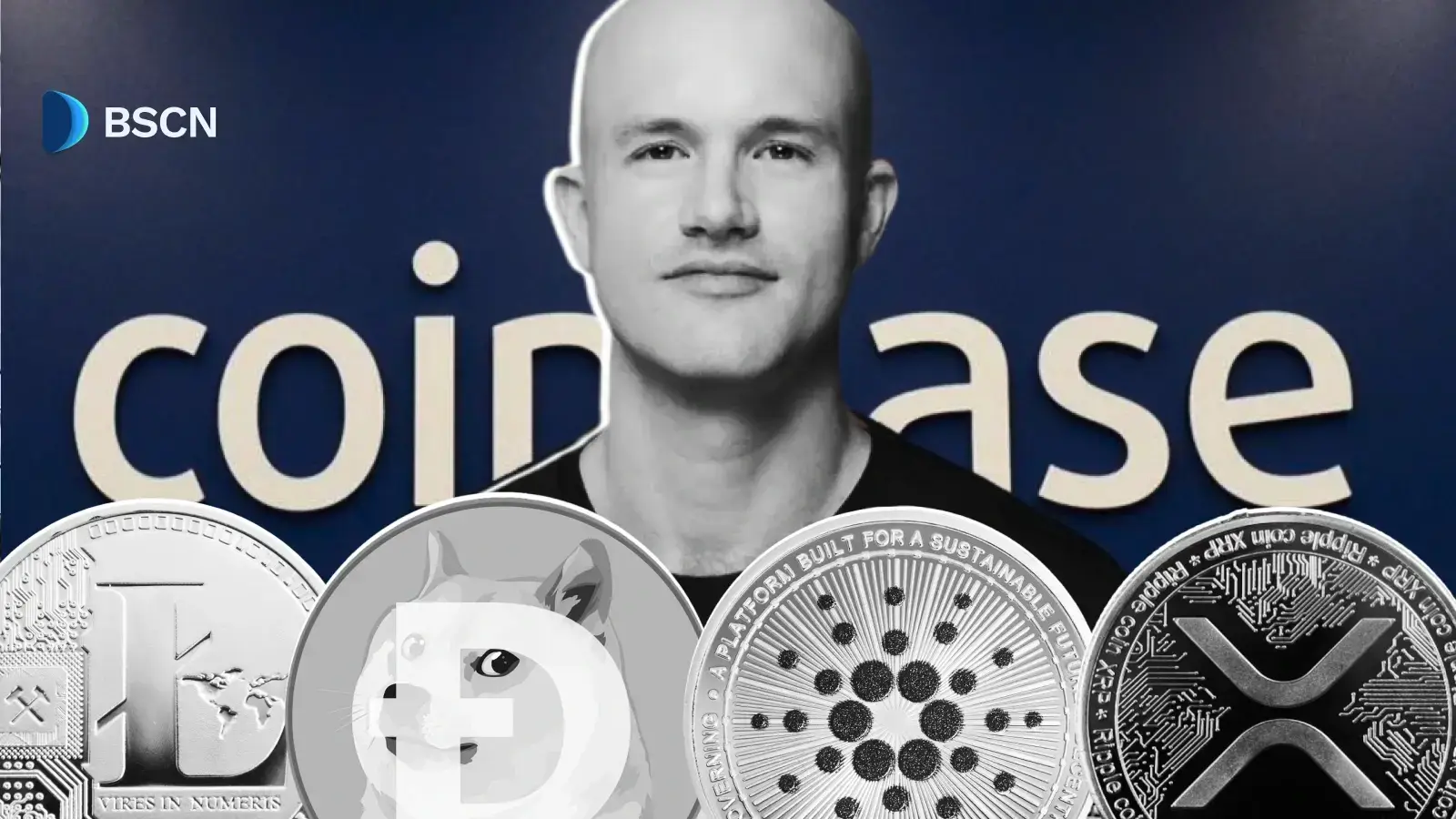
Coinbase now accepts XRP, Dogecoin, Cardano, and Litecoin as collateral for onchain USDC loans via Morpho. Borrow up to $100,000 without selling your crypto.

Soumen Datta
February 19, 2026

(Advertisement)
Table of Contents
Coinbase has expanded its onchain lending product to accept XRP, Dogecoin (DOGE), Cardano (ADA), and Litecoin (LTC) as collateral, allowing eligible U.S. customers to borrow up to $100,000 in USDC without selling their holdings. The loans are powered by the Morpho lending protocol running on Base, Coinbase's own Ethereum layer-2 network.
What Are Coinbase's Onchain Loans and How Do They Work?
Coinbase first launched its onchain loan product with Bitcoin support, then added Ether. The setup lets users post crypto as collateral through the Morpho protocol and receive USDC, a dollar-pegged stablecoin issued by Circle. Coinbase handles the front-end interface, while Morpho manages the lending markets onchain, creating a hybrid of centralized user experience and decentralized infrastructure.
The product has now crossed $1.9 billion in total loan originations. Bitcoin-backed loans go up to $5 million in USDC, and ether-backed loans top out at $1 million. The newly added altcoins carry a lower cap of $100,000.
The service is available across the U.S., except New York. Coinbase has indicated plans to expand access internationally at a later date.
Why XRP, Dogecoin, Cardano, and Litecoin?
The four newly supported assets had a combined market capitalization of around $117 billion at the time of the announcement, based on CoinGecko data. That is less than half of Ethereum's total market value, but these coins have maintained strong retail interest for years.
There is also a practical case for adding them. Ethereum and Cardano support native staking, meaning holders can earn rewards by participating in network validation. XRP, Dogecoin, and Litecoin do not offer that option, which makes crypto-backed lending one of the only ways holders can access liquidity from their positions without selling.
Coinbase also has a financial incentive. According to an SEC filing covering the period ending December 31, the exchange held $17.2 billion in XRP on its platform. Turning idle collateral into loan activity generates fee revenue without requiring those assets to move off the platform.
"No matter what you're holding, you should be able to leverage your crypto without having to sell," said Jacob Frantz, product lead at Coinbase. "Being able to borrow against more tokens means more opportunity to make your crypto work for you."
How Does the Loan-to-Value Ratio Work for These Assets?
Loan-to-value (LTV) ratio is a key concept in crypto-backed lending. It measures how large your loan is relative to the current market value of your collateral. If your collateral drops in value or interest builds up, your LTV rises. If collateral appreciates or you repay part of the loan, LTV falls.
Coinbase sets different LTV limits depending on the asset:
- Bitcoin and Ether: Borrow up to 75% LTV; liquidation triggers at 86%
- XRP, DOGE, ADA, LTC: Borrow up to 49% LTV; liquidation triggers at 62.5%
The tighter limits on altcoins reflect their higher price volatility compared to Bitcoin and Ether. There is no fixed repayment schedule, but borrowers must keep their LTV below the liquidation threshold at all times.
When a loan is liquidated on Morpho, third parties can repay the outstanding balance and claim the collateral at a discount. Coinbase adds a buffer on top of Morpho's standard threshold and notifies borrowers as their LTV approaches the danger zone, with alerts sent as frequently as every 30 minutes.
What Are the Fees and Restrictions?
Coinbase charges a one-time fee each time a user borrows, including when adding to an existing loan. The fee is applied directly to the loan principal. Interest rates on Morpho markets fluctuate based on supply and demand within each lending pool rather than being fixed upfront.
One notable restriction: borrowers cannot use loan proceeds for trading on the Coinbase exchange. This limits speculation and pushes borrowers toward other use cases such as covering expenses or making purchases without triggering a sale.
Tax and Liquidation Risks to Know
Crypto-backed loans are sometimes described as a way to access value from appreciated assets without triggering a capital gains tax event, since no sale takes place. However, this comes with caveats worth understanding.
Liquidations can create taxable events, according to law firm Greenspoon Marder LLP. Additionally, the assets posted as collateral through Coinbase's product are wrapped before being used on Base, which is an Ethereum-compatible network. Swapping a native asset like XRP for its wrapped equivalent is treated as a taxable event under current U.S. rules. Coinbase has acknowledged this and stated it does not provide tax advice.
Conclusion
Coinbase's onchain loan product now supports six assets, from Bitcoin's $5 million cap down to the $100,000 limit for XRP, DOGE, ADA, and LTC. Borrowers work within a no-fixed-schedule structure governed by LTV ratios, pay a one-time fee per borrow event, and must monitor collateral values closely given the liquidation risks tied to volatile markets. The product sits on Morpho's lending infrastructure via Base, with Coinbase serving as the access layer between users and onchain liquidity pools.
Resources
Coinbase on X: Post on Feb. 18
Report by Decrypt: Coinbase’s Crypto-Backed Lending Product Expands to XRP and DOGE
Report by The Block: Coinbase launches Bitcoin-backed onchain loans via DeFi protocol Morpho
Dune onchain data: Coinbase Onchain Loans data
Read Next...


Frequently Asked Questions
What is the maximum I can borrow using XRP, Dogecoin, Cardano, or Litecoin as collateral on Coinbase?
Eligible U.S. customers can borrow up to $100,000 in USDC using XRP, DOGE, ADA, or LTC as collateral. The maximum LTV ratio for these assets is 49%, and liquidation is triggered at 62.5%.
How does Morpho handle liquidations when collateral value drops?
When a loan's LTV exceeds the liquidation threshold on Morpho, third parties can step in to repay the loan and claim the collateral at a discount. Coinbase applies an additional buffer and sends borrower alerts up to every 30 minutes as the threshold is approached.
Is Coinbase's onchain loan product available everywhere in the United States?
No. The service is available to eligible U.S. customers in most states, but it is currently not available to residents of New York. Coinbase has said it plans to expand access to other countries in the future.
Disclaimer
Disclaimer: The views expressed in this article do not necessarily represent the views of BSCN. The information provided in this article is for educational and entertainment purposes only and should not be construed as investment advice, or advice of any kind. BSCN assumes no responsibility for any investment decisions made based on the information provided in this article. If you believe that the article should be amended, please reach out to the BSCN team by emailing [email protected].
Author
 Soumen Datta
Soumen has been a crypto researcher since 2020 and holds a master’s in Physics. His writing and research has been published by publications such as CryptoSlate and DailyCoin, as well as BSCN. His areas of focus include Bitcoin, DeFi, and high-potential altcoins like Ethereum, Solana, XRP, and Chainlink. He combines analytical depth with journalistic clarity to deliver insights for both newcomers and seasoned crypto readers.
(Advertisement)
Latest News
July 10, 2026

How Do PancakeSwap's CAKE Token Burns Actually Work?
July 10, 2026

Report: Ripple & The XRP Ecosystem in H1 2026
July 10, 2026

How Is Cardano Advancing Financial Inclusion in Developing Countries?
July 10, 2026
Why Was Sui Built From Scratch Instead of Forking an Existing Blockchain?
July 9, 2026

Trust Wallet Adds Native Support for Robinhood Chain, Opening Stock Tokens to 220 Million Users
July 9, 2026
Robinhood Chain Explodes Post-Mainnet Launch
July 9, 2026
Is Avalanche AVAX Bringing Hyundai On Chain?
July 9, 2026

Stop Tokenizing Assets You Don't Control
(Advertisement)

Crypto Project & Token Reviews
Project & Token Reviews
Comprehensive reviews of crypto's most interesting projects and assets
Learn about the hottest projects & tokens

Latest Crypto Articles
Get up to date with the latest crypto news stories and events