News
(Advertisement)


Coinbase Rejects Senate Stablecoin Yield Compromise in Latest Clarity Act Draft

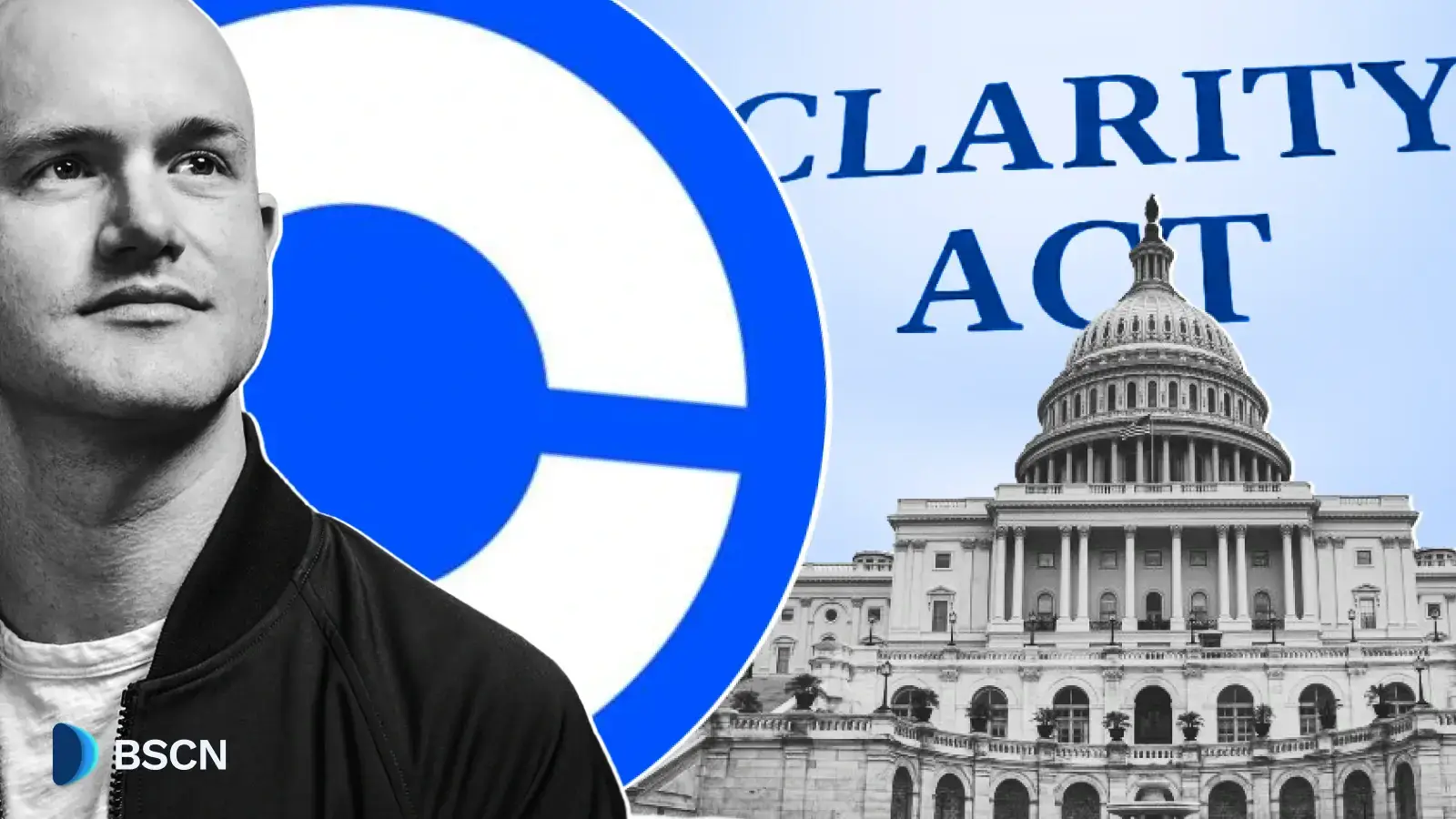
Coinbase has rejected the latest Senate stablecoin yield compromise in the Clarity Act, sparking market turmoil and exposing a deepening rift in the crypto industry.

Soumen Datta
March 26, 2026

(Advertisement)
Table of Contents
Coinbase, the largest cryptocurrency exchange in the United States, has rejected the latest draft compromise in the Digital Asset Market Clarity Act, which would broadly prohibit stablecoin yields across exchanges, brokers, and affiliated entities, according to The Punch Bowl. The company expressed its objections directly to Senate staff during closed-door meetings on Capitol Hill, stopping short of a public declaration but making its position clear to those in the room.
What Is The Clarity Act And Why Does The Yield Provision Matter?
The Digital Asset Market Clarity Act is federal legislation designed to establish a regulatory framework for digital assets within the US financial system. It passed the House 294-134 in July 2025 and cleared the Senate Agriculture Committee in January 2026, but has since stalled in the Senate Banking Committee over one particularly contested provision: whether stablecoin platforms can offer yield to users.
Stablecoin yield refers to rewards or interest that platforms pass on to users who hold stablecoins in their accounts. For Coinbase, this is not a minor feature. Stablecoin-related revenue represented approximately 20% of the company's total 2025 revenue, making the outcome of this provision a direct commercial concern.
The latest draft text, reviewed by crypto industry leaders on Monday and bank representatives on Tuesday in separate closed-door Capitol Hill sessions, goes further than previous versions. It prohibits offering yield directly or indirectly on stablecoin balances and bans anything economically or functionally equivalent to bank interest. The language covers exchanges, brokers, and affiliated entities, closing structural workarounds that had previously allowed platforms like Coinbase to continue passing stablecoin rewards to users even after the GENIUS Act restricted issuers directly.
How The Banks Got Here
The US banking industry has been lobbying against stablecoin yield provisions since the Senate Banking Committee's draft text first circulated. On March 5, the American Bankers Association formally rejected a White House-brokered compromise that would have allowed yield in limited peer-to-peer payment contexts while prohibiting it on idle balances. Crypto firms had accepted that compromise. Banks did not.
That rejection reset the negotiations entirely, and the text that emerged three weeks later sits closer to the banking industry's position than to the White House proposal that preceded it.
Standard Chartered analysts have estimated that a stablecoin yield provision, if enacted, could redirect up to $500 billion in deposits away from traditional banks toward stablecoin products by 2028.
What Did Coinbase Object To Specifically?
People familiar with Monday's meeting said Coinbase's objections went beyond the headline yield ban. Key concerns included:
- The bill's broad language around "active rewards," which could restrict firms from tying rewards to the scale of stablecoin transactions in an account, potentially affecting programs structured like credit card rewards.
- Worries about regulatory agencies being granted authority to draft subjective criteria governing permissible activity, which could result in inconsistent enforcement across different types of rewards programs.
- The possibility that the compromise impedes stablecoin-related products and services beyond what the industry had anticipated
Reactions among crypto industry stakeholders at Monday's meeting were mixed. Some participants were described as "pleasantly surprised" by the draft, while others, most notably Coinbase, were dissatisfied. No one was permitted to take a copy of the text with them, and it has not been publicly released.
Coinbase CEO Brian Armstrong, whose public withdrawal of support for an earlier stablecoin yield compromise contributed to collapsing a planned Senate Banking Committee markup, has not commented publicly on the new draft. That silence appears deliberate given the commercial stakes involved.
How Did Markets React To The New Draft Language?
The market response was immediate. Circle, the issuer of the USDC stablecoin and a close partner of Coinbase, fell 20% on Tuesday in its worst single-day decline on record, wiping approximately $5.6 billion in market value. Circle's stock ticked up slightly on Wednesday, though analysts noted that Tuesday's separate news of rival Tether submitting to an audit may have also weighed on Circle's shares.
Coinbase's own stock was also affected, reflecting investor concern that a yield ban would materially reduce one of the company's significant revenue streams.
Is The Clarity Act Still Moving Forward?
The bill's path remains uncertain. The Senate Banking Committee markup has no confirmed date, and several unresolved issues remain beyond the yield provision, including disputes over DeFi regulations, ethics language, and the possible attachment of community bank deregulation provisions that could pull the legislation into a broader set of political negotiations it was not originally designed to handle.
Where The Crypto Industry Stands
The Coinbase objection also exposed a fracture within the crypto industry itself. On an industry call this week, Coinbase clashed with other stakeholders over how to proceed. Some firms are prepared to accept restrictions on stablecoin rewards if it means securing the Clarity Act's broader establishment of crypto within the US financial system. For others, including Coinbase, giving up those rewards is too commercially significant to accept.
Coinbase is also a major sponsor of the Fairshake Super PAC network, a bipartisan political organization that has made multi-million dollar electoral contributions in support of crypto-friendly candidates, including donations connected to President Donald Trump's 2024 campaign. That political investment has delivered real legislative momentum, but it has not, so far, produced the yield language the industry sought.
The updated draft text is expected to be released either late this week or early next week, though lawmakers are unlikely to substantially rewrite provisions that have already been through months of negotiation.
Resources
Report by The Punch Bowl: Vault: Coinbase not sold on stablecoin compromise
Report by TheStreet: Coinbase again reportedly rejects support for CLARITY Act
Report by CNBC: Coinbase, a16z and others pour more than $78 million into pro-crypto PAC for 2026 election
Report by CoinDesk: Market structure bill compromise draws wide-ranging reaction from fractured crypto crowd
Report by Reuters: US banks may lose $500 billion to stablecoins by 2028, Standard Chartered warns
Congressional bill text: Digital Asset Market Clarity Act of 2025 (H.R. 3633)
Senate Banking Committee discussion draft: Responsible Financial Innovation Act of 2025
Read Next...




Frequently Asked Questions
Why is Coinbase opposed to the latest Clarity Act draft?
Coinbase objects to the draft's broad prohibition on stablecoin yields, which would cover exchanges, brokers, and affiliated entities. The company is concerned the language could restrict rewards programs tied to transaction activity, and that regulatory agencies could be granted authority to apply subjective criteria to permissible activity. Stablecoin-related revenue represented approximately 20% of Coinbase's total 2025 revenue.
What does the Clarity Act say about stablecoin yields?
The latest draft of the Digital Asset Market Clarity Act prohibits offering yield directly or indirectly on stablecoin balances. It bans anything economically or functionally equivalent to bank interest and covers exchanges, brokers, and affiliated entities, closing structural workarounds that had previously kept yield programs operating.
Why did Circle's stock drop 20% after the draft was shared?
Circle fell 20% on Tuesday after the draft Clarity Act language became known to market participants. Investors interpreted the broad yield ban as a win for the banking industry and a significant threat to Circle's business model, which is closely tied to USDC stablecoin activity and its partnership with Coinbase. The drop wiped approximately $5.6 billion in market value in a single session.
Disclaimer
Disclaimer: The views expressed in this article do not necessarily represent the views of BSCN. The information provided in this article is for educational and entertainment purposes only and should not be construed as investment advice, or advice of any kind. BSCN assumes no responsibility for any investment decisions made based on the information provided in this article. If you believe that the article should be amended, please reach out to the BSCN team by emailing [email protected].
Author
 Soumen Datta
Soumen has been a crypto researcher since 2020 and holds a master’s in Physics. His writing and research has been published by publications such as CryptoSlate and DailyCoin, as well as BSCN. His areas of focus include Bitcoin, DeFi, and high-potential altcoins like Ethereum, Solana, XRP, and Chainlink. He combines analytical depth with journalistic clarity to deliver insights for both newcomers and seasoned crypto readers.
(Advertisement)
Latest News
July 24, 2026

Analysis: Ondo Finance's 2026 In Numbers
July 24, 2026

Is Circle Planning to Launch a Korean Won Stablecoin?
July 24, 2026

What Is Ripple Mint?
July 23, 2026
Can Injective's New Mint Platform Bring Institutions to INJ?
July 23, 2026

What is RippleX & Why Does it Matter for XRP Ledger?
July 23, 2026

What Is Dfinity's Caffeine?
July 22, 2026
How Much Funding Has Canton Developer Digital Asset Raised?
July 22, 2026

What is Aptos' AIP-146 and Is It Good News for APT?
(Advertisement)

Crypto Project & Token Reviews
Project & Token Reviews
Comprehensive reviews of crypto's most interesting projects and assets
Learn about the hottest projects & tokens

Latest Crypto Articles
Get up to date with the latest crypto news stories and events