Research
(Advertisement)


Only 30% Chance The CLARITY Act Will Pass This Year Says Policy Expert

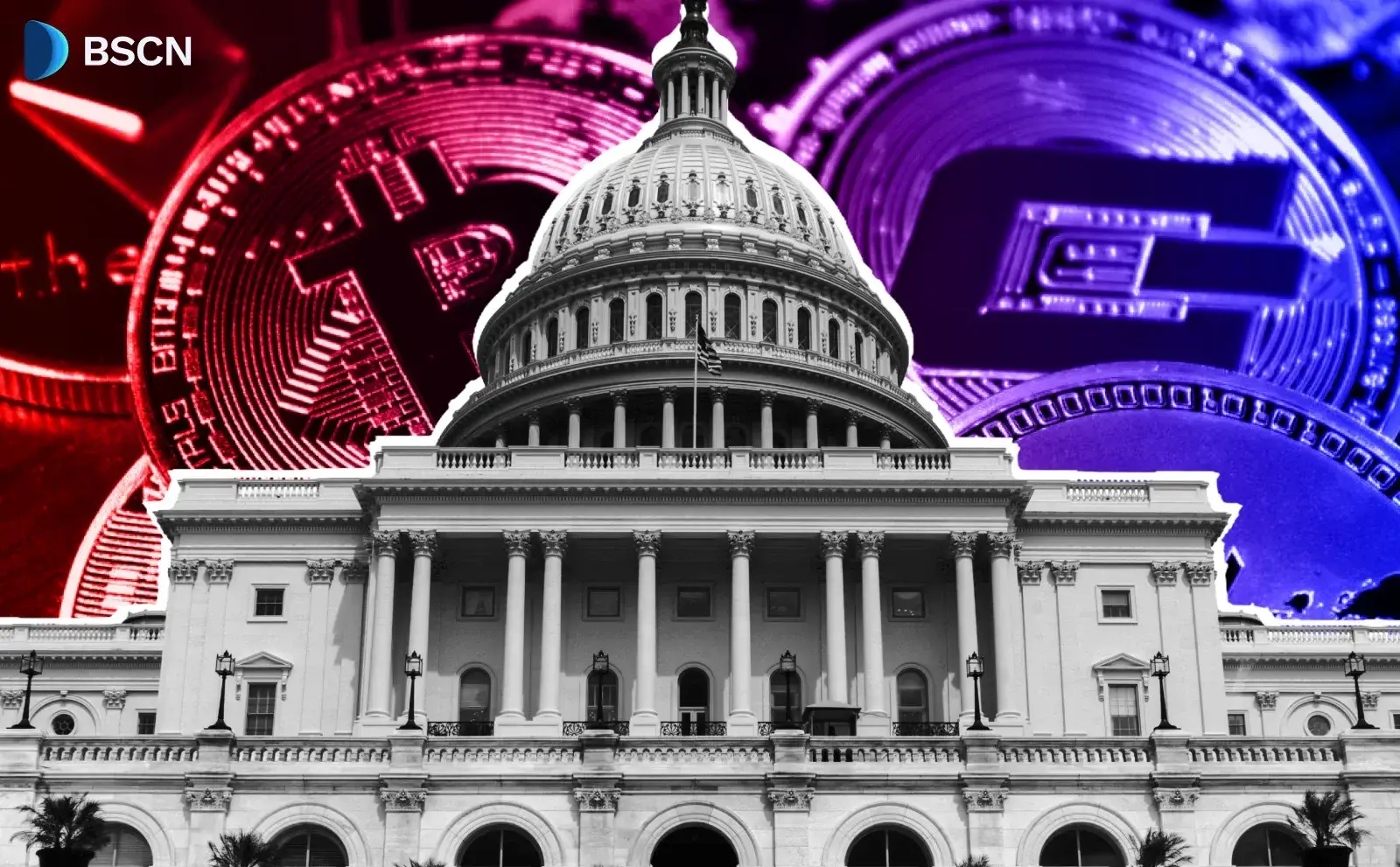
Wintermute policy chief Ron Hammond puts CLARITY Act passage at 30% in 2026 as Lummis warns Congress faces a four-year wait if the Senate misses its window.

Crypto Rich
April 15, 2026

(Advertisement)
Table of Contents
The Digital Asset Market Clarity Act has roughly a 30% chance of clearing Congress this year, according to Ron Hammond (@RonwHammond), head of policy at crypto market maker Wintermute. The number landed in an April 11 interview, the same week Senator Cynthia Lummis told colleagues this is their last real opening before 2030.
Two voices, one bill, and a very tight calendar.
What Hammond actually said
Hammond pointed to political friction, stalled negotiations, and shifting timelines as the main drags. He said there is "light at the end of the tunnel" but warned that passage in 2026 will require breakthroughs that have so far been elusive.
His firm has skin in this. Wintermute opened a New York office after the 2024 election and has been hiring in the United States. A favorable market structure law would lock in that bet. A failed one leaves the firm operating in the same patchwork it does today.
He also flagged a political wildcard: scrutiny of former President Trump's crypto-related dealings. If that intensifies around June, Democratic support could harden, making any bipartisan deal harder to assemble.
Why is the bill stuck?
The CLARITY Act passed the House in July 2025 by a vote of 294 to 134. It then moved to the Senate, where it has been parked in the Banking Committee since last fall. Chairman Tim Scott pulled a planned markup on January 14 after more than 100 amendments piled up.
The fight is over stablecoins. Specifically, whether platforms can pay yield or rewards on user balances. Banks have lobbied hard against it. A widely cited Standard Chartered estimate warns that uncapped stablecoin yield could pull up to $500 billion in deposits out of the insured banking system. Coinbase and Stripe argue that yield is the main reason institutions and retail users would adopt these instruments at scale.
Senators Thom Tillis and Angela Alsobrooks brokered a compromise on March 20 that bans passive yield but allows activity-based rewards. The framework is close to final, but the American Bankers Association rejected an earlier White House version on March 5 and is still pushing back. A markup date has not been set, and momentum cooled again after the Easter recess.
What does Lummis want?
Lummis posted on April 10 that this is the last chance to pass the bill until at least 2030. The Wyoming Republican announced in December 2025 that she will not seek a second term, which gives her warning extra weight.
Her math is simple. The November midterms will rearrange committee priorities. A new Congress takes time to organize. Complex financial legislation rarely survives a leadership reshuffle intact.
Treasury Secretary Scott Bessent published a Wall Street Journal op-ed the day before her post, framing the bill as a national security issue. Former White House crypto coordinator David Sacks called for an immediate Banking Committee vote. SEC Chair Paul Atkins urged Congress to "future-proof against rogue regulators." Coinbase CEO Brian Armstrong, who pulled the firm's support in January, reversed and said it is time.
White House crypto adviser Patrick Witt told reporters on April 13 that negotiations have "made considerable progress in the background" on issues beyond stablecoin yield, and said the team is "very close to closing them out."
Where do other forecasts land?
The 30% number sits well below most other estimates floating around right now.
- Polymarket has priced 2026 signing odds in the 56% to 66% range over the past week
- Ripple CEO Brad Garlinghouse has put the odds at 80% to 90%
- JPMorgan analysts described mid-2026 passage as a positive catalyst for digital assets, citing tokenization growth and institutional scaling
That gap between Hammond and the prediction markets is the story. Traders are pricing optimism; Hammond is pricing the friction.
Why does it matter?
The bill would do four things. It would split jurisdiction cleanly between the SEC and the CFTC. It would create registration paths for exchanges, brokers, and custodians. It would offer safe harbors for DeFi developers and validators. And it would block the Federal Reserve from issuing a retail central bank digital currency.
A March 17 joint interpretation from the SEC and CFTC already classified Bitcoin, Ethereum, Solana, XRP, and Dogecoin as digital commodities. The CLARITY Act would write that into statute, removing it from future agency reinterpretation.
Without the bill, regulation by enforcement returns the moment a different administration takes office.
What happens next?
Hammond expects "some progress soon." The practical deadline is the Senate floor calendar. If the Banking Committee does not move by May, the bill almost certainly slips past the midterms. After that, Lummis is on her way out, the post-midterm Senate looks different, and the math gets harder.
Three weeks of legislative time. One stablecoin fight left to settle. The crypto industry is about to find out whether its biggest policy ask of the cycle survives the room.
Sources:
- Senator Cynthia Lummis on X — Lummis' April 10 post warning the CLARITY Act window closes until 2030 if the Senate fails to act
- Yahoo Finance — Coverage of Lummis' retirement, the Tillis-Alsobrooks compromise, and Polymarket signing odds
- CoinDesk — Original April 11 interview where Hammond gave the 30% estimate
- Yellow.com — Detailed breakdown of the stablecoin yield fight, Standard Chartered $500 billion estimate, and Hammond's 30% number in market context
- Crypto.news — Coverage of regulator endorsements from Atkins and the Witt negotiation update
- Congress.gov — Official text and 294-134 House vote record for H.R. 3633
Read Next...




Disclaimer
Disclaimer: The views expressed in this article do not necessarily represent the views of BSCN. The information provided in this article is for educational and entertainment purposes only and should not be construed as investment advice, or advice of any kind. BSCN assumes no responsibility for any investment decisions made based on the information provided in this article. If you believe that the article should be amended, please reach out to the BSCN team by emailing [email protected].
Author
 Crypto Rich
Rich has been researching cryptocurrency and blockchain technology for eight years and has served as a senior analyst at BSCN since its founding in 2020. He focuses on fundamental analysis of early-stage crypto projects and tokens and has published in-depth research reports on over 200 emerging protocols. Rich also writes about broader technology and scientific trends and maintains active involvement in the crypto community through X/Twitter Spaces, and leading industry events.
(Advertisement)
Latest News
July 24, 2026

Analysis: Ondo Finance's 2026 In Numbers
July 24, 2026

Is Circle Planning to Launch a Korean Won Stablecoin?
July 24, 2026

What Is Ripple Mint?
July 23, 2026
Can Injective's New Mint Platform Bring Institutions to INJ?
July 23, 2026

What is RippleX & Why Does it Matter for XRP Ledger?
July 23, 2026

What Is Dfinity's Caffeine?
July 22, 2026
How Much Funding Has Canton Developer Digital Asset Raised?
July 22, 2026

What is Aptos' AIP-146 and Is It Good News for APT?
(Advertisement)

Crypto Project & Token Reviews
Project & Token Reviews
Comprehensive reviews of crypto's most interesting projects and assets
Learn about the hottest projects & tokens

Latest Crypto Articles
Get up to date with the latest crypto news stories and events