

House Democrats press the SEC over AI agents trading for retail investors

Eight House Democrats have written to SEC Chair Paul Atkins demanding clarity on how AI trading agents are regulated, citing Coinbase's new in-app AI adviser as a live example and requesting a response by July 31.
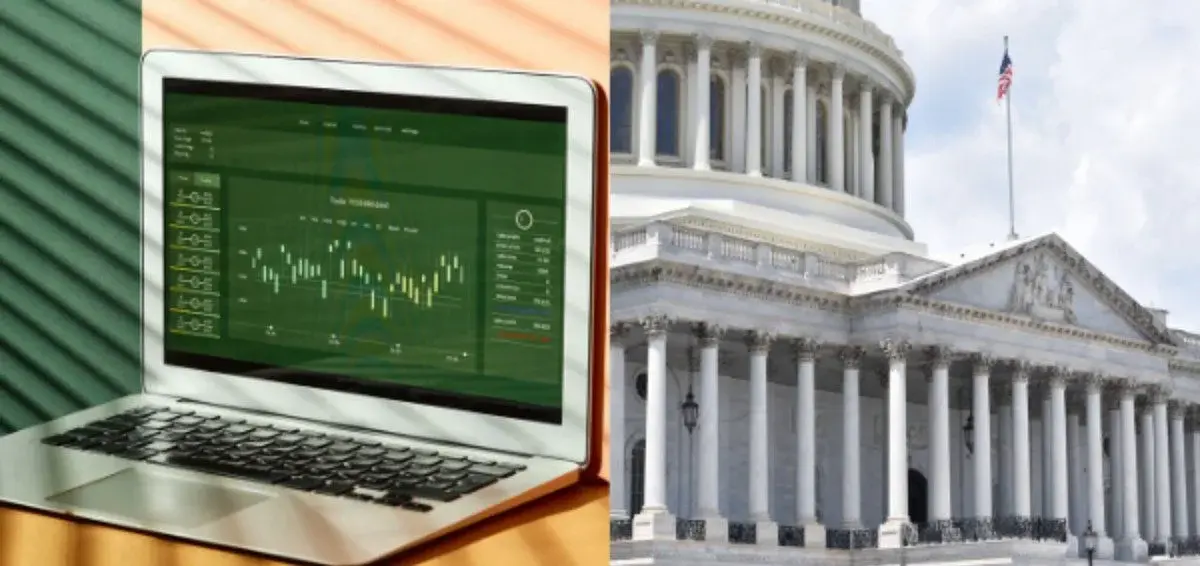
A group of eight House Democrats has formally asked the Securities and Exchange Commission to explain how it oversees artificial intelligence agents that make trades on behalf of retail investors, warning that the technology is advancing faster than the regulatory framework designed to govern it.
Representatives Bill Foster and Brad Sherman led members of the House Financial Services Committee in calling on SEC Chair Paul Atkins to detail what oversight, guidance, and investor protections are in place as brokerage firms begin allowing AI agents to make autonomous trades on behalf of retail investors. Representatives Stephen Lynch, Jim Himes, Sean Casten, Rashida Tlaib, Brittany Pettersen, and Sylvia Garcia also signed the letter.
A Regulatory Gap the Lawmakers Want Closed
Foster, Sherman, and the other signatories argued that many AI trading agents have "operated largely outside the securities regulatory framework," despite making "consequential investment decisions on behalf of retail investors." The letter also raises concerns about accountability. The lawmakers noted that disclosures on many AI agent platforms state that brokerage firms cannot guarantee the accuracy or suitability of AI-generated recommendations and cannot fully control, monitor, or audit agent behavior.
The lawmakers warned that agentic trading "could expand to a broad range of additional products, including options, cryptocurrency, event contracts, and futures." They pointed to @coinbase's recently launched in-app AI adviser, Coinbase Advisor, as a live example of the trend. Coinbase described the tool as one of the first SEC-registered AI-powered investment advisory tools, initially available to Coinbase One subscribers in the United States, designed to provide portfolio recommendations, tax-loss harvesting guidance, and market analysis.
Coinbase's own disclosures state that the adviser's output "may be inaccurate or incomplete" and that investment outcomes remain the customer's responsibility. That combination, of fiduciary duty claimed by the platform but outcomes borne by the user, has no direct precedent in securities law and has not been tested in court for an AI-driven registered investment adviser.
What the SEC Must Answer by July 31
The letter asks Chairman Atkins to provide clarity on the legal responsibilities of broker-dealers, AI developers, and AI agents themselves, and whether existing securities laws are sufficient to regulate agentic trading or if additional action from Congress would be needed. Among the specific questions, the letter asks what safeguards or analyses the agency has conducted on AI agents, when such systems should register with the regulator, how extensively the SEC has consulted with trading platforms, and whether Congress needs to grant the agency additional authority to address emerging risks.
The SEC has not been entirely silent on the issue. The agency's Investment Management Division has been discussing AI's role in financial advisory contexts, with particular emphasis on transparency requirements and fiduciary obligations. Even so, the Democrats' letter suggests that guidance has not kept pace with what is being deployed in consumer-facing products today.
The deadline the lawmakers set is July 31.
Sources:
Rep. Bill Foster official press release: Foster, Sherman Seek Regulatory Clarity on Agentic AI Trading
CoinTelegraph: House Democrats Probe SEC On AI Agent Advisors
Coinbase official blog: System Update, The Future of Finance is on Coinbase
Latest News





Read More...





(Advertisement)
Author
 Crypto Rich
Rich has been researching cryptocurrency and blockchain technology for eight years and has served as a senior analyst at BSCN since its founding in 2020. He focuses on fundamental analysis of early-stage crypto projects and tokens and has published in-depth research reports on over 200 emerging protocols. Rich also writes about broader technology and scientific trends and maintains active involvement in the crypto community through X/Twitter Spaces, and leading industry events.