Deepdive
(Advertisement)


How Did Pi Network Get Millions to Mine Crypto on Their Phones?

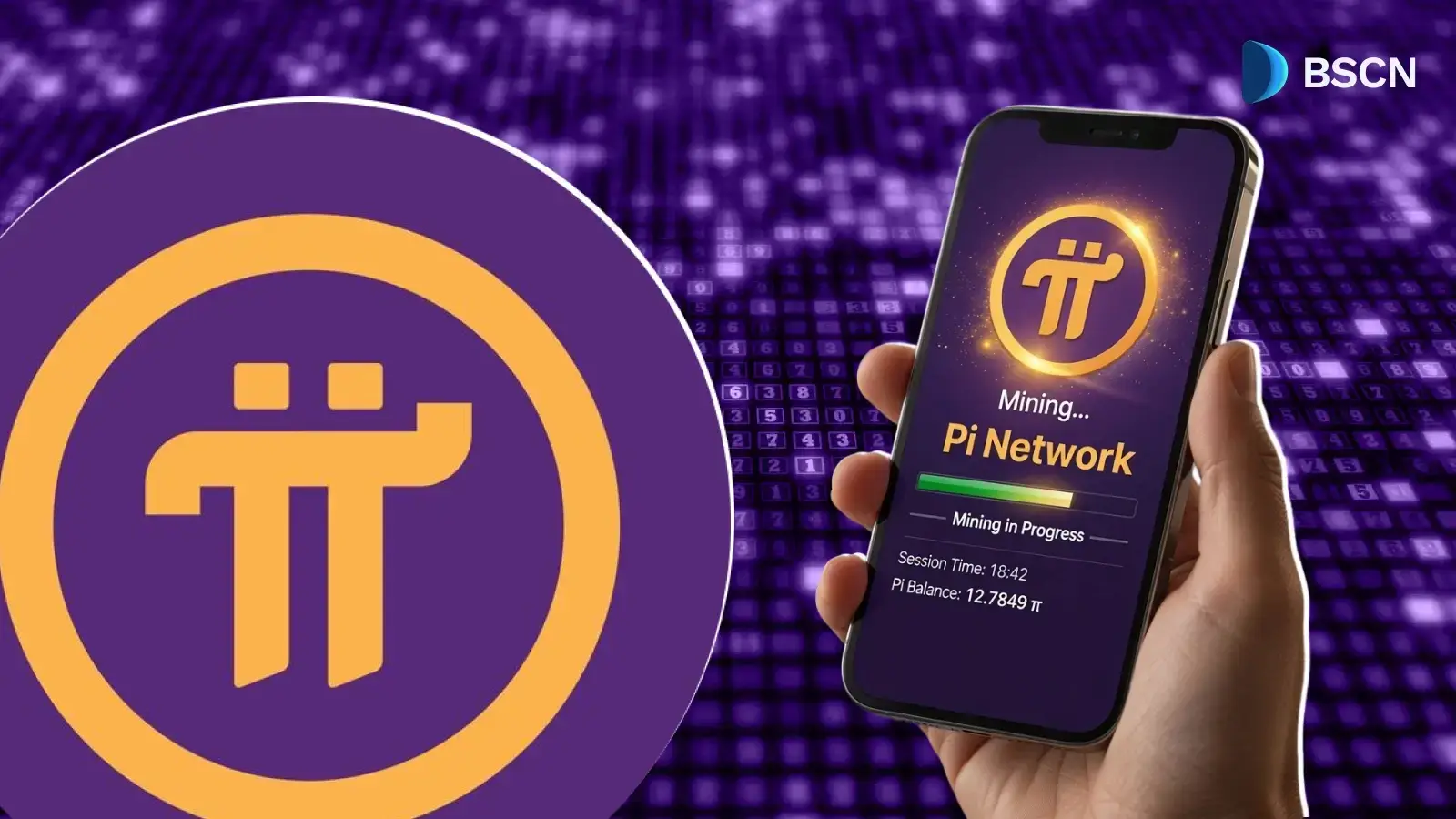
Pi Network got millions to mine crypto on phones using the Stellar Consensus Protocol, security circles, and a daily tap model. Here's exactly how it works in 2026.

Soumen Datta
June 18, 2026

(Advertisement)
Table of Contents
Pi Network attracted tens of millions of users to mine cryptocurrency on their smartphones by removing every barrier that traditionally kept people out of crypto: expensive hardware, high electricity costs, and technical knowledge. Instead of proof-of-work mining, Pi uses a trust-based consensus model adapted from the Stellar Consensus Protocol (SCP), where users earn PI tokens by checking into the app once every 24 hours and building networks of trusted contacts called security circles.
The network launched in 2019 and moved to its Open Network mainnet on February 20, 2025. As of June 2026, PI trades at approximately $0.13 USD with a market cap of around $1.4 billion.
Who Built Pi Network and Why?
Pi Network was founded by Dr. Nicolas Kokkalis and Dr. Chengdiao Fan, both of whom hold PhDs from Stanford University. Kokkalis holds a doctorate in electrical engineering with postdoctoral work in computer science, with a research background in distributed systems and human-computer interaction. Fan's work focuses on social computing.
Their stated goal was to make crypto participation accessible to everyday people, not just those with technical expertise or capital to invest in mining hardware. The app launched on March 14, 2019, a date chosen for its significance as Pi Day (3.14), and accumulated over 70 million registered users, known as Pioneers, over the following years.
How Does Pi Network Mining Actually Work?
The term "mining" in Pi Network is a departure from its meaning in Bitcoin or Ethereum. Traditional proof-of-work mining requires computers to repeatedly solve cryptographic hash puzzles, consuming large amounts of electricity. Pi does none of that.
Instead, Pi Network adapts the Stellar Consensus Protocol, a system originally designed by the Stellar Development Foundation for fast, low-energy transaction validation. SCP uses a mechanism called Federated Byzantine Agreement (FBA), where nodes reach consensus by trusting overlapping groups of other nodes rather than competing to solve puzzles. Pi maps this onto its user base through four participation roles:
- Pioneer: A basic user who opens the app daily to confirm they are an active human, not a bot.
- Contributor: A user who builds a security circle of trusted contacts. The mining rate boost caps at five active members, each contributing a 20% bonus to the base rate, though users can add more than five people to their circle.
- Ambassador: A user who refers new members, growing the network and earning a referral bonus on their mining rate.
- Node: A user who runs the Pi node software on a desktop computer, contributing to the actual consensus process.
When a Pioneer taps the mining button, the device is not performing any cryptographic computation. The app registers daily activity with a centralized server, and the user's mining rate is determined by their role, their security circle size, and the total number of active users on the network.
Mining rates follow a declining exponential model defined in Pi's whitepaper: as the user base grows, the base mining rate decreases. This is similar in design intent to Bitcoin's halving mechanism, though the mechanics are entirely different.
What Are Security Circles?
A security circle is a group of trusted people a user personally knows and vouches for as real, human, and not running duplicate accounts. Users can add more than five people to their circle, but the mining rate boost caps at five active members, with each contributing a 20% bonus to the base rate, for a maximum 100% boost. These circles form a global trust graph that Pi uses to prioritize verified human participants in its consensus process and to filter out bots and farms. The quality of this graph is central to the network's security model, since SCP relies on overlapping trust relationships rather than computational power to prevent fraudulent transactions.
Why Did It Grow So Fast?
The growth model is straightforward to understand once you see the incentive structure. Mining rates increase when a user refers to others and when those referred users remain active. This created a viral loop: existing users had a direct financial incentive to recruit new users, who in turn had the same incentive. Critics have compared this referral structure to multi-level marketing (MLM) schemes, pointing out that it rewards user acquisition more heavily than network utility.
Beyond referrals, the zero-cost barrier mattered. Pi required no financial investment, no special hardware, and no prior crypto knowledge. For users in emerging markets where smartphone penetration is high but access to crypto infrastructure is limited, the model offered a genuinely low-friction on-ramp.
What Happened When Pi Hit the Open Market?
Pi's mainnet launched in Open Network phase on February 20, 2025, and the PI token was listed on several centralized exchanges including OKX, Bitget, MEXC, and Gate.io. The token briefly hit an all-time high of $2.98 on February 26, 2025, just six days after launch. What followed was a sustained decline. By March 2026, PI was trading between $0.17 and $0.23, and as of June 2026 it sits near $0.13, down over 90% from its peak.
The sell-off reflected a pattern common to projects with large, early-accumulator user bases: when liquidity finally became available, the dominant market impulse among holders was to exit. The mobile mining phase itself ended permanently on March 14, 2025 (Pi Day), at 8:00 AM UTC. Users can no longer earn PI through the tap-to-mine button. Only balances migrated to the mainnet within the eligible window were retained.
As of April 2026, Pi Network had completed over 526 million KYC verification checks and confirmed 18 million fully verified users, with 16.72 million mainnet migrations completed. Validators who processed KYC checks received 0.05 PI per verified task, approximately 22 times the regular mining rate, as part of a decentralized identity verification system.
What Are the Legitimate Concerns?
Ben Zhou, CEO of Bybit, publicly questioned Pi Network's legitimacy. Justin Bons, founder of CyberCapital, labeled it a scam, citing centralized control and a referral-driven business model. On October 23, 2025, a federal class-action lawsuit was filed in the Northern District of California (docket 5:25-cv-09145-NC) against SocialChain Inc. and Pi's founders, alleging fraudulent scheme design.
Additional structural concerns include:
- All mainnet validators are reportedly operated by the Pi Core Team, undermining the decentralization claims.
- The mandatory KYC process requires government-issued ID and biometric facial recognition data submitted to a centralized corporate entity, with limited independent third-party security audits.
- The referral model's incentive structure prioritizes user acquisition over proven utility.
- Token unlock schedules in 2026 involve approximately 1.21 billion PI tokens entering circulation, adding supply pressure to an already declining price.
The Pi Core Team has denied fraud allegations and maintains that impersonation-related incidents were misattributed to the project. The team points to its protocol upgrades as evidence of ongoing technical development: the V21.2 hard fork in April 2026, the Protocol v23 upgrade completed in May 2026 which introduced full smart contract functionality via Rust-based WebAssembly, and the subsequent Protocol v25 upgrade in June 2026 focused on node stability and mainnet infrastructure. Protocol v26 is scheduled for June 22, 2026.
Dr. Altcoin, a recognized opinion leader in the Pi community, told FXStreet:
"Pi's large user base and focus on payments and ecosystem apps could support broader use cases, such as increased peer-to-peer transactions, local commerce, and digital services, if the mainnet delivers full functionality. However, wider adoption will depend on execution, liquidity, regulatory clarity, and the ability to convert users into active participants."
Conclusion
Pi Network built one of the largest mobile crypto user bases in history by replacing hardware-based mining with daily app check-ins and a social trust graph. The Stellar Consensus Protocol adaptation made participation energy-light and accessible, and the referral incentive structure drove rapid growth in emerging markets. \
Mobile mining ended in March 2025, and the open mainnet launch followed shortly after. PI hit an all-time high of $2.98 before declining over 90% to around $0.13 as of June 2026. The network now has 18 million KYC-verified users, over 215 active commercial dApps, and a sequential protocol upgrade roadmap that reached Protocol v25 as of June 2026.
Whether that infrastructure translates into sustained token demand remains the open question.
Resources
- Coin Bureau – Pi Network in 2026: What It Is, How Mining Works, Is It Legit?
- CoinMarketCap – Pi Network (PI) Live Price, Market Cap, and Tokenomics
- CoinGecko – Pi Network (PI) Price and Market Data
- Coinpedia – Pi Network Hits 526 Million KYC Verifications, Rewards Over 1 Million Validators
- FXStreet – Pi Network Price Forecast: Rocky 2026 as Community Eyes Real-World Utility
- CryptoTimes – Is Pi Network a Scam? The Truth About PI Coin, Lawsuits, and the Kraken Listing
- Coin Bureau – Is Pi Network Legit in 2026? A Comprehensive Review
- Coinpedia – Pi Network April 6 Upgrade Deadline, KYC Milestone, and What Comes Next
- The Coin Republic – Pi Network Price Outlook After KYC Validator Rewards and V21.2 Upgrade
Read Next...

Frequently Asked Questions
How did Pi Network get so many users without paying for hardware?
Pi replaced proof-of-work mining with a daily app check-in system based on the Stellar Consensus Protocol. Users earned PI for logging in once every 24 hours, referring others, and building security circles. No financial investment or specialized equipment was required, making participation accessible to anyone with a smartphone.
Is Pi Network mining still active in 2026?
No. The tap-to-mine phase ended permanently on March 14, 2025. The network has since transitioned to its Open Network mainnet, where PI is tradable on select exchanges including OKX, Bitget, and MEXC, and users can still earn PI through other activities such as KYC validation and node operation.
What is a security circle in Pi Network?
A security circle is a group of trusted contacts that a user adds within the Pi app. Users can add more than five people, but the mining rate boost caps at five active members, each providing a 20% bonus to the base mining rate, for a maximum 100% total boost. Each user vouches that those people are real and human. These circles collectively form a trust graph that feeds into the Stellar Consensus Protocol's validation process, helping the network distinguish genuine participants from bots and duplicate accounts.
Disclaimer
Disclaimer: The views expressed in this article do not necessarily represent the views of BSCN. The information provided in this article is for educational and entertainment purposes only and should not be construed as investment advice, or advice of any kind. BSCN assumes no responsibility for any investment decisions made based on the information provided in this article. If you believe that the article should be amended, please reach out to the BSCN team by emailing [email protected].
Author
 Soumen Datta
Soumen has been a crypto researcher since 2020 and holds a master’s in Physics. His writing and research has been published by publications such as CryptoSlate and DailyCoin, as well as BSCN. His areas of focus include Bitcoin, DeFi, and high-potential altcoins like Ethereum, Solana, XRP, and Chainlink. He combines analytical depth with journalistic clarity to deliver insights for both newcomers and seasoned crypto readers.
(Advertisement)
Latest News
6h : 43m ago
XRP Ledger's v3.2.0 Upgrade Explained
8h : 6m ago
Big News for Morpho and Ethena: What is Robinhood Earn?
10h : 28m ago
What Does XRP's Relationship With Banks Actually Look Like?
15h : 58m ago
How Does InterLink Solve the Bot Problem in Web3?
July 7, 2026
The 90% Myth
July 7, 2026

License Secured: Ripple's Biggest European Win Ever
July 7, 2026

How Much Bitcoin Has Saylor's Strategy Sold?
July 7, 2026

What Does It Mean to Rent Blockspace on Polkadot, and Who's Doing It?
(Advertisement)

Crypto Project & Token Reviews
Project & Token Reviews
Comprehensive reviews of crypto's most interesting projects and assets
Learn about the hottest projects & tokens

Latest Crypto Articles
Get up to date with the latest crypto news stories and events