

CLARITY Act comes down to one clause

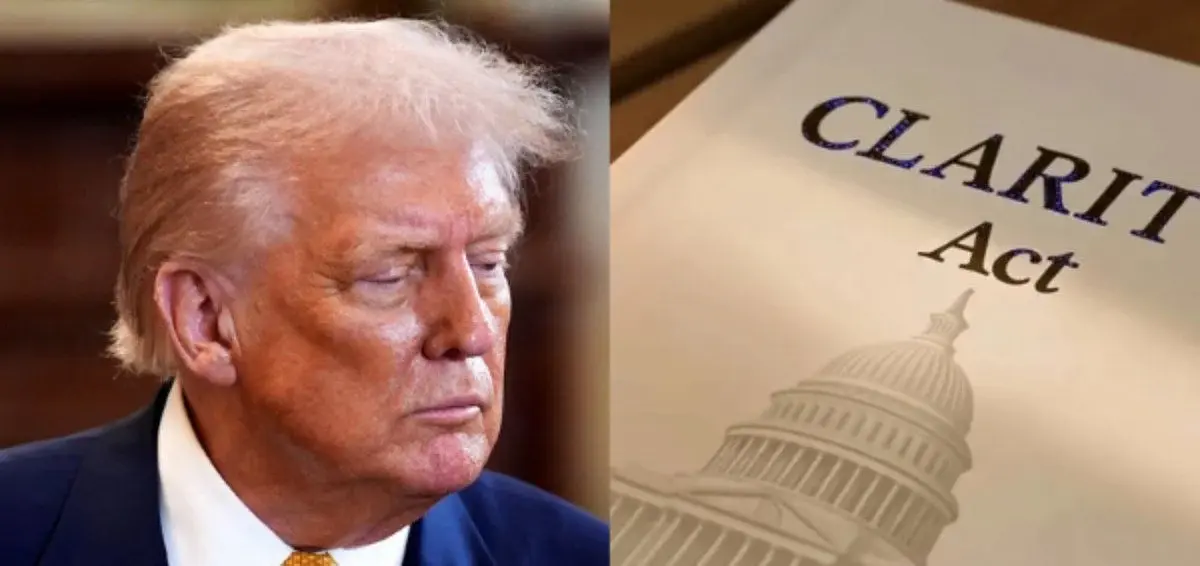
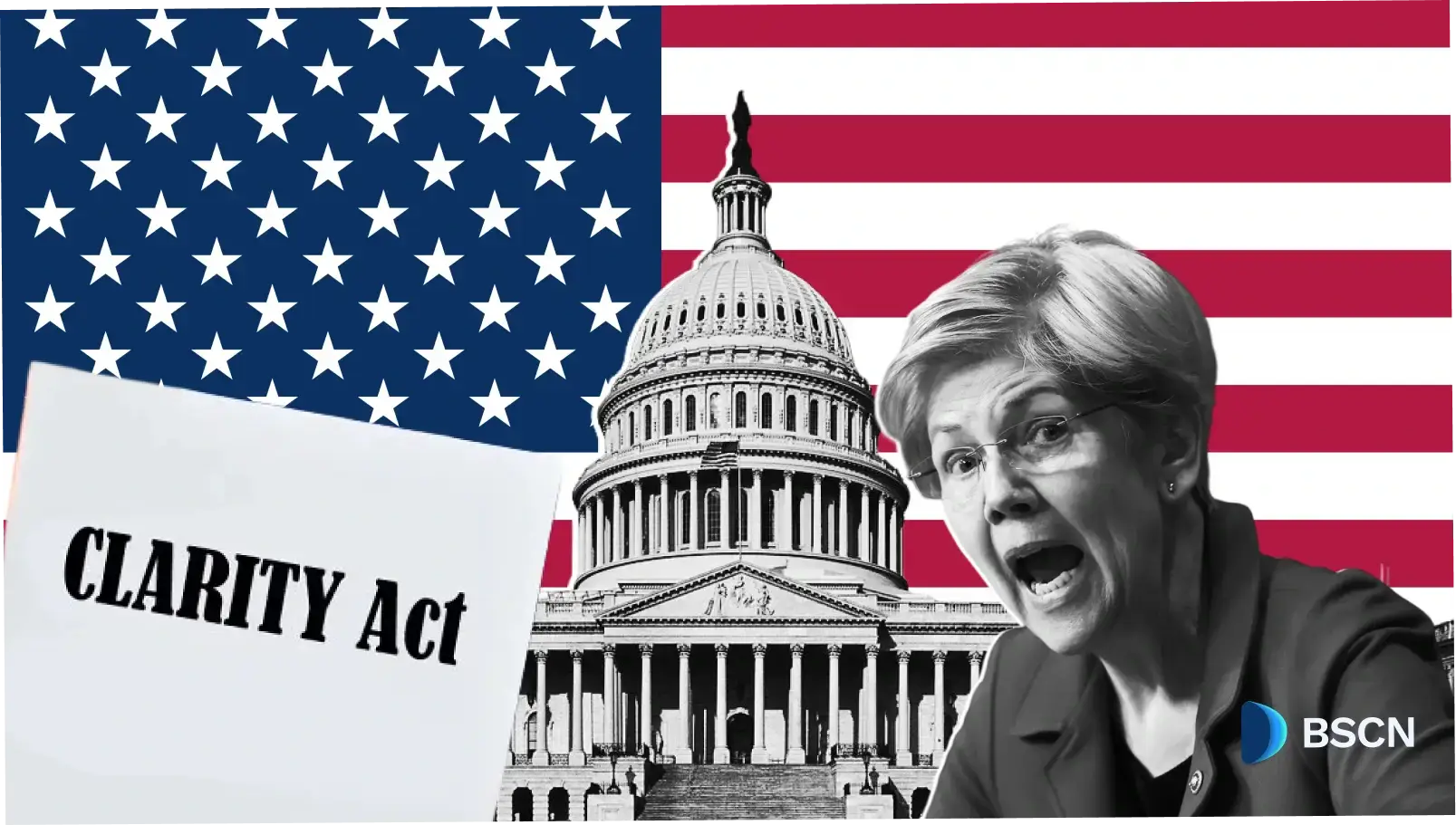
The Digital Asset Market CLARITY Act stalls in the Senate over a single ethics clause barring presidents and lawmakers from profiting off crypto in office. Seven Democratic votes are needed, and the August recess deadline is closing in.
(Advertisement)

One ethics clause is holding up the most consequential crypto bill in U.S. history
The Digital Asset Market CLARITY Act, widely described as the most comprehensive crypto regulatory framework ever to pass one chamber of Congress, has cleared the House and the Senate Banking Committee. What stands between it and a floor vote is a single conflict-of-interest provision: language that would restrict presidents, vice presidents, and members of Congress from profiting off digital assets while in office.
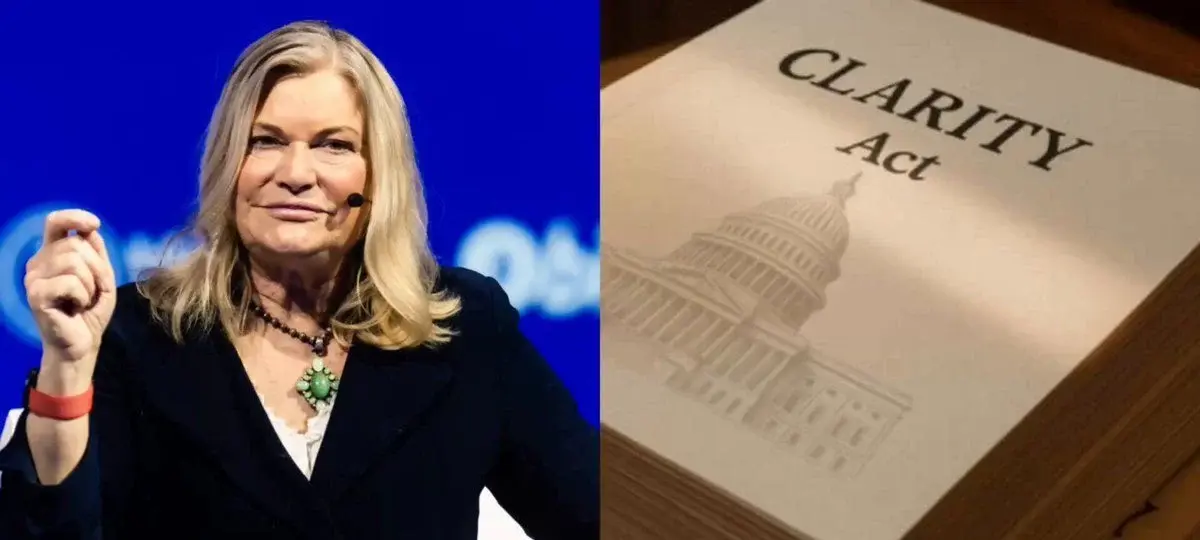
On Thursday, Republican senators brought that fight directly to the White House. President Trump met with Senators Bernie Moreno (R-OH), Cynthia Lummis (R-WY), Thom Tillis (R-NC), and Bill Hagerty (R-TN) to work through the impasse, the highest executive-branch engagement the legislation has received. The goal was to secure Trump's sign-off on ethics language, even as the bill would, in effect, constrain his own financial interests. Around $1.4 billion of Trump's 2025 income came from the crypto industry, spread across royalty payments from his memecoin company, token sales from World Liberty Financial, and sales to an Abu Dhabi-linked firm, among other streams.
The math is clear. The votes are not.
Seven Democratic votes beyond the Senate's 53-seat Republican caucus are required to invoke cloture and advance the bill past a filibuster. The CLARITY Act does not currently have them. At the Senate Banking Committee markup in May, only two Democrats, Senators Ruben Gallego (D-AZ) and Angela Alsobrooks (D-MD), voted for the bill, and both immediately conditioned their floor votes on a satisfactory ethics provision.
On the Republican side, Senator Lummis has confirmed that blind trusts remain under consideration as a mechanism to manage conflicts, but she rejected proposals that would allow state attorneys general to sue elected officials over crypto holdings. The White House has reportedly pushed for any restriction to be framed as a general officeholder rule rather than language that explicitly targets Trump.
Opposition from within the Democratic caucus remains firm. Senators Van Hollen, Murphy, and Merkley have signaled they want the bill dead without meaningful ethics guardrails, while Alsobrooks has said the next move belongs to Republicans. Senate Majority Leader John Thune has said he will press forward with a floor vote in July, whether or not the final ethics language is settled.
The deadlock has expanded uncertainty over the voting timeline, as the Senate has a limited window to complete its review before the August recess. Lummis has suggested that if the CLARITY Act does not pass this session, meaningful digital asset legislation might not materialize until 2030. Galaxy Research puts passage odds at roughly 50-50 for 2026, while Polymarket traders placed a 39% probability on the bill being signed into law this year, down from 82% in February.
Seven Democrats have to move. Which way they go will determine whether the United States gets its first comprehensive crypto market-structure law before the midterm election cycle takes over.
Sources
TechTimes: CLARITY Act Stalls on Only Clause That Could Limit Trump's $1.4B Crypto Income
CoinDesk: Trump's Crypto Riches Loom Over Clarity Act Talks
CryptoNews: Clarity Act Ethics Provision and Trump's Crypto Conflict
(Advertisement)
Latest News



Read More...

Author
 Crypto Rich
Rich has been researching cryptocurrency and blockchain technology for eight years and has served as a senior analyst at BSCN since its founding in 2020. He focuses on fundamental analysis of early-stage crypto projects and tokens and has published in-depth research reports on over 200 emerging protocols. Rich also writes about broader technology and scientific trends and maintains active involvement in the crypto community through X/Twitter Spaces, and leading industry events.