

Clarity ACT Brings Certainty, Production, & Integrity For Markets

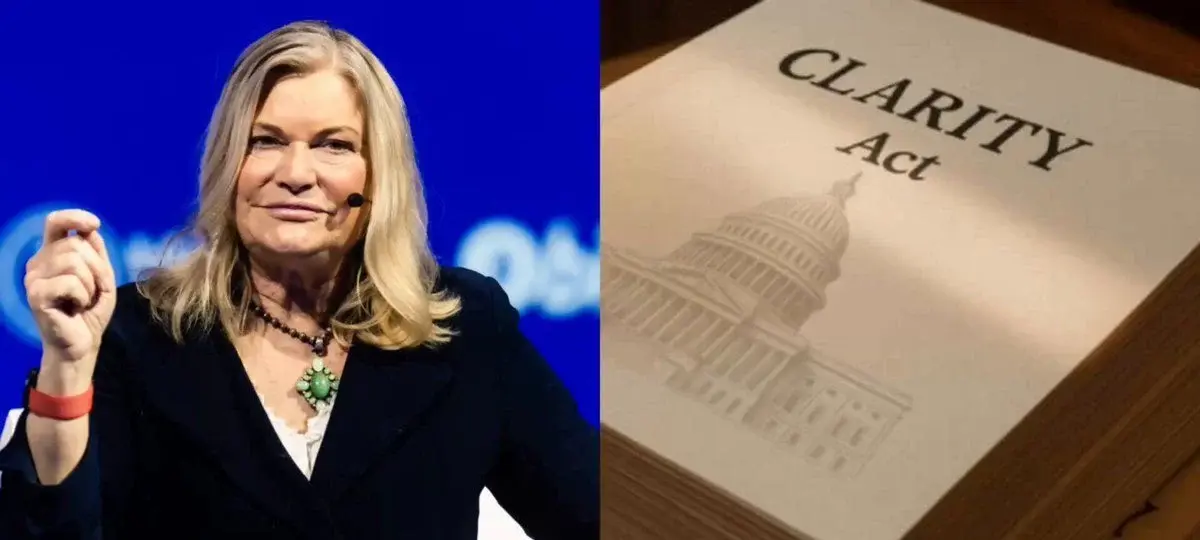
Senator Cynthia Lummis is pushing for a Senate floor vote on the Digital Asset Market Clarity Act before the August 2026 recess, a bill that would define SEC and CFTC jurisdiction over digital assets and give the US crypto industry its first comprehensive regulatory framework.
(Advertisement)

Senator Cynthia Lummis (@SenLummis) is pushing lawmakers to pass the Digital Asset Market Clarity Act, known as the CLARITY Act, before Congress breaks for its August recess, arguing that the bill would deliver the three things the US digital asset market has lacked for years: certainty for developers, protection for investors, and integrity for markets.
What the CLARITY Act Does
The legislation is designed to end the long-running regulatory ambiguity that has complicated life for crypto firms, exchanges, and on-chain developers operating in the United States. The CLARITY Act establishes a clear framework for distinguishing between digital assets that are securities, commodities, or payment stablecoins, and delineates the respective jurisdictions of the SEC and the CFTC, granting the CFTC exclusive authority over "digital commodities" and the SEC authority over "digital securities."
The bill tries to solve a problem that has frustrated the US crypto market for years. The SEC and CFTC have often taken overlapping views of digital assets, while businesses have had to infer rules from enforcement actions, speeches, settlements, and court decisions. Beyond jurisdictional clarity, the bill includes enforcement funding, with a separate report noting the CLARITY Act would set aside $150 million for crypto fraud investigations. Lummis said the money would help agencies "track down scammers and bad actors in the digital asset space."
The bill also includes over 16 provisions targeting illicit finance, including BSA and AML requirements designed to address concerns about crypto being used for money laundering, and carves out considerations for DeFi developers and validators.
A Narrow Window to Act
The bill has already passed the House with a 294-134 vote and cleared the Senate Banking Committee with a 15-9 vote in May 2026. But the path to becoming law remains narrow. Timing is one of the main challenges. If the Senate does not act before the August recess, the bill's path could move into 2027, making July a critical month for digital asset policy in Washington.
Republicans will likely need at least seven Democratic senators to overcome the Senate's 60-vote threshold. Unresolved issues include ethics rules tied to President Trump's crypto business interests and the treatment of crypto rewards programs. Lummis has framed the urgency in competitive terms, warning that without the CLARITY Act, other countries would fill the regulatory vacuum and create standards that may not align with American interests and values.
The European Union already has its Markets in Crypto-Assets (MiCA) framework up and running, and Singapore has been rolling out the regulatory red carpet for digital asset firms for years. Without a coherent US framework, international regulatory standards risk being set without American input at the table.
Sources:
Congressional Research Service: CLARITY Act's Potential Effects on SEC Jurisdiction
Blockchain Council: CLARITY Act Explained
Crypto Briefing: Sen. Lummis calls CLARITY Act starting point for crypto regulation
(Advertisement)
Latest News





Read More...





Author
 UC Hope
UC holds a bachelor’s degree in Physics and has been a crypto researcher since 2020. UC was a professional writer before entering the cryptocurrency industry, but was drawn to blockchain technology by its high potential. UC has written for the likes of Cryptopolitan, as well as BSCN. He has a wide area of expertise, covering centralized and decentralized finance, as well as altcoins.