News
(Advertisement)


The CLARITY Act Amendment Battle: Key Changes Lawmakers Are Pushing For

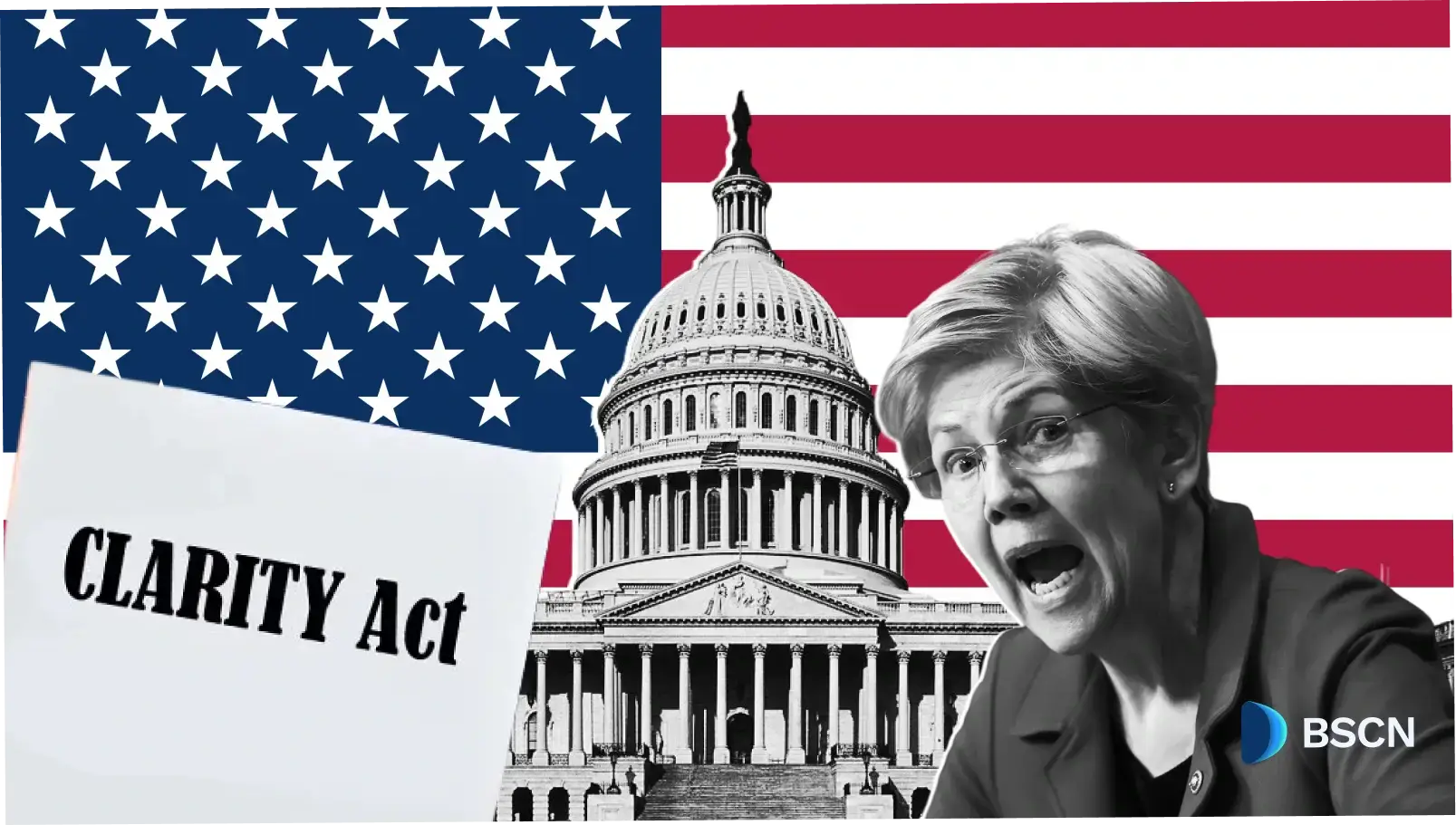
The US Senate Banking Committee faces 100+ amendments to the CLARITY Act ahead of its May 14 markup, with stablecoin yield and Trump ethics at the center of debate.

Soumen Datta
May 13, 2026

(Advertisement)
Table of Contents
The US Senate Banking Committee is preparing to review more than 100 proposed amendments to the CLARITY Act at its May 14 markup session, with most of the changes coming from Democratic lawmakers.
More than 40 of those amendments were submitted by Senator Elizabeth Warren alone, according to reports from POLITICO and industry journalists. The sheer volume of proposed changes signals that passing this landmark crypto regulation bill will not be straightforward, even as industry executives warn that failure to act could cost the US its competitive position in digital finance.
What Is the CLARITY Act and Why Does It Matter?
The CLARITY Act is a broad crypto market structure bill that would bring the US digital asset industry under federal regulation for the first time. It draws clear lines between the Securities and Exchange Commission and the Commodity Futures Trading Commission, resolving a long-running dispute over which agency oversees which assets.
Committee Chairman Tim Scott described the bill as a product of "serious, good-faith work across the committee," saying it "puts consumers first, combats illicit finance, cracks down on criminals and foreign adversaries, and keeps the future of finance here in the United States."
The Senate Banking Committee published the full 309-page draft just after midnight on Tuesday, ahead of Thursday's markup vote. The revised text expanded from the 278-page version released in January and revived negotiations that had slowed after Coinbase withdrew from earlier talks. Industry insiders had already reviewed the bill privately in recent weeks, so the text was not expected to include major surprises.
What Changed on Stablecoin Yield?
Stablecoin yield remains one of the most contested areas of the bill. The question at the center of the debate is whether stablecoin issuers should be allowed to pay holders a return simply for holding the token, which would make them function more like interest-bearing bank accounts.
How the New Language Reads
The updated draft restricts the payment of interest or yield "solely in connection with the holding of payment stablecoins" or on a stablecoin balance "in a manner that is economically or functionally equivalent to the payment of interest or yield on an interest-bearing bank deposit." This language was negotiated by Senators Angela Alsobrooks and Thom Tillis.
Coinbase CEO Brian Armstrong, who had pulled the company's support for the January draft over this exact issue, said at a live event on Monday that "not everyone got everything they wanted, but they got the must-haves."
Not everyone agrees. American Bankers Association CEO Rob Nichols argued in a letter to bank executives that the current text would "unnecessarily incentivize the flight of bank deposits into payment stablecoins, putting both economic growth and financial stability at risk." The ABA has sent more than 8,000 letters to Senate offices since last Friday targeting the stablecoin yield compromise.
How Does the Bill Handle DeFi Developers?
The draft includes the Blockchain Regulatory Certainty Act, known as the BRCA. It protects software developers who do not control user funds from being classified as money transmitters, a legal designation that carries significant compliance and licensing obligations. For open-source developers building DeFi tools, this distinction matters directly.
Law enforcement groups raised concerns that the BRCA language creates gaps in financial crime enforcement. Senators Chuck Grassley and Cynthia Lummis reached a deal earlier on Monday allowing prosecutors to pursue crypto-related money laundering while keeping developer protections in place. The DeFi Education Fund confirmed the BRCA is present in the bill text and said it is encouraged by the direction of negotiations.
What Are the Key Sticking Points in the Amendment Battle?
Beyond stablecoin yield and DeFi protections, several Democratic amendments target specific structural concerns:
- Senator Warren proposed an amendment that would block the Federal Reserve from granting master accounts to crypto companies
- Senator Jack Reed proposed an amendment that "prohibits crypto from being used as legal tender, for example, to pay taxes"
- Senators Reed and Tina Smith proposed amendments aimed at tightening standards for stablecoin products that offer users returns similar to interest payments
Committee members filed 137 amendments before the planned markup in January. The current tally of 100-plus new amendments signals continued resistance as the bill nears a committee vote.
What Is Still Missing From the Draft?
The most significant absence from the current text is an ethics provision covering conflicts of interest tied to President Donald Trump's crypto holdings. Bloomberg estimated in January that Trump has made at least $1.4 billion from crypto ventures, including memecoins tied to him and his wife, as well as his family's stake in the DeFi project World Liberty Financial.
Senators Elizabeth Warren, Kirsten Gillibrand, and Adam Schiff have all said they will not support the bill without a conflict-of-interest provision. Chairman Scott has said the issue falls outside the Banking Committee's jurisdiction and will need to be addressed separately before a full Senate vote.
The bill still needs to be merged with a similar version passed by the Senate Agriculture Committee, and it will require 60 votes in the full Senate to advance, meaning a significant number of Democrats must eventually back the final text. White House crypto adviser Patrick Witt has said the administration is targeting a July 4 passage date, while Senator Gillibrand has predicted the first week of August as more realistic.
Conclusion
The CLARITY Act covers stablecoin yield rules, DeFi developer protections, and the division of oversight between the SEC and CFTC. With more than 100 amendments filed ahead of the May 14 markup, the bill faces a complex path forward. Stablecoin yield language, Federal Reserve master accounts, and the absence of a Trump ethics provision remain the primary fault lines. The bill still needs a full Senate vote requiring 60 votes to advance, and the timeline for passage remains contested between the White House and key Senate members.
Resources
- Politico: The junk food lobby is winning on Capitol Hill
- CoinDesk: Clarity Act, in the Flesh, Unveiled by U.S. Senate Banking Committee Before Hearing
- The Block: Updated Senate Banking Committee Bill Tackles Stablecoin Rewards, DeFi but Sidesteps Trump's Crypto Conflicts of Interest
- BeInCrypto: Senators Pile 100+ Amendments on CLARITY Act Bill
- CoinDesk: Crypto Bill Won't Move Without a Ban on Officials' Industry Ties, Says U.S. Senator Gillibrand
- Invezz: What's New in the Senate Banking Committee's Updated CLARITY Act?
Read Next...





Frequently Asked Questions
What is the CLARITY Act?
The CLARITY Act is a US federal bill that would regulate the digital asset industry for the first time, defining which crypto assets fall under SEC oversight and which fall under CFTC oversight, while also setting rules for stablecoins and DeFi developers.
Why are there so many amendments to the CLARITY Act?
Democratic senators, led by Elizabeth Warren, have submitted more than 40 amendments each on issues including stablecoin yield restrictions, Federal Reserve master accounts for crypto firms, and conflicts of interest tied to President Trump's crypto holdings.
What is the BRCA in the CLARITY Act?
The Blockchain Regulatory Certainty Act, or BRCA, is a provision within the CLARITY Act that protects software developers who do not control user funds from being classified as money transmitters, shielding them from the compliance obligations that designation carries.
Disclaimer
Disclaimer: The views expressed in this article do not necessarily represent the views of BSCN. The information provided in this article is for educational and entertainment purposes only and should not be construed as investment advice, or advice of any kind. BSCN assumes no responsibility for any investment decisions made based on the information provided in this article. If you believe that the article should be amended, please reach out to the BSCN team by emailing [email protected].
Author
 Soumen Datta
Soumen has been a crypto researcher since 2020 and holds a master’s in Physics. His writing and research has been published by publications such as CryptoSlate and DailyCoin, as well as BSCN. His areas of focus include Bitcoin, DeFi, and high-potential altcoins like Ethereum, Solana, XRP, and Chainlink. He combines analytical depth with journalistic clarity to deliver insights for both newcomers and seasoned crypto readers.
(Advertisement)
Latest News
July 10, 2026

How Do PancakeSwap's CAKE Token Burns Actually Work?
July 10, 2026

Report: Ripple & The XRP Ecosystem in H1 2026
July 10, 2026

How Is Cardano Advancing Financial Inclusion in Developing Countries?
July 10, 2026

Why Was Sui Built From Scratch Instead of Forking an Existing Blockchain?
July 9, 2026

Trust Wallet Adds Native Support for Robinhood Chain, Opening Stock Tokens to 220 Million Users
July 9, 2026

Robinhood Chain Explodes Post-Mainnet Launch
July 9, 2026

Is Avalanche AVAX Bringing Hyundai On Chain?
July 9, 2026

Stop Tokenizing Assets You Don't Control
(Advertisement)

Crypto Project & Token Reviews
Project & Token Reviews
Comprehensive reviews of crypto's most interesting projects and assets
Learn about the hottest projects & tokens

Latest Crypto Articles
Get up to date with the latest crypto news stories and events