News
(Advertisement)


Recent Updates Around CLARITY Act

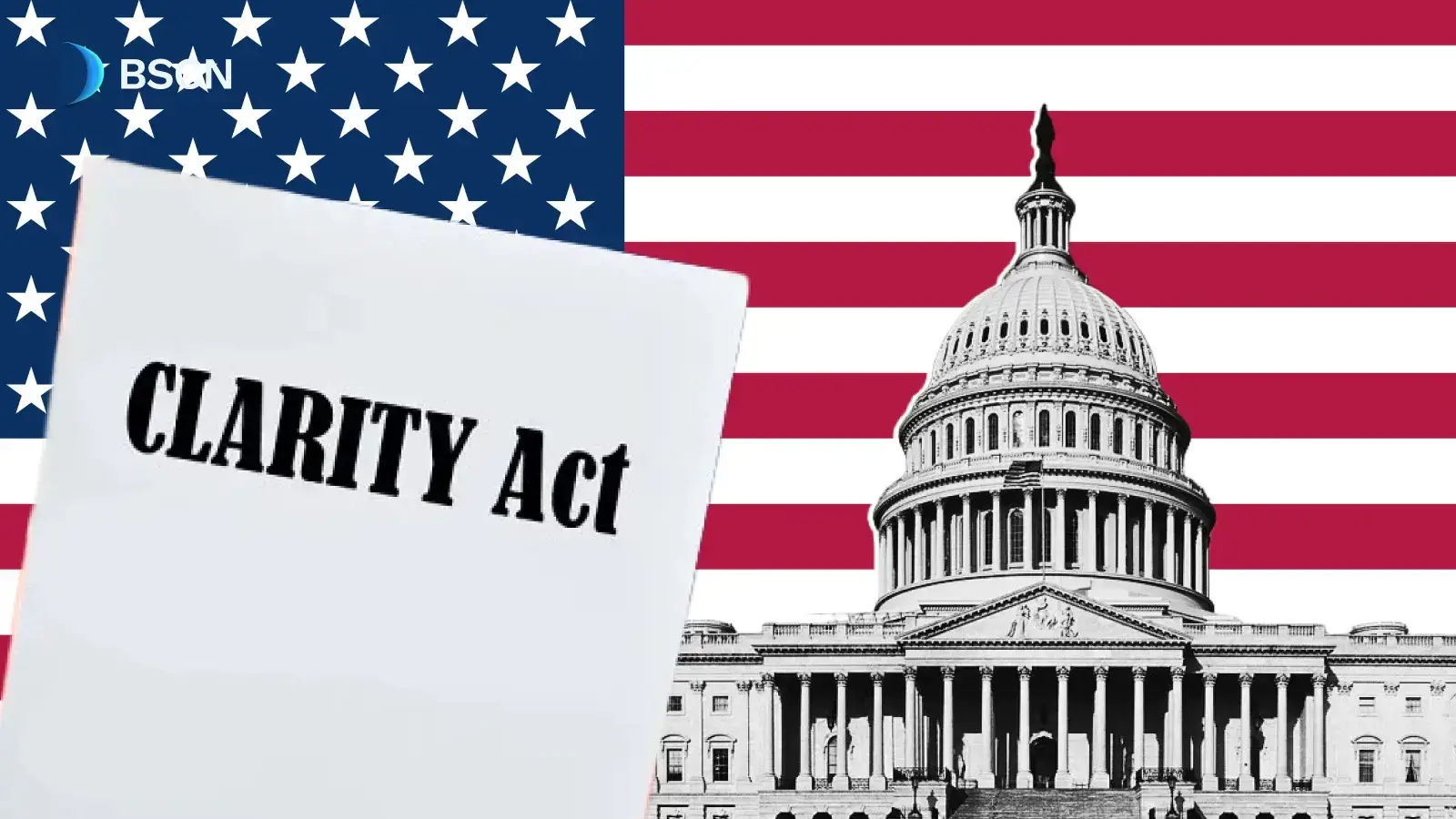
Senate talks on the Digital Asset Market CLARITY Act collapsed ahead of the May 14 markup over ethics disputes and developer protections. Here is what comes next.

Soumen Datta
May 14, 2026

(Advertisement)
Table of Contents
Senate lawmakers failed to reach a bipartisan deal on the Digital Asset Market CLARITY Act ahead of the May 14 Senate Banking Committee markup. Democrats demanded stronger ethics language, and disputes over developer protections blocked a final agreement.
What Is The CLARITY Act?
The CLARITY Act is a broad crypto market structure bill that would bring the US digital asset industry under federal regulation for the first time. It draws clear lines between the Securities and Exchange Commission and the Commodity Futures Trading Commission, resolving a long-running dispute over which agency oversees which assets.
Under the draft framework:
- The SEC would oversee most initial token sales treated as digital asset securities
- The CFTC would regulate spot trading of digital commodities, covering tokens that reach a sufficiently decentralized state
- Payment stablecoins would fall under a mix of Federal Reserve and state supervision
The bill passed the House in July 2025 by a 294 to 134 bipartisan vote but has since stalled twice in the Senate.
Why Did Senate Talks Break Down?
Senator Cynthia Lummis said the bill's provisions were "almost 99% sorted out," but that final one percent proved decisive. Democrats including Senators Adam Schiff and Ruben Gallego demanded stronger ethics language before agreeing to back the legislation.
The central issue is that the bill contains no provision explicitly prohibiting US government officials and their family members from benefiting financially from crypto investments.
Bloomberg estimated in January that President Trump has made at least $1.4 billion from crypto ventures, including memecoins tied to him and his wife and his family's stake in the DeFi project World Liberty Financial. Senators Warren, Gillibrand, and Schiff have all said they will not support the bill without this language included.
The Blockchain Regulatory Certainty Act Dispute
A separate sticking point involves the Blockchain Regulatory Certainty Act, or BRCA, which the Senate version added to the bill's expanded nine-title structure. The BRCA protects software developers who do not control user funds from being classified as money transmitters, a legal designation that carries heavy compliance and licensing obligations.
Senator Jack Reed filed an amendment to eliminate the BRCA entirely. Law enforcement groups raised concerns about enforcement gaps, though Senators Grassley and Lummis reached a deal allowing crypto-related money laundering prosecutions while keeping developer protections in place.
What Changed On Stablecoin Yield?
The updated draft restricts stablecoin issuers from paying holders a return in a way that functions like interest on a bank deposit. This language, negotiated by Senators Angela Alsobrooks and Thom Tillis, attempts to draw a line between stablecoin products and traditional bank accounts.
The American Bankers Association sent more than 8,000 letters to Senate offices opposing the compromise, arguing it would push deposits out of banks and into stablecoins. Coinbase CEO Brian Armstrong, who had pulled support over this issue in January, said "not everyone got everything they wanted, but they got the must-haves."
What Happens If The Bill Misses The Deadline?
More than 100 amendments were filed ahead of the May 14 markup, with 44 coming from Senator Warren alone. Chairman Tim Scott is expected to reject the majority of them over drafting issues, pushing the vote toward a largely partisan outcome.
The stakes are significant. If the bill does not clear committee before the May 21 Memorial Day recess, the entire process resets. Senators Lummis and Bernie Moreno have warned that failure at this stage could push the next viable legislative window to 2030 or beyond. Prediction market Polymarket currently gives the bill roughly a 60% chance of passing this year.
Assuming the bill clears committee, it still needs to be merged with a parallel Senate Agriculture Committee version and then secure 60 votes on the Senate floor, making Democratic support essential.
Conclusion
The CLARITY Act is at a pivotal moment. A coalition of more than 120 firms, including Coinbase, Kraken, and Andreessen Horowitz, backs the legislation, and Ripple CEO Brad Garlinghouse has publicly called the committee's work "incredible leadership." But without an ethics provision addressing Trump's crypto interests, Democratic support remains conditional. The next week will determine whether comprehensive US crypto regulation moves forward in 2025 or waits years longer.
Resources
Bloomberg: Trump Family's $6.8 Billion Fortune Is Increasingly Tied to Crypto, Including $1.4 Billion in Digital Asset Gains
Fortune: The Crypto Industry's Clarity Act Hits a Critical Juncture: Where Things Stand Going Into Senate Markup
CoinDesk: Clarity Act, in the Flesh, Unveiled by U.S. Senate Banking Committee Before Hearing
CoinDesk: Clarity Act Amendments Would Remake Key Parts of Crypto Bill but Have Doubtful Future
The Block: More Than 100 Amendments Filed Targeting Stablecoins, Ethics and DeFi Ahead of Senate Banking Committee Clarity Act Vote
The Block: Updated Senate Banking Committee Bill Tackles Stablecoin Rewards, DeFi but Sidesteps Trump's Crypto Conflicts of Interest
The Crypto Times: CLARITY Act Talks Collapse: Sen. Lummis Says 99% Is Settled Before Senate Markup
The Crypto Times: CLARITY Act Faces 100+ Amendments Just Before Make-or-Break May 14 Vote
Polymarket: Clarity Act Signed Into Law in 2026? Prediction Market Odds and Crowd-Sourced Probability
X / Brad Garlinghouse: Ripple CEO Brad Garlinghouse Backs the CLARITY Act and Calls Senate Banking Committee Work "Incredible Leadership"
Read Next...




Frequently Asked Questions
What Is The CLARITY Act?
The Digital Asset Market CLARITY Act is a US federal bill that would create the first comprehensive regulatory framework for the crypto industry, assigning oversight of digital asset securities to the SEC and spot digital commodities to the CFTC, while placing payment stablecoins under Federal Reserve and state supervision.
Why Are Democrats Blocking The CLARITY Act?
Democrats are withholding support because the bill lacks an ethics provision prohibiting government officials and their family members from holding conflicting crypto interests. Senators Warren, Gillibrand, and Schiff have all stated they will not vote for the bill without this language included.
What Happens If The CLARITY Act Misses The Memorial Day Deadline?
If the bill does not clear the Senate Banking Committee before May 21, senators including Cynthia Lummis and Bernie Moreno have warned the next realistic legislative window could be 2030 or later.
Disclaimer
Disclaimer: The views expressed in this article do not necessarily represent the views of BSCN. The information provided in this article is for educational and entertainment purposes only and should not be construed as investment advice, or advice of any kind. BSCN assumes no responsibility for any investment decisions made based on the information provided in this article. If you believe that the article should be amended, please reach out to the BSCN team by emailing [email protected].
Author
 Soumen Datta
Soumen has been a crypto researcher since 2020 and holds a master’s in Physics. His writing and research has been published by publications such as CryptoSlate and DailyCoin, as well as BSCN. His areas of focus include Bitcoin, DeFi, and high-potential altcoins like Ethereum, Solana, XRP, and Chainlink. He combines analytical depth with journalistic clarity to deliver insights for both newcomers and seasoned crypto readers.
(Advertisement)
Latest News
8h : 9m ago

Telebiz Goes Live With an Open-Source CRM Built Directly Into Telegram
10h : 14m ago

Will Robinhood Chain Push ETH's Price to All Time Highs?
11h : 56m ago

What is BlackRock's BUIDL Fund on Avalanche AVAX?
July 10, 2026

How Do PancakeSwap's CAKE Token Burns Actually Work?
July 10, 2026

Report: Ripple & The XRP Ecosystem in H1 2026
July 10, 2026

How Is Cardano Advancing Financial Inclusion in Developing Countries?
July 10, 2026

Why Was Sui Built From Scratch Instead of Forking an Existing Blockchain?
July 9, 2026

Trust Wallet Adds Native Support for Robinhood Chain, Opening Stock Tokens to 220 Million Users
(Advertisement)

Crypto Project & Token Reviews
Project & Token Reviews
Comprehensive reviews of crypto's most interesting projects and assets
Learn about the hottest projects & tokens

Latest Crypto Articles
Get up to date with the latest crypto news stories and events