

CLARITY Act's crypto ban on officials expires the moment Trump's term ends

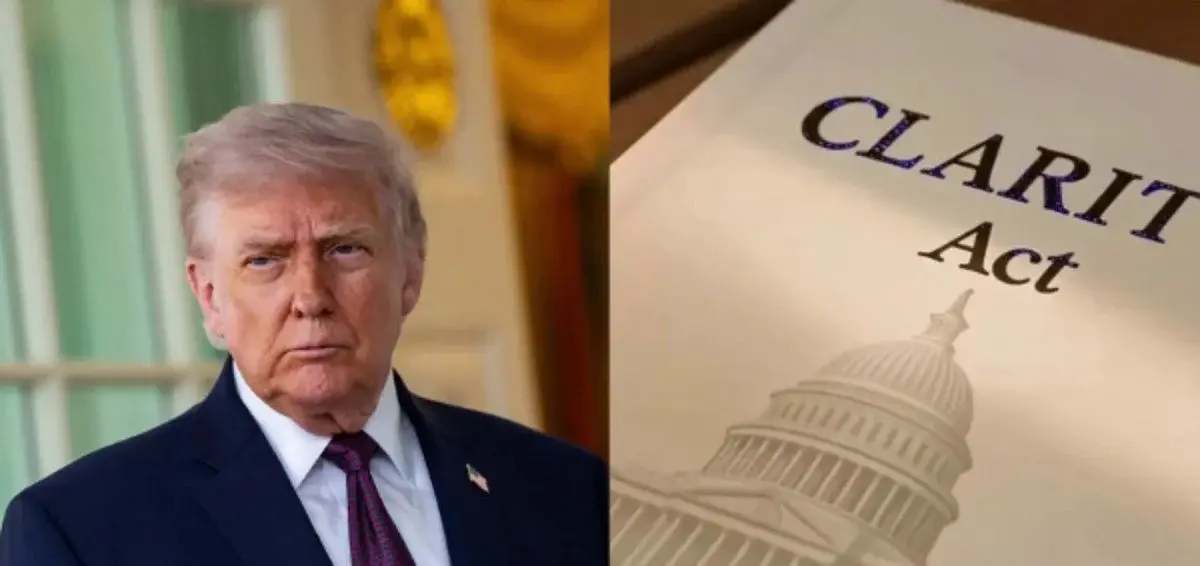
The Senate's revised CLARITY Act bans federal officials and their spouses from issuing or sponsoring digital assets for compensation, but the provision automatically expires at noon on January 20, 2029, the constitutionally fixed end of the current presidential term.
(Advertisement)

A Built-In Expiry Date
The Senate's updated Digital Asset Market Clarity Act has addressed one of its most contested sticking points: what to do about federal officials and their ties to the crypto industry. The updated bill bans the president, vice president, members of Congress, federal judges, and other covered officials, along with their spouses, from issuing or sponsoring digital assets for compensation while in office. But the restriction is narrower than it sounds, and it comes with a hard end date written into the text.
The bill carves out officials who simply appear at events or encourage crypto use generally. The prohibition applies only where compensation changes hands. More strikingly, the ban contains its own off switch: according to the bill language, the restriction "shall have no force and effect" from noon on January 20, 2029, the constitutionally fixed end of the current presidential term. A companion clause shields anyone from penalties after that date, even for conduct that occurred during the covered period. The effective-date clause in Section 30104 tightens the window further: the division takes effect at the earlier of 360 days after enactment or 60 days after a final rule publishes, meaning active enforcement could last considerably less than a full year before the provision self-terminates.
The coverage is also more limited than the political debate around it suggests. Covered individuals include the official and their spouse. Adult children are not included. That matters because the Trump-family conflict-of-interest concerns driving Democratic opposition centre largely on ventures such as World Liberty Financial, which is run by the president's adult sons, not his spouse.
On enforcement, the proposal grants the Department of Justice civil enforcement authority over ethics violations, and Democrats have expressed strong opposition to assigning enforcement solely to the DOJ without involving state attorneys general. Democrats, including Sen. Angela Alsobrooks, have criticised proposals that leave the DOJ in charge of enforcing ethics provisions, with Alsobrooks slamming the arrangement and calling for state attorneys general to lead oversight instead. Under the current draft, the Attorney General holds exclusive enforcement power, with state AG actions and private suits explicitly barred under Section 13153(b), which is the specific exclusivity that Democrats have objected to.
What Survives After 2029
When the ban lapses, two elements remain on the books. The text requires disclosure of crypto sales exceeding $1,000 and directs the Government Accountability Office to examine further ethics gaps. Critics argue those measures fall well short of a durable conflict-of-interest framework, given that the core prohibition will have already expired.
Senators could vote on the bill in the next two weeks before leaving Washington for most of August. Republicans hold 52 seats, meaning they need at least seven Democrats to clear the 60-vote filibuster threshold. It is not clear whether the bill will be able to garner the Democratic support needed to get 60 votes to clear the Senate. The ethics provision's limited scope and its built-in sunset could yet prove the decisive obstacle.
Sources:
CNBC: Senate crypto bill would ban federal officials from issuing digital assets
Crypto Times: Senate GOP unveils updated CLARITY Act draft with ethics rules
Latham and Watkins: US Crypto Policy Tracker, Legislative Developments
(Advertisement)
Latest News





Read More...




Author
 Crypto Rich
Rich has been researching cryptocurrency and blockchain technology for eight years and has served as a senior analyst at BSCN since its founding in 2020. He focuses on fundamental analysis of early-stage crypto projects and tokens and has published in-depth research reports on over 200 emerging protocols. Rich also writes about broader technology and scientific trends and maintains active involvement in the crypto community through X/Twitter Spaces, and leading industry events.