Deepdive
(Advertisement)


What Is in Trump's CLARITY Act Ethics Deal?

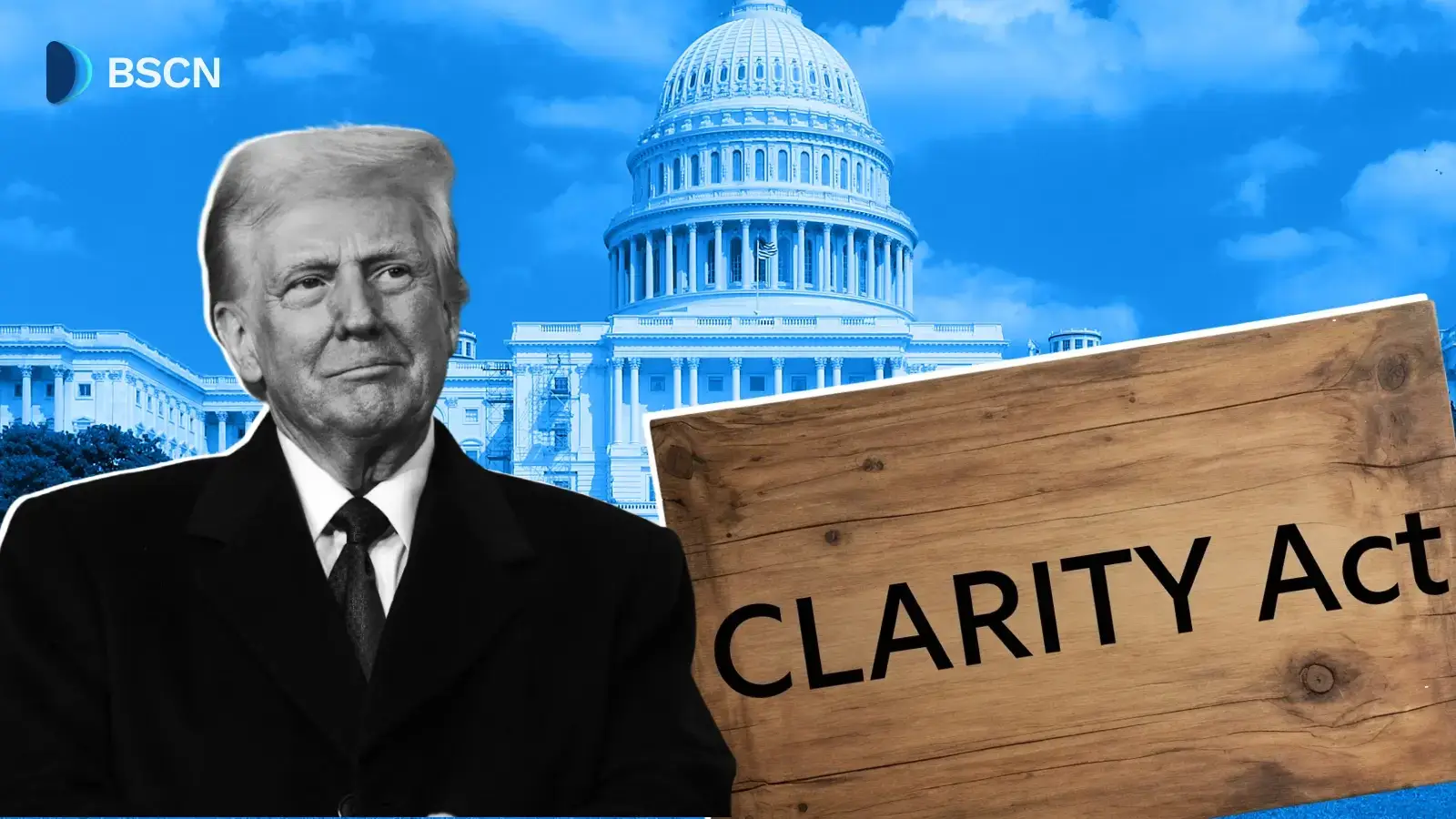
Trump has agreed to an ethics provision for the CLARITY Act. Here is what the package covers, who enforces it, and what happens next in the Senate.

Soumen Datta
July 22, 2026

(Advertisement)
Table of Contents
US President Donald Trump reportedly agreed on Monday night to an ethics provision for the CLARITY Act, a step that could clear one of the last hurdles standing between the crypto market structure bill and a Senate floor vote.
The provision would stop the president, vice president, members of Congress, and senior federal officials from issuing or profiting from digital assets while in office, with the Department of Justice put in charge of enforcing the rule. As of the latest reporting, the White House had not formally confirmed the agreement, and the Senate had not yet set a date for a vote.
What Is the CLARITY Act?
The Digital Asset Market Clarity Act, known as the CLARITY Act, would give the United States its first full federal rulebook for crypto. It splits oversight between two regulators.
- The Commodity Futures Trading Commission (CFTC) would oversee digital commodities such as Bitcoin.
- The Securities and Exchange Commission (SEC) would continue to regulate tokens that behave like securities.
The House passed the bill by a bipartisan vote of 294 to 134 on July 17, 2025. It then stalled in the Senate, where it needs 60 votes to advance, largely over the ethics clause now at the center of negotiations.
What Does the Ethics Provision Actually Do?
The provision bars all federal officials, including the president, from offering or issuing digital assets during their time in office. According to a source who spoke with The Hill after a meeting with White House crypto adviser Patrick Witt, the Department of Justice would enforce the rule rather than state attorneys general.
Senator Bernie Moreno (R-Ohio) confirmed the DOJ enforcement detail to reporters. The agreement reportedly involved Moreno, Senator Cynthia Lummis (R-Wyo.), and the White House, and covers the president directly. A preview of the language was shared with some Republican senators on Monday afternoon, but Senate Democrats had not yet reviewed the text, and the White House itself had not publicly confirmed the exact wording.
Why Did Democrats Push for This?
The push traces back to Trump's own crypto holdings. His financial disclosure listed $635 million in memecoin royalties and another $515 million from token sales tied to World Liberty Financial, his family's crypto venture. Reports have also pointed to more than $1 billion in crypto-related income for Trump last year.
This is not a new fight. In May, Senator Chris Van Hollen introduced an amendment to bar officials and their families from owning or promoting crypto. Republicans blocked it, and the underlying bill cleared committee by a 15-9 vote, with only two Democrats, Ruben Gallego and Angela Alsobrooks, supporting it.
Why Is DOJ Enforcement So Controversial?
This is the sharpest point of disagreement. Senator Alsobrooks called DOJ enforcement of the ethics rule "unserious" in comments to Crypto In America. Democrats argue the department answers to Trump, so it may not act against him even if he breaks the rule. Trump's personal lawyer, Todd Blanche, is also going through confirmation to lead the department, which adds to Democratic skepticism.
Senator Elizabeth Warren and Van Hollen have separately argued the bill weakens consumer protections rather than strengthening them, and could open the door to further conflicts of interest.
What Happens Next in the Senate?
Full legislative text was expected to circulate as early as Tuesday night or Wednesday, though the release has been delayed several times already. Senate Majority Leader John Thune said Tuesday that passage depends on whether Democrats can deliver enough votes, adding he has been "optimistic about it, been pessimistic about it, then optimistic about it" again.
Lummis told Fox Business she expects the bill to reach the Senate floor this week, but as of this writing the Senate has not set a formal vote date, and reports on whether the White House has actually signed off on the ethics language have conflicted.
Remaining sticking points include anti-money laundering and know-your-customer reporting standards. Lawmakers have fewer than three weeks before the August recess, and experts say the bill likely will not pass before the 2026 midterms if it misses this window.
Market Reaction So Far
Prediction market Polymarket had CLARITY Act passage odds at 40% for 2026 before this breakthrough, and odds have risen since. Separately, US spot Bitcoin ETFs pulled in about $727 million over five trading days, and Glassnode data shows roughly 1% of Bitcoin's supply last moved between the current price and $70,685, suggesting limited nearby seller resistance.
Conclusion
The CLARITY Act has a reported ethics provision that would bar federal officials from issuing digital assets and put the DOJ in charge of enforcement, though the White House had not formally confirmed the agreement as of the latest reports. Republicans and the White House say it is the toughest ethics language of its kind. Democrats say DOJ oversight leaves Trump largely unchecked given his disclosed crypto income. No Senate vote date has been set, and the bill's fate now rests on whether the Senate can gather 60 votes before the August recess begins.
Resources
- Report by The Hill: White House agrees to ethics provision in crypto bill
- Report by CoinDesk: White House pushes Senate Democrats to take 'historic' crypto Clarity Act ethics deal
- Report by BeInCrypto: What is the CLARITY Act Ethics Package and Why is It Bullish for Bitcoin?
- Eleanor Terrett (Crypto in America) on X: Senator Alsobrooks calls DOJ enforcement plan an "unserious offer"
- Report by Fox News: Lummis reveals CLARITY Act timeline
Read Next...




Frequently Asked Questions
What is the CLARITY Act ethics provision?
It is a rule that would bar the president, vice president, members of Congress, and senior officials from issuing or profiting from digital assets in office, enforced by the Department of Justice rather than state regulators.
Why do Democrats oppose DOJ enforcement?
Democrats argue the DOJ reports to the president, creating a conflict when the same office is meant to police Trump's own crypto activity.
When could the CLARITY Act reach a Senate vote?
Senator Cynthia Lummis has said she expects a floor vote this week, but as of the latest reports no formal date has been set, and the Senate faces a tight deadline before its August recess.
Disclaimer
Disclaimer: The views expressed in this article do not necessarily represent the views of BSCN. The information provided in this article is for educational and entertainment purposes only and should not be construed as investment advice, or advice of any kind. BSCN assumes no responsibility for any investment decisions made based on the information provided in this article. If you believe that the article should be amended, please reach out to the BSCN team by emailing [email protected].
Author
 Soumen Datta
Soumen has been a crypto researcher since 2020 and holds a master’s in Physics. His writing and research has been published by publications such as CryptoSlate and DailyCoin, as well as BSCN. His areas of focus include Bitcoin, DeFi, and high-potential altcoins like Ethereum, Solana, XRP, and Chainlink. He combines analytical depth with journalistic clarity to deliver insights for both newcomers and seasoned crypto readers.
(Advertisement)
Latest News
2h : 55m ago
What Is in Trump's CLARITY Act Ethics Deal?
July 21, 2026

Pudgy Penguins to Reach Millions with Target Placement
July 21, 2026
What is the GENIUS Act and Why Does it Matter?
July 21, 2026

What Is Jimothy Memecoin?
July 21, 2026

What Is the Cardano Van Rossem Upgrade?
July 20, 2026
How Does Pump.Fun Make Money?
July 20, 2026

A Closer Look at Avalanche's 2026 Fundamentals
July 20, 2026

How Does Chainlink Verify That Tokenized Gold Is Backed by Real Gold?
(Advertisement)

Crypto Project & Token Reviews
Project & Token Reviews
Comprehensive reviews of crypto's most interesting projects and assets
Learn about the hottest projects & tokens

Latest Crypto Articles
Get up to date with the latest crypto news stories and events