Deepdive
(Advertisement)


What is The United Nations' New Blockchain Advisory Group?

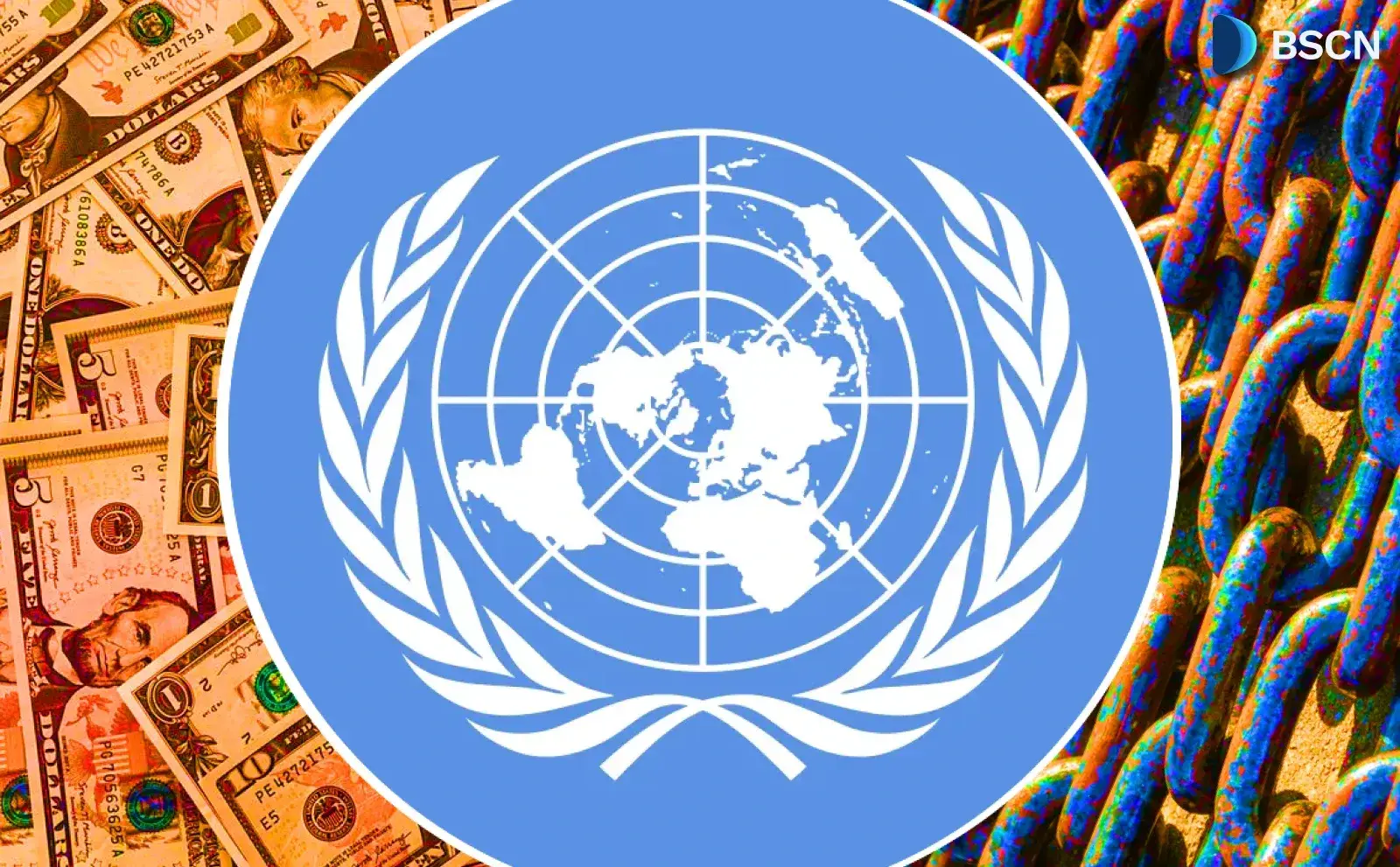
UNDP launched its Blockchain Advisory Group in Paris with 26 members including Ethereum, Cardano and Dfinity. Here's what the group plans to do.

Crypto Rich
June 10, 2026
(Advertisement)
The United Nations Development Programme (@UNDP) launched its Blockchain Advisory Group (BAG) on June 3, 2026 in Paris during the Proof of Talk 2026 conference, bringing together senior leaders from across the blockchain ecosystem to explore how the technology can help tackle development challenges, support digital public infrastructure and strengthen public systems. The group counts 26 member organizations, from the Ethereum Foundation and Cardano Foundation to Kraken and the Dfinity Foundation.
It is one of the clearest signals yet that the UN's development arm wants a permanent seat at the table with the blockchain industry. Not for token speculation, but for the unglamorous work of payments, identity and public services.
Why Did UNDP Create the Group?
The group is chaired by Haoliang Xu (@HaoliangXu), UNDP Associate Administrator. Xu said the key question is how fast-moving blockchain innovations can contribute to "stronger public systems and better development outcomes for people and planet."
The stated goal is to move from dialogue to action. The group builds on years of UNDP pilot projects testing blockchain across Africa, Latin America, the Middle East, Europe and Asia-Pacific, covering use cases such as digital payments, climate finance, digital identity and public procurement. Preparatory discussions began in late 2025, with a technical working meeting in Copenhagen that November laying the groundwork for the formal launch.
The inaugural meeting in Paris focused on financial inclusion and digital finance. Discussions covered fragmented payment systems, digital identity constraints, interoperability challenges and institutional readiness, the practical barriers that keep billions of people outside the formal financial system.
Who Are the 26 Members?
The membership spans layer 1 foundations, infrastructure firms, exchanges, nonprofits and media. The full list:
- Algorand Foundation (@AlgoFoundation)
- Arbitrum Foundation (@arbitrum)
- Avalanche Foundation (@AvalancheFDN)
- Blockchain for Good Alliance (@ChainforGood)
- Blockchain for Impact (@BFI_Impact)
- Cardano Foundation (@Cardano_CF)
- Celo Foundation (@Celo)
- Cointelegraph (@Cointelegraph)
- Interchain Foundation (Cosmos) (@interchain_io)
- Dfinity Foundation (@dfinity)
- Dubai Blockchain Centre
- Ethereum Foundation (@ethereumfndn)
- Exponential Science Foundation (@Exponential_Sci)
- Filecoin Foundation (@FilFoundation)
- FLock(.)io (@flock_io)
- Funding the Commons (@FundingCommons)
- Giveth (@Giveth)
- InfStones (@InfStones)
- Kraken (@krakenfx)
- NEARWeek (@NEARWEEK)
- Nordic Blockchain Association (@nordicblock)
- Partisia Blockchain Foundation (@partisiampc)
- Stellar Development Foundation (@StellarOrg)
- Sui Foundation (@SuiFoundation)
- The Blockchain Center Abu Dhabi (@adbc_ae)
- Web3 Foundation (@Web3foundation)
The mix is deliberate. Ecosystems like Ethereum, Cardano, Avalanche, Sui and Stellar bring the core infrastructure. Kraken adds an exchange perspective. Groups like Giveth and Funding the Commons represent the public goods side, while Cointelegraph and NEARWeek keep media in the room.
Members did not just show up for the photo. Dfinity Foundation chief business officer Pierre Samaties (@PierreSamaties), who attended the Paris sessions, argued afterward that while token ledgers drove the first wave of blockchain use cases, "the real impact of the technology for public good will come from compute." It is a notable framing from inside the room, suggesting the group's scope will stretch beyond payments into decentralized infrastructure itself.
What Happens Next?
The Blockchain Advisory Group will meet twice a year, each time around a different theme. Future topics include public trust and digital governance, inclusive legal identity, financial inclusion, sustainability and climate accountability, and digital labor.
UNDP says it wants concrete collaboration opportunities and public-good pilots to emerge from these sessions, not just talking points. A multi-stakeholder group of this size that meets biannually has the structure to produce recommendations that filter into national policy discussions, making it worth watching even for readers who are skeptical of UN working groups.
For the blockchain industry, the appeal is obvious. A standing channel into the UN's development machinery offers legitimacy and a path to real-world deployments in markets where the technology's case is strongest.
Sources:
- UNDP Official press release announcing the Blockchain Advisory Group launch, including the full member list and focus areas.
- Pierre Samaties on X Post from Dfinity's chief business officer on attending the Paris launch and his perspective on blockchain for public good.
Read Next...
Disclaimer
Disclaimer: The views expressed in this article do not necessarily represent the views of BSCN. The information provided in this article is for educational and entertainment purposes only and should not be construed as investment advice, or advice of any kind. BSCN assumes no responsibility for any investment decisions made based on the information provided in this article. If you believe that the article should be amended, please reach out to the BSCN team by emailing [email protected].
Author
 Crypto Rich
Rich has been researching cryptocurrency and blockchain technology for eight years and has served as a senior analyst at BSCN since its founding in 2020. He focuses on fundamental analysis of early-stage crypto projects and tokens and has published in-depth research reports on over 200 emerging protocols. Rich also writes about broader technology and scientific trends and maintains active involvement in the crypto community through X/Twitter Spaces, and leading industry events.
(Advertisement)
Latest News
5h : 30m ago
How Does Pump.Fun Make Money?
6h : 32m ago
A Closer Look at Avalanche's 2026 Fundamentals
9h : 37m ago
How Does Chainlink Verify That Tokenized Gold Is Backed by Real Gold?
July 17, 2026
What is the Nakamoto Coefficient & Why Does it Matter?
July 17, 2026
How to Trade on Robinhood Chain, Crypto's Busiest New Memecoin Market
July 17, 2026
Insights from CoinGecko's Q2 Crypto Report
July 17, 2026
Why Is Sui's Approach to Storing Data On Chain Different From Most Blockchains?
July 17, 2026
Why Does XRP Move Faster Than Bitcoin, And What Makes It Possible?
(Advertisement)

Crypto Project & Token Reviews
Project & Token Reviews
Comprehensive reviews of crypto's most interesting projects and assets
Learn about the hottest projects & tokens

Latest Crypto Articles
Get up to date with the latest crypto news stories and events