News
(Advertisement)


Did Vitalik Buterin Just Destroy the Ethereum Layer-2 Dream?

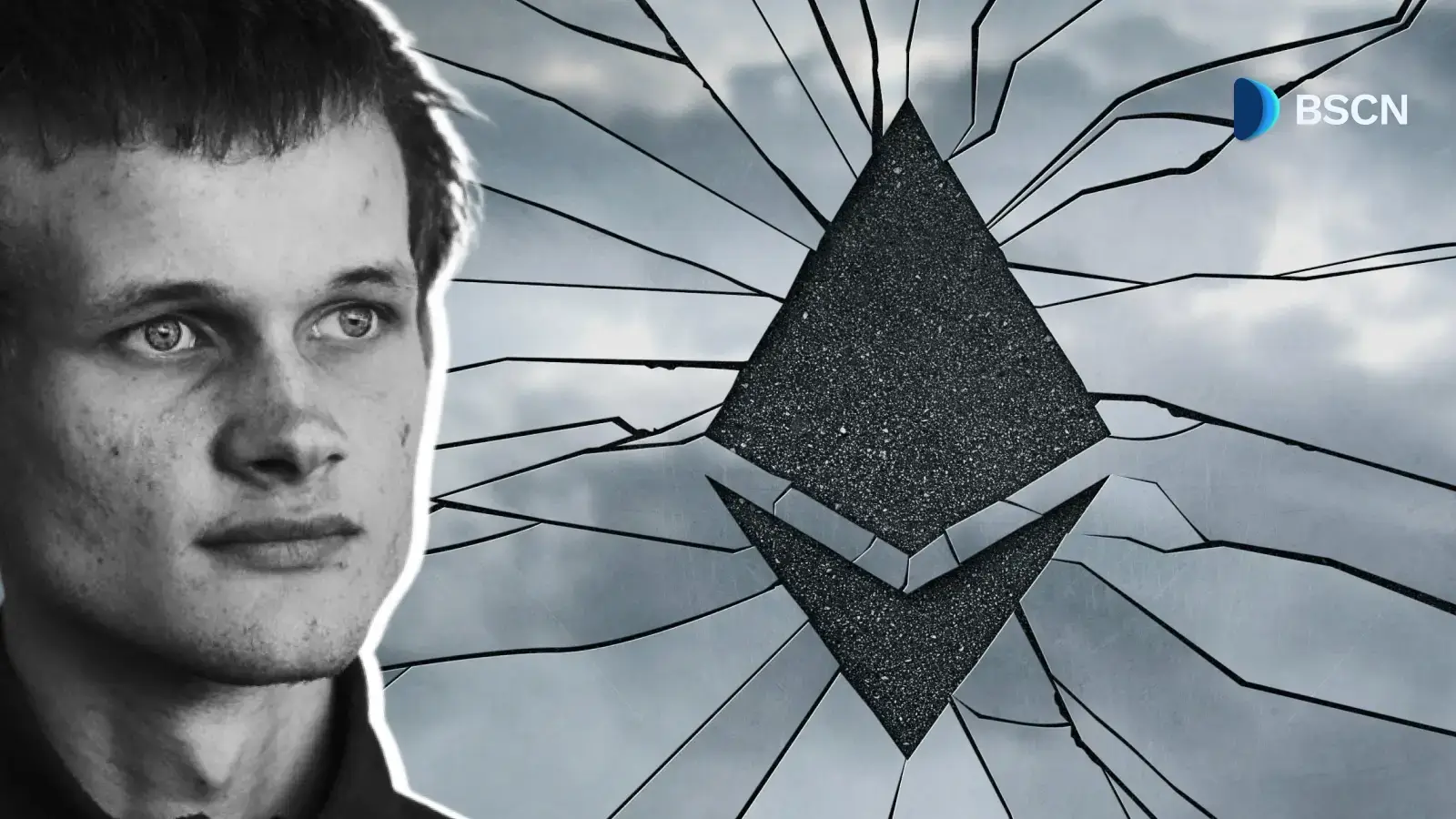
Vitalik Buterin says Ethereum no longer needs L2s as branded shards as mainnet scales. What this means for layer-2 networks.

Soumen Datta
February 4, 2026

(Advertisement)
Table of Contents
Ethereum co-founder Vitalik Buterin announced Tuesday that the network must find a new path involving less dependence on layer-2 scaling networks. In a detailed X post, Buterin stated that "the original vision of L2s and their role in Ethereum no longer makes sense."
The announcement represents a major change for projects like Base, Polygon, Arbitrum, and Optimism, which have spent years positioning themselves as essential scaling solutions for Ethereum. Buterin now argues that Ethereum's mainnet is scaling on its own, reducing the need for L2s to function as official extensions of the network.
Why Is Vitalik Buterin Changing The L2 Roadmap?
Buterin identified two key developments that undermined the original case for layer-2 networks as integral parts of Ethereum.
First, progress by L2s toward full decentralization and security has been far slower and more difficult than expected. Some L2 developers have openly stated they may never move beyond partial decentralization, citing technical limits or regulatory demands that require retaining control.
Second, Ethereum's main network is now scaling directly. Transaction fees have fallen sharply, and major increases in capacity are planned from 2026 onward. This direct scaling means Ethereum no longer needs L2s to deliver the growth originally anticipated.
Gas costs were a major obstacle for decentralized finance (DeFi) users in 2021 and 2022, when network activity surged. During high-demand periods, gas fees could reach thousands of dollars for a single transaction. The infamous Otherside NFT mint from the Bored Ape Yacht Club led to more than 55,000 ETH (worth $193 million at the time) being burned, with many users losing thousands of dollars on failed transactions.
What Was The Original Vision For Layer-2 Networks?
Ethereum's original roadmap imagined L2s as "branded shards," which are tightly integrated networks that would inherit Ethereum's security and censorship resistance while dramatically increasing transaction capacity.
Buterin wrote that scaling Ethereum should mean creating "large quantities of block space that is backed by the full faith and credit of Ethereum," where activity is "guaranteed to be valid, uncensored, unreverted, untouched, as long as Ethereum itself functions."
He argued that high-throughput chains connected to Ethereum through multisig-controlled bridges do not meet that definition.
"If you create a 10000 TPS EVM where its connection to L1 is mediated by a multisig bridge, then you are not scaling Ethereum," he wrote.
Layer-2s are offchain networks built on top of primary blockchains (Layer 1s) like Ethereum. The main purpose is to increase transaction speed and reduce transaction costs on the main network.
As Buterin first laid out in 2022, stage 1 L2s are those with "limited training wheels" when it comes to security and decentralization, while stage 2 networks are fully decentralized. Some L2s have indicated they may never advance beyond stage 1, including for regulatory reasons where customers' compliance needs require the network to maintain ultimate control.
What Should Layer-2s Do Now?
Buterin proposed that developers and users should start thinking of L2s less as extensions of Ethereum and more as a spectrum of networks with different levels of connection to the mainnet.
He outlined several value propositions L2s should consider beyond basic scaling:
- Privacy-focused features and specialized virtual machines
- Application-specific efficiency optimization
- Extreme levels of scaling that even an expanded L1 cannot achieve
- Different designs for non-financial applications like social networks, identity systems, or AI
- Ultra-low-latency and other sequencing properties
- Built-in oracles or decentralized dispute resolution for applications like Polymarket
Buterin also suggested that L2s should support maximum interoperability with Ethereum and be transparent with users about what guarantees they provide. He advocated for a native rollup precompile that would verify ZK-EVM proofs as part of Ethereum itself, enabling safer and stronger trustless interoperability.
How Does This Affect L2 Tokens?
Layer-2 tokens have already proven challenging for investors. Leading L2 tokens like ARB and OP have fallen more than 90% from their respective all-time highs. Over the last month alone, Arbitrum ARB is down 37%, while Optimism OP is down 30%.
Other highly anticipated layer-2 ecosystems, including Blast, Scroll, and Linea, struggled to retain activity after their initial launch phases.
The announcement could prove to be a watershed moment for L2 development and marketing. For years, most networks building on Ethereum have centered their pitch around "scaling Ethereum." Buterin's new framework means leaning on that positioning alone will no longer suffice.
Conclusion
Buterin's announcement marks a fundamental shift in Ethereum's development strategy. With the mainnet scaling independently, L2s must now differentiate themselves through specific features like privacy, specialized applications, or ultra-fast processing rather than relying on generic scaling claims.
The new framework gives L2 developers clearer direction but eliminates the safety net of the "scaling Ethereum" narrative that attracted users and investors for years. Projects that offer genuine innovation beyond transaction throughput may thrive, while those that cannot differentiate will face mounting pressure as Ethereum's mainnet expands capacity through 2026.
For users and investors, the message is clear: evaluate L2s based on their specific features and trust guarantees, not broad claims about scaling. Understanding the trade-offs between security, speed, and decentralization becomes essential as the ecosystem moves away from treating all L2s as equivalent extensions of Ethereum.
Resources
Vitalik Buterin on X: Posts (February, 2026)
Report by CoinDesk: 'You are not scaling Ethereum': Vitalik Buterin issues a blunt reality check to the biggest crypto networks
Blog article by Vitalik Buterin: Proposed milestones for rollups taking off training wheels
Read Next...

Frequently Asked Questions
What did Vitalik Buterin say about layer-2 networks?
Vitalik Buterin stated that the original vision of L2s as "branded shards" of Ethereum no longer makes sense because Ethereum's mainnet is scaling on its own and many L2s cannot or will not meet the decentralization standards required for that model.
What is the difference between stage 1 and stage 2 L2s?
Stage 1 L2s have "limited training wheels" regarding security and decentralization, while stage 2 networks are fully decentralized. Some L2s may choose to remain at stage 1 for technical or regulatory reasons.
How should layer-2 networks differentiate themselves now?
Buterin suggests L2s should identify value propositions beyond scaling, such as privacy features, application-specific design, ultra-fast transactions, non-financial use cases, or built-in oracles and dispute resolution systems.
Disclaimer
Disclaimer: The views expressed in this article do not necessarily represent the views of BSCN. The information provided in this article is for educational and entertainment purposes only and should not be construed as investment advice, or advice of any kind. BSCN assumes no responsibility for any investment decisions made based on the information provided in this article. If you believe that the article should be amended, please reach out to the BSCN team by emailing [email protected].
Author
 Soumen Datta
Soumen has been a crypto researcher since 2020 and holds a master’s in Physics. His writing and research has been published by publications such as CryptoSlate and DailyCoin, as well as BSCN. His areas of focus include Bitcoin, DeFi, and high-potential altcoins like Ethereum, Solana, XRP, and Chainlink. He combines analytical depth with journalistic clarity to deliver insights for both newcomers and seasoned crypto readers.
(Advertisement)
Latest News
4h : 54m ago
REAL Joins Blockchain for Europe to Shape EU Tokenisation Rules
6h : 20m ago
Which Crypto Companies and Protocols Make The Most Money?
7h : 47m ago
How SBI Built Japan's Largest Crypto Business
8h : 9m ago

Elon Musk And Dogecoin: How One Man Shaped A Memecoin’s Price And Reputation
13h : 9m ago
DTCC Tokenization Platform: How Does Wall Street's Blockchain Pilot Actually Work?
July 14, 2026
Report: Cardano's Biggest Updates from H1 2026
July 14, 2026

What is an XDC Network Masternode Validator?
July 13, 2026
Telebiz Goes Live With an Open-Source CRM Built Directly Into Telegram
(Advertisement)

Crypto Project & Token Reviews
Project & Token Reviews
Comprehensive reviews of crypto's most interesting projects and assets
Learn about the hottest projects & tokens

Latest Crypto Articles
Get up to date with the latest crypto news stories and events