News
(Advertisement)


What Is Vitalik Buterin's "Cypherpunk Principled" Ethereum?

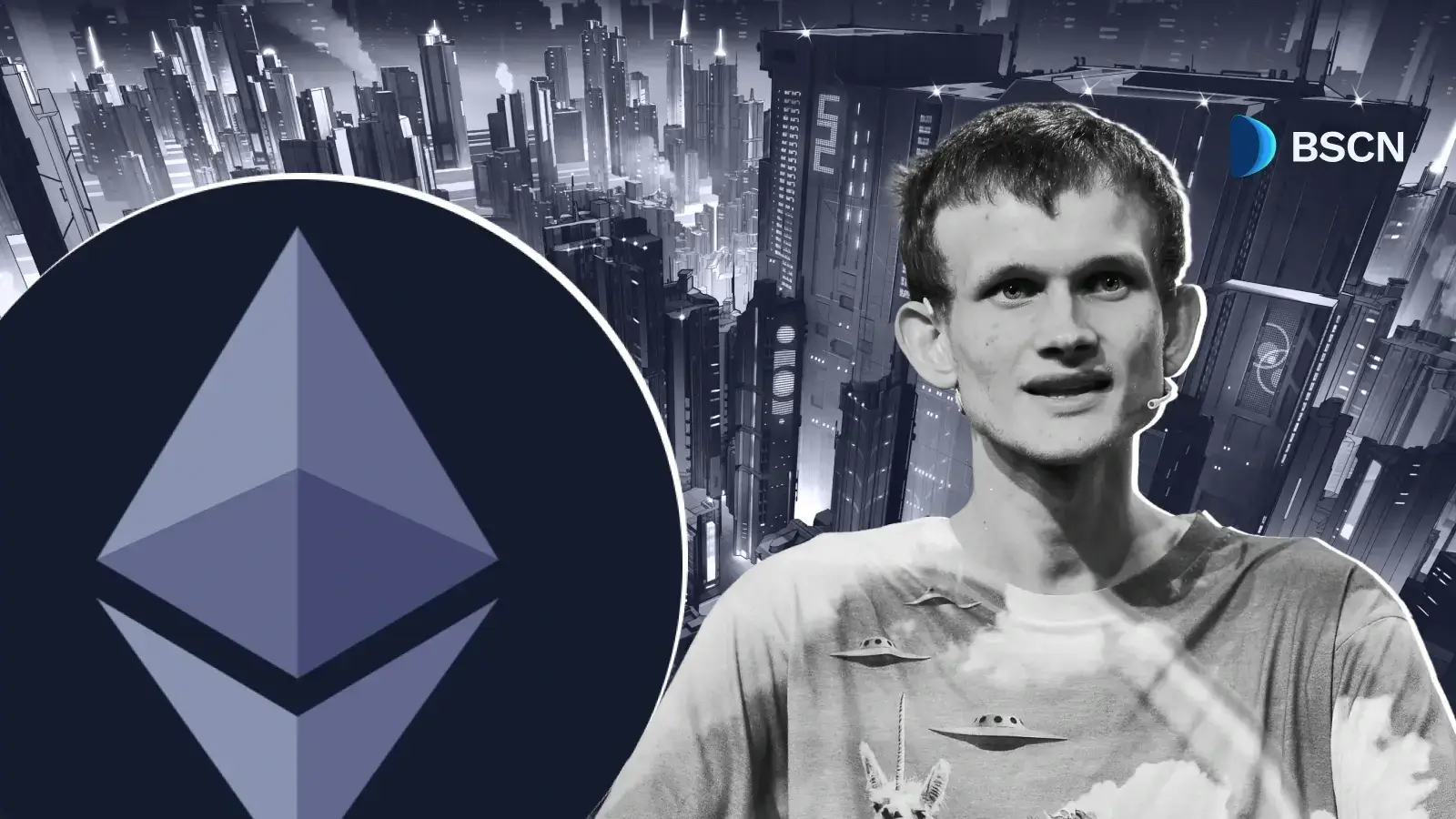
Vitalik Buterin wants to build a "cypherpunk principled" Ethereum as a bolt-on to the existing network, not a rebuild. Here's what that means and why it matters.

Soumen Datta
February 23, 2026

(Advertisement)
Table of Contents
Vitalik Buterin is not scrapping Ethereum. Instead, he wants to build a "cypherpunk principled non-ugly Ethereum" as a bolt-on extension to the existing network, gradually replacing current infrastructure over roughly five years while keeping the chain running throughout.
The plan, which Buterin posted on X on February 20, targets censorship resistance, zero-knowledge (ZK) proof compatibility, and simplified consensus mechanisms. It is a direct answer to growing criticism that Ethereum is fragmenting under the weight of its own Layer 2 (L2) ecosystem.
Why Buterin Rejected the "Start Over" Argument
A crypto community member suggested on X that Buterin should "let the original Ethereum die a slow and painful death by fragmentation" and rebuild it from scratch as a cypherpunk chain on RISC-V. Buterin responded that he was already trying to do "something even more ambitious."
The bolt-on approach avoids the costs and risks of a hard fork or full network migration. Buterin pointed to the Merge, Ethereum's shift from proof-of-work to proof-of-stake in 2022, as proof the network can make major changes while staying live. He estimated the same can be done roughly four more times, covering the state tree, a leaner consensus layer, ZK-EVM verification, and a virtual machine swap.
His timeline: five years, potentially shorter if AI-assisted coding and verification accelerates the process.
What Does "Cypherpunk" Mean in This Context?
The cypherpunk movement, which dates back to the early 1990s, centers on using cryptography and open software to protect privacy and resist censorship. Applied to Ethereum, Buterin uses the term to describe a network that is:
- Resistant to transaction censorship at the protocol level
- Friendly to zero-knowledge proofs, which enable private and efficient verification
- Simpler in its consensus design, reducing technical bloat
These are properties Buterin argues "necessarily have to be system-wide" and cannot be delegated to L2 networks alone.
How Does FOCIL Fit Into the Plan?
One of the most concrete steps toward a more cypherpunk Ethereum is already scheduled. Fork-Choice Enforced Inclusion Lists, or FOCIL (EIP-7805), was confirmed for inclusion in the upcoming Hegota hard fork during an All Core Devs call in February. Hegota is scheduled for late 2026, following the Glamsterdam hard fork expected in the coming months.
FOCIL works by enabling committees of Ethereum validators to enforce transaction inclusion through fork-choice rules and inclusion lists. If a proposed block skips valid transactions from those lists, the chain forks away from it. The result is that any valid, public-mempool transaction gets included within a bounded number of slots, regardless of whether it might violate OFAC sanctions.
This is what makes FOCIL controversial. Critics argue it creates legal exposure for validators and adds protocol complexity. It was excluded from Glamsterdam before being scheduled for Hegota. Buterin has backed it anyway, calling it central to making Ethereum "harder."
What FOCIL Pairs With
Buterin noted that FOCIL works well alongside EIP-8141, an account abstraction upgrade also slated for Hegota. EIP-8141 would add native support for smart wallets, multisig setups, quantum-resistant keys, and gas-sponsored privacy transactions without requiring extra wrapper contracts.
With both upgrades in place, transactions from smart wallets and privacy protocols could be sent through a public mempool and received directly by a FOCIL includer, with no intermediaries required.
What Is the "Lean Ethereum" Initiative?
Alongside hardening the network, Buterin has also pushed to reduce technical complexity. Two key parts of this effort stand out.
The first is the Beam Chain, a proposed consensus layer redesign that would be ZK-native from the start by enshrining ZK-EVM proofs directly into L1 validation. ZK-EVM proofs allow the network to verify execution results efficiently using cryptography rather than re-running all computations.
The second is a long-term plan to replace the Ethereum Virtual Machine (EVM) with RISC-V as Ethereum's native virtual machine. RISC-V is an open-source instruction set architecture that supports a wider range of programming languages, including Solidity, Rust, and C. Developers argue it also offers better ZK support for the execution layer.
Why the Ethereum Foundation Is Prioritizing This Now
The Ethereum Foundation outlined "protocol priorities for 2026" in a recent blog post, listing scaling, hardening, and simplifying the base layer as three parallel tracks. The hardening track is described as a new focus area, reflecting concern that Ethereum could scale while losing the properties that make it useful.
This shift comes after months of pressure. Competing chains like Solana have gained ground, and Ethereum's rollup-centric roadmap, which Buterin himself championed, has drawn criticism for decentralizing more slowly than anticipated while L1 advanced faster than expected. Buterin has since stepped back from that roadmap and taken a more vocal role in guiding the ecosystem's direction.
ETH was trading at approximately $1,860 at the time of writing, down about 5.5% over the past seven days.
Resources
Vitalik Buterin on X: Post on Feb. 20
Report by The Block: Vitalik Buterin is building a 'cypherpunk principled non-ugly Ethereum' as devs officially add FOCIL to upgrade roadmap
Report by Crypto Briefing: Vitalik Buterin plans bolt-on cypherpunk layer to upgrade existing Ethereum
Blog article by Ethereum: Protocol Priorities Update for 2026
Read Next...



Frequently Asked Questions
What is Vitalik Buterin's "cypherpunk principled" Ethereum?
It is a proposed upgrade layer that Buterin wants to build on top of the existing Ethereum network, rather than replacing it. The goal is to add censorship resistance, ZK proof compatibility, and simplified consensus to the base layer over roughly five years.
What is FOCIL and why is it controversial?
FOCIL, or Fork-Choice Enforced Inclusion Lists (EIP-7805), forces Ethereum validators to include valid transactions in blocks by using fork-choice rules. It is controversial because critics argue it could expose validators to legal risk, particularly around OFAC-sanctioned transactions, and increases protocol complexity.
Will Ethereum switch to RISC-V?
Will Ethereum switch to RISC-V? Replacing the EVM with RISC-V is a long-term goal, not an immediate change. It is part of the broader effort to simplify Ethereum and improve ZK proof support. No hard timeline has been confirmed for the full transition.
Disclaimer
Disclaimer: The views expressed in this article do not necessarily represent the views of BSCN. The information provided in this article is for educational and entertainment purposes only and should not be construed as investment advice, or advice of any kind. BSCN assumes no responsibility for any investment decisions made based on the information provided in this article. If you believe that the article should be amended, please reach out to the BSCN team by emailing [email protected].
Author
 Soumen Datta
Soumen has been a crypto researcher since 2020 and holds a master’s in Physics. His writing and research has been published by publications such as CryptoSlate and DailyCoin, as well as BSCN. His areas of focus include Bitcoin, DeFi, and high-potential altcoins like Ethereum, Solana, XRP, and Chainlink. He combines analytical depth with journalistic clarity to deliver insights for both newcomers and seasoned crypto readers.
(Advertisement)
Latest News
5h : 9m ago

Report: Cardano's Biggest Updates from H1 2026
7h : 42m ago

What is an XDC Network Masternode Validator?
July 13, 2026

Telebiz Goes Live With an Open-Source CRM Built Directly Into Telegram
July 13, 2026
Will Robinhood Chain Push ETH's Price to All Time Highs?
July 13, 2026
What is BlackRock's BUIDL Fund on Avalanche AVAX?
July 10, 2026

How Do PancakeSwap's CAKE Token Burns Actually Work?
July 10, 2026

Report: Ripple & The XRP Ecosystem in H1 2026
July 10, 2026
How Is Cardano Advancing Financial Inclusion in Developing Countries?
(Advertisement)

Crypto Project & Token Reviews
Project & Token Reviews
Comprehensive reviews of crypto's most interesting projects and assets
Learn about the hottest projects & tokens

Latest Crypto Articles
Get up to date with the latest crypto news stories and events