News
(Advertisement)


Solana Developer Platform Launches With Mastercard, Western Union, and Worldpay as Early Users

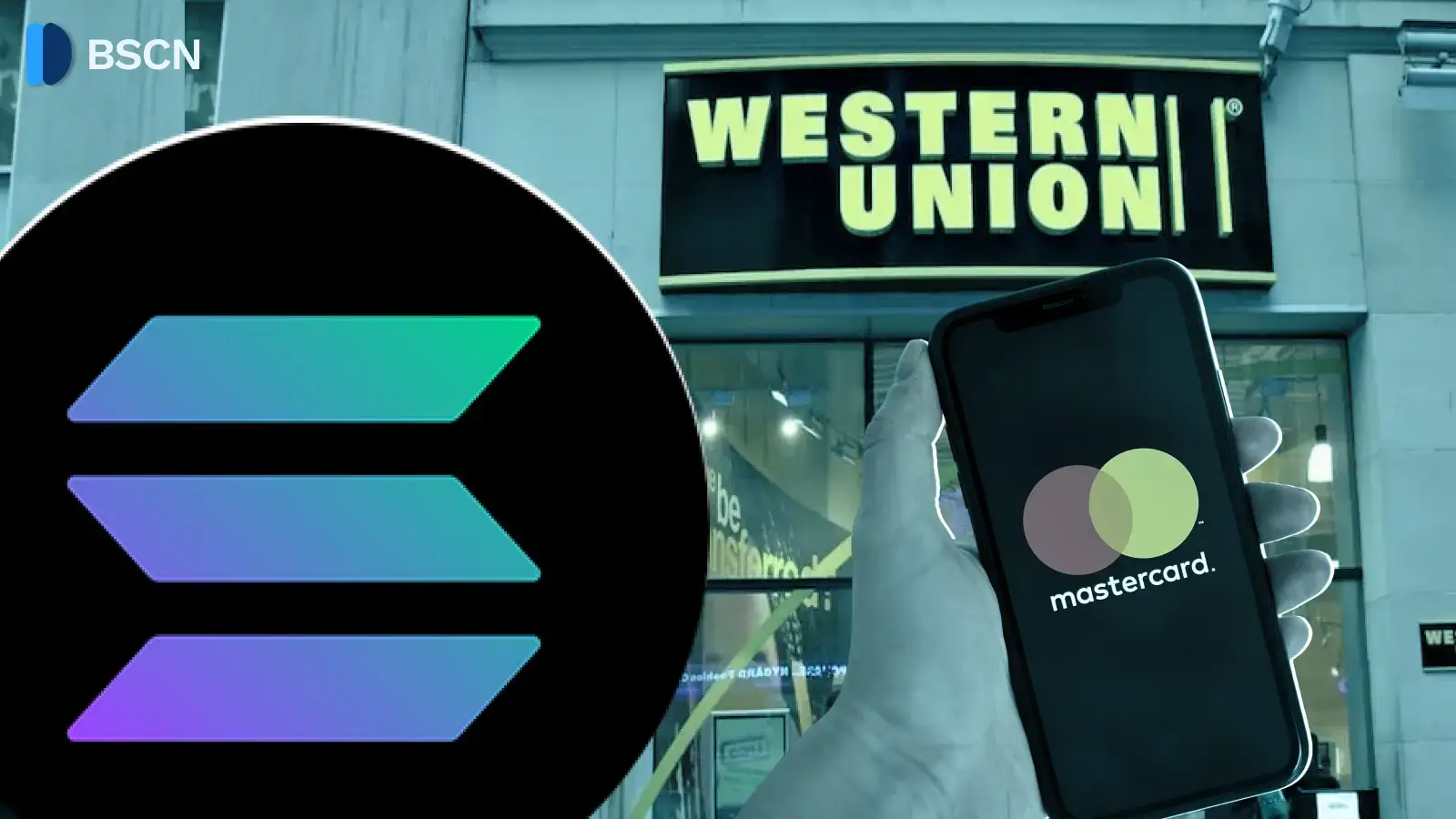
Solana launches its Developer Platform (SDP), a unified API suite for enterprises. Mastercard, Western Union, and Worldpay are already building on it.

Soumen Datta
March 25, 2026

(Advertisement)
Table of Contents
Solana has launched the Solana Developer Platform (SDP), a unified API-based suite that lets enterprises and financial institutions build and deploy financial products on the Solana blockchain. Mastercard, Western Union, and Worldpay are among the first institutions already using the platform.
Introducing Solana Developer Platform
— Solana Foundation (@SolanaFndn) March 24, 2026
Designed for enterprise, launch financial products on @Solana in weeks instead of months.
Create stablecoins, RWAs, or orchestrate payments with AI-ready APIs that bundle 20+ infra providers.@Mastercard, @WesternUnion, and @Worldpay are… pic.twitter.com/u02ZCDfYlw
What Is the Solana Developer Platform?
Announced by the Solana Foundation on March 24, the Solana Developer Platform is designed to reduce the time and technical complexity required for large institutions to go live on Solana. Rather than building connections to dozens of separate infrastructure providers individually, enterprises now connect once through SDP and access the full stack from a single interface.
The platform bundles more than 20 infrastructure partners, covering nodes, wallets, compliance tools, and on-ramp and off-ramp services. It is entirely API-based, meaning developers interact with it through standardised programming interfaces without needing to manage the underlying blockchain infrastructure directly.
Catherine Gu, Head of Product, Digital Assets at the Solana Foundation, said the platform "removes the technical and operational barriers that enterprise developers may encounter" and allows any financial institution to start building on Solana from day one.
How Does SDP Actually Work?
SDP is built around three core API modules, each targeting a specific type of financial activity.
The Issuance Module allows institutions to mint tokenized deposits, stablecoins compliant with the GENIUS Act (the U.S. stablecoin legislation framework), and tokenized real-world assets (RWAs). RWAs are blockchain-based representations of physical or traditional financial assets such as treasury bills, real estate, or commodities.
The Payments Module handles fiat and stablecoin flows end-to-end, including on-ramping (converting fiat to crypto), off-ramping (converting back to fiat), and on-chain stablecoin transactions. This module supports business-to-business (B2B), business-to-consumer (B2C), and peer-to-peer (P2P) payment structures.
The Trading Module covers more complex financial flows, including atomic swaps, vaults, and on-chain foreign exchange. Atomic swaps are instant, trustless exchanges of one asset for another without a central intermediary. This module is not yet live but is expected to launch later in 2026.
The issuance and payments modules are both available as of launch.
Which Companies Are Using SDP Already?
Three major financial institutions have been confirmed as early adopters:
- Mastercard is using SDP for stablecoin settlement
- Worldpay is applying it to merchant payments and settlement
- Western Union is building cross-border payment infrastructure on the platform
The inclusion of Western Union is notable. The company handles billions of dollars in international remittances annually and has historically relied on traditional correspondent banking networks. Building on Solana via SDP shows a practical shift toward blockchain-based rails for cross-border transfers.
Is Solana Also Targeting AI-Driven Payments?
On the same day as the SDP launch, Solana announced support for the Machine Payments Protocol (MPP), developed by Stripe and Tempo. MPP is a specification designed for autonomous, machine-initiated payments, which is increasingly relevant as AI agents begin executing tasks that require real-time financial transactions.
Solana's implementation of MPP supports:
- Split payouts and more complex settlement flows
- Native fee payer support, allowing servers to cover network transaction fees on behalf of users
- Delegated signer options, including Ed25519 and passkey-friendly secp256r1 cryptographic flows
The Solana MPP SDK handles any stablecoin on Solana, including SPL tokens and Token2022 tokens. Token2022 is Solana's newer token standard that includes built-in extensions for features like transfer restrictions, confidential transfers, and interest-bearing mechanics, all of which are relevant for institutional and compliance-heavy use cases.
What Does This Mean for Solana's Enterprise Push?
SDP aggregates Solana's protocol features, including token extensions for permissioning and privacy, into one accessible interface. The platform is built to scale, and the early demand from institutions like Mastercard and Western Union reflects the growing appetite for regulated, efficient blockchain infrastructure.
Rather than a speculative pitch, SDP is a working product with live modules, named enterprise clients, and a defined technical architecture. The trading module remains on the roadmap for later in 2026, but the core issuance and payments capabilities are operational today.
Conclusion
The Solana Developer Platform is a practical infrastructure move, not a concept paper. By consolidating custody, compliance, stablecoin issuance, and payment rails into a single API layer, Solana has lowered the barrier for institutions that want to build on-chain without assembling a patchwork of separate providers.
With Mastercard, Western Union, and Worldpay already live on the platform, and the trading module still to come later in 2026, SDP gives Solana a credible foothold in institutional blockchain infrastructure. The addition of Machine Payments Protocol support on the same day suggests the Foundation is also positioning Solana as a payment rail for AI-driven transactions, a use case that is still early but growing fast.
Resources
Solana on X: Posts (March, 2026)
Blog article by Solana: Solana Foundation Launches Solana Developer Platform
Read Next...




Frequently Asked Questions
What is the Solana Developer Platform (SDP)?
The Solana Developer Platform is an API-based suite launched by the Solana Foundation that allows enterprises and financial institutions to build financial products on Solana. It bundles over 20 infrastructure providers into a single interface, covering stablecoin issuance, payments, tokenized assets, compliance, custody, and more.
Who is using the Solana Developer Platform?
Mastercard, Worldpay, and Western Union are confirmed early users. Mastercard is using it for stablecoin settlement, Worldpay for merchant payment flows, and Western Union for cross-border payments.
What is the GENIUS Act and why does it matter for SDP?
The GENIUS Act is a U.S. legislative framework aimed at regulating stablecoins. SDP's issuance module supports GENIUS-compliant stablecoin creation, meaning institutions can mint stablecoins that are designed to meet current U.S. regulatory expectations, which is a key requirement for large financial institutions operating in regulated markets.
Disclaimer
Disclaimer: The views expressed in this article do not necessarily represent the views of BSCN. The information provided in this article is for educational and entertainment purposes only and should not be construed as investment advice, or advice of any kind. BSCN assumes no responsibility for any investment decisions made based on the information provided in this article. If you believe that the article should be amended, please reach out to the BSCN team by emailing [email protected].
Author
 Soumen Datta
Soumen has been a crypto researcher since 2020 and holds a master’s in Physics. His writing and research has been published by publications such as CryptoSlate and DailyCoin, as well as BSCN. His areas of focus include Bitcoin, DeFi, and high-potential altcoins like Ethereum, Solana, XRP, and Chainlink. He combines analytical depth with journalistic clarity to deliver insights for both newcomers and seasoned crypto readers.
(Advertisement)
Latest News
July 23, 2026
Can Injective's New Mint Platform Bring Institutions to INJ?
July 23, 2026

What is RippleX & Why Does it Matter for XRP Ledger?
July 23, 2026

What Is Dfinity's Caffeine?
July 22, 2026

How Much Funding Has Canton Developer Digital Asset Raised?
July 22, 2026

What is Aptos' AIP-146 and Is It Good News for APT?
July 22, 2026

What Happens to Unverified Pi Balances If Users Miss the Deadline?
July 22, 2026

What Is in Trump's CLARITY Act Ethics Deal?
July 21, 2026

Pudgy Penguins to Reach Millions with Target Placement
(Advertisement)

Crypto Project & Token Reviews
Project & Token Reviews
Comprehensive reviews of crypto's most interesting projects and assets
Learn about the hottest projects & tokens

Latest Crypto Articles
Get up to date with the latest crypto news stories and events