Research
(Advertisement)


Exploring the Pi Browser Ecosystem: Top Applications and Key Utilities

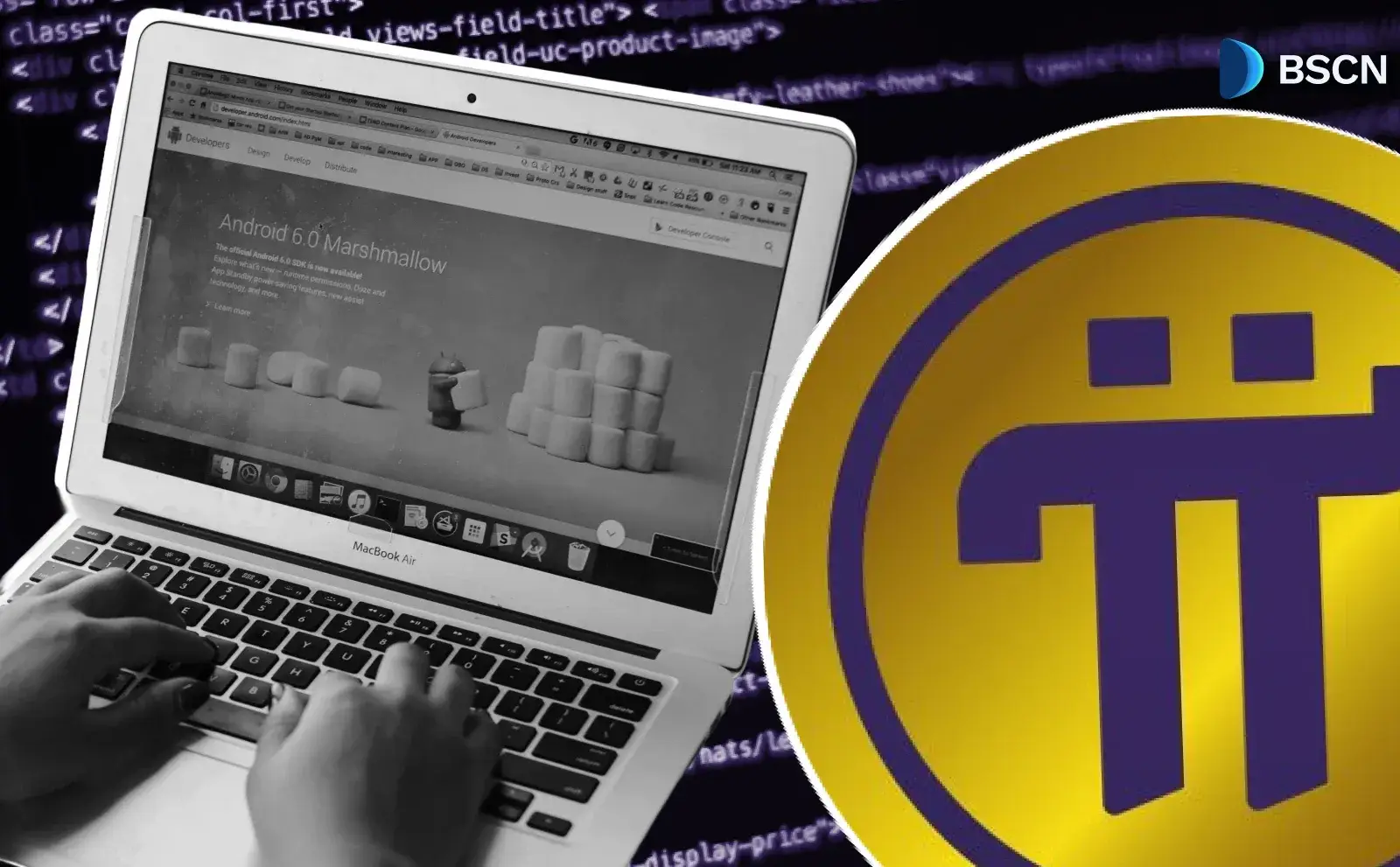
Detailed overview of Pi Browser ecosystem covering wallets, social tools, developer platforms, domains, mining, identity verification, and decentralized application infrastructure.

UC Hope
January 27, 2026
(Advertisement)
Table of Contents
Pi Network entered the blockchain industry with the stated goal of making cryptocurrency accessible through everyday mobile devices. At the center of this effort sits Pi Browser, a mobile application designed to connect users to decentralized tools, social platforms, and payment-enabled applications built specifically for the Pi ecosystem.
Unlike traditional browsers that simply render web pages, Pi Browser functions as an application layer for interacting with blockchain-based services. It supports authentication, wallet access, payments, and identity across Pi-enabled apps, while remaining usable on low-power smartphones. Think of it as an “all-in-one crypto application” for everything within the mobile mining blockchain ecosystem.
This article examines the Pi Browser application and use cases for both new and experienced Pioneers. Additionally, this write-up is based on personal experience within the mobile application and does not intend to promote Pi in any way.
The Pi Browser Mobile Application: Overview and Key Details
Pi Browser is available for free on both the iOS App Store and Google Play Store. Users sign in with their existing Pi mining account, enabling seamless access to wallets, applications, and social features without creating separate credentials for each service.
The browser supports standard web content alongside Pi native applications that use Pi SDKs and APIs. Its design emphasizes mobile usability, minimal battery impact, and compatibility with entry-level devices. This approach aligns with Pi Network’s use of the Stellar Consensus Protocol, which relies on trust graphs rather than energy-intensive mining.
Key characteristics include:
- A tile-based interface that highlights core utilities such as wallet access, mining, and app discovery
- A curated directory of Pi applications that meet ecosystem requirements
- Built-in support for pi domains through a dedicated naming system
- Non-custodial security, where users control their own wallet passphrase
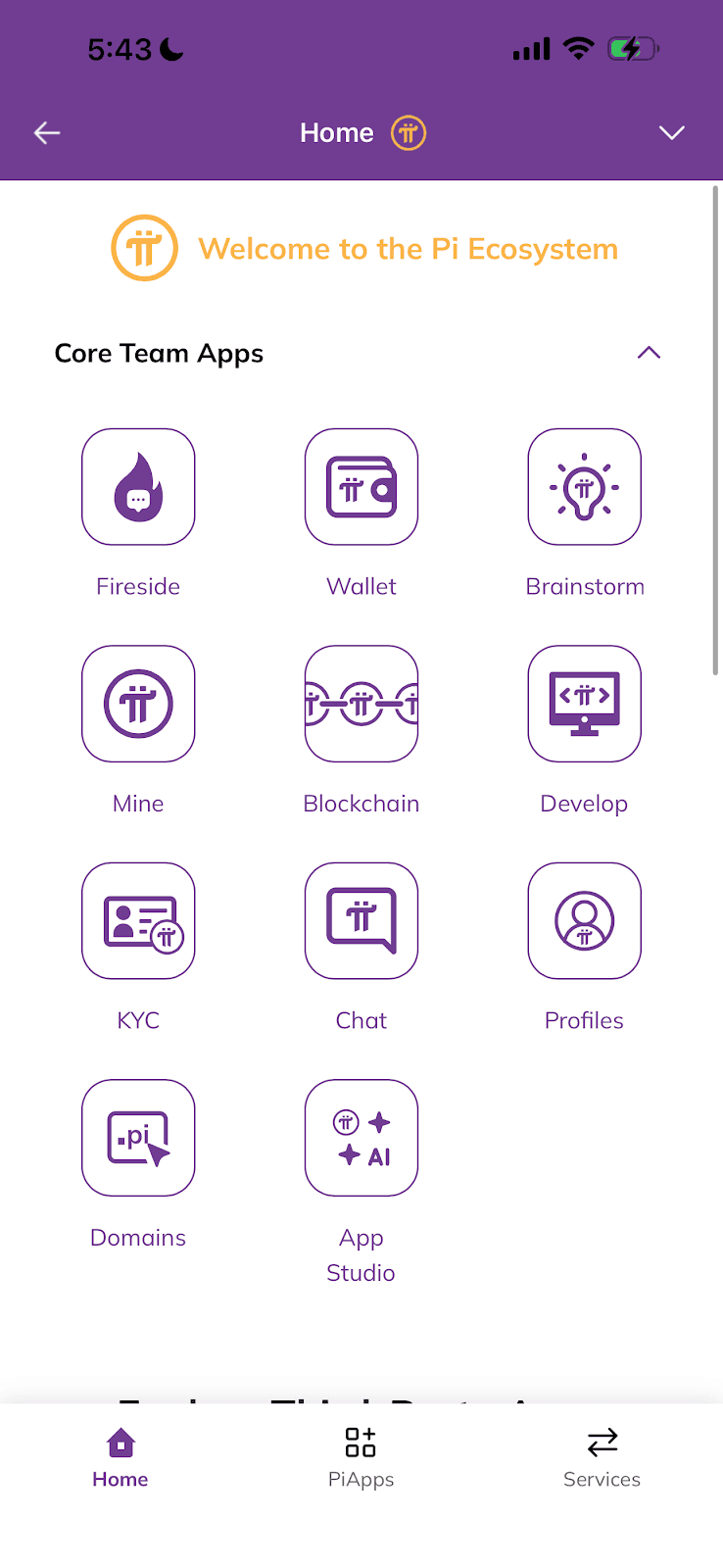
As of 2026, Pi Browser also includes no-code development tools, in-app payments, and expanded identity features that tie activity across applications into a single profile.
Inside the PI Browser Ecosystem: Key Utilities and Tools for Pioneers
Fireside Forum social interaction with token-based moderation
Fireside Forum is a social discussion platform integrated directly into Pi Browser and accessible through fireside.pi. It launched in May 2023 as an experiment in using cryptocurrency incentives to influence online behavior.
Instead of relying on centralized moderators or opaque algorithms, Fireside Forum uses Pi-based staking and spending mechanisms to reward constructive contributions and discourage spam or abuse. Users can allocate Pi to promote high-quality posts or penalize content that violates community standards.
The system operates on several principles:
- Users who post or moderate have economic exposure through Pi
- Positive contributions can earn Pi rewards
- Negative behavior carries a measurable cost
Participation in moderation is open to the community, with incentives aligned toward maintaining relevant and civil discussions. Fireside Forum supports topic categories covering Pi updates, development ideas, and community coordination.
Posting and moderation require identity verification, which limits automated abuse and reinforces accountability. The platform does not emphasize location-based content; instead, it focuses on global peer interaction.
Fireside Forum has become one of the most active Pi applications, with millions of Pioneers engaging in daily discussions. It also serves as an early example of Pi being used as a functional utility rather than a speculative asset.
Pi Wallet: Non-custodial access to assets and payments
Pi Wallet is embedded within Pi Browser and acts as the primary interface for holding and transferring Pi coins. It is non-custodial, meaning users generate and control their own twenty-four-word passphrases. However, there is no account recovery mechanism if a passphrase is lost.
Wallet creation requires signing in to Pi Browser and selecting the Generate Wallet option. Once created, the wallet can be switched between Testnet and Mainnet modes, which interact with compatible applications.
Core wallet functions include:
- Sending and receiving Pi with minimal transaction fees
- Viewing balances, transaction history, and addresses
- Connecting to Pi applications for payments and authentication
Beyond Pi, the wallet can also hold assets on other compatible chains using the same passphrase structure. This design allows developers to build applications that extend beyond a single asset while maintaining a unified user experience.
Mainnet interaction requires successful identity verification. Even before full migration, verified users can activate wallets and interact with Mainnet features where permitted.
The wallet underpins nearly every application in the Pi ecosystem, making it a foundational component rather than an optional add-on.
Brainstorm: Community-driven application development
Brainstorm is a collaborative environment where users propose, evaluate, and form teams around new application ideas. Accessible through brainstorm.pi, it functions as a structured forum for ecosystem development.
Users can submit ideas across categories such as finance, commerce, gaming, and social tools. Each proposal is visible to the community, which can provide feedback and vote on relevance and feasibility. High-interest ideas receive additional visibility and may be reviewed by the Pi Core Team.
Brainstorm emphasizes collaboration beyond software engineering. Designers, marketers, translators, and researchers can join projects, reflecting Pi Network’s focus on broad participation.
Several early Pi utilities originated in Brainstorm before moving into active development. The platform continues to serve as a pipeline from concept to deployable application.
Mining and participation incentives
Mining remains the entry point for most users who are interested in the blockchain platform. Through the Mine feature, accessible in both Pi Browser and the main Pi app, users confirm participation once every 24 hours by tapping a button. This process does not run background computations or consume additional battery resources.
The underlying consensus relies on the Stellar Consensus Protocol, and Mining rewards accumulate as Pi balances that can later migrate to the Mainnet following verification.
Mining also unlocks access to other ecosystem features, reinforcing its role as both an onboarding mechanism and a participation signal.
Blockchain Explorer and transparency tools
Blockchain pi provides access to Pi Network’s blockchain data through Pi Browser. Users can view transactions, blocks, and addresses on both Testnet and Mainnet.
The Pi blockchain is a layer one network optimized for low-resource devices. During early development, some validation layers were centralized to enable rapid iteration. Over time, node participation has expanded, with users running nodes to support validation and network resilience.
The explorer integrates directly with Pi Wallet, allowing users to confirm balances and transaction status in real time. This transparency supports trust and enables developers to test and verify application behavior.
Developer Portal and application deployment
Develop pi is the official environment for building Pi-integrated applications. Registration is open, and users do not need blockchain experience. Thus, it is open to both skilled and aspiring developers.
Developers can access SDKs and APIs for authentication, payments, and wallet interactions. Applications can be tested using Test Pi before deployment to Mainnet.
A significant addition is Pi App Studio, which lets users generate applications with guided prompts without writing code. Generated applications can accept payments, manage content, and later be customized by downloading the underlying code. Most recently, Pi Network introduced Pi Payment integration within Pi Applications, allowing users to add PI payment into their apps without any code.
Applications may be hosted on standard domains or Pi domains, and approved apps can be listed in the Pi Browser directory. This lowers barriers to entry while maintaining ecosystem standards.
Identity verification and compliance
KYC pi handles identity verification within Pi Browser. The process requires users to submit government-issued identification and complete a liveness check. A one Pi fee covers verification and validator incentives.
Eligibility requires a minimum age of eighteen and at least thirty mining sessions. Verified identity is required for Mainnet access, wallet activation, and full participation in applications like Fireside Forum.
Messaging and communication tools
Chats pi provides direct messaging, group chats, and public discussion rooms within Pi Browser. Some messaging features require staking Pi, which discourages unsolicited messages and spam.
Users can join interest-based rooms, communicate with development teams, or send direct requests that carry a small Pi stake. This design introduces a cost to unwanted outreach while rewarding legitimate engagement.
Moderation relies on community incentives similar to other social features, reinforcing consistent behavior across the ecosystem.
Profiles and social identity
Profiles pi allows users to create a persistent identity used across Pi applications. Profiles can include a photo, display name, biography, and links to external social accounts.
Privacy controls let users manage visibility and follower settings. Profiles integrate with Fireside Forum, Chats, and other applications, creating continuity across interactions.
More than three million users have set up profiles, making it one of the most widely used social layers in the Pi ecosystem.
Pi domains and application naming
Domains pi manages registration and auctions for pi domains. These domains function as human-readable identifiers for applications, services, and stores within Pi Browser. Domains are paid for and renewed using Pi, and security strings help prevent automated squatting.
Pi domains simplify navigation and reinforce ecosystem identity while remaining interoperable with wallet and payment systems.
App Studio lowering development barriers
App Studio is a mobile-only tool that enables users to create functional applications through guided prompts. The system generates both front-end and back-end components and supports payment integration using Test Pi.
Creators can download generated code for further development or upload modified versions. Deployment does not require hosting fees, and limited Pi credits are distributed through periodic events.
App Studio reflects Pi Network’s emphasis on accessibility and practical utility rather than technical exclusivity.
Conclusion
Pi Browser functions as the connective tissue of the Pi Network ecosystem. It combines wallet management, identity, social interaction, development tools, and application discovery into a single mobile interface. Each component is designed to reinforce participation through measurable incentives and verifiable activity.
Rather than relying on abstract claims, Pi Browser demonstrates its utility through deployed applications, active users, and integrated payment flows. Its architecture prioritizes accessibility, non-custodial control, and incremental decentralization.
As the ecosystem continues to mature, Pi Browser’s role remains clearly defined. It is not a general-purpose browser replacement but a specialized environment for interacting with Pi Network services in a consistent, resource-efficient manner.
Source:
- Pi Browser Application on Mobile
Read Next...



Frequently Asked Questions
What makes Pi Browser different from a standard mobile browser
Pi Browser integrates wallet access, authentication, and payments directly into the browsing experience, allowing users to interact with Pi applications without separate extensions or accounts
Is Pi Wallet custodial or non-custodial
Pi Wallet is non-custodial. Users control their own passphrases, and there is no centralized recovery option.
Do developers need blockchain experience to build Pi apps
No. The Developer Portal and App Studio allow application creation using guided tools and standard web development practices.
Disclaimer
Disclaimer: The views expressed in this article do not necessarily represent the views of BSCN. The information provided in this article is for educational and entertainment purposes only and should not be construed as investment advice, or advice of any kind. BSCN assumes no responsibility for any investment decisions made based on the information provided in this article. If you believe that the article should be amended, please reach out to the BSCN team by emailing [email protected].
Author
 UC Hope
UC holds a bachelor’s degree in Physics and has been a crypto researcher since 2020. UC was a professional writer before entering the cryptocurrency industry, but was drawn to blockchain technology by its high potential. UC has written for the likes of Cryptopolitan, as well as BSCN. He has a wide area of expertise, covering centralized and decentralized finance, as well as altcoins.
(Advertisement)
Latest News
8h : 13m ago
XRP Ledger's v3.2.0 Upgrade Explained
9h : 36m ago

Big News for Morpho and Ethena: What is Robinhood Earn?
11h : 58m ago
What Does XRP's Relationship With Banks Actually Look Like?
17h : 28m ago
How Does InterLink Solve the Bot Problem in Web3?
July 7, 2026
The 90% Myth
July 7, 2026

License Secured: Ripple's Biggest European Win Ever
July 7, 2026

How Much Bitcoin Has Saylor's Strategy Sold?
July 7, 2026

What Does It Mean to Rent Blockspace on Polkadot, and Who's Doing It?
(Advertisement)

Crypto Project & Token Reviews
Project & Token Reviews
Comprehensive reviews of crypto's most interesting projects and assets
Learn about the hottest projects & tokens

Latest Crypto Articles
Get up to date with the latest crypto news stories and events