Deepdive
(Advertisement)


How Does InterLink Use Face Recognition to Create a Sybil-Resistant Web3 Identity?

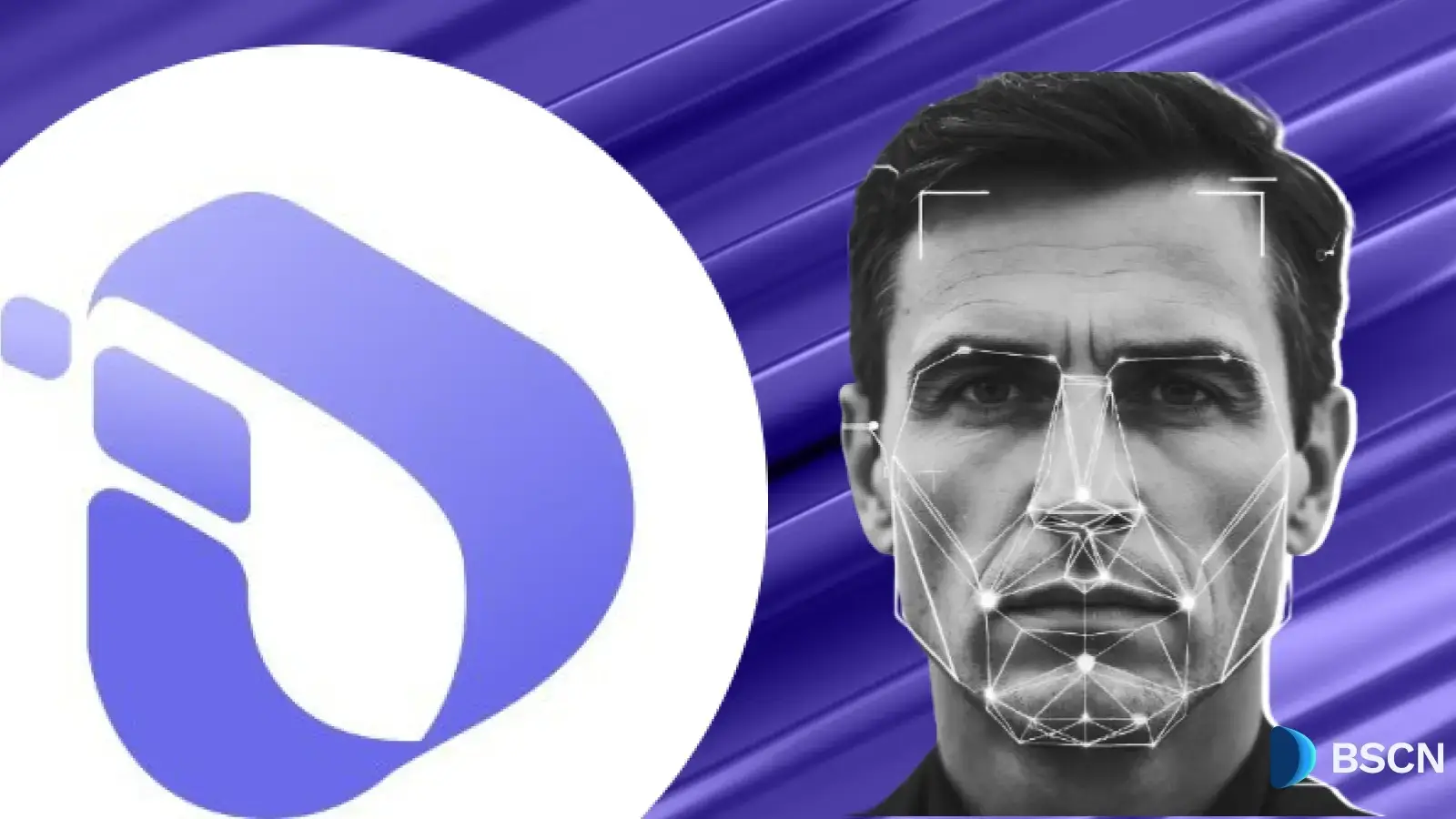
InterLink uses facial recognition, liveness detection, and zero-knowledge proofs to verify one real human per account, blocking bots and Sybil attacks in Web3.

Soumen Datta
June 15, 2026
(Advertisement)
Table of Contents
InterLink uses facial recognition combined with liveness detection and zero-knowledge proofs to ensure that each account on its network belongs to exactly one real, unique human being. This design is the foundation of its Proof of Personhood (PoP) consensus mechanism, which replaces the computational power of Proof of Work and the token wealth requirement of Proof of Stake with something simpler: confirmed human identity.
As of June 2026, the network has surpassed 8 million verified human users, making it one of the largest real-identity networks in Web3.
What Is a Sybil Attack and Why Does It Matter in Web3?
A Sybil attack is when one person or entity creates many fake accounts to manipulate a system. The name comes from a 1973 book about a woman with dissociative identity disorder (formerly called multiple personality disorder). In blockchain networks, Sybil attacks are a serious threat because most decentralized systems give power based on the number of participants. If one bad actor controls 1,000 fake wallets, they can swing governance votes, game reward systems, drain token airdrops, or manipulate consensus.
Traditional blockchains try to solve this with economic barriers. Proof of Work requires massive computing hardware. Proof of Stake requires locking up large amounts of tokens. Both approaches price out most regular users and concentrate power with those who have more money or hardware. Neither actually verifies that participants are real people.
InterLink takes a different approach: instead of making fake accounts expensive to run, it makes them technically impossible to create.
How Does InterLink's Face Recognition Verification Work?
The entry point for every InterLink user is a process called InterLink ID, the network's biometric identity system. Here is how it works step by step:
- A new user opens the InterLink mobile app and completes a facial scan using their smartphone camera.
- The app runs liveness detection during the scan, checking that the person is physically present and not submitting a photo, video replay, or deepfake.
- The facial scan is processed locally on the user's device. Only an encrypted, anonymized version of the biometric data is sent for verification — the raw facial image never leaves the device.
- The system extracts a unique mathematical fingerprint from the facial features using deep learning models, then converts that fingerprint into an encrypted identity hash.
- That hash is compared against all existing hashes on the network. If a match is found, the new registration is rejected. One face, one account.
The system is trained and evaluated against NIST benchmarks — the same standards used by US government agencies for biometric accuracy.
As of June 2026, InterLink's facial recognition model holds a ranking of #51 globally on the NIST Face Recognition Technology Evaluation (FRTE), placing it among the top-ranked systems worldwide. InterLink's deepfake detection model achieved accuracy exceeding 90% on benchmark datasets in controlled evaluations, surpassing the 89% benchmark reported for XceptionNet, a widely used deepfake detection model. The system also uses federated learning, meaning it continuously improves by learning from real-world spoofing attempts without centralizing sensitive data.
What Happens to the Biometric Data?
This is a common concern with any facial recognition system, and InterLink addresses it directly through its technical design.
The raw biometric data is never stored. Instead, the system uses zero-knowledge proofs (ZKPs) and homomorphic encryption to convert a user's facial features into an irreversible encrypted representation.
Homomorphic encryption means the system can perform identity checks on the encrypted data without ever decrypting it, similar to a lock that can be tested without a key ever being inserted. The encrypted output is stored on decentralized infrastructure (IPFS), not a central server, making it resilient against single-point breaches. The approach is designed to comply with GDPR and CCPA privacy regulations.
What Is Proof of Personhood and How Does It Replace Traditional Consensus?
Proof of Personhood (PoP) is InterLink's consensus mechanism. In simple terms, it is the rule system the network uses to decide who gets to validate transactions and participate in governance.
In Proof of Work (used by Bitcoin), validators are chosen based on computing power. In Proof of Stake (used by Ethereum), validators are chosen based on how many tokens they hold. In both cases, those with more resources get more influence, and neither system verifies that any real human is involved at all.
In InterLink's Proof of Personhood, the only qualification is being a verified human with a valid InterLink ID. Every verified user becomes what the network calls a Human Node. Human Nodes can validate transactions, vote on governance proposals, and earn token rewards, not because they bought hardware or staked large sums, but simply because they proved they are a real person.
By requiring a verified InterLink ID to participate as a validator, the system makes Sybil attacks structurally impossible. Creating 1,000 fake accounts would require 1,000 distinct human faces passing liveness detection and biometric deduplication checks. That is not a cost problem — it is a biological one.
The network also runs a dynamic reputation system for validators. Performance is tracked continuously, and validators who underperform or break protocol rules face penalties including token burns and removal from the validator set.
How Does Zero-Knowledge Proof Protect User Privacy?
Zero-knowledge proofs are a cryptographic technique that lets someone prove a statement is true without revealing any of the underlying information. A simple analogy: imagine proving to a bouncer that you are over 21 without showing your ID or saying your date of birth. ZKPs allow exactly that kind of verification in digital systems.
InterLink uses ZKPs so that a user can prove they hold a valid, verified identity on the network without ever exposing their biometric data, name, or any personal details. For example, a user can prove they are a unique verified human to a third-party application built on InterLink, without that application ever learning anything about who they are.
This privacy layer is what separates InterLink ID from standard Know Your Customer (KYC) processes used by centralized exchanges. Traditional KYC stores copies of passports, selfies, and personal data in databases that are frequent breach targets. InterLink's design means there is no central database of faces to steal.
What Does This Mean for Real Users and Token Holders?
The Sybil resistance built into InterLink ID connects directly to how the network's tokenomics work. Only verified Human Nodes can earn $ITLG, the network's primary governance and utility token. Bots and duplicate accounts are blocked at the identity layer, which means every token in circulation was earned by a confirmed human participant.
Users earn $ITLG points by checking into the InterLink app every four hours. No mining hardware is required. The points convert to actual $ITLG tokens at the Token Generation Event (TGE). The TGE was originally targeted for Q1 2026, shifted to early Q2 2026, and as of June 2026 had not yet launched, with the project still in its private mainnet preparation phase. The final timing remains subject to a community DAO vote. Vesting periods for larger holders extend up to 180 months after conversion.
The total supply of $ITLG is fixed at 100 billion tokens, with 80% allocated to Human Node miners and 20% reserved for ecosystem incentives and development. A secondary token, $ITL, has a separate fixed supply of 10 billion tokens and handles external payments, liquidity, and institutional access. The network also enforces deflationary pressure through on-chain activity burns and up to 100 planned halving events.
The World Bank estimates over 1 billion people globally lack formal identification documents. Because InterLink ID requires only a smartphone camera, and there were approximately 6.8 billion smartphone users worldwide as of 2023, the system is designed to be more inclusive than traditional identity verification tied to government documents.
Conclusion
InterLink's approach to Sybil resistance rests on a specific technical stack: NIST-benchmarked facial recognition, liveness detection that blocks deepfakes and replays, biometric deduplication that enforces one account per human, and zero-knowledge proofs that preserve privacy at every step.
The Proof of Personhood consensus mechanism builds on this foundation by tying network validation and governance rights directly to verified identity rather than hardware or capital. With more than 8 million verified users confirmed as of June 2026, the system has demonstrated that biometric-based Sybil resistance can operate at scale while keeping user data off central servers and out of reach of single-point breaches.
Resources
- InterLink Whitepaper – Proof of Personhood: The Consensus Mechanism Behind InterLink Chain
- InterLink Whitepaper – Sybil Resistance: How InterLink Chain Defends Against Identity Attacks
- InterLink Whitepaper – Deepfake Detection and Facial Recognition: Technical Implementation
- InterLink Whitepaper – Encrypted Biometric Data: How InterLink ID Protects User Privacy
- InterLink Whitepaper – Zero-Knowledge Proofs: Privacy-Preserving Identity in InterLink ID
- InterLink Labs – InterLink ID: NIST-Certified Biometric Verification and Proof of Personhood
- InterLink Whitepaper – InterLink ID: Proof of Personhood Technical Architecture
- Bitget Academy – What Is Interlink ($ITLG): Human-Verified Token With Proof of Personhood
- KuCoin Blog – Interlink Network (ITLG): Proof of Personhood Web3 Innovation and Token Outlook
- BSC News – InterLink's Dual Token Model Explained: ITL vs ITLG
- BlockchainReporter – InterLink Crosses 7 Million Verified Users After Adding One Million in a Single Month
- Google Play Store – InterLink Network App Listing: 8 Million+ Users (Updated June 4, 2026)
- NIST FRTE Report Card – InterLink Labs Algorithm (interlinklabs_002): NIST Face Recognition Technology Evaluation Report
Read Next...


Frequently Asked Questions
How does InterLink prevent someone from using a deepfake to bypass face verification?
InterLink ID uses liveness detection alongside facial recognition to check that the person being scanned is physically present in real time. The system's CNN-based deepfake detection model is trained to reject video replays, deepfake videos, and physical replicas like printed photos or masks. The model achieved over 90% accuracy on benchmark deepfake datasets and uses federated learning to continuously update against new spoofing techniques encountered in production.
Does InterLink store biometric data on-chain or on a central server?
No. Biometric data is processed locally on the user's device. Only an encrypted, anonymized identity hash is sent for verification. That hash is stored on decentralized infrastructure (IPFS), not a central server. Zero-knowledge proofs and homomorphic encryption ensure the raw biometric data is never stored, transmitted in readable form, or recoverable from the encrypted output.
What is a Human Node and how is it different from a traditional blockchain validator?
A Human Node is a verified InterLink user who has completed the InterLink ID biometric verification process. Unlike traditional validators who need specialized hardware (Proof of Work) or large token holdings (Proof of Stake), Human Nodes participate simply by proving they are a unique real person. They earn $ITLG rewards through regular app check-ins, network activity, and referrals, with no hardware investment required.
Disclaimer
Disclaimer: The views expressed in this article do not necessarily represent the views of BSCN. The information provided in this article is for educational and entertainment purposes only and should not be construed as investment advice, or advice of any kind. BSCN assumes no responsibility for any investment decisions made based on the information provided in this article. If you believe that the article should be amended, please reach out to the BSCN team by emailing [email protected].
Author
 Soumen Datta
Soumen has been a crypto researcher since 2020 and holds a master’s in Physics. His writing and research has been published by publications such as CryptoSlate and DailyCoin, as well as BSCN. His areas of focus include Bitcoin, DeFi, and high-potential altcoins like Ethereum, Solana, XRP, and Chainlink. He combines analytical depth with journalistic clarity to deliver insights for both newcomers and seasoned crypto readers.
(Advertisement)
Latest News
July 24, 2026

Analysis: Ondo Finance's 2026 In Numbers
July 24, 2026

Is Circle Planning to Launch a Korean Won Stablecoin?
July 24, 2026
What Is Ripple Mint?
July 23, 2026
Can Injective's New Mint Platform Bring Institutions to INJ?
July 23, 2026
What is RippleX & Why Does it Matter for XRP Ledger?
July 23, 2026

What Is Dfinity's Caffeine?
July 22, 2026
How Much Funding Has Canton Developer Digital Asset Raised?
July 22, 2026

What is Aptos' AIP-146 and Is It Good News for APT?
(Advertisement)

Crypto Project & Token Reviews
Project & Token Reviews
Comprehensive reviews of crypto's most interesting projects and assets
Learn about the hottest projects & tokens

Latest Crypto Articles
Get up to date with the latest crypto news stories and events