News
(Advertisement)


Ethereum's $40B L2 Problem Might Have a Fix — Here's What You Need to Know

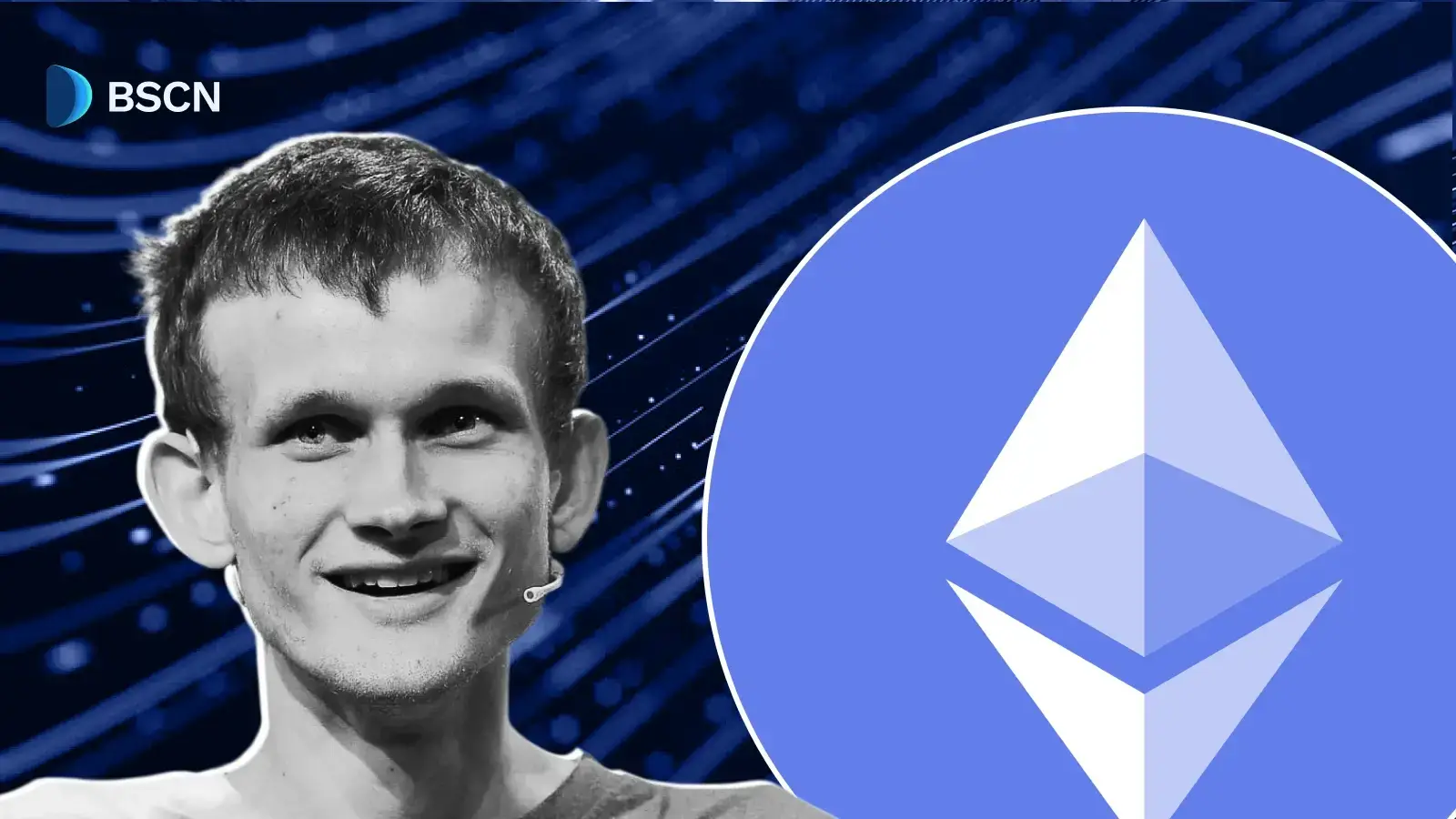
Ethereum developers from Gnosis and Zisk have proposed the Ethereum Economic Zone (EEZ), a framework to unify fragmented L2 networks without bridges. Here's how it works.

Soumen Datta
March 30, 2026

(Advertisement)
Table of Contents
Developers from Gnosis and Zisk, backed by the Ethereum Foundation, have proposed a framework called the Ethereum Economic Zone (EEZ) that would allow Ethereum's layer-2 (L2) networks to interact with each other and the mainnet in a single transaction, without using bridges.
What Is The Ethereum Economic Zone?
The EEZ is a proposed technical framework designed to let smart contracts deployed on different rollups execute synchronously across networks. In practical terms, this means a transaction could touch multiple L2s at once, settling back to Ethereum mainnet, without the user or developer needing to manually bridge assets between networks.
The development team includes researchers and industry contributors from across the Ethereum ecosystem.
At its core, the EEZ aims to replicate the experience of building directly on Ethereum, where all contracts share the same environment and guarantees. It would also retain ETH as the default gas token, avoiding the introduction of new tokens.
Why Bridges Are A Problem
Bridges are the current solution for moving assets between Ethereum L2s like Arbitrum, Base, and Optimism. They work, but they come with trade-offs: they can be slow, expensive, and have historically been targets for exploits.
According to data from L2BEAT, more than 20 active L2 networks currently secure nearly $40 billion in total value, with that liquidity spread thinly across separate environments.
The EEZ would remove the need for bridging entirely between participating networks.
Why Does Ethereum's L2 Fragmentation Matter?
Ethereum's scaling strategy has relied on rollups for several years. Rollups are networks that process transactions off the main chain but post data back to it, inheriting Ethereum's security. The problem is that dozens of these networks now operate independently, splitting users, developers, and liquidity across separate ecosystems.
As Gnosis co-founder Friederike Ernst said:
"Ethereum doesn't have a scaling problem. It has a fragmentation problem. Every new L2 is a silo that makes it harder to seamlessly extend and drive value back to the Ethereum mainnet."
The EEZ is designed to address that directly by enabling shared infrastructure and unified liquidity across rollups, reducing duplication and simplifying development.
Vitalik Buterin's Concerns About The Rollup Roadmap
The EEZ proposal arrives at a notable moment. In a February 3 post on X, Ethereum co-founder Vitalik Buterin wrote that "the original vision of L2s and their role in Ethereum no longer makes sense, and we need a new path," signaling that the ecosystem may need to rethink how rollups fit into Ethereum's long-term scaling model.
Buterin has also pointed to centralized sequencers and trusted bridging mechanisms as weak points in the current L2 architecture.
His comments drew mixed reactions. Karl Floersch, co-founder of Optimism, acknowledged that L2s must evolve beyond simple scaling. Steven Goldfeder, co-founder of Offchain Labs (the team behind Arbitrum), argued that scaling remains a core function, noting that rollups continue to handle higher transaction throughput than Ethereum mainnet itself.
How Would The EEZ Actually Work?
The framework enables synchronous execution across rollups. That is a technical way of saying that instead of a transaction happening on one network and then triggering a separate process on another, all the steps happen at the same time within a single transaction context.
Here is what that looks like in practice for different stakeholders:
- Users would move between L2 applications without manually bridging assets or switching networks.
- Developers would be able to build once and deploy across multiple rollups without rebuilding the same infrastructure each time.
- Protocols operating across multiple L2s, such as DeFi platforms, would share liquidity pools rather than fragmenting them.
The framework leans on zero-knowledge (ZK) proving technology, which is the specialty of Zisk. ZK proofs allow one party to prove that a computation was done correctly without revealing underlying data, and are widely used in modern rollup designs. Zisk was founded by Jordi Baylina, the creator of Polygon zkEVM.
The EEZ Alliance
The proposal also introduces the EEZ Alliance, a coordination body that would bring together infrastructure providers, DeFi protocols, and other ecosystem participants to standardize how the framework is adopted.
The alliance is intended to function as an open group rather than a centralized authority. Technical specifications and performance benchmarks are expected to be published in the coming weeks.
Who Is Building The EEZ?
The framework is being developed by three organizations:
- Gnosis is a veteran Ethereum infrastructure developer that has been building on the network since its early days. It is best known for the Gnosis Safe multisig wallet and the Gnosis Chain.
- Zisk is a ZK proving project led by Jordi Baylina, who previously created Polygon zkEVM, one of the most widely used ZK rollups.
- The Ethereum Foundation is providing backing and research support for the initiative.
The project is being developed collaboratively, with broader community input expected as specifications are finalized.
Conclusion
The Ethereum Economic Zone is a direct response to a problem that has grown alongside Ethereum's own success. More L2 networks have meant more capacity, but also more fragmentation, more bridges, and a worse experience for both users and developers.
The EEZ does not add another network to that pile. Instead, it proposes a layer of coordination that makes existing rollups behave like parts of a single system, while keeping ETH as the fee currency and Ethereum as the settlement layer.
Whether the EEZ Alliance can bring enough of the ecosystem on board remains to be seen. Technical specifications are still pending, and adoption will depend on buy-in from the same L2 teams whose independence the framework is designed to work around. But with the Ethereum Foundation involved and Vitalik Buterin publicly questioning the current rollup model, the conditions for a rethink are clearly in place.
Resources
Gnosis on X: Post on March 29
Vitalik Buterin on X: Post on Feb. 3
Report by CoinTelegraph: Ethereum builders propose ‘economic zone’ to tackle L2 fragmentation
Report by CoinDesk: New Ethereum project aims to fix network fragmentation and improve user experience
Read Next...

Frequently Asked Questions
What is the Ethereum Economic Zone (EEZ)?
The EEZ is a proposed framework that lets smart contracts on different Ethereum L2 networks execute synchronously in a single transaction, without using bridges. It is being developed by Gnosis, Zisk, and the Ethereum Foundation.
How is the EEZ different from using a bridge?
Bridges move assets between networks in separate transactions and often take minutes or longer. The EEZ would allow contracts on different rollups to interact within the same transaction, making cross-network interactions faster and removing the security risks associated with bridge infrastructure.
Will the EEZ introduce a new token?
No. The framework is designed to retain ETH as the default gas token across participating networks, avoiding the creation of additional tokens for fees or governance.
Disclaimer
Disclaimer: The views expressed in this article do not necessarily represent the views of BSCN. The information provided in this article is for educational and entertainment purposes only and should not be construed as investment advice, or advice of any kind. BSCN assumes no responsibility for any investment decisions made based on the information provided in this article. If you believe that the article should be amended, please reach out to the BSCN team by emailing [email protected].
Author
 Soumen Datta
Soumen has been a crypto researcher since 2020 and holds a master’s in Physics. His writing and research has been published by publications such as CryptoSlate and DailyCoin, as well as BSCN. His areas of focus include Bitcoin, DeFi, and high-potential altcoins like Ethereum, Solana, XRP, and Chainlink. He combines analytical depth with journalistic clarity to deliver insights for both newcomers and seasoned crypto readers.
(Advertisement)
Latest News
July 8, 2026
XRP Ledger's v3.2.0 Upgrade Explained
July 8, 2026

Big News for Morpho and Ethena: What is Robinhood Earn?
July 8, 2026
What Does XRP's Relationship With Banks Actually Look Like?
July 8, 2026
How Does InterLink Solve the Bot Problem in Web3?
July 7, 2026
The 90% Myth
July 7, 2026
License Secured: Ripple's Biggest European Win Ever
July 7, 2026
How Much Bitcoin Has Saylor's Strategy Sold?
July 7, 2026
What Does It Mean to Rent Blockspace on Polkadot, and Who's Doing It?
(Advertisement)

Crypto Project & Token Reviews
Project & Token Reviews
Comprehensive reviews of crypto's most interesting projects and assets
Learn about the hottest projects & tokens

Latest Crypto Articles
Get up to date with the latest crypto news stories and events