News
(Advertisement)


What Does Coinbase's OCC Trust Charter Approval Actually Mean?

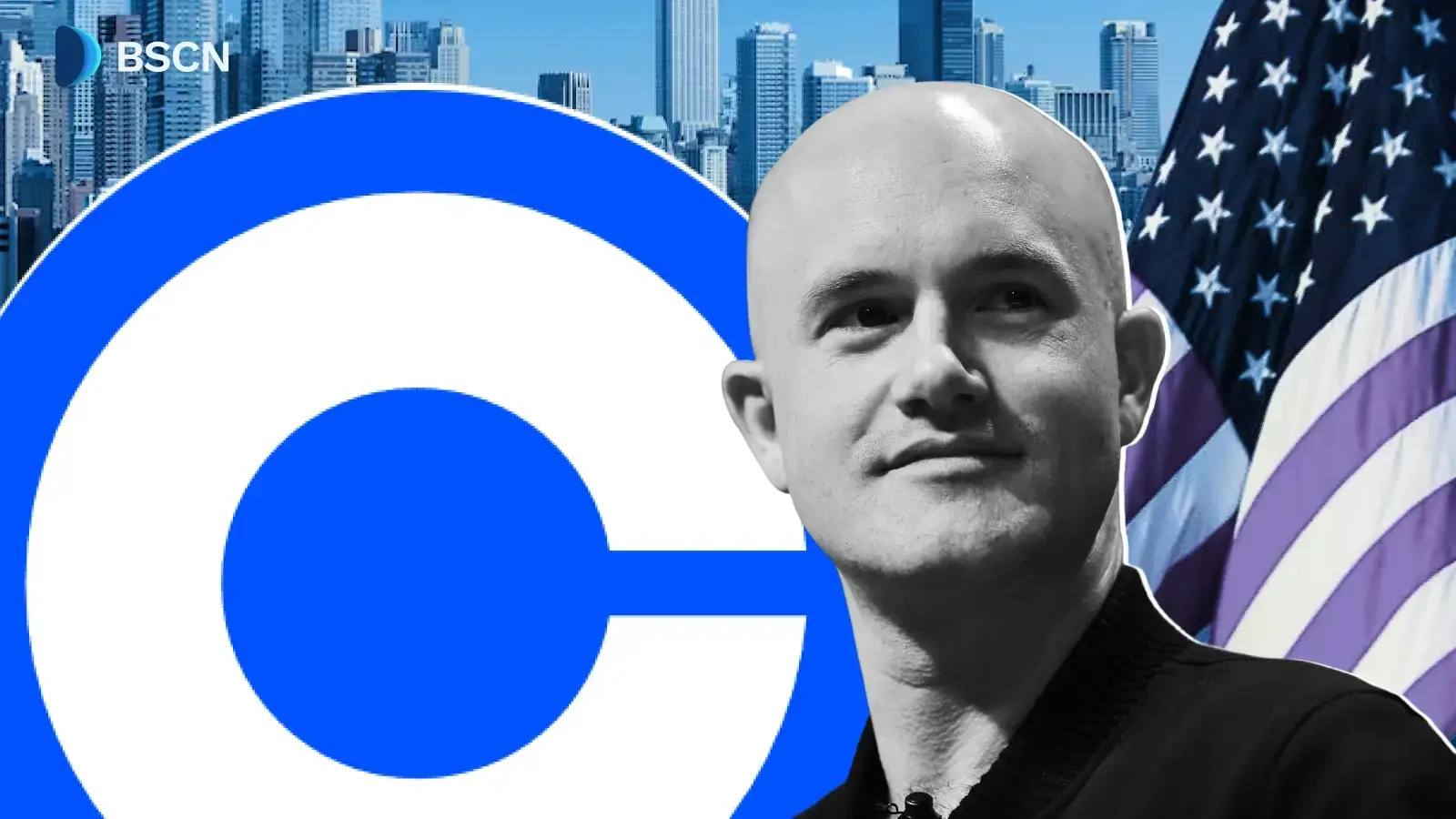
Coinbase received conditional approval from the OCC for a national trust company charter, a key step toward becoming a federally regulated crypto custodian for institutions.

Soumen Datta
April 3, 2026

(Advertisement)
Table of Contents
Coinbase has received conditional approval from the U.S. Office of the Comptroller of the Currency (OCC) for a national trust company charter, the company confirmed Thursday, per Bloomberg. The approval is not final, but it marks a concrete step toward Coinbase operating as a federally regulated crypto custodian serving institutional clients.
What Does the OCC Conditional Approval Actually Mean?
Conditional approval is not the same as a full green light. The OCC has set out a list of requirements Coinbase must satisfy before it can receive final authorization and begin operating under the charter.
Those requirements include:
- Building out anti-money laundering (AML) and know-your-customer (KYC) programs
- Meeting capital and liquidity standards
- Establishing governance structures and risk management protocols
- Signing an operating agreement with the OCC
- Holding its first board meeting, adopting bylaws, and passing a pre-opening OCC exam
Only after the OCC confirms those conditions are met will Coinbase be authorized to operate the national trust bank.
What Coinbase Can and Cannot Do Under This Charter
The charter is structured as a non-insured national trust company. That means Coinbase will not take retail deposits, issue loans, or engage in fractional reserve banking. Accounts under this structure do not carry FDIC insurance.
What the charter does cover is custody, staking, and related fiduciary and trust functions for institutional clients.
"Federal oversight will bring consistency and uniformity to our custody business and create a foundation for new products, including payments and related services," Greg Tusar, co-CEO of Coinbase Institutional, stated.
Coinbase currently holds more than $245 billion in assets under custody through its existing New York Department of Financial Services-chartered custody business, which operates under its institutional arm, Coinbase Prime.
Why Does a Federal Charter Matter for Institutional Investors?
For large institutional investors such as pension funds, asset managers, and hedge funds, custody is less about trading and more about trust. A pension fund seeking bitcoin exposure, for example, needs a regulated entity to hold that asset securely. A federal charter provides that assurance in a way that a state-level license may not.
The Preemption Benefit Explained
A national charter carries a practical regulatory advantage known as federal preemption. Rather than navigating different custody rules state by state, Coinbase would operate under a single national framework. Tusar noted the charter would "unlock a broader addressable market," pointing to asset managers and hedge funds that require a federally chartered counterparty before placing assets with a crypto firm. Coinbase already acts as custodian for more than 80% of the world's digital asset ETFs.
Which Other Crypto Firms Have Received Similar OCC Approvals?
Coinbase is not the only firm pursuing this route. The OCC has issued conditional national trust charter approvals to several companies through 2025 and into 2026, including Paxos, Circle, Ripple, BitGo, Fidelity Digital Assets, and Crypto(.)com. More recently, Citadel-backed exchange EDX Markets, Morgan Stanley, and World Liberty Financial have filed for similar structures.
Each company must clear its own pre-opening conditions independently. Receiving conditional approval does not guarantee final authorization.
Conclusion
Coinbase's conditional OCC approval moves its institutional custody business from a state-chartered structure to a federal one, assuming it clears the remaining pre-opening requirements. The national trust charter will not make Coinbase a commercial bank. It will not allow deposit-taking or lending. What it does is give the company a single federal regulatory framework to operate its custody and infrastructure services, and a credential that a growing number of institutional investors have been waiting for before committing assets to a crypto custodian.
The company already holds more than $245 billion in assets under custody and serves as custodian for the majority of U.S. spot bitcoin ETFs. A federal charter builds on that foundation. Whether Coinbase clears the OCC's conditions and reaches full authorization will determine how much that foundation actually expands.
Resources
Report by Reuters: Coinbase gets conditional US approval for trust charter
Report by Bloomberg: Coinbase Says It Wins Conditional US Approval for Trust Charter
Report by CoinDesk: Coinbase wins initial bank regulator nod for trust charter, boosting custody push
Read Next...




Frequently Asked Questions
What is an OCC national trust charter for crypto companies?
A national trust company charter issued by the OCC allows a firm to offer custody, fiduciary, and trust services under federal oversight. Unlike a full commercial bank charter, it does not permit taking deposits or lending, and accounts do not carry FDIC insurance.
Is Coinbase's OCC approval final?
No. The approval is conditional. Coinbase must first satisfy several pre-opening requirements, including compliance programs, governance structures, capital standards, and a pre-opening OCC exam, before it can begin operating under the charter.
What does this mean for Coinbase's institutional custody business?
It allows Coinbase to offer federally supervised custody to institutional clients who require that level of regulatory oversight. It also extends Coinbase's reach beyond its existing New York state-chartered custody operation, which currently holds more than $245 billion in assets under management.
Disclaimer
Disclaimer: The views expressed in this article do not necessarily represent the views of BSCN. The information provided in this article is for educational and entertainment purposes only and should not be construed as investment advice, or advice of any kind. BSCN assumes no responsibility for any investment decisions made based on the information provided in this article. If you believe that the article should be amended, please reach out to the BSCN team by emailing [email protected].
Author
 Soumen Datta
Soumen has been a crypto researcher since 2020 and holds a master’s in Physics. His writing and research has been published by publications such as CryptoSlate and DailyCoin, as well as BSCN. His areas of focus include Bitcoin, DeFi, and high-potential altcoins like Ethereum, Solana, XRP, and Chainlink. He combines analytical depth with journalistic clarity to deliver insights for both newcomers and seasoned crypto readers.
(Advertisement)
Latest News
July 10, 2026

How Do PancakeSwap's CAKE Token Burns Actually Work?
July 10, 2026

Report: Ripple & The XRP Ecosystem in H1 2026
July 10, 2026

How Is Cardano Advancing Financial Inclusion in Developing Countries?
July 10, 2026

Why Was Sui Built From Scratch Instead of Forking an Existing Blockchain?
July 9, 2026

Trust Wallet Adds Native Support for Robinhood Chain, Opening Stock Tokens to 220 Million Users
July 9, 2026

Robinhood Chain Explodes Post-Mainnet Launch
July 9, 2026

Is Avalanche AVAX Bringing Hyundai On Chain?
July 9, 2026

Stop Tokenizing Assets You Don't Control
(Advertisement)

Crypto Project & Token Reviews
Project & Token Reviews
Comprehensive reviews of crypto's most interesting projects and assets
Learn about the hottest projects & tokens

Latest Crypto Articles
Get up to date with the latest crypto news stories and events