News
(Advertisement)


BlackRock to Launch ETH Staking ETF That Actually Pays You — But There's a Catch

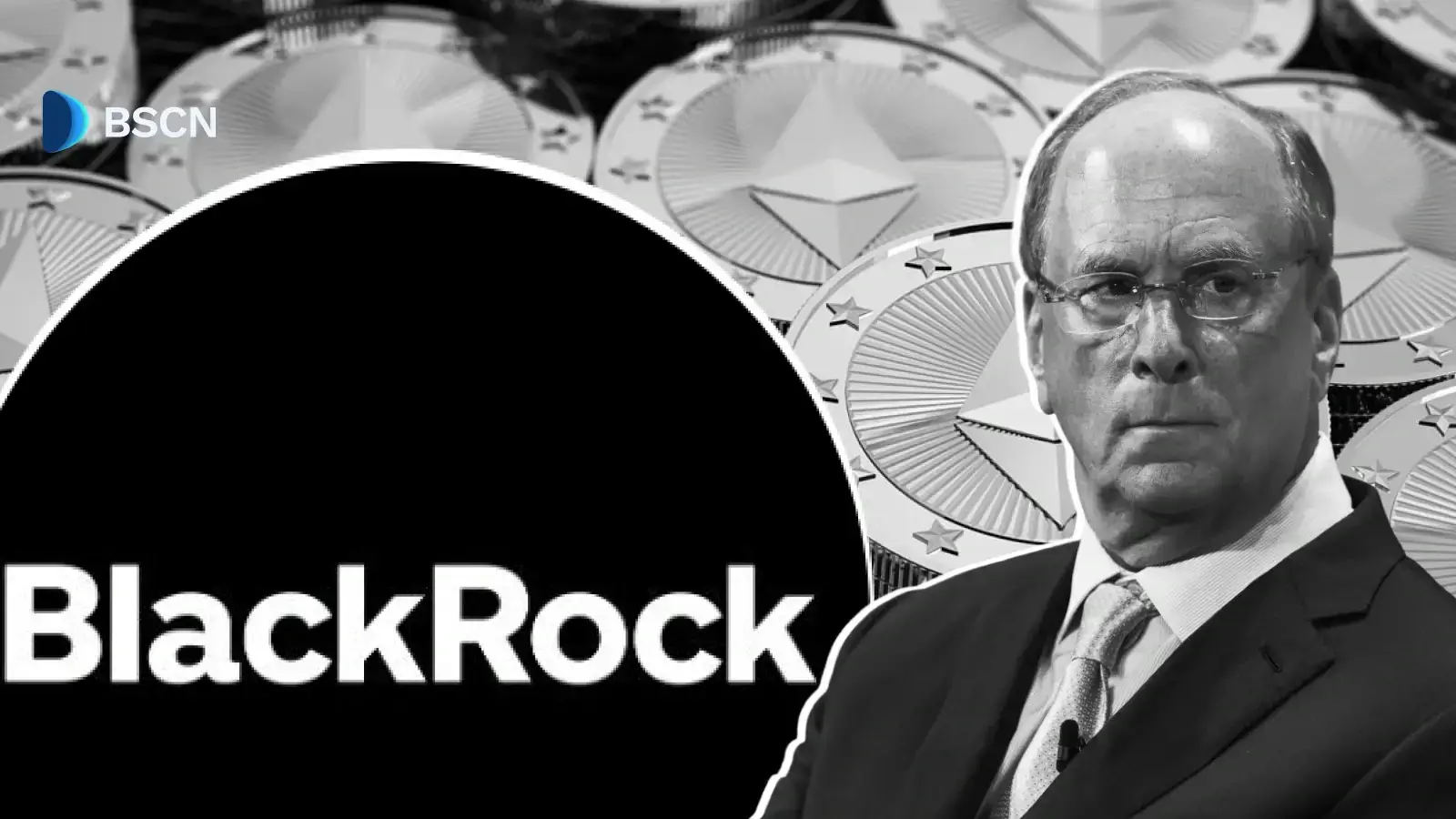
BlackRock files amended S-1 for its iShares Staked Ethereum Trust ETF (ETHB), targeting 70–95% ETH staking with ~3% annual yield. Here's what investors need to know.

Soumen Datta
February 18, 2026

(Advertisement)
Table of Contents
BlackRock, the world's largest asset manager, has moved beyond paperwork and started acquiring Ethereum for its planned staking ETF. According to an amended S-1 registration statement filed with the U.S. Securities and Exchange Commission on Tuesday, February 17, a BlackRock affiliate purchased 4,000 seed shares at $25 each, putting $100,000 in initial capital into the trust. That seed purchase marks a concrete step toward launching the iShares Staked Ethereum Trust, which is expected to trade under the ticker ETHB.
This is a separate product from BlackRock's existing iShares Ethereum Trust (ETHA), which already manages over $6.42 billion in ETH assets and tracks price only with no staking yield attached.
What Is Ethereum Staking, and Why Does It Matter for This ETF?
Staking is the process by which ETH holders lock up their tokens to help validate transactions on the Ethereum network. In return, they earn rewards, typically paid out in ETH, based on network participation rates and overall validator activity. Those rewards function similarly to interest in traditional finance, though they are not guaranteed and fluctuate based on how many validators are active on the network.
For retail and institutional investors using an ETF wrapper, staking exposure has historically been off the table in the U.S. The SEC, under former Chair Gary Gensler, instructed issuers to remove staking features from their filings when spot Ethereum ETFs were approved in mid-2024. The agency had previously taken action against staking services offered by Kraken and Coinbase, arguing those could qualify as unregistered securities.
That regulatory position has shifted. In May 2025, the SEC issued guidance clarifying that certain staking activities are not securities. Under new Chair Paul Atkins, multiple issuers including BlackRock and VanEck are now resubmitting or amending filings to include staking. BlackRock chose to launch an entirely new fund rather than modify ETHA.
How ETHB Is Structured: Staking Allocation and Liquidity Buffer
The iShares Staked Ethereum Trust is designed to stake between 70% and 95% of its total Ethereum holdings under normal market conditions. The filing describes this as staking "as much of the Trust's ether as practicable."
The remaining 5% to 30% of the fund's ETH will stay unstaked at any given time. That unstaked portion acts as a liquidity buffer, covering operational needs like ETF creations and redemptions. This is a standard mechanism in pooled investment vehicles that issue redeemable shares. Staking too large a share of the fund's ETH could delay redemptions, which the filing warns could cause shares to trade at significant premiums or discounts to net asset value (NAV).
Key structural details from the filing include:
- Staking allocation: 70% to 95% of total ETH holdings under normal conditions
- Liquidity buffer: 5% to 30% held unstaked for redemptions
- Estimated annualized staking yield: approximately 3%, based on early 2026 reference benchmarks
- Sponsor fee: 0.25% annually, reduced to 0.12% for the first $2.5 billion in assets during the first 12 months post-launch
- Reward split: 82% of gross staking rewards flow back to shareholders; 18% is shared between BlackRock and Coinbase Prime
How Are Staking Rewards Split Between Investors, BlackRock, and Coinbase?
Coinbase Prime serves as the execution agent for ETHB's staking operations. Together, BlackRock and Coinbase will take an 18% cut of gross staking rewards. The remaining 82% flows back to the trust and, ultimately, to shareholders.
The filing explicitly states that this arrangement creates a financial incentive for BlackRock, as sponsor, to maximize the amount of ETH staked by the trust. For investors, the structure is more transparent than many traditional yield products, where fee mechanics are often embedded in product terms rather than disclosed upfront.
The 0.12% promotional sponsor fee, which applies during the first 12 months up to $2.5 billion in assets under management, positions ETHB competitively against other institutional-grade crypto products. Beyond that threshold or after the promotional period, the fee reverts to 0.25% annually.
What Yield Can Investors Realistically Expect?
BlackRock estimated annualized staking returns at roughly 3%, citing early 2026 reference benchmarks. However, the filing includes a clear caution: those figures reflect average network conditions over specific periods and carry no guarantee of future performance.
The filing also notes that staking rewards have trended lower over time as validator participation on the Ethereum network has grown. More validators competing for the same reward pool means each validator, and by extension each staker, earns a smaller share. This is a known dynamic in proof-of-stake networks and a factor institutional investors should account for when evaluating yield projections.
One source suggests ETHB could yield approximately 2.8% annually, slightly below the 3% benchmark figure, once all fees are accounted for.
Where Does ETHB Fit in the Broader Ethereum ETF Market?
ETHA, BlackRock's existing spot Ethereum ETF, holds around $6.42 billion in assets and ranks as the largest Ethereum-based exchange-traded fund by assets under management. Grayscale's ETHE, by comparison, holds approximately $1.69 billion in ETH. VanEck has also submitted an SEC filing for a staked Ethereum ETF, meaning ETHB will not be the only product of its kind once approvals come through.
Grayscale already offers two Ethereum ETFs, ETHE and ETH, that generate staking yield. ETHB entering the market would add significant institutional weight to the staking ETF category given BlackRock's existing distribution reach and brand recognition in traditional finance.
The fund's structure specifically addresses the needs of institutional investors focused on daily liquidity, transparent fee disclosures, and regulatory compliance within a familiar U.S.-registered product format.
What Comes Next for Regulatory Approval?
BlackRock first registered the iShares Staked Ethereum Trust name in Delaware in November, which signaled intent without constituting a formal application. The formal S-1 filing followed in December 2024, kicking off the SEC review process.
For a formal approval deadline to be triggered, the fund's listing exchange must still submit a separate 19b-4 form. Until that happens, the SEC is not bound by a statutory timeline to approve or deny the product. The amended S-1 filed in February moves the product further along but does not itself finalize the regulatory clock.
Vitalik Buterin's Concerns About Wall Street's Growing Influence on Ethereum
Not everyone in the Ethereum ecosystem views the push for staking ETFs as straightforward progress. The same week that BlackRock first detailed plans for ETHB, Ethereum co-founder Vitalik Buterin publicly warned that a high concentration of ETH ownership among large Wall Street asset managers could distort the blockchain's governance structure and introduce centralized chokepoints into a network designed to operate without central control.
The concern is a technical and philosophical one. When a large portion of staked ETH is controlled by a small number of institutional entities like asset managers and custodians, those entities gain outsized influence over validator sets and, indirectly, over protocol-level decisions. This is a known tension in proof-of-stake systems, and it becomes more pronounced as institutional staking scales.
BlackRock's partnership with Coinbase for staking infrastructure adds another layer to this discussion, as Coinbase already operates as one of the larger validator node operators in the Ethereum ecosystem.
The Bottom Line on BlackRock's Ethereum Staking ETF
BlackRock's iShares Staked Ethereum Trust is a concrete product with a defined structure, not a concept in early development. The fund is designed to stake between 70% and 95% of its ETH holdings, distribute 82% of gross staking rewards to shareholders, and charge a sponsor fee starting at 0.12% annually. Coinbase Prime handles the staking infrastructure, and both firms take an 18% combined cut of gross rewards. Estimated annualized yield sits at roughly 3%, though that figure has trended lower as validator participation on the Ethereum network has grown.
What remains is regulatory approval. The SEC review is underway, but a formal deadline will not be triggered until the listing exchange submits its 19b-4 form. In the meantime, Vitalik Buterin's concerns about institutional concentration on Ethereum are worth watching, particularly as more asset managers follow BlackRock's lead into staking products.
For investors already comfortable with Ethereum exposure, ETHB offers a yield component that ETHA does not. Whether that yield justifies the fee structure and reward split is a decision that comes down to individual investment goals and how much weight you put on the SEC's timeline.
Resources
Report by CoinDesk: BlackRock Files for Staked Ethereum ETF
Report by The Block: BlackRock begins acquiring ETH for upcoming Ethereum staking ETF
Report by DL News: Vitalik Buterin warns of two threats to Ethereum if BlackRock gets any bigger
Read Next...



Frequently Asked Questions
What is the ticker symbol for BlackRock's new Ethereum staking ETF?
BlackRock's iShares Staked Ethereum Trust is expected to trade under the ticker ETHB. It is a separate product from the firm's existing spot Ethereum ETF, which trades under the ticker ETHA.
How much of ETHB's Ethereum will be staked at any given time?
Under normal market conditions, between 70% and 95% of the fund's total Ethereum holdings will be actively staked. The remaining 5% to 30% will stay unstaked to handle daily ETF creations and redemptions.
How are staking rewards distributed in the ETHB fund?
Shareholders receive 82% of gross staking rewards. The remaining 18% is split between BlackRock, as the fund's sponsor, and Coinbase Prime, which serves as the execution agent for staking operations. Shareholders also pay an annual sponsor fee of between 0.12% and 0.25%, depending on assets under management and the timing relative to the fund's launch.
Disclaimer
Disclaimer: The views expressed in this article do not necessarily represent the views of BSCN. The information provided in this article is for educational and entertainment purposes only and should not be construed as investment advice, or advice of any kind. BSCN assumes no responsibility for any investment decisions made based on the information provided in this article. If you believe that the article should be amended, please reach out to the BSCN team by emailing [email protected].
Author
 Soumen Datta
Soumen has been a crypto researcher since 2020 and holds a master’s in Physics. His writing and research has been published by publications such as CryptoSlate and DailyCoin, as well as BSCN. His areas of focus include Bitcoin, DeFi, and high-potential altcoins like Ethereum, Solana, XRP, and Chainlink. He combines analytical depth with journalistic clarity to deliver insights for both newcomers and seasoned crypto readers.
(Advertisement)
Latest News
July 10, 2026

How Do PancakeSwap's CAKE Token Burns Actually Work?
July 10, 2026
Report: Ripple & The XRP Ecosystem in H1 2026
July 10, 2026

How Is Cardano Advancing Financial Inclusion in Developing Countries?
July 10, 2026

Why Was Sui Built From Scratch Instead of Forking an Existing Blockchain?
July 9, 2026

Trust Wallet Adds Native Support for Robinhood Chain, Opening Stock Tokens to 220 Million Users
July 9, 2026
Robinhood Chain Explodes Post-Mainnet Launch
July 9, 2026
Is Avalanche AVAX Bringing Hyundai On Chain?
July 9, 2026

Stop Tokenizing Assets You Don't Control
(Advertisement)

Crypto Project & Token Reviews
Project & Token Reviews
Comprehensive reviews of crypto's most interesting projects and assets
Learn about the hottest projects & tokens

Latest Crypto Articles
Get up to date with the latest crypto news stories and events