Deepdive
(Advertisement)


BlackRock's Bitcoin ETF Explained: How IBIT Works and Who It Targets

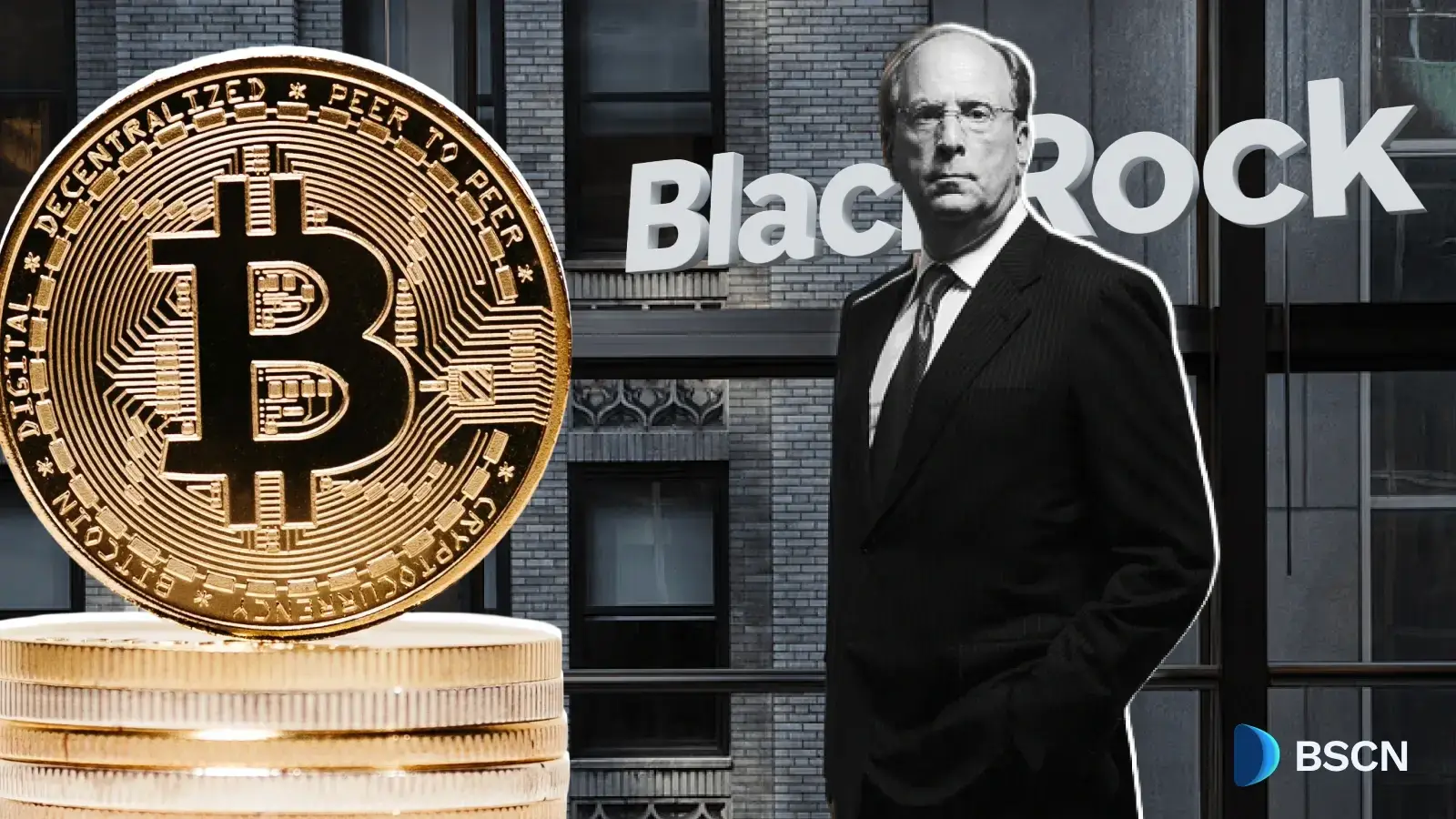
BlackRock's Bitcoin ETF, IBIT, is the world's largest spot Bitcoin ETF. Here is how it works, who it targets, and what investors actually own.

Soumen Datta
June 11, 2026

(Advertisement)
Table of Contents
BlackRock's iShares Bitcoin Trust, ticker IBIT, is a spot Bitcoin ETF that lets investors gain direct exposure to Bitcoin's price through a standard brokerage account, without holding cryptocurrency themselves. Approved by the U.S. Securities and Exchange Commission in January 2024 as part of a simultaneous approval of ten spot Bitcoin ETFs, IBIT has since become the largest Bitcoin ETF in the world by assets under management, surpassing $70 billion in AUM at its peak during 2025 when Bitcoin traded above $100,000.
What Is IBIT And How Does It Actually Work?
IBIT holds actual Bitcoin, not futures contracts or derivatives. Each share of the ETF represents a fractional ownership of the Bitcoin held in custody by Coinbase Custody Trust Company, which BlackRock selected as its custodian. When an investor buys a share of IBIT through a brokerage, they are buying a security that tracks the spot price of Bitcoin directly.
BlackRock prices IBIT using the CME CF Bitcoin Reference Rate, a regulated benchmark that aggregates Bitcoin prices across major exchanges. The fund charges a sponsor fee of 0.25% annually, which is the standard ongoing rate and is competitive within the spot Bitcoin ETF category. BlackRock waived a portion of this fee during the initial launch period as an incentive for early investors.
How The Creation And Redemption Model Has Evolved
When IBIT launched in January 2024, the SEC required it to operate under a cash creation and redemption model. This meant authorized institutional participants could only create or redeem large blocks of shares using cash, not actual Bitcoin. The SEC imposed this condition because it was uncomfortable with broker-dealers directly handling Bitcoin at that time.
BlackRock and other issuers pushed for in-kind redemptions from the outset, arguing they would better align the ETF price with the underlying asset and reduce costs. Following further SEC guidance in 2025, in-kind creation and redemption became available for spot Bitcoin ETFs, including IBIT. Under this model, authorized participants can now exchange actual Bitcoin when creating or redeeming share blocks, which helps reduce tracking error and is the standard structure used for commodity ETFs.
How Big Is IBIT Today?
IBIT reached over $70 billion in assets under management at its peak in 2025, making it one of the fastest ETFs in history to reach that scale across any asset class. For context, the SPDR Gold Shares ETF, known as GLD, launched in November 2004 and took approximately two years to reach $10 billion in AUM. IBIT crossed $10 billion in under two months after launch, a comparison that illustrates the scale of institutional demand Bitcoin attracted once a regulated vehicle became available.
Daily trading volumes for IBIT regularly exceed those of many large-cap equity ETFs, reflecting sustained institutional and retail demand. The fund has also been included in several model portfolios by major wealth management platforms, broadening its distribution significantly. Investors should note that IBIT's AUM figure fluctuates with Bitcoin's price, so current figures should be verified against live data before making investment decisions.
As of June 10, IBIT's net assets under management stood at $47.21 billion.
Who Is IBIT Designed For?
IBIT targets two distinct groups:
- Traditional investors who want Bitcoin exposure but are uncomfortable managing private keys, crypto wallets, or exchange accounts
- Institutional investors such as hedge funds, registered investment advisors, and pension funds that face regulatory or compliance restrictions on holding crypto assets directly
For both groups, IBIT solves a structural problem. Bitcoin held on a crypto exchange carries custodial risk. Bitcoin held in a self-custody wallet requires technical competence and carries its own operational risks. IBIT transfers that complexity to BlackRock and Coinbase Custody, within a regulated securities wrapper that institutional compliance frameworks already understand.
What IBIT Does Not Offer
Investors in IBIT do not receive actual Bitcoin. They cannot withdraw Bitcoin from the fund to a personal wallet. They have no access to Bitcoin's network directly, meaning they cannot use their IBIT holdings for transactions, staking, or any on-chain activity. IBIT is purely a price exposure vehicle.
Is IBIT Safe Compared To Holding Bitcoin Directly?
This depends on what risks an investor is trying to manage. IBIT eliminates self-custody risk and exchange counterparty risk, replacing them with custodial risk concentrated at Coinbase Custody and regulatory risk tied to the ETF structure itself.
Coinbase Custody holds the Bitcoin in segregated cold storage, meaning the assets are kept offline and separate from Coinbase's operational funds. BlackRock has disclosed that the trust's Bitcoin is not lent out or used for any income-generating activity, removing rehypothecation risk that some crypto lending products carry.
However, IBIT investors are exposed to risks that direct Bitcoin holders are not, including the possibility of regulatory changes affecting the ETF's structure, counterparty risk from Coinbase Custody, and the fund's dependence on BlackRock remaining its sponsor.
Key Custodial And Structural Details
- Bitcoin is held in cold storage by Coinbase Custody Trust Company
- No Bitcoin lending or rehypothecation within the trust
- Shares trade on Nasdaq under the ticker IBIT
- The fund is structured as a grantor trust under U.S. securities law
- Tax treatment follows standard brokerage account rules for U.S. investors
- In-kind creation and redemption is now available following SEC guidance in 2025
How Does IBIT Compare To Other Spot Bitcoin ETFs?
Ten spot Bitcoin ETFs received simultaneous SEC approval in January 2024, including products from Fidelity (FBTC), Invesco, and ARK Invest. Since then, the spot Bitcoin ETF market has expanded further as additional issuers have entered the space. IBIT captured the majority of net inflows within the first weeks of the original launch and has maintained its lead in AUM since.
Fidelity's FBTC is IBIT's closest competitor by AUM. Fidelity uses its own subsidiary, Fidelity Digital Asset Services, as custodian rather than a third party. Some investors prefer this vertical integration. Others prefer BlackRock's established ETF infrastructure and liquidity profile. As of June 10, Fidelity CBOE’s net assets stood at $11.12 billion.
The primary competitive differentiators across spot Bitcoin ETFs are fee structure, custodian choice, liquidity, and the sponsor's distribution network. BlackRock's existing relationships with institutional allocators have given IBIT a structural advantage in the latter category.
Conclusion
IBIT is a specific product doing a specific job: giving investors regulated, liquid exposure to Bitcoin's spot price without requiring them to interact with crypto infrastructure directly. It holds real Bitcoin, uses Coinbase Custody for cold storage, charges 0.25% annually, and trades on Nasdaq. Its creation and redemption model evolved from cash-only at launch to in-kind following SEC guidance in 2025, bringing it closer to the structure used by commodity ETFs.
At its peak, IBIT surpassed $70 billion in AUM, a scale that took gold ETFs years to reach. It is not a substitute for direct Bitcoin ownership and does not replicate the full properties of holding Bitcoin on-chain. What it does, it does with the operational backing of the world's largest asset manager.
FAQ
What does IBIT actually hold? IBIT holds real Bitcoin in cold storage custody through Coinbase Custody Trust Company. Each share represents fractional ownership of that Bitcoin, priced using the CME CF Bitcoin Reference Rate. The trust does not hold futures, derivatives, or any other synthetic instruments.
Can I convert my IBIT shares into actual Bitcoin? No. Individual investors cannot redeem IBIT shares for Bitcoin directly. Only authorized institutional participants can interact with the fund's creation and redemption mechanism, and even that process operates under specific conditions set by BlackRock and the SEC.
Is IBIT available in a retirement account? IBIT is a standard listed ETF on Nasdaq and is eligible for IRAs and 401(k) brokerage windows where the plan administrator has made it available. Availability is not automatic. Many employer-sponsored 401(k) plans have not yet added IBIT as an investment option, so investors should confirm with their plan provider before assuming access.
Resources
- BlackRock iShares – IBIT Product Page: Fund Details, Fees, Holdings and Prospectus
- U.S. Securities and Exchange Commission – BlackRock iShares Bitcoin Trust: SEC Registration Filings
- CME Group – CME CF Bitcoin Reference Rate: Pricing Methodology and Index Construction
- Coinbase Institutional – Coinbase Custody: Cold Storage Infrastructure and Segregated Asset Framework
- CoinGlass – Bitcoin ETF Tracker: Live AUM, Daily Flows and Comparative Market Data
- SPDR Gold Shares – GLD ETF: Historical AUM Growth and Fund Structure Reference
Read Next...



Frequently Asked Questions
What does IBIT actually hold?
IBIT holds real Bitcoin in cold storage custody through Coinbase Custody Trust Company. Each share represents fractional ownership of that Bitcoin, priced using the CME CF Bitcoin Reference Rate. The trust does not hold futures, derivatives, or any other synthetic instruments.
Can I convert my IBIT shares into actual Bitcoin?
No. Individual investors cannot redeem IBIT shares for Bitcoin directly. Only authorized institutional participants can interact with the fund's creation and redemption mechanism, and even that process operates under specific conditions set by BlackRock and the SEC.
Is IBIT available in a retirement account?
IBIT is a standard listed ETF on Nasdaq and is eligible for IRAs and 401(k) brokerage windows where the plan administrator has made it available. Availability is not automatic. Many employer-sponsored 401(k) plans have not yet added IBIT as an investment option, so investors should confirm with their plan provider before assuming access.
Disclaimer
Disclaimer: The views expressed in this article do not necessarily represent the views of BSCN. The information provided in this article is for educational and entertainment purposes only and should not be construed as investment advice, or advice of any kind. BSCN assumes no responsibility for any investment decisions made based on the information provided in this article. If you believe that the article should be amended, please reach out to the BSCN team by emailing [email protected].
Author
 Soumen Datta
Soumen has been a crypto researcher since 2020 and holds a master’s in Physics. His writing and research has been published by publications such as CryptoSlate and DailyCoin, as well as BSCN. His areas of focus include Bitcoin, DeFi, and high-potential altcoins like Ethereum, Solana, XRP, and Chainlink. He combines analytical depth with journalistic clarity to deliver insights for both newcomers and seasoned crypto readers.
(Advertisement)
Latest News
2h : 5m ago

What Is Jimothy Memecoin?
5h : 5m ago

What Is the Cardano Van Rossem Upgrade?
July 20, 2026
How Does Pump.Fun Make Money?
July 20, 2026

A Closer Look at Avalanche's 2026 Fundamentals
July 20, 2026
How Does Chainlink Verify That Tokenized Gold Is Backed by Real Gold?
July 17, 2026

What is the Nakamoto Coefficient & Why Does it Matter?
July 17, 2026

How to Trade on Robinhood Chain, Crypto's Busiest New Memecoin Market
July 17, 2026

Insights from CoinGecko's Q2 Crypto Report
(Advertisement)

Crypto Project & Token Reviews
Project & Token Reviews
Comprehensive reviews of crypto's most interesting projects and assets
Learn about the hottest projects & tokens

Latest Crypto Articles
Get up to date with the latest crypto news stories and events