News
(Advertisement)


Bitwise Files for Avalanche AVAX ETF: Key Details

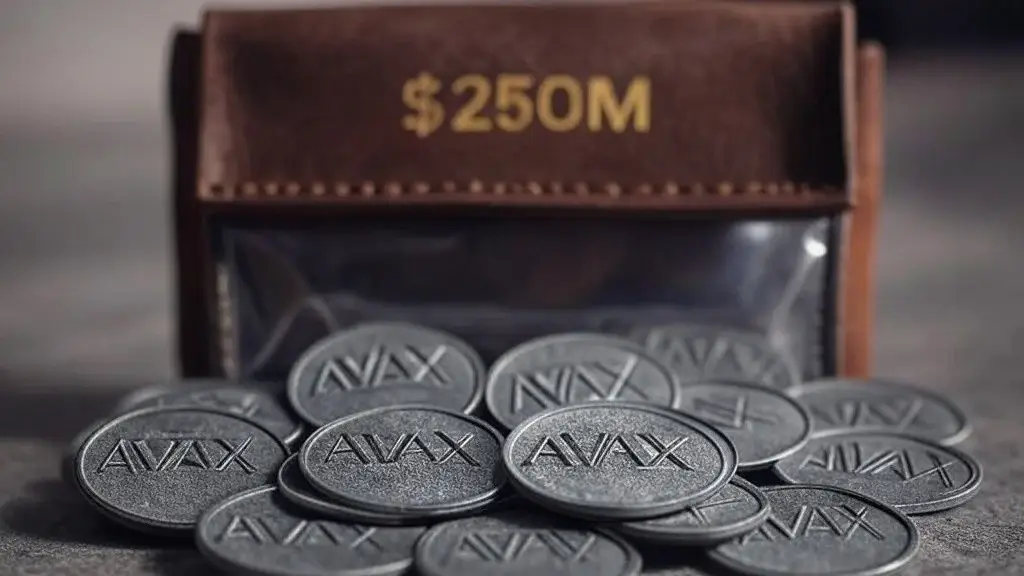
Bitwise files amended S-1 for spot Avalanche (AVAX) ETF with staking, ticker BAVA, 0.34% fee, up to 70% staked, targeting Q1 2026 launch.

UC Hope
December 1, 2025

(Advertisement)
Table of Contents
Bitwise Asset Management has submitted an amended S-1 registration statement to the U.S. Securities and Exchange Commission for a spot Avalanche AVAX ETF that incorporates staking, according to the filing dated November 27, 2025.
The proposed exchange-traded fund, with the ticker symbol BAVA, seeks to offer investors exposure to the price of AVAX, the native token of the Avalanche blockchain, while also generating additional returns by staking a portion of its holdings on the network.
This development follows an initial filing in September 2025 and positions the product as a potential addition to the U.S. crypto ETF market, with a targeted launch in the first quarter of 2026 on the NYSE Arca exchange.
What Do We Know About The Latest Filing?
The amended S-1 filing updates the original submission by introducing staking as a key feature. The ETF is structured as a grantor trust under the Bitwise ETF Trust, which provides tax treatment that treats shareholders as direct owners of the underlying AVAX tokens. This structure ensures that any income from staking flows through to investors. The fund's primary objective is to track the spot price of AVAX, with staking serving as a secondary mechanism to enhance returns. Bitwise has indicated that the ETF will hold AVAX in segregated accounts, and the sponsor will manage staking activities without engaging in active trading.
The filing specifies that the ETF will launch with an annual management fee of 0.34 percent, covering operational costs, including staking-related costs. To encourage initial investments, Bitwise plans to waive this fee entirely for the first month on up to $500 million in assets. This fee is lower than those proposed by competitors, such as VanEck's 0.40 percent and Grayscale's 0.50 percent for their respective Avalanche ETF proposals. The document also notes that the fund will not use leverage or derivatives, focusing instead on direct AVAX holdings.
Custody arrangements are detailed extensively in the filing. Coinbase Custody will maintain the private keys for the AVAX holdings in cold storage using hardware security modules. The accounts are segregated to prevent commingling with other assets, and there is no FDIC or SIPC insurance coverage. The custodian has an addendum to its agreement that allows for staking facilitation, but it limits liability for certain losses to $5 million.
Staking Mechanics in the Bitwise Avalanche AVAX ETF
Staking is a core component of the proposed ETF, enabling the fund to participate in Avalanche's proof-of-stake consensus mechanism. The filing states that the trust will stake some or all of its AVAX holdings, excluding a liquidity reserve, by delegating tokens to validators operated by staking agents. One such agent mentioned is Attestant, Ltd., which became an affiliate of Bitwise on November 25, 2025.
The process involves escrowing AVAX on the Avalanche network for a lockup period ranging from 2 weeks to 1 year, as determined by the validators. During this time, the staked tokens help secure the network by proposing and validating blocks. The fund's sponsor selects trusted staking agents, and the custodian handles the staking requests without transferring AVAX to the agents' wallets. This setup aims to maintain security and avoid rehypothecation.
There is no fixed cap on the percentage of AVAX that can be staked, but the filing describes a liquidity reserve of unstaked tokens, initially set at 30 percent of holdings. This reserve can be adjusted monthly based on factors like redemption volumes, market volatility, and on-chain liquidity data. In practice, Bitwise anticipates staking a substantial portion, potentially up to 70 percent, while aggregating stakes across multiple validators to comply with network rules. These rules include a minimum of 2,000 AVAX and a maximum of 3 million AVAX per validator. The exact percentage staked will be disclosed daily on the ETF's website.
What are the Risks Associated with Staking in the Avalanche AVAX ETF?
The amended filing includes detailed risk disclosures related to staking. Operational risks include downtime or failures of validators, which could result in the forfeiture of rewards. If a validator goes offline, the trust may lose some or all of its expected rewards.
Agent or custodian errors, including insolvency, could lead to losses, though liability is capped in some cases.
Liquidity risks arise from the lockup periods, which may delay redemptions if the liquidity reserve proves insufficient. In such scenarios, the fund has a contingent liquidity arrangement to exchange staked AVAX for unstaked tokens at a market spread, potentially causing premiums or discounts to the net asset value or even temporary redemption suspensions.
Network and cyber risks are also highlighted. Hacks, protocol vulnerabilities, or attacks on the Avalanche network could result in permanent losses. Currently, the network does not implement slashing, but future governance changes could introduce it.
Tax and regulatory risks include the possibility that staking rewards are treated as ordinary income without corresponding cash payouts. Non-compliance with IRS Revenue Procedure 2025-31, issued on November 10, 2025, could affect the grantor trust status. This procedure provides a safe harbor for grantor trusts engaging in staking without being deemed to conduct a trade or business.
Other risks encompass quantum computing threats to cryptography, exchange hacks, and reduced network adoption if widespread staking deters independent validators. All AVAX holdings, staked or unstaked, are uninsured against theft or loss.
Conclusion
The Bitwise filing for the Avalanche AVAX ETF outlines a product that combines spot price tracking with staking to generate yields, structured as a grantor trust with Coinbase as custodian. It details mechanics such as delegation to validators, a 30 percent initial liquidity reserve, and 12 percent in rewards, while disclosing risks including operational failures, liquidity constraints, and regulatory uncertainties.
Competitors like VanEck and Grayscale lack similar yield features, and the proposal builds on Bitwise's European ETP experience. This submission reflects efforts to integrate blockchain-native returns into regulated U.S. investment vehicles, underscoring the role of recent IRS guidance in enabling such structures. Investors should review the full S-1 for complete details before considering participation.
Sources:
- Coindesk Article: Avalanche ETF Race
- SEC Document: Bitwise S-1 Amendment
- TheBlock: VanEck Avalanche ETF Live Status
Read Next...


Frequently Asked Questions
What is the ticker symbol for the proposed Bitwise Avalanche AVAX ETF?
The proposed ETF has the ticker symbol BAVA and is set to trade on the NYSE Arca exchange if approved.
How much of the AVAX holdings will be staked in the Bitwise ETF?
The fund plans to stake some or all holdings excluding a liquidity reserve, potentially up to 70 percent, with daily disclosures on the website.
What are the fees associated with staking in the Bitwise Avalanche AVAX ETF?
Staking expenses are 12 percent of generated rewards, deducted before adding net AVAX to the fund, in addition to the 0.34 percent annual management fee.
Disclaimer
Disclaimer: The views expressed in this article do not necessarily represent the views of BSCN. The information provided in this article is for educational and entertainment purposes only and should not be construed as investment advice, or advice of any kind. BSCN assumes no responsibility for any investment decisions made based on the information provided in this article. If you believe that the article should be amended, please reach out to the BSCN team by emailing [email protected].
Author
 UC Hope
UC holds a bachelor’s degree in Physics and has been a crypto researcher since 2020. UC was a professional writer before entering the cryptocurrency industry, but was drawn to blockchain technology by its high potential. UC has written for the likes of Cryptopolitan, as well as BSCN. He has a wide area of expertise, covering centralized and decentralized finance, as well as altcoins.
(Advertisement)
Latest News
July 15, 2026

REAL Joins Blockchain for Europe to Shape EU Tokenisation Rules
July 15, 2026

Which Crypto Companies and Protocols Make The Most Money?
July 15, 2026
How SBI Built Japan's Largest Crypto Business
July 15, 2026

Elon Musk And Dogecoin: How One Man Shaped A Memecoin’s Price And Reputation
July 15, 2026
DTCC Tokenization Platform: How Does Wall Street's Blockchain Pilot Actually Work?
July 14, 2026

Report: Cardano's Biggest Updates from H1 2026
July 14, 2026

What is an XDC Network Masternode Validator?
July 13, 2026
Telebiz Goes Live With an Open-Source CRM Built Directly Into Telegram
(Advertisement)

Crypto Project & Token Reviews
Project & Token Reviews
Comprehensive reviews of crypto's most interesting projects and assets
Learn about the hottest projects & tokens

Latest Crypto Articles
Get up to date with the latest crypto news stories and events