News
(Advertisement)


Bitget Wallet Brings Google and Apple Login With ‘Hardware Level’ Security

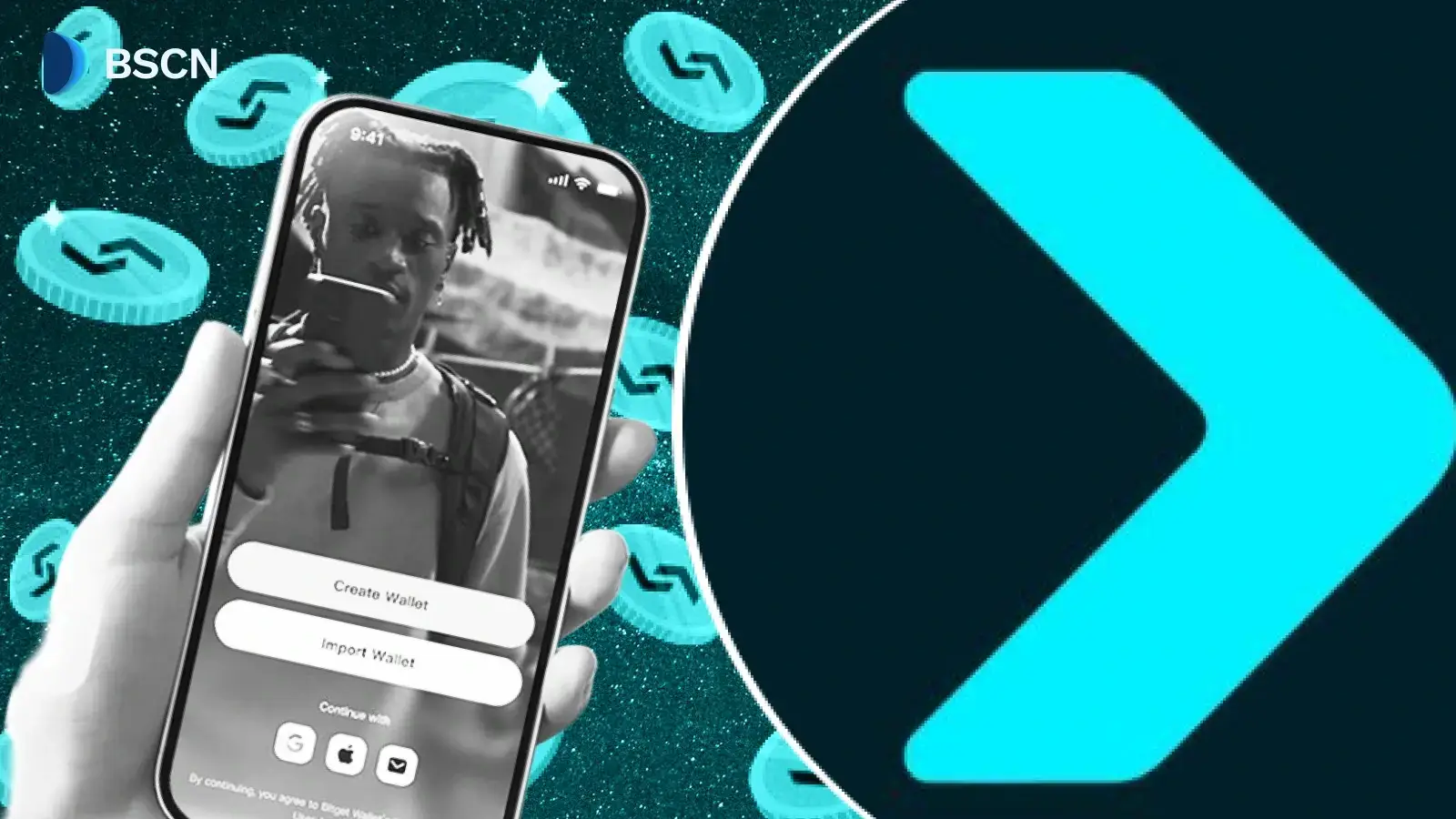
Bitget Wallet adds Google and Apple login backed by hardware-level TEE security, making self-custody simpler while preserving full key control.

Soumen Datta
December 5, 2025

(Advertisement)
Table of Contents
Bitget Wallet now lets users open and access a self-custody crypto wallet using Google, Apple ID, or email. The feature removes the need for a 12-word recovery phrase while keeping full control of private keys.
Introducing: Social Logins
— Bitget Wallet 🩵 (@BitgetWallet) December 4, 2025
Create wallets bound to your socials (Google, Apple ID or email)
❌ No seed phrases = no leakages
✅ Private keys are encrypted, backed up in cloud + TEE tech
Easier onboarding. Same security layers. Still self-custodial.
Making #Crypto4Everyone easy pic.twitter.com/xfuS0q4ts0
It does this by combining social login with hardware-level protection through a Trusted Execution Environment, or TEE. This approach keeps keys local to the device and secured inside an isolated hardware zone.
Self-custody often depends on seed phrases and manual backups. Many new users struggle with these steps, and small mistakes can lead to permanent loss of access. Bitget Wallet’s new login method aims to reduce this barrier without moving users toward custodial accounts.
How Does the New Login System Work?
Bitget Wallet uses a TEE to create a familiar login experience while maintaining a self-custodial model. A TEE is a protected space inside a device’s hardware. It functions like the secure chip found in modern smartphones. Sensitive data inside the TEE stays isolated from the main operating system.
When a user signs in with Google, Apple ID, or email, several things happen inside the TEE:
- The private key is generated locally on the device.
- The key stays encrypted and never leaves the secure hardware zone.
- Signing operations take place inside the TEE in milliseconds.
- The wallet provider never sees or stores the user’s key.
Users can switch phones by simply logging in again. Because the key is tied to TEE-based authentication, not a written phrase, the process feels familiar to anyone who uses mobile apps.
A spokesperson from Bitget Wallet describes this as a behavioral problem, not a technical one. Most people understand logging into an app. Very few understand the risks of key exposure, seed-phrase management, or manual backups.
Why Is TEE Security Important?
TEE-based wallets differ from custodial services and from MPC (multi-party computation) wallets. MPC splits a private key into fragments stored across devices or servers. TEE keeps everything local. This reduces latency and avoids the need for distributed coordination.
Bitget Wallet also uses AWS Nitro Enclaves in its backend architecture to keep encrypted key material isolated during necessary processes. Keys remain encrypted at all times and are decrypted only inside the enclave after authentication. This design ensures end-to-end isolation across the key lifecycle.
TEE protection is already used in banking apps, password managers, and smartphone biometrics. Bringing this model to self-custody aligns crypto tools with familiar real-world security practices.
What Blockchains Does the Feature Support?
At launch, the social-login wallet works across major networks, including:
Users can send assets, swap tokens, access DApps, process payments, and stake on supported chains. Bitget Wallet says additional blockchains are planned. Upcoming updates will add email-based transfers and expanded recovery options.
How Does This Change Web3 Onboarding?
Many new users hesitate to enter crypto because of concerns about seed phrases. Losing a phrase means losing access. Storing it insecurely increases the risk of theft.
TEE-backed social login lets users interact with Web3 in a more familiar way:
- No need to memorize long phrases
- No dependence on cloud backups
- Biometric authentication supported by smartphone hardware
- Fast setup for sending and receiving transactions
This is relevant for payment use cases, onchain transfers, and users relying on stablecoins during periods of inflation. The model aligns more closely with mobile finance apps, which have already shaped expectations around convenience and recovery.
Recent Expansion Into Real-World Payments
The new login feature arrives a few weeks after Bitget Wallet introduced a Bank Transfer service in Nigeria and Mexico. That service converts stablecoins such as USDT and USDC into local currency and sends funds directly to bank accounts.
The bank-transfer tool addresses gaps in payment infrastructure in both countries, where stablecoins are used widely for daily spending and as a buffer during currency volatility.
How the Bank Transfer Feature Works
Users select a currency, enter an amount, input recipient bank details, and confirm the transfer. Licensed payment partners handle settlement through regulated channels.
The service supports:
- Over 45 banks in Nigeria
- More than 35 banks in Mexico
- Transfers using USDT and USDC on Ethereum, Solana, Tron, Base, and BNB Chain
Settlements normally complete within minutes.
Addressing Real-World Challenges
In Nigeria, peer-to-peer platforms often face liquidity shortages and inconsistent rates. Direct bank transfers give users a more stable option. Nigeria processes more than $90 billion in annual onchain activity, making it Africa’s most active crypto market.
Mexico, with more than $70 billion in annual onchain volume, has limited regulated crypto-to-bank channels. Bitget Wallet’s service offers a clear path from stablecoins to local currency.
Practical Uses
The feature supports everyday needs, such as:
- Paying merchants or contractors
- Sending funds to family
- Handling bills and recurring expenses
- Converting stablecoin savings to local currency
Transfers originate from self-custody wallets. Users do not need to deposit funds into centralized exchanges.
Conclusion
Bitget Wallet’s social login feature pairs a simple sign-in flow with hardware-level protection. Private keys stay locked inside a TEE, never exposed to the provider, and remain under user control.
The approach reduces onboarding friction while preserving self-custody, supports major blockchains at launch, and fits into the platform’s broader push toward practical, accessible crypto tools. The recent bank-transfer service in Nigeria and Mexico shows how these features tie into real-world usage. Seed phrases remain an option, but TEE-backed login offers a path that looks and feels closer to modern mobile finance.
Resources
Bitget Wallet on X: Announcement (Dec. 4)
Bitget Wallet’s official website: General info
Bitget Wallet’s official blog: Announcements up to December 3rd, 2025
Read Next...

Frequently Asked Questions
How does Bitget Wallet keep private keys secure when using Google or Apple login?
The wallet generates and stores private keys inside a hardware-isolated Trusted Execution Environment. Keys never leave the device or pass through Bitget Wallet’s servers.
Is this login method custodial?
No. Despite using social accounts for authentication, key control stays with the user. All signing happens locally inside the TEE.
Which networks are supported with the new login feature?
The wallet currently supports Bitcoin, Ethereum, Solana, Tron, Base, BNB Chain, Polygon, Arbitrum, and Morph, with more planned.
Disclaimer
Disclaimer: The views expressed in this article do not necessarily represent the views of BSCN. The information provided in this article is for educational and entertainment purposes only and should not be construed as investment advice, or advice of any kind. BSCN assumes no responsibility for any investment decisions made based on the information provided in this article. If you believe that the article should be amended, please reach out to the BSCN team by emailing [email protected].
Author
 Soumen Datta
Soumen has been a crypto researcher since 2020 and holds a master’s in Physics. His writing and research has been published by publications such as CryptoSlate and DailyCoin, as well as BSCN. His areas of focus include Bitcoin, DeFi, and high-potential altcoins like Ethereum, Solana, XRP, and Chainlink. He combines analytical depth with journalistic clarity to deliver insights for both newcomers and seasoned crypto readers.
(Advertisement)
Latest News
July 17, 2026

What is the Nakamoto Coefficient & Why Does it Matter?
July 17, 2026
How to Trade on Robinhood Chain, Crypto's Busiest New Memecoin Market
July 17, 2026
Insights from CoinGecko's Q2 Crypto Report
July 17, 2026
Why Is Sui's Approach to Storing Data On Chain Different From Most Blockchains?
July 17, 2026
Why Does XRP Move Faster Than Bitcoin, And What Makes It Possible?
July 17, 2026

Top 8 Prediction Markets in Crypto Today
July 16, 2026
Grayscale Picks Its Most Promising Tokenization Blockchains
July 16, 2026

Crypto's Top Five Centralized Exchanges
(Advertisement)

Crypto Project & Token Reviews
Project & Token Reviews
Comprehensive reviews of crypto's most interesting projects and assets
Learn about the hottest projects & tokens

Latest Crypto Articles
Get up to date with the latest crypto news stories and events