News
(Advertisement)


Binance and CZ Beat a Terrorism Lawsuit, There Is Just One Catch

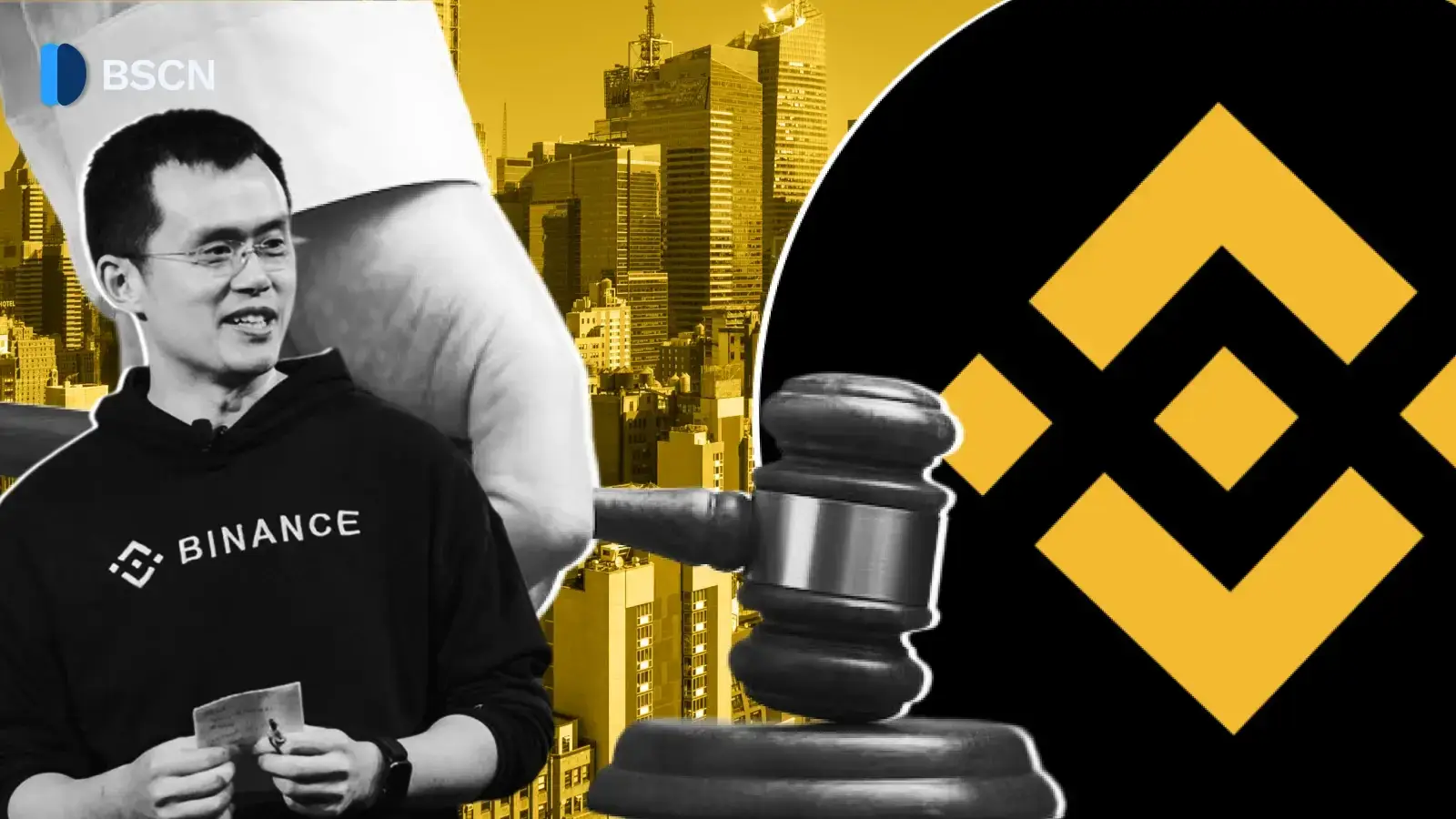
A federal judge dismissed the Binance terrorism lawsuit but gave plaintiffs 60 days to refile. Here's what the ruling means for Binance, CZ, and crypto compliance.

Soumen Datta
March 9, 2026

(Advertisement)
Table of Contents
A federal judge in Manhattan dismissed all claims in a civil lawsuit that sought to hold Binance and its founder Changpeng Zhao responsible for helping finance terrorist attacks. Ruling on March 6, Judge Jeannette A. Vargas found that the 535 plaintiffs failed to plausibly connect the exchange's conduct to specific attacks. She gave them 60 days to file an amended complaint with more precise evidence.
What Did The Lawsuit Actually Claim?
The case was brought by victims and family members of victims of 64 terrorist attacks between 2016 and 2024. They accused Binance, Zhao, and BAM Trading (the operator of Binance.US) of knowingly processing transactions that funneled money to designated foreign terrorist organizations, including Hamas, Hezbollah, the Islamic Revolutionary Guard Corps (IRGC), al-Qaeda, Palestinian Islamic Jihad (PIJ), and ISIS.
The complaint, which ran to 891 pages and 3,189 paragraphs, alleged several specific failures:
- Binance processed billions of dollars in transactions with Iranian users in violation of U.S. sanctions, effectively benefiting Iran-linked proxy groups.
- The exchange hosted wallets linked to Hamas and PIJ, and internal communications showed Binance executives knew Hamas was transacting on the platform as early as 2019.
- Binance hosted Garantex, a sanctioned Russian "nested exchange," a term for a service that uses a compliant exchange's infrastructure while hiding the true identity of its users.
- One primary liability claim was brought on behalf of the family of an infant who died after a Wizard Spider ransomware attack disrupted hospital systems.
The complaint documented roughly $56 million in Hamas-linked transfers and $59 million in PIJ-linked transfers flowing through Binance. Plaintiffs sought triple damages under the federal Anti-Terrorism Act (ATA).
Why Did The Judge Dismiss The Case?
Judge Vargas acknowledged that Binance was likely "generally aware" of its role in facilitating terrorist financing, based on its documented compliance failures and history of hosting accounts tied to sanctioned groups. But awareness, the court held, is not enough.
The ruling leaned on the Justice Against Sponsors of Terrorism Act (JASTA), which requires plaintiffs to show not just that a defendant processed money for a terrorist group, but that it did so with the intent to support the specific attacks in question. The plaintiffs did not meet that standard.
The Ashley v. Deutsche Bank Precedent
A key factor in the dismissal was the Second Circuit's 2025 ruling in Ashley v. Deutsche Bank, which established that a bank's general facilitation of money laundering for clients with terrorist ties is too indirect to support JASTA liability. Judge Vargas applied this directly to Binance, concluding that the exchange's relationship to the terrorist organizations was essentially that of a platform provider in "an arms' length relationship."
Worth noting, the court was not saying Binance did nothing wrong. It was saying that wrongdoing, without specific intent tied to specific attacks, does not meet the legal threshold under JASTA.
Vargas also noted a separate case, Raanan v. Binance, had survived a motion to dismiss in February 2025 on similar Hamas and PIJ allegations, but that Raanan was decided before the Ashley ruling, which she concluded changes the outcome here.
The Fungibility Problem
For the Hamas and PIJ claims, which the judge called "a closer call," the plaintiffs' argument relied on fungibility. In crypto, fungibility means one unit of a currency is interchangeable with another. Applied to the lawsuit, the logic was: because Binance processed illicit transactions broadly, some of those funds must have reached the groups behind the attacks. Vargas rejected this reasoning as too speculative to establish JASTA liability.
What Happens Now?
The dismissal is not final. Judge Vargas gave plaintiffs 60 days to file an amended complaint. To survive a second dismissal, the new filing will need to go further than documenting general misconduct. The judge was specific about what is missing: direct links between wallet addresses and named terrorists, precise transaction dates, and a clear chain connecting particular Binance accounts to the specific attacks named in the suit.
That is a meaningful but difficult task. Blockchain transactions are pseudonymous, tied to wallet addresses rather than names. Establishing a provable link between a Binance wallet, a terrorist operative, and a specific attack requires forensic blockchain analysis and, in many cases, information that may only be accessible through law enforcement.
Binance and CZ's Response
Binance general counsel Eleanor Hughes called the ruling "a complete vindication" and said the company is "confident that no amended pleading will be able to cure the fundamental deficiencies the Court identified."
Zhao accused the plaintiffs of trying to "piggyback" on Binance's November 2023 guilty plea and the $4.32 billion criminal penalty the exchange paid for violating federal AML and sanctions laws. In that settlement, Zhao personally pleaded guilty, stepped down as CEO, and agreed to pay a $50 million fine. A court sentenced him to four months in prison in April 2024. He completed that sentence in September 2024 and relocated to Dubai.
President Trump later pardoned Zhao, a move that drew scrutiny given the well-documented ties between the Trump family and Binance. Trump's son Eric confirmed last year that USD1, the stablecoin from the Trump family's World Liberty Financial project, would be used to settle a $2 billion investment from Abu Dhabi sovereign fund MGX into Binance. Democratic senators including Elizabeth Warren have since called for an investigation into the relationship between the Trump family's crypto interests and Binance.
How Does This Fit Into Binance's Broader Compliance History?
The civil terrorism case has always sat alongside, not separate from, Binance's documented regulatory record. The $4.32 billion settlement in 2023 was one of the largest in U.S. financial history. Regulators found that Binance had systematically failed to implement KYC (know your customer) procedures and had processed transactions for users in sanctioned jurisdictions including Iran, Syria, and Cuba.
The civil case sought to translate those admitted failures into direct liability for terrorist attacks. The court found that translation legally insufficient, at least in its current form. The underlying facts, billions in Iranian transactions, a sanctioned nested exchange, and internal communications confirming awareness of terrorist activity, are not in dispute. They are simply not enough, on their own, to satisfy the JASTA standard.
Resources
Federal judge’s ruling: 62-page ruling issued by the U.S. District Court for the Southern District of New York
Report by Reuters: Binance, Zhao win dismissal of lawsuit by victims of 64 attacks
Report by The Block: Binance terrorism lawsuit dismissed, but judge signals plaintiffs could refile with sharper allegations
Report by Reuters 2: Trump's stablecoin chosen for $2 billion Abu Dhabi investment in Binance, co-founder says
Read Next...



Disclaimer
Disclaimer: The views expressed in this article do not necessarily represent the views of BSCN. The information provided in this article is for educational and entertainment purposes only and should not be construed as investment advice, or advice of any kind. BSCN assumes no responsibility for any investment decisions made based on the information provided in this article. If you believe that the article should be amended, please reach out to the BSCN team by emailing [email protected].
Author
 Soumen Datta
Soumen has been a crypto researcher since 2020 and holds a master’s in Physics. His writing and research has been published by publications such as CryptoSlate and DailyCoin, as well as BSCN. His areas of focus include Bitcoin, DeFi, and high-potential altcoins like Ethereum, Solana, XRP, and Chainlink. He combines analytical depth with journalistic clarity to deliver insights for both newcomers and seasoned crypto readers.
(Advertisement)
Latest News
1h : 38m ago

Trust Wallet Adds Native Support for Robinhood Chain, Opening Stock Tokens to 220 Million Users
4h : 40m ago
Robinhood Chain Explodes Post-Mainnet Launch
6h : 46m ago

Is Avalanche AVAX Bringing Hyundai On Chain?
7h : 49m ago

Stop Tokenizing Assets You Don't Control
9h : 8m ago

What Is Cash Cat Memecoin?
13h : 8m ago

What Makes Hedera's Enterprise Adoption Strategy Different From Ethereum's?
July 8, 2026
XRP Ledger's v3.2.0 Upgrade Explained
July 8, 2026

Big News for Morpho and Ethena: What is Robinhood Earn?
(Advertisement)

Crypto Project & Token Reviews
Project & Token Reviews
Comprehensive reviews of crypto's most interesting projects and assets
Learn about the hottest projects & tokens

Latest Crypto Articles
Get up to date with the latest crypto news stories and events