

Stablecoin issuers are about to get treated like banks

US regulators have proposed requiring stablecoin issuers to run full bank-style KYC checks under the GENIUS Act, with Fed Governor Michael Barr pushing for the rules to extend to secondary markets.

Federal agencies push bank-style KYC rules for stablecoin issuers
A coalition of US financial regulators has proposed requiring stablecoin issuers to verify customer identities the same way banks do, the latest step in folding digital-dollar assets into mainstream financial oversight. The Federal Reserve, FinCEN, FDIC, OCC, and NCUA jointly proposed a rule that would require Permitted Payment Stablecoin Issuers (PPSIs) to establish and maintain Customer Identification Programs comparable to those banks and credit unions already run.
The proposal implements the GENIUS Act's directive to treat PPSIs as financial institutions for purposes of the Bank Secrecy Act, and sets out anti-money laundering obligations alongside sanctions compliance requirements. In practical terms, that means names, addresses, government-issued ID checks, and screening against terrorist-financing watchlists before any customer can access or redeem a stablecoin.
The GENIUS Act does not introduce new KYC concepts, but it does amplify existing expectations in a sector previously defined by rapid growth and differing standards. The proposal is part of implementing the GENIUS Act, the law that classifies stablecoin issuers as financial institutions under the Bank Secrecy Act. That classification is the hinge: once an issuer is legally a financial institution, the full apparatus of identity verification and AML compliance follows from it.
Barr flags secondary-market gap, comment window opens
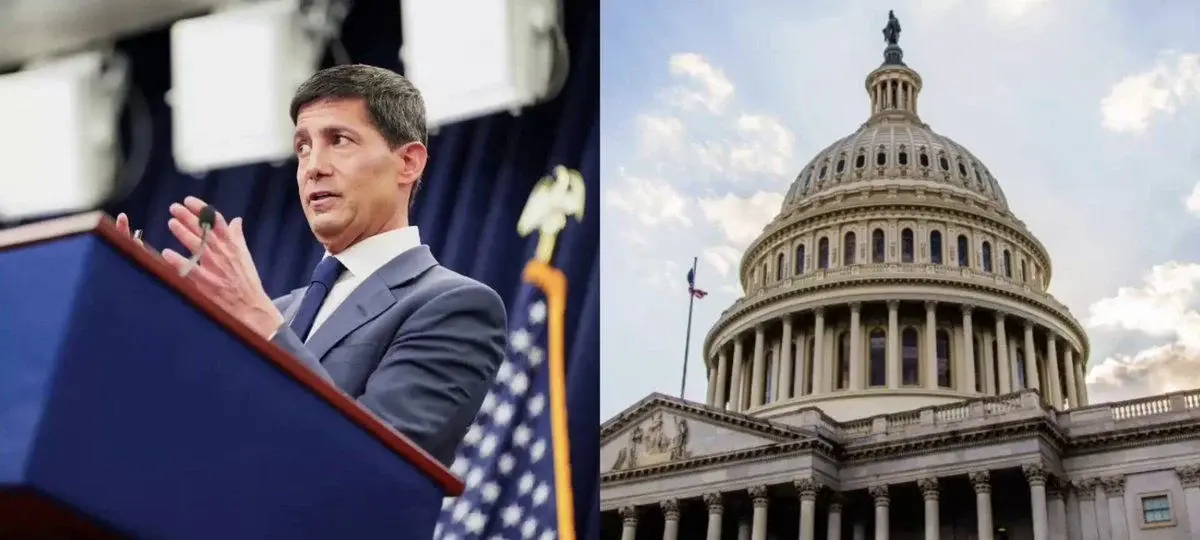
Federal Reserve Governor Michael Barr has signaled he wants the rules to go further. A key area of concern is the potential for stablecoin use in money laundering or terrorist financing, since bad actors can purchase stablecoins in secondary markets that may not have customer identification requirements. Barr has argued that both regulatory and technological solutions will be needed to close that gap.
The secondary-market question is not a minor one. AML standards for stablecoin issuers may need to be stronger than for banks because stablecoins are bearer instruments and secondary market transactions cannot easily be tracked in real time by the issuer. While an issuer or exchange can vet the customer with whom it interacts directly, it has little control over where stablecoins go when used to execute payment transactions by the holder.
The current proposal focuses on account creation, issuance, and redemption rather than every downstream transaction. The proposal enters a 60-day public comment period once published in the Federal Register, during which stablecoin issuers, banks, crypto companies, and industry groups can submit feedback before the rule moves toward final implementation. The GENIUS Act's implementing regulations face a statutory deadline in 2026, which is why the agencies have been moving in rapid succession through related rulemakings this year.
For larger, established issuers with existing compliance infrastructure, the shift may be manageable. In past cases where AML and customer-identification rules were extended to payment processors and money-services businesses, the friction tended to come less from the legal obligation itself and more from operations, reconciling traditional identity-based verification systems with blockchain-native onboarding. Stablecoin issuers built around on-chain flows may find that bolting bank-grade KYC onto that model is the harder, slower part of compliance.
Sources
Federal Reserve: Governor Barr remarks on stablecoins and the GENIUS Act
Coindoo: Stablecoin issuers could verify customers the way banks do
Federal Register: Permitted Payment Stablecoin Issuer AML/CFT Proposed Rule
Latest News




Read More...






(Advertisement)
Author
 Crypto Rich
Rich has been researching cryptocurrency and blockchain technology for eight years and has served as a senior analyst at BSCN since its founding in 2020. He focuses on fundamental analysis of early-stage crypto projects and tokens and has published in-depth research reports on over 200 emerging protocols. Rich also writes about broader technology and scientific trends and maintains active involvement in the crypto community through X/Twitter Spaces, and leading industry events.