

SIP-5 Proposed by Sei Labs To Bring Quantum-Resistant Account Security

Sei Labs has proposed SIP-5, a governance upgrade that would let SEI holders add post-quantum cryptographic keys to their existing accounts without migrating addresses or balances.

(Advertisement)

Sei Labs Tables Quantum-Security Upgrade
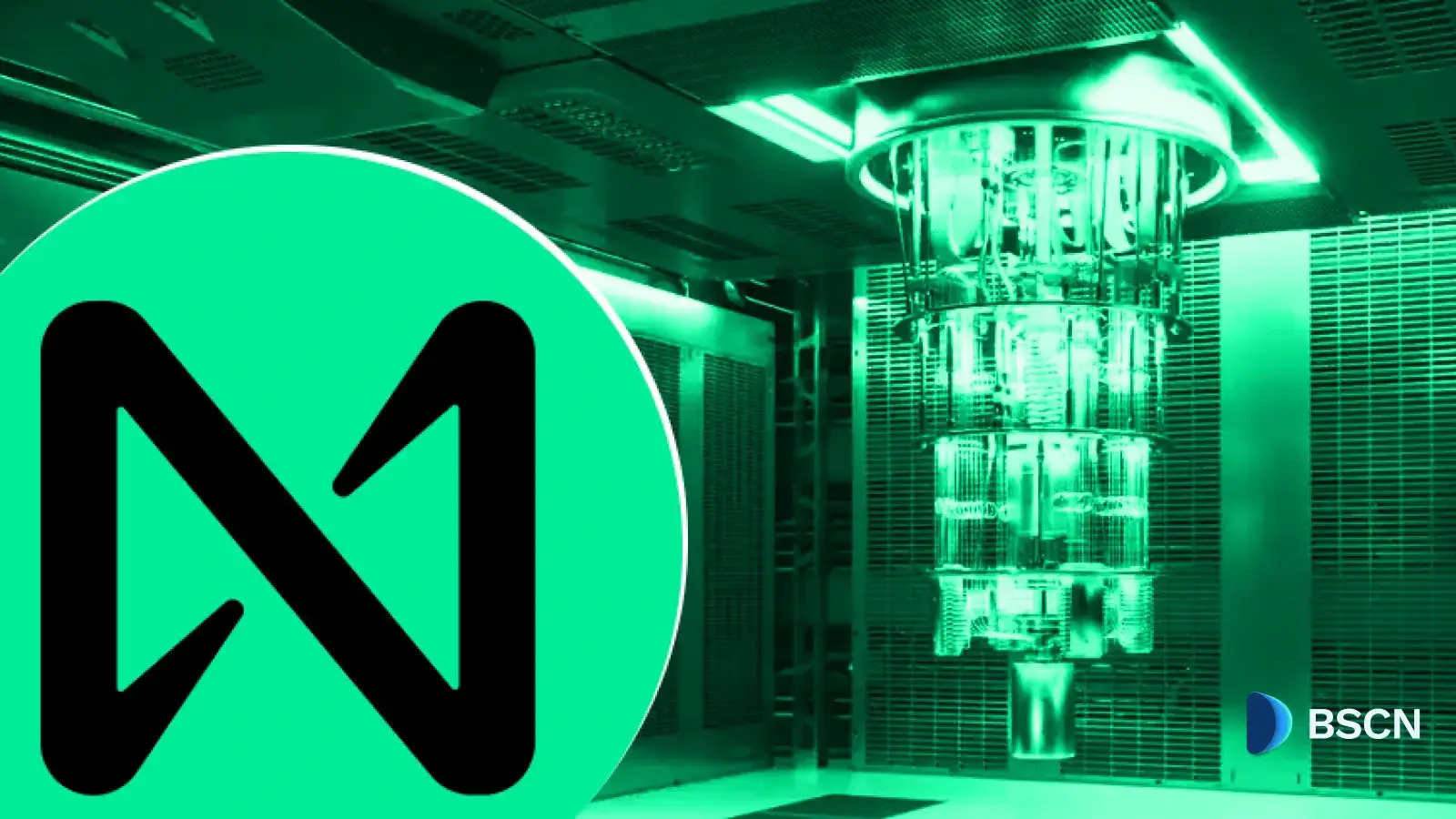
@SeiNetwork has put forward SIP-5, a governance proposal that would give $SEI holders the option to upgrade their account security to a post-quantum cryptography (PQC) standard. The proposal is designed to be additive rather than disruptive: users would keep their existing addresses and balances while layering on a new quantum-resistant key, with no obligation to act until quantum computing presents a credible real-world threat.
The move positions Sei as one of the first high-throughput layer-1 networks to formally address the long-term risk that quantum hardware poses to public-key cryptography. Quantum computers pose a significant threat to blockchain technology's security, which heavily relies on public-key cryptography. The cryptographic algorithms used in blockchains, based on large prime numbers and discrete logarithms, can be compromised by quantum computing algorithms such as Shor's algorithm. By embedding an upgrade path at the protocol level now, Sei aims to give users a clear migration route well before that risk becomes acute.
A Pragmatic, Opt-In Approach
What makes SIP-5 notable is its user-friendly framing. Rather than forcing a network-wide migration, the proposal allows accounts to opt in on their own schedule, preserving backwards compatibility. Pure quantum-resistant deployments remain rare, and hybrid approaches combining classical and post-quantum algorithms are expected to dominate near-term implementations. This pragmatic strategy provides defence-in-depth while allowing organisations to maintain operations with current and legacy systems. SIP-5 follows a similar logic, letting users hold both key types in parallel.
Post-quantum cryptography uses much larger signatures and higher verification costs, which can strain high-throughput blockchains. Sei contributors say the network's design is well suited to approaches like proof batching and recursive verification. Rather than viewing quantum resistance as a simple key swap, Sei is treating it as a broader systems challenge that must work alongside extreme performance.
The wider crypto industry is watching the quantum threat closely. NIST finalised three post-quantum cryptographic standards in August 2024, and any blockchain project that has not begun a post-quantum cryptography assessment as of 2026 is operating outside the bounds of responsible security practice. SIP-5 signals that Sei intends to be ahead of that curve rather than behind it.
No timeline for a vote or implementation has been confirmed at the time of writing. The proposal remains open for community discussion.
Sources:
Bitget News: Sei Network Nears Giga Upgrade as SIP-3 Enters Final Phase
Yellow Research: Post-Quantum Cryptography and Blockchain 2026
ScienceDirect: Navigating the Quantum Computing Threat Landscape for Blockchains
(Advertisement)
Latest News





Read More...




Author
 UC Hope
UC holds a bachelor’s degree in Physics and has been a crypto researcher since 2020. UC was a professional writer before entering the cryptocurrency industry, but was drawn to blockchain technology by its high potential. UC has written for the likes of Cryptopolitan, as well as BSCN. He has a wide area of expertise, covering centralized and decentralized finance, as well as altcoins.