

SoloHost Emerges to Improve Pi's Private AI & Distributed Computing Future

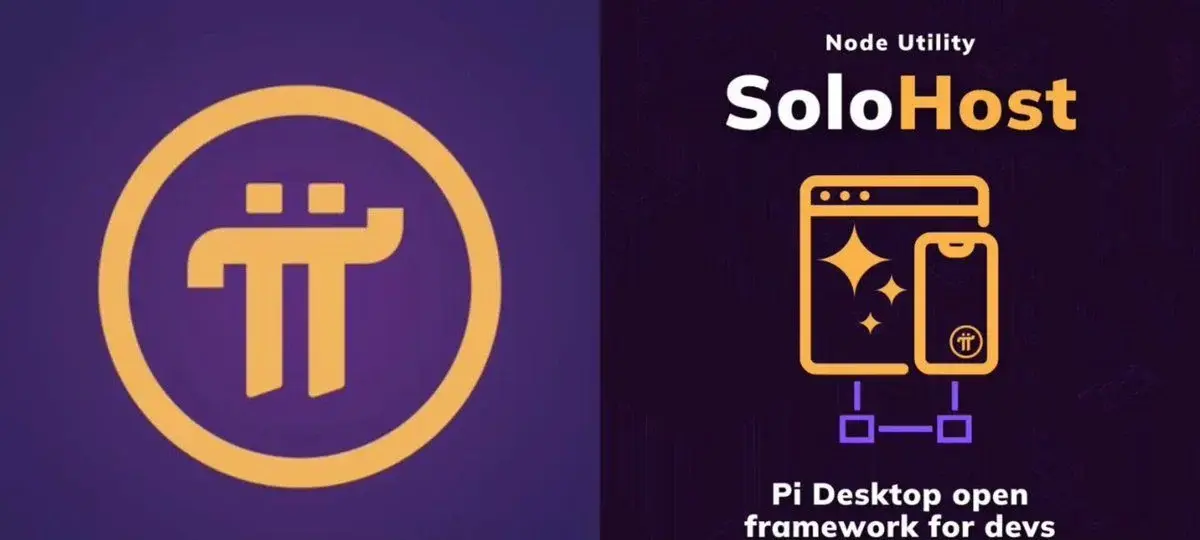
Pi Network launched SoloHost in beta on Pi2Day 2026, giving developers a permissionless way to publish self-hosted apps and local AI agents on Pi Desktop while keeping all data on-device. The framework also lays the groundwork for distributed computing across Pi's 420,000-plus node network.
(Advertisement)

@PiCoreTeam used its annual Pi2Day celebration on June 28, 2026 to launch SoloHost in early beta on Pi Desktop. SoloHost is an open, permissionless framework on Pi Desktop where developers can build and list apps that help run local AI and, soon, distributed computing use cases. The release is part of a broader set of Pi2Day announcements that also included Pi Sign-in and PiVerify, framed as a deliberate pivot from a mining-centric community toward an infrastructure provider for the artificial-intelligence era.
Privacy-First AI, On Your Own Device
The headline capability of SoloHost is local AI. SoloHost lowers the barriers to running self-hosted software by streamlining access to local applications through Pi Desktop, instead of requiring users to manually configure servers, Docker environments, or other technical infrastructure. With this setup, people can benefit from AI while keeping their data on their own devices, not having to share it with third-party remote servers.
SoloHost Beta also includes Hermes, an open-source AI application that prioritizes data privacy by processing tasks directly on the user's device. Developers with a Pi account can create a self-hosted app and submit it for listing, making the directory closer to an open developer platform than a curated app store, to encourage participation especially from AI builder communities.
Distributed Computing on 420,000-Plus Nodes
Beyond individual on-device apps, SoloHost is designed to eventually tap Pi's broader node infrastructure. Pi's Node network is already a large, distributed network of over 420,000 Pioneer-operated computers that can be coordinated for useful work when Node operators opt in, turning Pi Nodes into a practical computing layer for AI-related applications and other compute-intensive workloads.
Participating Nodes can be compensated by third-party clients in Pi, further demonstrating how Pi Nodes can support utility beyond blockchain infrastructure by turning available computing capacity into a resource for real applications. As an early proof of concept, Pi successfully completed a proof-of-concept project with OpenMind, a company developing an open-source protocol for robots to think and learn together, in which a small group of Pi Node operators ran image recognition tasks for the company.
SoloHost is now live in early beta with availability being gradually rolled out, and the experience and functionality may change significantly as the product is improved. Whether the framework attracts meaningful developer and enterprise adoption will be the key test for Pi Network's broader push to position itself as infrastructure for the AI era.
Sources:
Pi Network: Pi2Day 2026 Official Blog Post
Pi Network: Decentralized Computing Case Study (OpenMind)
Crypto.news: Pi Network's Pivot to AI and Identity Infrastructure
(Advertisement)
Latest News





Read More...



Author
 UC Hope
UC holds a bachelor’s degree in Physics and has been a crypto researcher since 2020. UC was a professional writer before entering the cryptocurrency industry, but was drawn to blockchain technology by its high potential. UC has written for the likes of Cryptopolitan, as well as BSCN. He has a wide area of expertise, covering centralized and decentralized finance, as well as altcoins.