

Ethereum May Have Found A Cheap Quantum Defense

Ethereum researcher Nico Consigny proposes a wallet-level quantum-resistant account protection method using SPHINCS- for roughly $0.07 per account, no hard fork required.

A $0.07 Fix That Skips the Hard Fork
Ethereum Foundation researcher Nico (@ncsgy) has proposed a way to add quantum-resistant protection to $ETH accounts for roughly $0.07 each, and without waiting for a protocol-wide upgrade. The approach relies on wallet-level smart contract logic rather than a hard fork, meaning users and wallet teams could begin testing it under the current network infrastructure.
The proposal centers on SPHINCS-, an EVM-optimised post-quantum signature verification design. As reported by crypto.news, Consigny took SPHINCS+, a post-quantum signature standard, and modified how it can be verified inside an Ethereum smart-contract environment, with the core claim being that the updated scheme can cut the onchain verification burden and allow post-quantum protections to be introduced earlier than a full protocol change would permit. The SPHINCS- approach uses a NIST-standardised post-quantum signature scheme compatible with current EVM infrastructure, and the plan avoids a hard fork while aiming to transition to leanSPHINCS for lower costs via signature aggregation.
For users, the key point is that Ethereum may not need to wait for a full protocol change before wallets begin testing quantum-resistant account protection. For developers, the next steps include more review, safer wallet flows, clearer cost models, and better hardware support. Further audits are expected before any wider adoption.
Where This Fits Into Ethereum's Broader Security Roadmap
The proposal arrives as quantum readiness has become a formal priority for the Ethereum Foundation. Post-quantum readiness has emerged as a formal priority, with researcher Justin Drake announcing in January that the foundation had established a dedicated post-quantum team. Ethereum co-founder Vitalik Buterin has also outlined a roadmap to protect the blockchain from the long-term risks posed by quantum computers.
On the protocol side, EIP-8141 would allow individual accounts to choose their own signature verification, meaning users could switch to quantum-safe signatures without waiting for a single protocol-wide migration, and the proposal is being considered for the Hegotá hard fork planned for the second half of 2026. The Ethereum Foundation has outlined structured fork milestones targeting completion of core post-quantum infrastructure by approximately 2029.
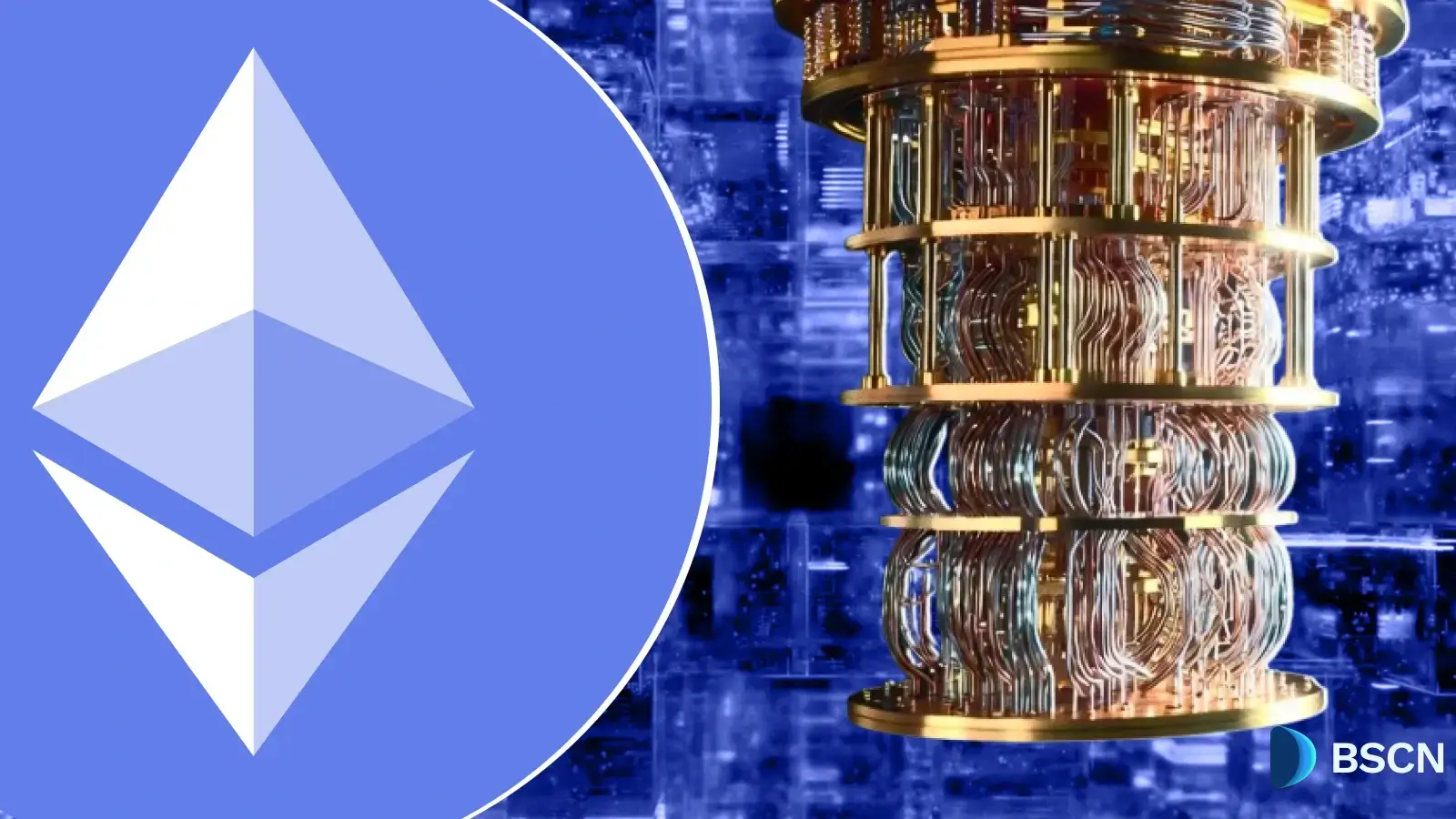
The urgency behind all of this is growing. In March 2026, Google Quantum AI published research estimating that breaking 256-bit elliptic curve cryptography, the type Ethereum uses for account signatures, could require roughly 1,200 logical qubits. The current proposal does not mean Ethereum faces an immediate quantum attack, but a wallet-level option at a fraction of a dollar could give high-value accounts an early layer of protection while longer-term upgrades are developed and tested.
Sources:
crypto.news: Ethereum researcher says $0.07 can add post-quantum account protection
Ethereum.org: Post-quantum cryptography on Ethereum
CoinDesk: Vitalik Buterin unveils Ethereum roadmap to counter quantum computing threat
Latest News



Read More...





(Advertisement)
Author
 Soumen Datta
Soumen has been a crypto researcher since 2020 and holds a master’s in Physics. His writing and research has been published by publications such as CryptoSlate and DailyCoin, as well as BSCN. His areas of focus include Bitcoin, DeFi, and high-potential altcoins like Ethereum, Solana, XRP, and Chainlink. He combines analytical depth with journalistic clarity to deliver insights for both newcomers and seasoned crypto readers.