

Arthur Hayes is Against the Clarity Act, but why?

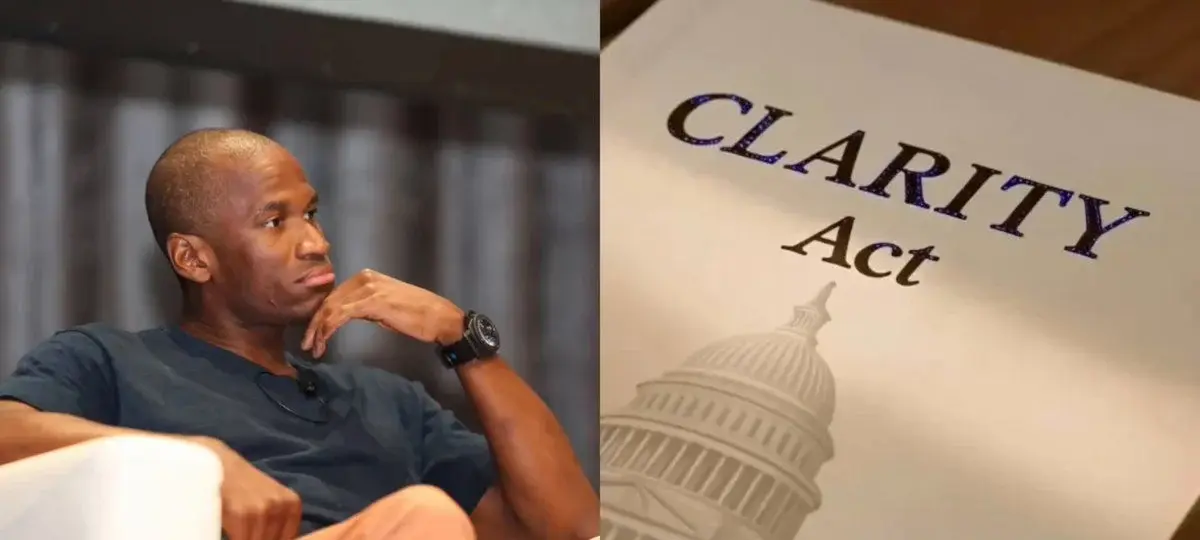
BitMEX co-founder Arthur Hayes is calling for a presidential veto of the CLARITY Act, warning that fully institutionalizing Bitcoin could destroy the very value proposition that makes it worth holding.
Hayes Breaks With the Industry
Arthur Hayes, co-founder of BitMEX and chief investment officer of Maelstrom, is publicly calling for a presidential veto of the CLARITY Act, putting him sharply at odds with most of the crypto industry. Speaking on The Wolf of All Streets podcast on May 13, Hayes questioned whether Bitcoin and other digital assets need to gain legitimacy through regulation at all. His position, bluntly stated, is that "if Bitcoin and crypto need regulation to survive, they are not worth a penny."
Hayes draws a distinction that much regulatory commentary collapses: banks should be allowed to offer Bitcoin products because clients want them, but designing regulatory infrastructure to make Bitcoin institutionally acceptable is a different project, and one that produces a product with counterparty risk that Bitcoin was specifically built to remove. In other words, a $BTC product sitting on a bank balance sheet introduces the same institutional failure modes that Bitcoin was created to sidestep. His broader point is that Bitcoin does not need regulatory legitimacy to have value: if it did, it would not be worth anything, because the value comes precisely from operating without it.
Hayes also argued that the CLARITY Act primarily serves centralized crypto firms with Washington lobbying operations, not the decentralised ecosystem that gives the asset class its meaning. "Regulation is for people who own centralized companies," he said. "You own a centralized company; you want a regulatory motor running the business. Of course you are going to lobby politicians to get what you want."
Where the Bill Stands
The CLARITY Act is the most comprehensive piece of crypto regulation ever to pass one chamber of the United States Congress, clearing the House of Representatives on July 17, 2025, with a 294-134 vote. It classifies digital assets into three categories: digital commodities such as Bitcoin, Ethereum and Solana falling under CFTC jurisdiction, investment contract assets that can graduate to commodity status once sufficiently decentralised, and stablecoins governed separately under the GENIUS Act. It also gives the CFTC exclusive jurisdiction over digital commodity spot markets, ending the SEC's longstanding claim over the entire asset class.
Hayes's comments have resurfaced at a moment of peak legislative momentum, just days after the bill cleared the Senate Banking Committee with a bipartisan 15-9 vote. The bill is championed by numerous crypto companies, including Coinbase, Circle and Ripple, which want to see a degree of regulation and oversight of their industry to help encourage investors. Senators Cynthia Lummis and Bernie Moreno have both warned that failure before Memorial Day could push the next viable legislative window to 2030 or beyond.
Within the crypto community itself, two clear camps have emerged: those advocating for transparency and oversight, and those insisting on the importance of independence and authenticity. Hayes firmly occupies the latter camp, and his argument is straightforward: crypto's value was never dependent on Washington's approval, and it does not need that approval now.
Sources:
Arthur Hayes rejects the CLARITY Act at Consensus – crypto.news
Crypto industry scores win as Clarity Act clears Senate hurdle – CNBC
Digital Asset Market Clarity Act of 2025, full text – Congress.gov
Latest News





Read More...



(Advertisement)
Author
 UC Hope
UC holds a bachelor’s degree in Physics and has been a crypto researcher since 2020. UC was a professional writer before entering the cryptocurrency industry, but was drawn to blockchain technology by its high potential. UC has written for the likes of Cryptopolitan, as well as BSCN. He has a wide area of expertise, covering centralized and decentralized finance, as well as altcoins.