(Advertisement)


Zebec Takes Streaming Payroll to Stellar in First Move Outside Solana

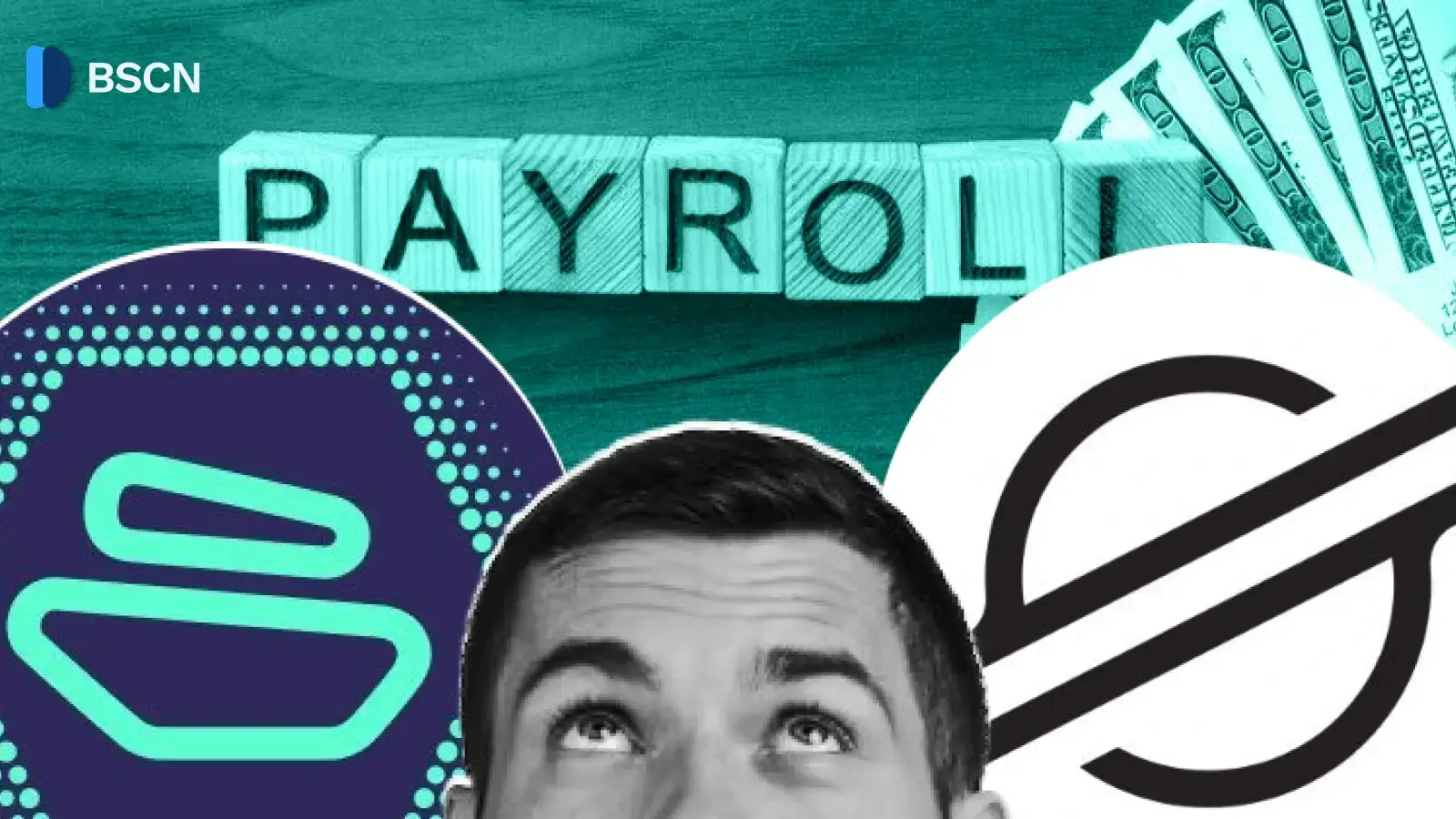
Zebec brings real-time USDC streaming payroll to Stellar, its first native deployment outside Solana. Here is what it means for businesses and workers globally.

Soumen Datta
March 20, 2026

(Advertisement)
Table of Contents
Zebec has confirmed it has been selected by Stellar to build real-time, stablecoin-based payroll natively on the network. This is the first time Zebec's streaming payment rails have been deployed on any chain outside Solana. For workers in markets with limited banking access, the practical implications are significant.
.@StellarOrg has selected Zebec as its global stablecoin payroll infrastructure provider for the Stellar ecosystem.
— Zebec Network (@Zebec_HQ) March 19, 2026
This expands our partnership with one of the original blockchain networks in crypto, powering global payments and remittances, including a direct integration to… pic.twitter.com/VMEvFaqb6b
How Zebec's Streaming Payroll Actually Works
Traditional payroll runs on a cycle. Employers batch payments, banks process them, and workers wait. Depending on the country and provider, that wait can stretch from two days to two weeks. Zebec's model reportedly removes the cycle entirely.
Instead of holding earnings until a scheduled date, the system releases funds continuously as work happens. A worker clocking hours on a Tuesday afternoon receives a proportional share of their pay in real time, directly into a digital wallet, in USDC.
The flow on Stellar follows three steps in sequence:
- Earnings stream in USDC to a worker's digital wallet in real time
- Funds are immediately available — no holding period, no clearing delay
- Workers spend via card or convert to local cash at physical pickup points
The rollout will not happen all at once. Zebec is starting with core payroll functionality, then expanding into full global payout infrastructure, including fiat on- and off-ramps and connections to remittance networks.
Why Stellar Makes Sense for This Use Case
Stellar was designed with cross-border payments as its primary function. That focus shapes what the network can actually deliver at the infrastructure level.
According to Zebec, Stellar handles hundreds of thousands of transactions per day, with USDC transactions alone exceeding 250,000 daily and stablecoin volumes reaching tens of millions of dollars. Each transaction costs a fraction of a cent, which matters enormously when payments are flowing continuously rather than in monthly batches. A payroll system streaming micro-increments of pay every few seconds cannot absorb fees that eat into principal.
Settlement speed is another factor. Stellar finalizes transactions in seconds, which eliminates the timing uncertainty that traditional payroll systems build delays around.
There is also a compliance angle. Stellar operates in alignment with ISO 20022, the international financial messaging standard that major banks and payment networks use globally. That compatibility means Zebec's infrastructure can connect to regulated institutions without requiring a separate compliance layer for each market.
The relationship between the two companies goes back further than this announcement. Zebec has supported Stellar's card infrastructure for over two years, so this is less a new partnership than an expansion of an existing one into deeper technical integration.
What MoneyGram Adds to the Picture
Digital payroll only solves part of the problem for workers in cash-dependent economies. Getting paid in USDC is useful if you can convert it. For workers without bank accounts — and there are hundreds of millions of them globally — that conversion step is where most systems fall apart.
Stellar's existing connection to MoneyGram changes that equation. Workers paid through Zebec on Stellar can walk into any of MoneyGram's 450,000-plus agent locations across more than 170 countries and convert their USDC balance to local cash. A logistics worker in Manila gets paid at 9am. Their family in a province without banking infrastructure can collect the equivalent in pesos the same morning.
This works through Stellar's anchor network — a system of regulated local providers in individual countries that act as conversion points between USDC and domestic currency. The anchors handle the compliance, the exchange, and the local banking connectivity, so neither Zebec nor the employer needs to manage that separately for each market.
The MoneyGram integration also connects Zebec to an existing user base of more than 50 million people across Latin America and other regions where formal banking coverage is thin.
ZBCN Token and Where Zebec Is Headed Next
The Zebec ecosystem runs on ZBCN, the network's native token. It covers transaction fees, staking participation, user rewards, and access to premium features within Zebec's product suite. As with most utility tokens, its value proposition depends on how widely the underlying platform is adopted — more payroll volume means more token activity.
Zebec launched the desktop version of its SuperApp in February 2026. A mobile version is expected by mid-March, with an enterprise-grade build targeting institutional users coming after that. The company's CEO is set to speak at XRP Las Vegas in April, and market watchers are expecting a Ripple-related announcement at the event, though nothing has been confirmed.
Conclusion
Zebec on Stellar combines continuous USDC streaming, sub-cent transaction fees, second-level settlement, and cash-out access through MoneyGram's global agent network. It is the company's first multi-chain deployment and its clearest attempt yet to build payroll infrastructure that functions in markets where traditional banking does not reach.
Resources
Zebec on X: Posts (March, 2026)
Blog article by Zebec: Zebec Brings Streaming Payroll to Stellar
Blog article by Lumexo: Zebec Protocol Integrates with Stellar: XLM Powers Payroll and Streaming Payments
Read Next...
Frequently Asked Questions
What is Zebec's streaming payroll on Stellar?
It is a payroll system that releases worker earnings continuously in USDC rather than in scheduled lump-sum payments. Stellar was chosen for its low fees, fast settlement, and global payment infrastructure. It is the first time Zebec has deployed natively on a blockchain outside Solana.
Do workers need a bank account to get paid through Zebec on Stellar?
No. Funds land in a digital wallet and workers can convert USDC to local cash through MoneyGram's agent network at over 450,000 locations in more than 170 countries, with no bank account required.
What does the ZBCN token do in the Zebec ecosystem?
ZBCN is the native token of the Zebec Network. It is used to pay fees, earn staking rewards, access premium product features, and receive ecosystem incentives. Its utility is tied directly to usage of Zebec's payroll and payments infrastructure across chains.
Disclaimer
Disclaimer: The views expressed in this article do not necessarily represent the views of BSCN. The information provided in this article is for educational and entertainment purposes only and should not be construed as investment advice, or advice of any kind. BSCN assumes no responsibility for any investment decisions made based on the information provided in this article. If you believe that the article should be amended, please reach out to the BSCN team by emailing [email protected].
Author
 Soumen Datta
Soumen has been a crypto researcher since 2020 and holds a master’s in Physics. His writing and research has been published by publications such as CryptoSlate and DailyCoin, as well as BSCN. His areas of focus include Bitcoin, DeFi, and high-potential altcoins like Ethereum, Solana, XRP, and Chainlink. He combines analytical depth with journalistic clarity to deliver insights for both newcomers and seasoned crypto readers.
(Advertisement)
Latest News
5h : 4m ago

Telebiz Goes Live With an Open-Source CRM Built Directly Into Telegram
7h : 10m ago

Will Robinhood Chain Push ETH's Price to All Time Highs?
8h : 52m ago
What is BlackRock's BUIDL Fund on Avalanche AVAX?
July 10, 2026

How Do PancakeSwap's CAKE Token Burns Actually Work?
July 10, 2026

Report: Ripple & The XRP Ecosystem in H1 2026
July 10, 2026

How Is Cardano Advancing Financial Inclusion in Developing Countries?
July 10, 2026

Why Was Sui Built From Scratch Instead of Forking an Existing Blockchain?
July 9, 2026

Trust Wallet Adds Native Support for Robinhood Chain, Opening Stock Tokens to 220 Million Users
(Advertisement)

Crypto Project & Token Reviews
Project & Token Reviews
Comprehensive reviews of crypto's most interesting projects and assets
Learn about the hottest projects & tokens

Latest Crypto Articles
Get up to date with the latest crypto news stories and events