News
(Advertisement)


Crypto Firms ‘Outnumber’ Banks in Heated White House Showdown Over Your Money

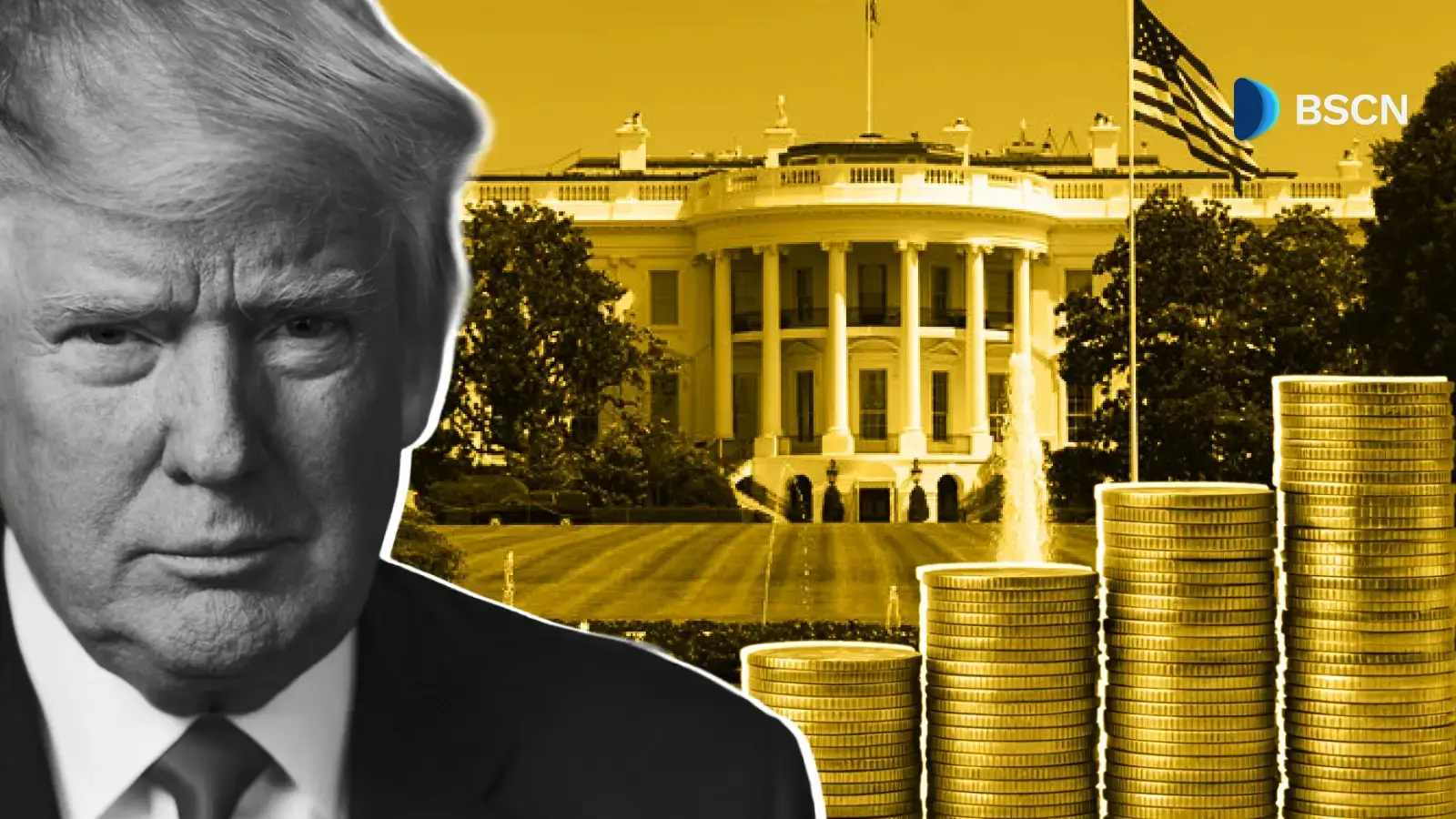
White House hosts crypto firms and banks to resolve stablecoin rewards dispute. Banks fear $500B deposit loss while crypto firms push for competition.

Soumen Datta
February 3, 2026

(Advertisement)
Table of Contents
Representatives from Coinbase, major crypto trade groups, and banking organizations met at the White House on Monday to address whether third-party platforms should be allowed to offer rewards on stablecoin holdings.
Today, the crypto and banking industry came to the table at the @WhiteHouse to discuss a critical issue to moving market structure legislation forward, stablecoin yield. pic.twitter.com/3gUMrbUVKc
— The Digital Chamber (@DigitalChamber) February 2, 2026
Patrick Witt of the President's Council of Advisors for Digital Assets led the meeting, which crypto advocacy groups called "an important step" toward resolving one of the biggest obstacles blocking comprehensive crypto market structure legislation from moving forward in Congress.
Sincere thanks to the representatives from the crypto and banking industries who participated in today’s meeting on stablecoin rewards and yield. The discussion was constructive, fact-based, and, most importantly, solutions-oriented.
— Patrick Witt (@patrickjwitt) February 2, 2026
Over the course of the past few months, we…
What Are Stablecoin Rewards and Why Do They Matter?
A stablecoin is a type of cryptocurrency designed to maintain a stable value by being pegged to a fiat currency like the U.S. dollar. Unlike Bitcoin or Ethereum, which experience significant price fluctuations, stablecoins offer price stability that makes them practical for everyday transactions, payments, and transfers.
The current debate centers on whether platforms like Coinbase can offer rewards or incentives to users who hold stablecoins on their platforms. While these rewards are not technically classified as interest payments, they function similarly by providing returns to holders.
The banking industry views this mechanism as a competitive threat to traditional deposit accounts, while crypto firms argue it represents legitimate innovation in financial services.
This distinction affects how billions of dollars in deposits could shift between traditional banks and digital asset platforms. The outcome could reshape competition in financial services and determine whether crypto platforms can offer yield products comparable to traditional savings accounts.
Why Are Banks Worried About Losing Deposits to Stablecoins?
The banking industry fears that stablecoin rewards could draw significant deposits away from traditional financial institutions. Standard Chartered has warned that banks risk losing roughly $500 billion in deposits by the end of 2028 if the stablecoin market grows to approximately $2 trillion in size.
The American Bankers Association, which represents the nation's $25.1 trillion banking industry employing over 2 million people, has been actively lobbying Congress to restrict third-party rewards on stablecoins. The organization oversees an industry that safeguards $19.7 trillion in deposits and extends $13.2 trillion in loans to American businesses and families.
Banking groups argue that:
- Legislation must support local lending to families and small businesses
- Financial system safety and soundness must be protected
- Community banks face particular vulnerability to deposit outflows
- The regulatory framework should prevent unfair competitive advantages
Banking representatives have described what they see as a deliberate "loophole" that allows stablecoin platforms to offer rewards while direct interest payments remain prohibited. They contend this creates an uneven playing field where crypto platforms can attract deposits without the same regulatory requirements banks face.
What Does the GENIUS Act Allow?
Last year, President Donald Trump signed the Guiding and Establishing National Innovation for U.S. Stablecoins (GENIUS) Act into law to establish a regulatory framework for USD-pegged stablecoins. The legislation created specific rules about how stablecoin rewards can be structured and offered to holders.
The GENIUS Act prohibits stablecoin issuers from offering "any form of interest or yield" directly to holders. However, the law explicitly allows crypto exchanges, intermediaries, and other third parties to offer "rewards" or "incentives" to stablecoin holders. This legal distinction has become the central point of contention in the current negotiations.
Crypto firms maintain this issue was thoroughly debated and settled when GENIUS passed through Congress. The Blockchain Association, which represents major companies including Coinbase, Ripple, and Kraken, argues that banks are attempting to eliminate competition from the digital assets industry rather than compete on equal terms.
How Did Monday's Meeting Progress?
Monday's meeting brought together representatives from multiple organizations but did not produce a final resolution. Digital Chamber CEO Cody Carbone stated that the two sides have "identified pain points and potential areas of compromise, with an identified path forward of reaching a solution by the end of February."
A source at the meeting revealed that all sides were talkative, and someone noted that banks were "outnumbered" by crypto representatives. The White House plans to narrow the group for future meetings and expects participants to arrive prepared to make concrete decisions and compromises.
The source also indicated that bank representation appeared "rigid in their approach," suggesting they lacked flexibility to negotiate through their member banks. This could complicate efforts to reach a middle ground acceptable to both industries.
Organizations present at the meeting included:
- Bank Policy Institute
- American Bankers Association
- Financial Services Forum
- Independent Community Bankers of America
- Consumer Bankers Association
- Blockchain Association
- Digital Chamber
- Coinbase representatives
What Happens Next in Congress?
The stablecoin rewards dispute has already delayed legislative progress in the Senate. Last month, the Senate Banking Committee canceled a scheduled hearing after Coinbase announced it would not support the bill due to concerns about stablecoin yield treatment.
While the House of Representatives passed its version of comprehensive market structure legislation in July, the Senate continues working on its approach to regulating the crypto industry. Key Senate committees have been working to divide regulatory jurisdiction between the Securities and Exchange Commission and the Commodity Futures Trading Commission while establishing disclosure standards and other requirements.
Last week, the Senate Agriculture Committee advanced its bill focusing on the CFTC, though it did not receive Democratic support. The stablecoin yield issue remains primarily within the Senate Banking Committee's jurisdiction, making resolution critical for broader legislative progress.
Blockchain Association CEO Summer Mersinger emphasized the importance of finding bipartisan solutions, stating the organization looks forward to working with policymakers "so Congress can advance lasting market structure legislation and ensure the United States remains the crypto capital of the world."
Conclusion
The White House meeting on stablecoin rewards demonstrates the complexity of regulating digital assets while protecting traditional banking interests. With $500 billion in potential deposit shifts at stake and comprehensive crypto legislation stalled in the Senate, both industries recognize the urgency of finding common ground.
The identified timeline of reaching a solution by the end of February provides a concrete deadline for negotiations, though the rigid approach from banking representatives suggests compromises will require significant effort from all parties.
As Congress works to establish clear regulatory jurisdiction between the SEC and CFTC, resolving the stablecoin rewards dispute remains essential for advancing broader market structure legislation that both industries acknowledge is necessary for the United States to maintain its position in the global digital assets market.
Resources
Report by The Block: Inside the White House talks between crypto firms and banks on stablecoin rewards
Report by The Street: White House meets crypto and banking executives as Bitcoin crashes
Report by Reuters: US banks may lose $500 billion to stablecoins by 2028, Standard Chartered warns
Report by Reuters 2: US Senate committee delays crypto bill after opposition from Coinbase CEO
Press release by American Bankers Association: Banking Trades Statement on White House Crypto Market Structure Meeting
Read Next...





Frequently Asked Questions
What is the main disagreement between banks and crypto firms?
Banks want to prohibit all stablecoin rewards, including those from third-party platforms, while crypto firms argue the GENIUS Act already settled this by allowing third-party rewards while banning direct interest from issuers.
How much money could banks lose to stablecoins?
Standard Chartered estimates banks could lose approximately $500 billion in deposits by the end of 2028 if the stablecoin market reaches $2 trillion in total size.
When will a final decision be reached?
Participants indicated they are working toward a compromise by the end of February, though no agreement was reached at Monday's meeting and banks showed limited flexibility in negotiations.
Disclaimer
Disclaimer: The views expressed in this article do not necessarily represent the views of BSCN. The information provided in this article is for educational and entertainment purposes only and should not be construed as investment advice, or advice of any kind. BSCN assumes no responsibility for any investment decisions made based on the information provided in this article. If you believe that the article should be amended, please reach out to the BSCN team by emailing [email protected].
Author
 Soumen Datta
Soumen has been a crypto researcher since 2020 and holds a master’s in Physics. His writing and research has been published by publications such as CryptoSlate and DailyCoin, as well as BSCN. His areas of focus include Bitcoin, DeFi, and high-potential altcoins like Ethereum, Solana, XRP, and Chainlink. He combines analytical depth with journalistic clarity to deliver insights for both newcomers and seasoned crypto readers.
(Advertisement)
Latest News
July 15, 2026

REAL Joins Blockchain for Europe to Shape EU Tokenisation Rules
July 15, 2026

Which Crypto Companies and Protocols Make The Most Money?
July 15, 2026

How SBI Built Japan's Largest Crypto Business
July 15, 2026

Elon Musk And Dogecoin: How One Man Shaped A Memecoin’s Price And Reputation
July 15, 2026
DTCC Tokenization Platform: How Does Wall Street's Blockchain Pilot Actually Work?
July 14, 2026

Report: Cardano's Biggest Updates from H1 2026
July 14, 2026

What is an XDC Network Masternode Validator?
July 13, 2026

Telebiz Goes Live With an Open-Source CRM Built Directly Into Telegram
(Advertisement)

Crypto Project & Token Reviews
Project & Token Reviews
Comprehensive reviews of crypto's most interesting projects and assets
Learn about the hottest projects & tokens

Latest Crypto Articles
Get up to date with the latest crypto news stories and events