News
(Advertisement)


Vitalik Buterin Attacks L1s After L2s: His Argument Explained

Vitalik Buterin argues Ethereum scaling has changed, urging L2s to specialize, criticizing copycat L1s, and calling for honest Ethereum alignment.

UC Hope
February 5, 2026

(Advertisement)
Table of Contents
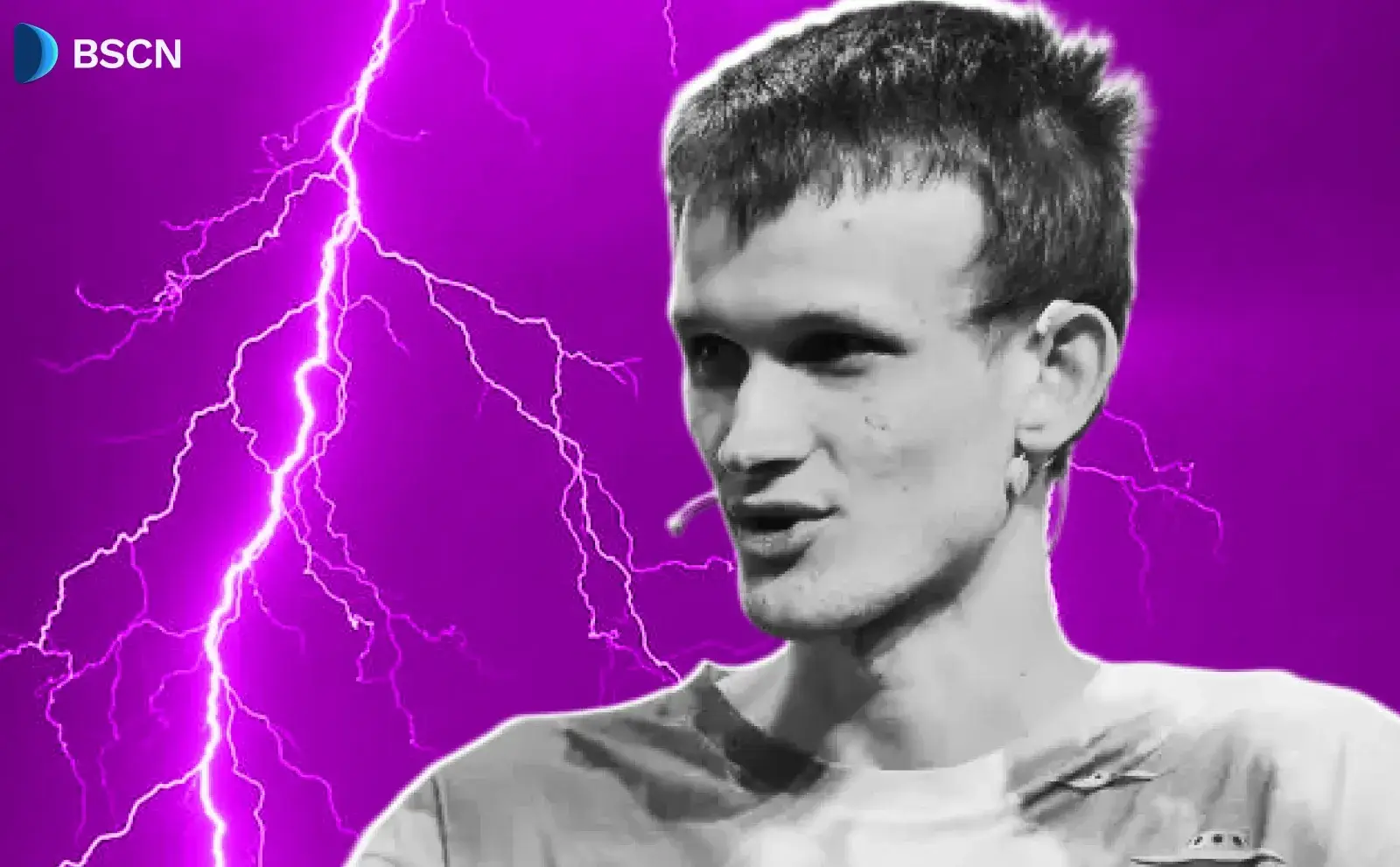
Vitalik Buterin, co-founder of Ethereum, triggered renewed debate about blockchain scaling after posting a series of comments on X in early February 2026. Headlines framed the discussion as an attack on Layer-2 networks and alternative Layer-1 blockchains.
Buterin was responding to the change in Ethereum’s scaling roadmap. Ethereum’s base layer now processes transactions at low fees, with further increases in the gas limit planned for 2026. At the same time, many Layer 2 systems have struggled to reach deeper decentralization. His argument focused on whether existing narratives about L2s and new L1s still align with current technical reality.
Why the Original L2 Vision No Longer Fits
On February 3, 2026, Buterin said the original idea of L2s as “branded shards” no longer holds. That model assumed L1 would remain expensive and cumbersome. Today, Ethereum L1 provides substantial block space at low cost, reducing the need for L2s to function solely as scaling tools.
He also pointed to slow progress toward full rollup decentralization. Many L2s still rely on centralized sequencers or multisig bridges. Some may never reach “Stage 2” decentralization due to regulatory constraints or business requirements. If an L2 connects to Ethereum only through a multisig bridge, Buterin argued, it does not inherit Ethereum’s security and should not claim to be scaling Ethereum.
A Different Role for L2s
Rather than rejecting L2s, Buterin outlined a narrower definition of what qualifies as an Ethereum-aligned rollup. L2s that handle ETH or Ethereum-issued assets should meet at least “Stage 1” rollup security. Beyond that, he said L2s should justify their existence through specialization.
Examples he listed included privacy-preserving systems using zero-knowledge proofs, app-specific execution for DeFi or games, ultra-low-latency environments, and non-EVM virtual machines. He also proposed a native rollup precompile on Ethereum L1 to verify ZK-EVM proofs, enabling tighter interoperability and composability.
Follow-Up: Criticism of Copy-Paste Chains
A February 5 follow-up expanded the critique. Buterin compared launching another EVM chain with an optimistic bridge to repeatedly forking existing governance code. He described both bridged EVM chains and standalone EVM L1s as unproductive copies that add little technical value.
Ethereum L1, he said, already supplies substantial EVM block space. While he acknowledged limits for workloads such as AI, he argued that most applications do not need new general-purpose L1s.
“Vibes Should Match Substance”
A central theme in both posts was honesty about Ethereum alignment. Systems that depend heavily on Ethereum, such as app chains in which accounts, issuance, or settlement reside on L1, can reasonably present themselves as Ethereum applications.
Other systems, such as institutional chains that publish Merkle roots and STARK proofs for algorithmic transparency, should not claim to be Ethereum. Their value lies in verifiable execution, not trustless neutrality. Buterin said both models are valid, provided that public claims reflect actual technical dependence.
Conclusion
Buterin’s comments outline a narrower definition of Ethereum alignment. L2s are expected to either deliver concrete security guarantees or offer distinct technical functions. New L1s are challenged to explain why they exist at all.
The argument reflects Ethereum’s current state: a base layer that scales, and an ecosystem that now needs clearer technical boundaries rather than broader slogans.
Source:
X Post: Vitalik’s statement following reactions to what he said about L2s
Read Next...


Frequently Asked Questions
What did Vitalik Buterin criticize about L2s?
He criticized the slow pace of decentralization and the claims of “scaling Ethereum” without strong security ties to L1.
Did he state that Ethereum no longer requires L2s?
No. He argued L2s should specialize or meet defined rollup security standards.
Why did he reject new EVM L1 chains?
Ethereum L1 already provides sufficient EVM block space for most use cases.
Disclaimer
Disclaimer: The views expressed in this article do not necessarily represent the views of BSCN. The information provided in this article is for educational and entertainment purposes only and should not be construed as investment advice, or advice of any kind. BSCN assumes no responsibility for any investment decisions made based on the information provided in this article. If you believe that the article should be amended, please reach out to the BSCN team by emailing [email protected].
Author
 UC Hope
UC holds a bachelor’s degree in Physics and has been a crypto researcher since 2020. UC was a professional writer before entering the cryptocurrency industry, but was drawn to blockchain technology by its high potential. UC has written for the likes of Cryptopolitan, as well as BSCN. He has a wide area of expertise, covering centralized and decentralized finance, as well as altcoins.
(Advertisement)
Latest News
6h : 26m ago
Grayscale Picks Its Most Promising Tokenization Blockchains
8h : 23m ago

Crypto's Top Five Centralized Exchanges
9h : 28m ago
How Is Polygon Trying to Connect Every Blockchain Into a Single Network?
13h : 58m ago
What Does It Really Mean To Host A Website On The Internet Computer?
July 15, 2026
REAL Joins Blockchain for Europe to Shape EU Tokenisation Rules
July 15, 2026
Which Crypto Companies and Protocols Make The Most Money?
July 15, 2026

How SBI Built Japan's Largest Crypto Business
July 15, 2026

Elon Musk And Dogecoin: How One Man Shaped A Memecoin’s Price And Reputation
(Advertisement)

Crypto Project & Token Reviews
Project & Token Reviews
Comprehensive reviews of crypto's most interesting projects and assets
Learn about the hottest projects & tokens

Latest Crypto Articles
Get up to date with the latest crypto news stories and events