News
(Advertisement)


Tether Discontinues Support for Chinese Yuan-Pegged Stablecoin: Here’s Why?

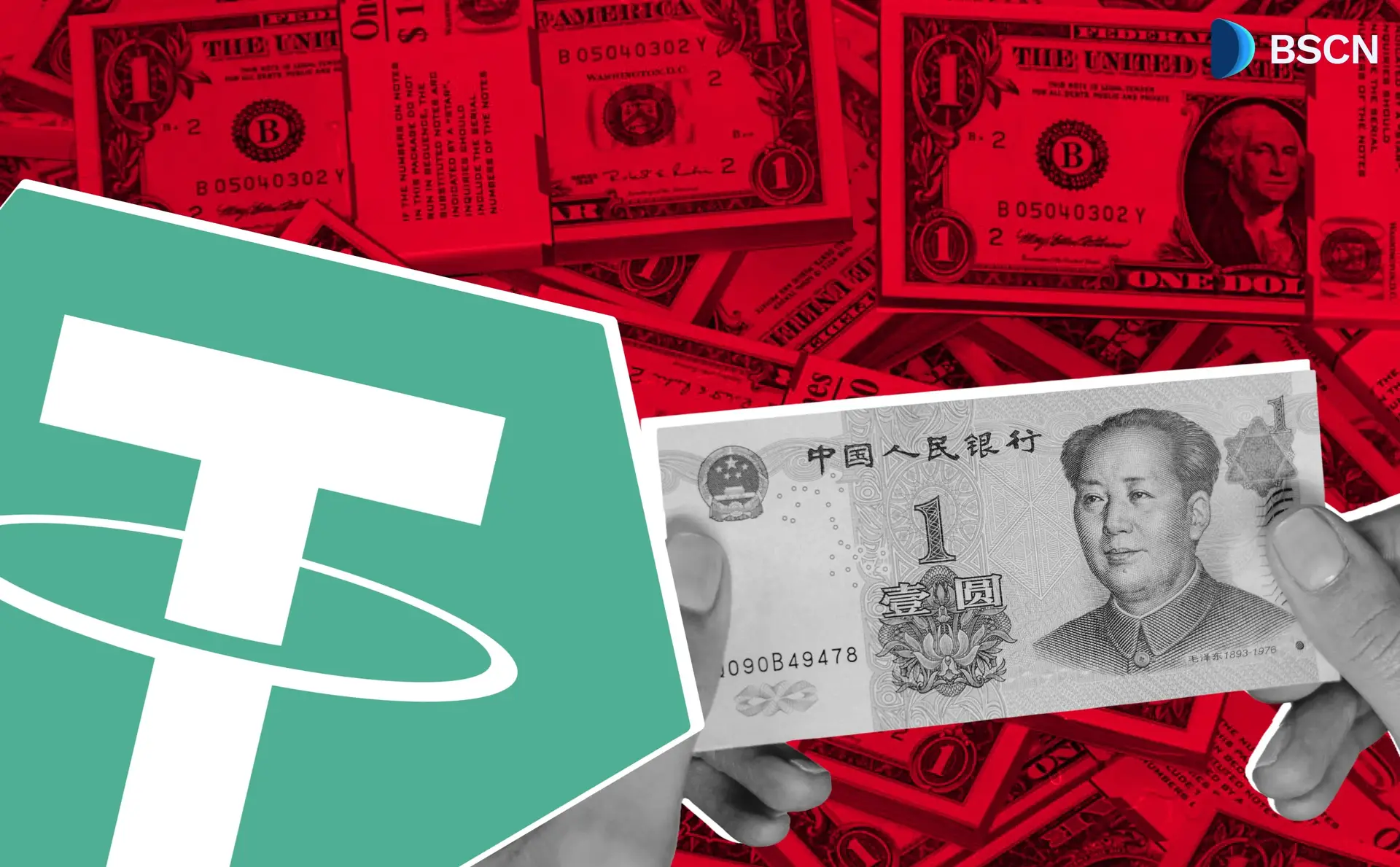
Tether discontinues CNH₮ stablecoin due to low demand and Chinese regulatory pressure, offering holders redemption until February 2027

UC Hope
February 23, 2026

(Advertisement)
Table of Contents
On February 20, Tether discontinued support for its offshore Chinese yuan-pegged stablecoin, CNH₮ (also known as CNHT).
CNH₮ was launched in 2019 to provide cryptocurrency traders with exposure to the offshore Chinese yuan (CNH). However, unlike Tether’s flagship USDT token, CNH₮ never achieved significant trading volume or market depth.
Tether stated it would immediately cease minting new CNH₮ tokens. The company framed the move as part of a broader review of underutilized digital assets within its product portfolio.
What was the Major Factor Behind the Discontinuation?
Low demand was a primary factor behind the discontinuation. CNH₮ saw limited trading activity and minimal integration across exchanges and decentralized finance platforms.
Compared with USDT, which consistently ranks among the highest-volume digital assets globally, CNH₮ remained a niche product. Market data shows that its liquidity levels were insufficient to justify continued operational support.
Stablecoin issuers face infrastructure, compliance, and maintenance costs. When a token does not reach a sustainable scale, continued support becomes inefficient. In this case, CNH₮ represented a small fraction of Tether’s overall stablecoin supply.
Industry analysts note that stablecoin issuers often retire low-utility tokens to concentrate resources on higher-volume products. This pattern has appeared across the sector as competition intensifies and regulatory standards tighten.
How Did Chinese Regulations Influence the Decision?
Regulatory pressure from China was another significant factor.
The People's Bank of China (PBOC) has repeatedly warned about unauthorized yuan-pegged stablecoins and tokenized real-world assets. Authorities prohibit domestic use of such instruments and impose penalties on intermediaries that facilitate overseas issuers.
China’s regulatory framework aims to limit systemic financial risks and maintain strict control over currency issuance. While state-approved digital asset initiatives may proceed under supervision, privately issued yuan-linked tokens face substantial compliance hurdles.
Although CNH₮ targeted offshore CNH exposure rather than onshore CNY markets, regulatory uncertainty reduced its practical utility. For exchanges and institutional partners, compliance risk remains a central consideration.
What Happens to CNH₮ Holders?
Tether outlined a structured wind-down process.
Immediate Actions:
As of February 20, 2026, Tether stopped minting and issuing new CNH₮ tokens.
Redemption Period:
Existing holders may redeem CNH₮ for one year, until February 20, 2027, under Tether’s terms of service. After this date, redemption support will end. The company stated it will issue a final notice before the deadline.
Users are advised to redeem their tokens through official Tether channels. Failure to do so before the cutoff could result in loss of redemption access.
Given CNH₮’s small circulating supply and limited exchange presence, analysts do not expect significant disruption in broader crypto markets.
What Does This Mean for the Stablecoin Market?
The discontinuation reflects ongoing consolidation within the stablecoin sector. Issuers are increasingly prioritizing liquidity, compliance, and operational efficiency.
Tether remains the issuer of USDT, the largest USD-pegged stablecoin by market capitalization. The company appears to be reallocating resources toward products with stronger trading volumes and long-term liquidity.
The decision also highlights the challenges facing non-USD stablecoins. While dollar-pegged tokens dominate global crypto trading pairs, alternative currency stablecoins often struggle to achieve comparable network effects.
In jurisdictions with strict monetary controls, such as China, currency-pegged stablecoins face regulatory barriers that limit adoption. As a result, issuers may reconsider products tied to tightly managed fiat currencies.
Market observers note that CNH₮’s retirement is unlikely to trigger systemic risk. Its market capitalization of roughly $2.57 million represented a negligible share of global stablecoin supply.
How Does This Reflect Broader Industry Trends?
Stablecoin issuers now operate under increasing global scrutiny. Regulators in multiple regions are developing frameworks that address reserve transparency, anti-money laundering controls, and cross-border payments.
Against this backdrop, maintaining low-demand tokens introduces cost without corresponding utility. The retirement of CNH₮ signals a focus on scale and regulatory alignment.
For traders seeking yuan exposure, alternatives may include other stablecoins, offshore financial instruments, or traditional fiat proxies. However, each option carries jurisdiction-specific compliance considerations.
The stablecoin sector continues to evolve toward fewer, higher-liquidity assets with clearer regulatory standing.
Conclusion
Tether’s decision to discontinue CNH₮ reflects a practical review of adoption, liquidity, and regulatory exposure. The token’s limited scale and China’s restrictive stance on yuan-pegged digital assets reduced its viability.
By ending new issuance and providing a one-year redemption window, Tether has implemented an orderly wind-down process. The move reinforces a broader industry shift toward focusing on high-liquidity stablecoins that meet regulatory and operational standards.
Sources:
- Reuters: China bans unauthorized offshore issuance of Yuan-pegged stablecoins
- Tether Blog: Announcing its discontinued support for CNH₮ stablecoin
- Coindesk: China expands crypto crackdown to stablecoins, asset tokenization
Read Next...





Frequently Asked Questions
Why did Tether discontinue CNH₮?
Tether cited low demand, limited trading activity, and regulatory pressures from China. The token’s small market capitalization made continued support inefficient.
When is the CNH₮ redemption deadline?
Holders can redeem CNH₮ until February 20, 2027. After that date, redemption support will end.
Will this impact the broader crypto market?
The impact is expected to be minimal. CNH₮ had a market capitalization of about $2.97 million, representing a small share of the stablecoin market.
Disclaimer
Disclaimer: The views expressed in this article do not necessarily represent the views of BSCN. The information provided in this article is for educational and entertainment purposes only and should not be construed as investment advice, or advice of any kind. BSCN assumes no responsibility for any investment decisions made based on the information provided in this article. If you believe that the article should be amended, please reach out to the BSCN team by emailing [email protected].
Author
 UC Hope
UC holds a bachelor’s degree in Physics and has been a crypto researcher since 2020. UC was a professional writer before entering the cryptocurrency industry, but was drawn to blockchain technology by its high potential. UC has written for the likes of Cryptopolitan, as well as BSCN. He has a wide area of expertise, covering centralized and decentralized finance, as well as altcoins.
(Advertisement)
Latest News
5h : 7m ago

Report: Cardano's Biggest Updates from H1 2026
7h : 40m ago

What is an XDC Network Masternode Validator?
July 13, 2026

Telebiz Goes Live With an Open-Source CRM Built Directly Into Telegram
July 13, 2026

Will Robinhood Chain Push ETH's Price to All Time Highs?
July 13, 2026

What is BlackRock's BUIDL Fund on Avalanche AVAX?
July 10, 2026

How Do PancakeSwap's CAKE Token Burns Actually Work?
July 10, 2026

Report: Ripple & The XRP Ecosystem in H1 2026
July 10, 2026

How Is Cardano Advancing Financial Inclusion in Developing Countries?
(Advertisement)

Crypto Project & Token Reviews
Project & Token Reviews
Comprehensive reviews of crypto's most interesting projects and assets
Learn about the hottest projects & tokens

Latest Crypto Articles
Get up to date with the latest crypto news stories and events