News
(Advertisement)


Sui Network Expands Into Everyday Payments Through New RedotPay Integration

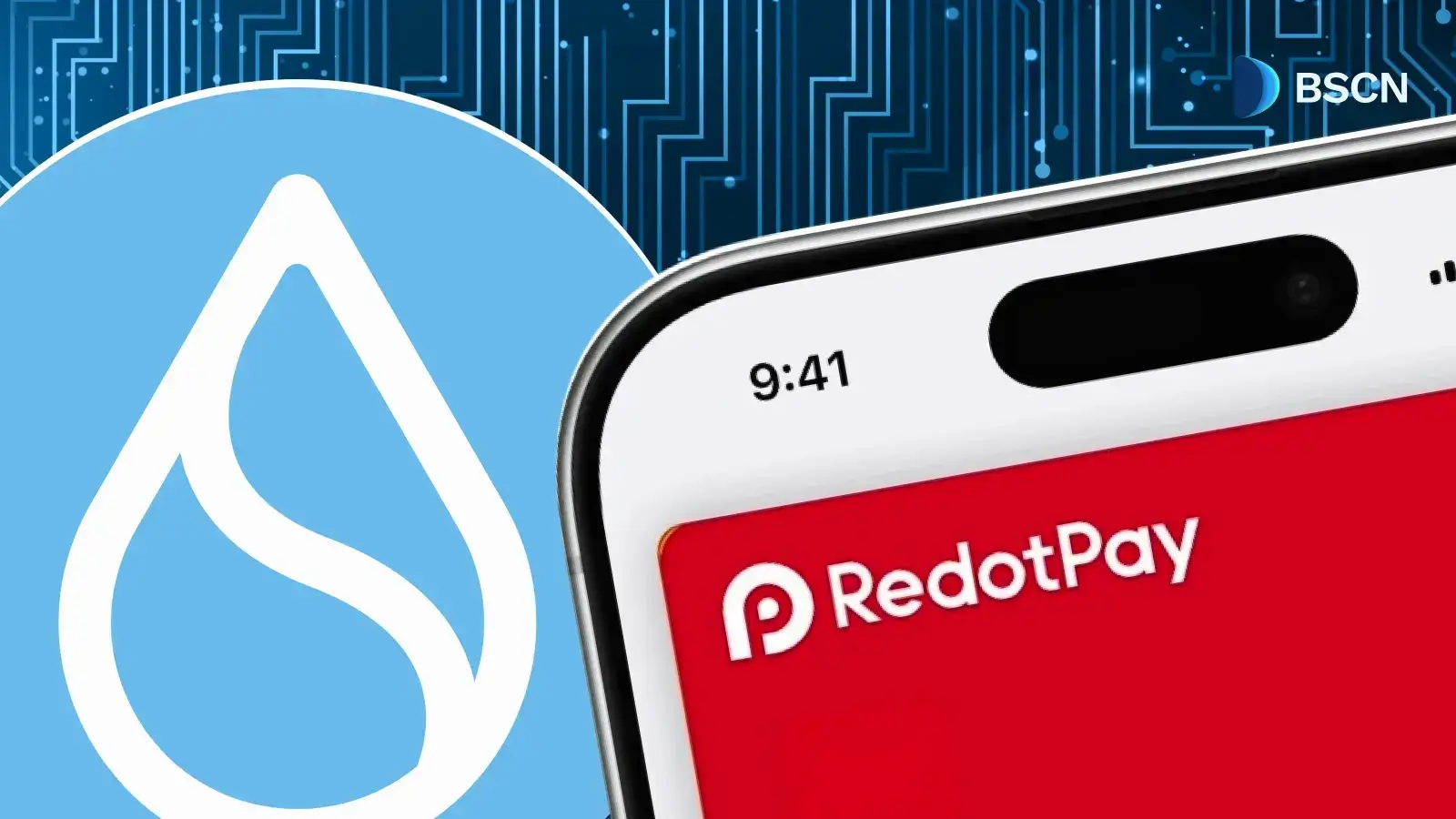
RedotPay has integrated SUI and USDC-Sui, letting users spend Sui-native assets at over 130 million merchants worldwide with low fees via the RedotPay app.

Soumen Datta
April 21, 2026

(Advertisement)
Table of Contents
RedotPay, a global stablecoin-based payments fintech, has integrated SUI and USDC-Sui into its platform, allowing users to spend and send Sui-native assets at merchants worldwide with low transaction fees.
Starting today, anywhere @RedotPay is accepted, so is SUI.
— Sui (@SuiNetwork) April 21, 2026
7M+ RedotPay customers. 130M+ merchants. 100+ countries. $SUI and $USDC-Sui are live for real-world use.
So, who’s buying the intern a coffee with SUI? ☕ pic.twitter.com/RHvOdPMehE
The integration gives RedotPay customers direct access to Sui's payments infrastructure and adds two more assets to a multi-currency wallet that already supports Bitcoin, Ethereum, Solana, XRP, and several others.
What Is RedotPay And How Does It Work?
RedotPay processes over $10 billion in annualized payment volume as of November 2025, making it one of the fastest-growing stablecoin payment networks globally. Its flagship product is a crypto card supported by both Apple Pay and Google Pay, with built-in on and off-ramps that let users spend digital assets at real-world merchants without manually converting to fiat first.
The platform supports a Multi-Currency Wallet covering BNB, BTC, ETH, SOL, TON, TRX, USDC, USDT, XRP, and the Sonic token S, among others. SUI and USDC-Sui are the latest additions to that list.
One of RedotPay's key features is its "send crypto, receive local currency" function. A user can send digital assets from the app and the recipient collects local fiat currency on their end, removing the need for both parties to hold or manage crypto directly.
Why Does The Sui Integration Matter?
RedotPay is among the first crypto card providers to support native USDC on Sui rather than a bridged version. Bridged assets are tokens that originate on one blockchain and are wrapped or transported to another, which introduces additional smart contract risk and can slow settlement. Native USDC on Sui is issued directly on the Sui network by Circle, making it a first-party asset rather than a derivative of one.
Sui was built by Mysten Labs, a team that includes engineers from Meta's Diem stablecoin project. The network was designed specifically to handle high transaction volumes with low latency, which aligns with the requirements of a payments-focused use case.
“By integrating with RedotPay, we are moving past the ‘experimental’ phase of crypto payments,” Adeniyi Abiodun, Co-founder and CPO at Mysten Labs, said. “Users can now leverage the speed of Native USDC on Sui to buy coffee, pay for travel, or shop online at over 130 million merchants worldwide without the friction of typical blockchain wait times. This is the standard for on-chain payments.”
What Can RedotPay Users Do With SUI And USDC-Sui?
The practical scope of the integration covers several everyday use cases:
- Spending SUI or USDC-Sui at merchants via the RedotPay card through Apple Pay or Google Pay
- Sending crypto internationally while the recipient receives local currency
- Swapping between digital assets within the app with near-instant finality
- Accessing Sui's payments infrastructure without managing blockchain infrastructure directly
What Is Happening With SUI Beyond RedotPay?
The RedotPay integration is one of several recent developments that point to growing institutional and retail interest in Sui.
CME Group, one of the world's largest derivatives exchanges, has announced plans to launch regulated futures contracts for both Avalanche and SUI, with trading expected to begin on May 4, subject to regulatory approval. CME already offers crypto futures on Bitcoin, Ethereum, XRP, Solana, Cardano, Stellar, and Chainlink. SUI and AVAX are the next additions.
The SUI futures contract is sized at 50,000 SUI for the standard contract and 5,000 SUI for the micro version. Both are cash-settled, meaning no actual SUI changes hands at expiry. Settlement prices reference CME CF rates tied to New York settlement windows, and clearing runs through CME Clearing.
How Big Is CME's Crypto Derivatives Business?
CME recorded $3 trillion in notional volume across its crypto futures and options in 2025. Year-to-date figures through early 2026 show average daily volume of 407,200 contracts, up 46% year over year. March 2026 average daily volume rose 19% year over year, with nearly $8 billion in average notional value traded daily. The SUI listing sits within a portfolio that has been expanding steadily in both asset count and trading volume.
Conclusion
RedotPay's integration of SUI and native USDC-Sui gives its users access to Sui's low-fee payment infrastructure across more than 130 million merchants globally. Combined with the platform's existing multi-currency support and local currency payout feature, the addition broadens RedotPay's practical reach for cross-border spending. At the same time, upcoming CME futures for SUI reflect growing institutional interest in the network beyond retail payments.
Resources
Sui Network on X: Posts (April, 2026)
Blog article by RedotPay: RedotPay Integrates SUI and USDC-Sui to Enable Seamless Stablecoin-based Payments and Global Payouts
Announcement by CME Group: CME Group to Continue Expansion of Regulated Crypto Suite with Launch of Avalanche and Sui Futures
Read Next...





Frequently Asked Questions
What is RedotPay's SUI and USDC-Sui integration?
RedotPay has added SUI and USDC-Sui to its payments platform, allowing users to spend Sui-native assets at over 130 million merchants worldwide via the RedotPay card, Apple Pay, and Google Pay, with low transaction fees.
What is native USDC on Sui and why does it matter?
Native USDC on Sui is issued directly on the Sui blockchain by Circle, unlike bridged USDC which is transported from another chain. Native issuance reduces smart contract risk and improves settlement speed, making it more suitable for everyday payment use cases.
Are there SUI futures contracts available for institutional traders?
CME Group has announced SUI futures contracts expected to launch on May 4, subject to regulatory approval. Standard contracts are sized at 50,000 SUI and micro contracts at 5,000 SUI. Both are cash-settled and cleared through CME Clearing.
Disclaimer
Disclaimer: The views expressed in this article do not necessarily represent the views of BSCN. The information provided in this article is for educational and entertainment purposes only and should not be construed as investment advice, or advice of any kind. BSCN assumes no responsibility for any investment decisions made based on the information provided in this article. If you believe that the article should be amended, please reach out to the BSCN team by emailing [email protected].
Author
 Soumen Datta
Soumen has been a crypto researcher since 2020 and holds a master’s in Physics. His writing and research has been published by publications such as CryptoSlate and DailyCoin, as well as BSCN. His areas of focus include Bitcoin, DeFi, and high-potential altcoins like Ethereum, Solana, XRP, and Chainlink. He combines analytical depth with journalistic clarity to deliver insights for both newcomers and seasoned crypto readers.
(Advertisement)
Latest News
8h : 48m ago

How Do PancakeSwap's CAKE Token Burns Actually Work?
9h : 47m ago

Report: Ripple & The XRP Ecosystem in H1 2026
14h : 20m ago

How Is Cardano Advancing Financial Inclusion in Developing Countries?
16h : 35m ago

Why Was Sui Built From Scratch Instead of Forking an Existing Blockchain?
July 9, 2026

Trust Wallet Adds Native Support for Robinhood Chain, Opening Stock Tokens to 220 Million Users
July 9, 2026
Robinhood Chain Explodes Post-Mainnet Launch
July 9, 2026

Is Avalanche AVAX Bringing Hyundai On Chain?
July 9, 2026

Stop Tokenizing Assets You Don't Control
(Advertisement)

Crypto Project & Token Reviews
Project & Token Reviews
Comprehensive reviews of crypto's most interesting projects and assets
Learn about the hottest projects & tokens

Latest Crypto Articles
Get up to date with the latest crypto news stories and events