News
(Advertisement)


Bitcoin Included in Iran's Hormuz Toll System as Tankers Face Up to $2M Fee

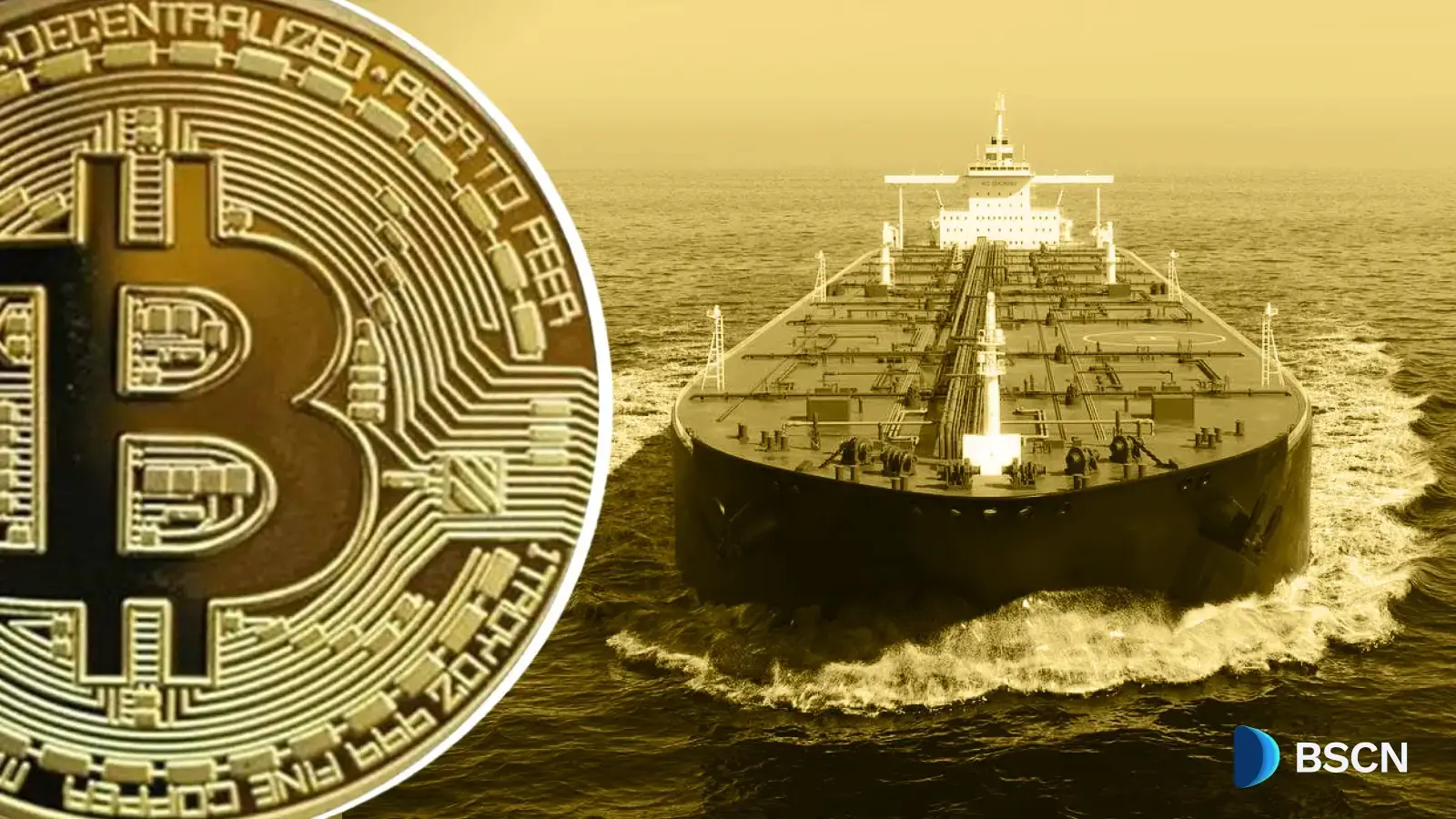
Iran is imposing transit fees on oil tankers crossing the Strait of Hormuz, accepting payment in cryptocurrency including Bitcoin or Chinese yuan, at $1 per barrel.

Soumen Datta
April 9, 2026

(Advertisement)
Table of Contents
Iran is imposing transit fees on oil tankers passing through the Strait of Hormuz, with payments accepted in cryptocurrency, including Bitcoin, or Chinese yuan. The fee is set at approximately $1 per barrel of oil carried, meaning a fully loaded supertanker carrying two million barrels could face charges approaching $2 million per vessel, according to reporting by the Financial Times.
A report by Iran International suggests the country could theoretically generate between $70 billion and $80 billion annually by charging for services in the strait.
What Is the Hormuz Toll and How Does It Work?
The process, as described by Hamid Hosseini, a spokesperson for Iran's Oil, Gas and Petrochemical Products Exporters' Union, is straightforward. Tanker crews email cargo details to Iranian authorities. Iran calculates the fee at $1 per barrel. The crew then has a short window to complete payment in cryptocurrency or Chinese yuan. Empty ships pass without charge.
Ships that skip the process receive a radio warning. The stakes are not subtle. Vessels attempting to transit without prior approval were told via radio broadcast they "will be destroyed."
Why Non-Dollar Payment Methods?
Iran's acceptance of cryptocurrency and Chinese yuan, rather than US dollars, reflects a consistent objective: reducing exposure to the dollar system and limiting the risk of funds being frozen under international sanctions. Iran operates under heavy sanctions that restrict its access to the global banking system, making dollar-denominated transactions both difficult and risky.
Bitcoin, as one of the accepted options, is particularly useful in this context. Transactions settle on a decentralized network that no government can block or reverse after confirmation. Chinese yuan also serves Iran’s purpose by keeping transactions outside the dollar system entirely.
Why Does the Strait of Hormuz Matter?
The Strait of Hormuz is a narrow waterway between Iran and Oman connecting the Persian Gulf to the Gulf of Oman. It handles roughly 20% of the world's oil supply, making it one of the most strategically significant chokepoints in global energy infrastructure. Disruption to shipping through the strait affects oil prices, supply chains, and energy markets worldwide.
Iran's move to impose these tolls came during a two-week ceasefire with the United States. Hosseini told the Financial Times that the monitoring requirement exists because Iran needs to ensure "these two weeks aren't used for transferring weapons." He added that Tehran is "not in a rush" to process vessels, meaning delays are built into the system by design.
Iran is also reported to be pushing ships toward routes closer to its coastline, increasing exposure for vessels linked to Western or Gulf nations. Many shipping companies have responded by holding back cargo movements until the situation becomes clearer.
How Did Bitcoin's Price React?
Bitcoin moved from around $68,000 to nearly $73,000 within hours of the reports emerging. More than $400 million in short positions were liquidated in the 24 hours following the ceasefire announcement. Oil prices fell roughly 15% in the same period, while Bitcoin and gold rallied together.
Short positions, in simple terms, are bets that an asset's price will fall. When prices move sharply upward instead, traders holding those positions are forced to close them, often automatically, adding further buying pressure to the rally.
What Are Analysts Projecting?
Price projections vary depending on how the geopolitical situation develops:
- CoinSwitch Markets Desk projected a move toward $75,000 if current momentum holds, with $68,000 identified as near-term support
- TradingKey analysts put a $100,000 target as realistic if global instability persists, arguing that under sustained sanctions pressure "the traditional banking system may face restrictions, making Bitcoin the sole channel for real-time global safe-haven capital"
What Does This Mean Beyond Iran?
Iran is not the only country operating under significant financial sanctions. Russia, Venezuela, and North Korea all face varying degrees of restrictions. The precedent of a sovereign state accepting cryptocurrency for access to critical infrastructure is now public, regardless of whether the ceasefire holds.
Iran already operates within a significant domestic crypto ecosystem, estimated at $7.8 billion. Bitcoin plays a particularly prominent role during periods of crisis, including protests, military escalation, and now as one of the accepted payment methods within its Hormuz transit system.
The future of the strait itself is one of the most contested issues in ceasefire extension talks. US President Donald Trump has stated that any extended truce would require Iran to ensure the "complete, immediate, and safe opening" of the strait. Iran's Supreme National Security Council has countered with a framework for supervised passage under its own authority. Neither position is settled.
Conclusion
Iran has set a $1-per-barrel transit fee for tankers crossing the Strait of Hormuz, a waterway that handles roughly 20% of global oil supply. Payments are accepted in cryptocurrency, including Bitcoin, or Chinese yuan, with a fully loaded supertanker potentially facing charges approaching $2 million.
The mechanics are operational: cargo details submitted by email, fee calculated, payment collected, passage granted or denied. Bitcoin responded with a move from $68,000 to nearly $73,000, alongside $400 million in short liquidations. The ceasefire is two weeks old, negotiations remain unresolved, and the toll structure is already in place.
Resources
Report by Financial Times: Iran demands crypto fees for ships passing Hormuz during ceasefire
Report by Reuters: Iran's Hormuz 'toll booth' set to hardwire higher energy prices
Report by The Block: Bitcoin payments allowed for Hormuz tanker tolls as Iran seeks up to $2 million per ship: FT
Report by Forbes: ‘Will Be Destroyed’—Iran’s Bitcoin Toll Sparks $100K Price Prediction
Read Next...




Frequently Asked Questions
How much would a tanker pay to cross the Strait of Hormuz under Iran's new toll?
Iran set the toll at approximately $1 per barrel of oil. A fully loaded supertanker carrying two million barrels would owe roughly $2 million, payable in cryptocurrency including Bitcoin, or Chinese yuan, within a short window after submitting cargo details by email to Iranian authorities.
Why is Iran accepting cryptocurrency instead of US dollars for Hormuz tolls?
Iran operates under international sanctions that restrict its access to the dollar-based banking system and expose dollar holdings to the risk of freezing. Accepting cryptocurrency and Chinese yuan keeps transactions outside the dollar system, reducing that exposure directly.
What happened to Bitcoin's price after the Hormuz toll was reported?
Bitcoin rose from approximately $68,000 to nearly $73,000 within hours of the reports. More than $400 million in short positions were liquidated in the following 24 hours. Analysts are watching $75,000 as the next upside level, with $68,000 identified as near-term support.
Disclaimer
Disclaimer: The views expressed in this article do not necessarily represent the views of BSCN. The information provided in this article is for educational and entertainment purposes only and should not be construed as investment advice, or advice of any kind. BSCN assumes no responsibility for any investment decisions made based on the information provided in this article. If you believe that the article should be amended, please reach out to the BSCN team by emailing [email protected].
Author
 Soumen Datta
Soumen has been a crypto researcher since 2020 and holds a master’s in Physics. His writing and research has been published by publications such as CryptoSlate and DailyCoin, as well as BSCN. His areas of focus include Bitcoin, DeFi, and high-potential altcoins like Ethereum, Solana, XRP, and Chainlink. He combines analytical depth with journalistic clarity to deliver insights for both newcomers and seasoned crypto readers.
(Advertisement)
Latest News
July 17, 2026

What is the Nakamoto Coefficient & Why Does it Matter?
July 17, 2026

How to Trade on Robinhood Chain, Crypto's Busiest New Memecoin Market
July 17, 2026
Insights from CoinGecko's Q2 Crypto Report
July 17, 2026
Why Is Sui's Approach to Storing Data On Chain Different From Most Blockchains?
July 17, 2026

Why Does XRP Move Faster Than Bitcoin, And What Makes It Possible?
July 17, 2026

Top 8 Prediction Markets in Crypto Today
July 16, 2026
Grayscale Picks Its Most Promising Tokenization Blockchains
July 16, 2026

Crypto's Top Five Centralized Exchanges
(Advertisement)

Crypto Project & Token Reviews
Project & Token Reviews
Comprehensive reviews of crypto's most interesting projects and assets
Learn about the hottest projects & tokens

Latest Crypto Articles
Get up to date with the latest crypto news stories and events