News
(Advertisement)


CZ Admits He is Not Confident About Bitcoin Supercycle: Here's Why

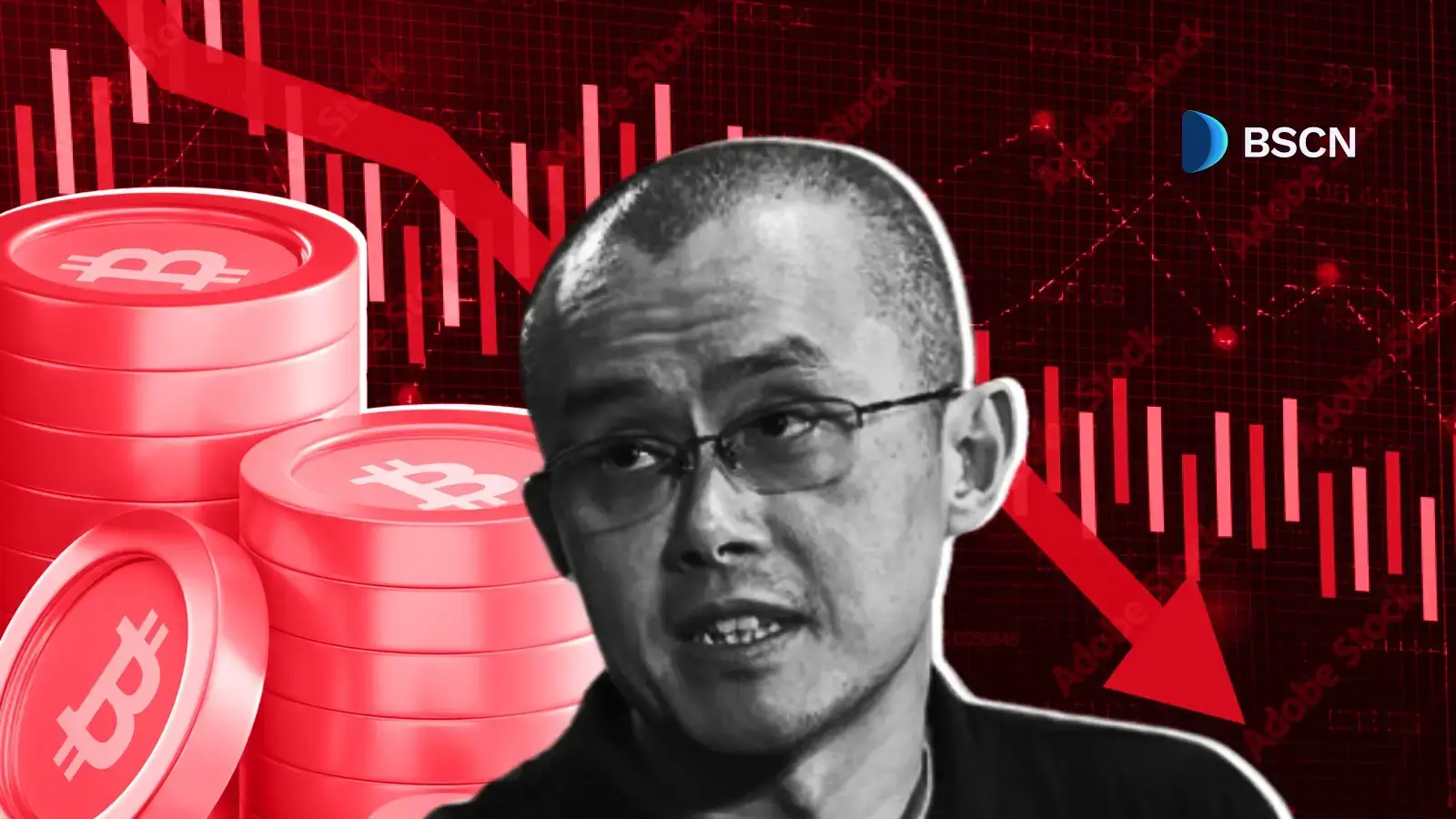
CZ reverses his 2026 Bitcoin supercycle prediction amid market FUD, $75K crash, and $2.5B liquidations. Here's why he changed his mind.

Soumen Datta
February 2, 2026

(Advertisement)
Table of Contents
Former Binance CEO Changpeng Zhao has walked back his bold prediction that Bitcoin would enter a supercycle in 2026. During a weekend AMA session, CZ told participants he no longer feels confident about the multi-year bull run he had forecast just weeks earlier.
The reversal follows Bitcoin's steep decline to $75,000 and a wave of liquidations that wiped out nearly $2.5 billion in leveraged positions.
"Couple weeks ago, I was very confident about the supercycle. But now with all that FUD, I'm not sure," CZ admitted, citing misinformation on Crypto Twitter as a major factor amplifying market panic.
Why Did CZ Predict A Supercycle In The First Place?
CZ's original forecast came during an interview on CNBC's Squawk Box with Andrew Ross Sorkin. At the time, he argued that favorable regulatory shifts in the United States would fundamentally alter Bitcoin's traditional market patterns.
His thesis centered on the idea that pro-crypto policies from Washington would attract enough institutional capital to override the historical four-year boom-and-bust cycles.
Understanding Bitcoin's Four-Year Cycle
Bitcoin has historically operated in four-year cycles linked to halving events. During these events, which occur roughly every 210,000 blocks, the reward miners receive for validating transactions gets cut in half.
This reduction in new supply has historically preceded major price rallies:
- 2012 halving led to a rally from $12 to over $1,000
- 2016 halving preceded the 2017 bull run to $20,000
- 2020 halving came before the 2021 peak at $69,000
CZ believed 2026 would be different. He pointed to increasing government acceptance of cryptocurrency and the wave of institutional investors entering the market as evidence that the old patterns would no longer hold.
"I think this year given the US being so pro-crypto and every other country is kind of following, I do think we will see this. We will probably break the four-year cycle," he said at the time.
What Forced The Change In Outlook?
The weekend crash exposed vulnerabilities that undermined CZ's earlier confidence. Bitcoin failed to hold critical technical support at $82,500 before tumbling through multiple price levels.
The cryptocurrency dropped below its 50-day exponential moving average near $75,500, a bearish signal that typically precedes extended downtrends.
More concerning was the breach of Bitcoin's realized market value at $80,700. This metric calculates the average purchase price across all coins currently in circulation, essentially representing the market's collective cost basis. When Bitcoin trades below this level, the majority of holders are underwater on their positions.
The Selloff Wasn't Just Crypto
The crash wasn't limited to cryptocurrency. Gold fell 9% to approximately $4,900, while silver experienced a devastating 26% drop to $85.30. Combined losses in gold and silver markets exceeded $10 trillion.
The synchronized selloff across traditionally uncorrelated assets suggested deeper systemic issues rather than crypto-specific problems.
CZ now attributes the market weakness to three primary factors:
- Geopolitical tensions: The escalating conflict between the U.S. and Iran triggered a flight to U.S. Dollar safety that left risk assets vulnerable
- Macroeconomic instability: Rising inflation and unpredictable monetary policy have made it difficult to forecast crypto valuations with any confidence
- Social media FUD: Amplified fear across platforms like Crypto Twitter has accelerated liquidation cascades
Kevin Warsh's nomination to lead the Federal Reserve added another layer of complexity. His appointment triggered a substantial U.S. Dollar rally, making dollar-denominated assets like bitcoin, gold, and silver more expensive for international buyers.
How Severe Were The Liquidations?
The derivatives market breakdown revealed the extent of overleveraged positions across crypto exchanges. Initial liquidations on Saturday morning totaled $850 million, but the figure swelled to $2.5 billion as forced selling triggered additional margin calls.
Nearly 200,000 trader accounts were completely liquidated, meaning their positions were closed automatically when collateral fell below required thresholds.
These liquidations created a self-reinforcing cycle. As exchanges automatically sold positions to recover loaned funds, the additional selling pressure pushed prices lower, triggering more liquidations. The effect was particularly severe during weekend trading when liquidity is naturally thinner and fewer institutional buyers are active.
Market depth data from Kaiko shows that order book liquidity remains more than 30% below levels recorded in October. The wider spreads between buy and sell orders and the reduced capital available to absorb large trades have left the market structurally fragile.
Is The Supercycle Theory Dead?
CZ stopped short of completely abandoning the supercycle concept but acknowledged that timing has become impossible to predict. "We live globally in a very volatile time," he explained, emphasizing that current conditions affect equities, commodities, and crypto simultaneously.
A supercycle, in crypto terms, refers to an extended bull market that lasts multiple years without the typical cyclical corrections. The theory suggests that once Bitcoin achieves sufficient institutional adoption and regulatory acceptance, it will behave more like traditional store-of-value assets.
What Still Supports Long-Term Growth
CZ still sees potential for this transformation but admits the path forward is unclear. Several positive factors remain in place:
Corporations continue to add Bitcoin to their balance sheets despite ongoing price volatility, signaling sustained institutional adoption.
Policymakers in major jurisdictions, including the United States, have taken increasingly supportive stances, bringing greater regulatory clarity to the crypto market.
At the same time, innovation in blockchain infrastructure and derivative products continues to advance, largely independent of short-term price action.
However, these positive factors must now compete with macro headwinds that weren't as prominent when CZ made his original forecast.
What Should Investors Do Now?
CZ's recommendation has shifted from confident predictions to defensive positioning. He advised crypto holders to adopt a buy-and-hold mentality rather than attempting to trade short-term price movements.
The emphasis on long-term accumulation reflects his view that fundamental value propositions remain intact even as near-term volatility makes timing nearly impossible.
Whales Buying While Retail Panics
Onchain data from Glassnode reveals a stark divide in market behavior:
- Small holders (fewer than 10 BTC): Net sellers for more than a month, reflecting retail capitulation as prices fell 35% from the $126,000 peak
- Mega-whales (1,000+ BTC): Quietly accumulated throughout the downturn, bringing holdings back to levels last seen in late 2024
This divergence between retail panic and whale accumulation is characteristic of market bottoms, though it doesn't guarantee an immediate reversal. Whales typically have longer time horizons and greater ability to withstand volatility.
CZ specifically warned against reacting to every rumor or headline circulating on social media.
Conclusion
CZ's retreat from his supercycle prediction shows how quickly crypto market sentiment can shift when confronted with real-world volatility. The former Binance CEO moved from confident forecasts about breaking historical patterns to acknowledging that macro uncertainty makes any near-term prediction unreliable.
His revised stance emphasizes patience and long-term holding over tactical trading, reflecting recognition that factors beyond crypto-specific developments now drive price action. While institutional adoption and regulatory progress continue, the intersection of geopolitical instability, monetary policy uncertainty, and social media-amplified fear has created conditions where even experienced market observers hesitate to make bold calls about timing or trajectory.
Resources
Changpeng Zhao on X: Recent posts (January 2026)
Bitcoin chart on TradingView: Bitcoin price action
Report by Bloomberg: Bitcoin Break Below $80,000 Signals New Crisis of Confidence
Report by CoinDesk: 'This is absolutely INSANE': Bitcoin’s weekend crash exposes the cracks beneath crypto’s latest boom
CoinGlass data: Bitcoin Whale vs Retail Delta
Read Next...





Frequently Asked Questions
What made CZ change his mind about the Bitcoin supercycle?
CZ cited three main factors: widespread FUD and misinformation on Crypto Twitter amplifying market fear, macroeconomic instability including inflation and uncertain monetary policies, and geopolitical tensions like U.S.-Iran conflicts. Bitcoin's crash to $75,000 with $2.5 billion in liquidations demonstrated that current volatility extends beyond crypto to all assets.
What is a Bitcoin supercycle?
A supercycle refers to an extended multi-year bull run that breaks Bitcoin's traditional four-year pattern. Normally, Bitcoin follows cycles tied to halving events (when mining rewards get cut in half), producing peaks followed by corrections. A supercycle would see sustained growth driven by institutional adoption and regulatory clarity instead of cyclical crashes.
Does CZ still believe in Bitcoin long-term?
Yes, CZ remains cautiously optimistic despite backtracking on near-term predictions. He advises buy-and-hold strategies over short-term trading and points to ongoing institutional adoption, improving regulatory clarity, and continued technological advancement as factors supporting long-term value, even though he can no longer confidently predict timing.
Disclaimer
Disclaimer: The views expressed in this article do not necessarily represent the views of BSCN. The information provided in this article is for educational and entertainment purposes only and should not be construed as investment advice, or advice of any kind. BSCN assumes no responsibility for any investment decisions made based on the information provided in this article. If you believe that the article should be amended, please reach out to the BSCN team by emailing [email protected].
Author
 Soumen Datta
Soumen has been a crypto researcher since 2020 and holds a master’s in Physics. His writing and research has been published by publications such as CryptoSlate and DailyCoin, as well as BSCN. His areas of focus include Bitcoin, DeFi, and high-potential altcoins like Ethereum, Solana, XRP, and Chainlink. He combines analytical depth with journalistic clarity to deliver insights for both newcomers and seasoned crypto readers.
(Advertisement)
Latest News
July 15, 2026

REAL Joins Blockchain for Europe to Shape EU Tokenisation Rules
July 15, 2026

Which Crypto Companies and Protocols Make The Most Money?
July 15, 2026

How SBI Built Japan's Largest Crypto Business
July 15, 2026

Elon Musk And Dogecoin: How One Man Shaped A Memecoin’s Price And Reputation
July 15, 2026
DTCC Tokenization Platform: How Does Wall Street's Blockchain Pilot Actually Work?
July 14, 2026

Report: Cardano's Biggest Updates from H1 2026
July 14, 2026

What is an XDC Network Masternode Validator?
July 13, 2026

Telebiz Goes Live With an Open-Source CRM Built Directly Into Telegram
(Advertisement)

Crypto Project & Token Reviews
Project & Token Reviews
Comprehensive reviews of crypto's most interesting projects and assets
Learn about the hottest projects & tokens

Latest Crypto Articles
Get up to date with the latest crypto news stories and events