News
(Advertisement)


Ripple CEO Says CLARITY Act Has Two Weeks Before Chances Drop

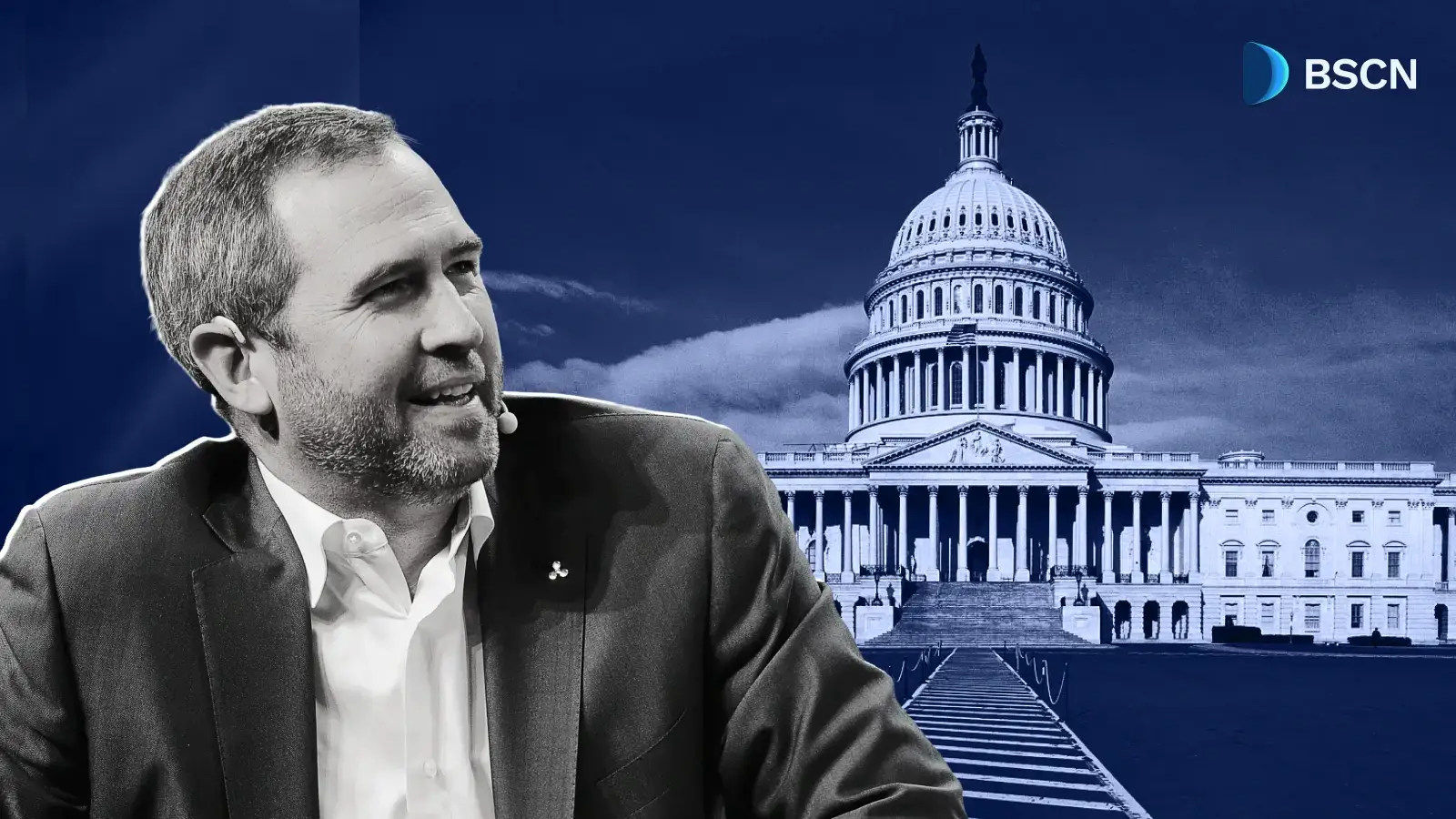
Ripple CEO Brad Garlinghouse warns the CLARITY Act could stall if the Senate Banking Committee fails to act within two weeks, calling passage still likely but not certain.

Soumen Datta
May 6, 2026

(Advertisement)
Table of Contents
Ripple CEO Brad Garlinghouse says the CLARITY Act still has a path to passage, but warned at CoinDesk's Consensus Miami event on Tuesday that the next two weeks will be decisive. Without a Senate Banking Committee hearing in that window, he said, the bill's chances will "drop precipitously."
What Is The CLARITY Act And Why Does It Matter?
The CLARITY Act is a crypto market-structure bill designed to establish clear regulatory boundaries for digital assets in the United States. It has already passed the U.S. House of Representatives and cleared a Senate Agriculture Committee markup in January 2026. But it still requires approval from the Senate Banking Committee before a full Senate vote.
Crypto(.)news has tracked at least five remaining steps before the bill becomes law, including committee approval, a 60-vote threshold in the Senate, and reconciliation between the Agriculture Committee version and the House bill.
Garlinghouse acknowledged the bill is not perfect. "Do I think it's perfect? Hell, no," he said at Consensus Miami. He described it as a product of compromise, but argued that regulatory clarity, even imperfect clarity, is better than continued uncertainty for the sector.
What Does Section 404 Actually Say About Stablecoin Yields?
One of the most debated parts of the bill is Section 404, which targets passive yield on stablecoins. Senators Thom Tillis and Angela Alsobrooks finalized the compromise text on Friday, closing a gap that banks had flagged since the GENIUS Act was signed into law by President Donald Trump.
In plain terms, a crypto exchange cannot reward users simply for parking stablecoins in an account the way a bank pays interest on a savings balance. Rewards tied to actual on-chain activity, such as payments, transfers, or trading, remain permitted.
Why Did Lawmakers Target Stablecoin Yields?
Banks argued that platforms offering passive stablecoin yields created an unfair advantage and accelerated deposit flight, meaning customers pulling money from traditional bank accounts to chase higher returns in crypto. Senators Tillis and Alsobrooks addressed this directly in their joint statement, saying the compromise prohibits stablecoin rewards from resembling bank deposit interest.
Who Does The New Rule Affect Most?
The revised language creates clear winners and some pressure points. Circle and Coinbase, whose core business models rely less on passive yield products, are relatively less exposed. Traditional banks retain the exclusive right to pay deposit-style interest. Smaller exchanges that built user acquisition strategies around high-yield stablecoin deposits face more pressure to restructure those products.
Coinbase CEO Brian Armstrong responded to the development on X with two words: "Mark it up."
Has Garlinghouse's Timeline For The Bill Shifted?
Yes, noticeably. At XRP Las Vegas on April 30, Garlinghouse had said he expected the bill to reach President Trump's desk before the Memorial Day recess. Before that, during a February appearance on Fox Business, he assigned an 80% probability to April passage. His comments at Consensus Miami reflect a more cautious position, with campaign pressures potentially turning the legislation into what he called "too much of a loaded issue."
A White House Council of Economic Advisers report, cited by Garlinghouse, found that a full ban on stablecoin yields could cost consumers $800 million annually. That figure helped shape the compromise that Section 404 now reflects.
Industry observers remain divided. Daniel Reis-Faria noted that the stablecoin yield agreement removes one barrier for investors but does not resolve uncertainty around how future rules will be applied, with implementation details expected from regulators within a year of passage still unclear.
Does XRP Need The CLARITY Act To Move?
Not according to Jake Claver, chairman of Digital Ascension Group. Speaking on the Good Evening Crypto podcast, Claver argued that XRP does not need new legislation for its price to move. He said the SEC and CFTC have already issued guidelines classifying XRP as a digital commodity, and that the legal cloud from Ripple's multi-year SEC lawsuit has lifted.
XRP is currently trading at $1.45, up about 3.55% on the day and roughly 7.5% over the past month. Over the past year, the token is down 32%.
Conclusion
The CLARITY Act is closer to the finish line than it has ever been, but the path is not clear. The stablecoin yield compromise in Section 404 resolves a dispute that had delayed the bill since January, and the Senate Banking Committee markup is targeted for May. Garlinghouse's warning at Consensus Miami reflects the real procedural risk that remains. The next two weeks will show whether the bill advances on schedule or gets pushed into a more politically difficult stretch of the legislative calendar.
Resources
Report by Crypto(.)news: Ripple CEO Brad Garlinghouse says CLARITY Act could stall before midterms
Report by cryptonews(.)net: Jake Claver Says XRP Doesn’t Need CLARITY Act to Surge
Eleanor Terrett on X: Post on May 5
Report by CNBC: Circle jumps nearly 20% on Clarity Act compromise that preserves stablecoin rewards
Read Next...





Frequently Asked Questions
What is the CLARITY Act?
The CLARITY Act is a U.S. crypto market-structure bill that defines regulatory rules for digital assets. It has passed the House and cleared the Senate Agriculture Committee but still needs Senate Banking Committee approval before a full Senate vote.
What does Section 404 of the CLARITY Act do?
Section 404 prohibits crypto platforms from paying passive, bank-style interest on stablecoins held by U.S. customers. Rewards tied to on-chain activity like payments and trading remain allowed.
What did Ripple CEO Brad Garlinghouse say about the CLARITY Act at Consensus Miami?
Garlinghouse said the bill still has a path forward but warned its chances would drop sharply if the Senate Banking Committee does not act within the next two weeks. He called it imperfect but worth passing for the regulatory clarity it provides.
Disclaimer
Disclaimer: The views expressed in this article do not necessarily represent the views of BSCN. The information provided in this article is for educational and entertainment purposes only and should not be construed as investment advice, or advice of any kind. BSCN assumes no responsibility for any investment decisions made based on the information provided in this article. If you believe that the article should be amended, please reach out to the BSCN team by emailing [email protected].
Author
 Soumen Datta
Soumen has been a crypto researcher since 2020 and holds a master’s in Physics. His writing and research has been published by publications such as CryptoSlate and DailyCoin, as well as BSCN. His areas of focus include Bitcoin, DeFi, and high-potential altcoins like Ethereum, Solana, XRP, and Chainlink. He combines analytical depth with journalistic clarity to deliver insights for both newcomers and seasoned crypto readers.
(Advertisement)
Latest News
2h : 47m ago

Can Injective's New Mint Platform Bring Institutions to INJ?
4h : 4m ago

What is RippleX & Why Does it Matter for XRP Ledger?
10h : 12m ago

What Is Dfinity's Caffeine?
July 22, 2026

How Much Funding Has Canton Developer Digital Asset Raised?
July 22, 2026

What is Aptos' AIP-146 and Is It Good News for APT?
July 22, 2026

What Happens to Unverified Pi Balances If Users Miss the Deadline?
July 22, 2026
What Is in Trump's CLARITY Act Ethics Deal?
July 21, 2026

Pudgy Penguins to Reach Millions with Target Placement
(Advertisement)

Crypto Project & Token Reviews
Project & Token Reviews
Comprehensive reviews of crypto's most interesting projects and assets
Learn about the hottest projects & tokens

Latest Crypto Articles
Get up to date with the latest crypto news stories and events